

Fish, snapper, mixed species, raw
Whole food · Finfish and Shellfish Products
Snapper is a lean, firm-fleshed saltwater fish prized for its mild, sweet flavor and clean, flaky texture. Nutritionally, it is a powerhouse of high-quality protein with virtually no fat or carbohydrates, making it a staple for low-calorie, high-protein diets. Its white flesh holds up beautifully to various cooking methods, from grilling to steaming.
Calorie split: 87% protein · 0% carbs · 13% fat
↓ Full nutrition💚 Why it's loved
People love snapper for its delicate, sweet flavor that isn't 'fishy,' making it approachable for seafood newcomers. Its firm, moist flesh is incredibly versatile, perfect for everything from simple pan-searing to complex curries, and it's a centerpiece in many coastal culinary traditions.
⚠️ Watch-outs & how to enjoy it better
As a lean fish, it can dry out quickly if overcooked, leading to a tough texture. Those with fish or seafood allergies must avoid it entirely. To counteract dryness, use moist-heat cooking methods like poaching or baking en papillote (in parchment), or baste with olive oil or butter during grilling.
Key benefits
- Excellent source of complete, lean protein for muscle maintenance
- Very low in fat and calories, ideal for weight management
- Naturally free of carbohydrates and sugars
- Provides essential nutrients like selenium and B vitamins
- A sustainable seafood choice when sourced responsibly
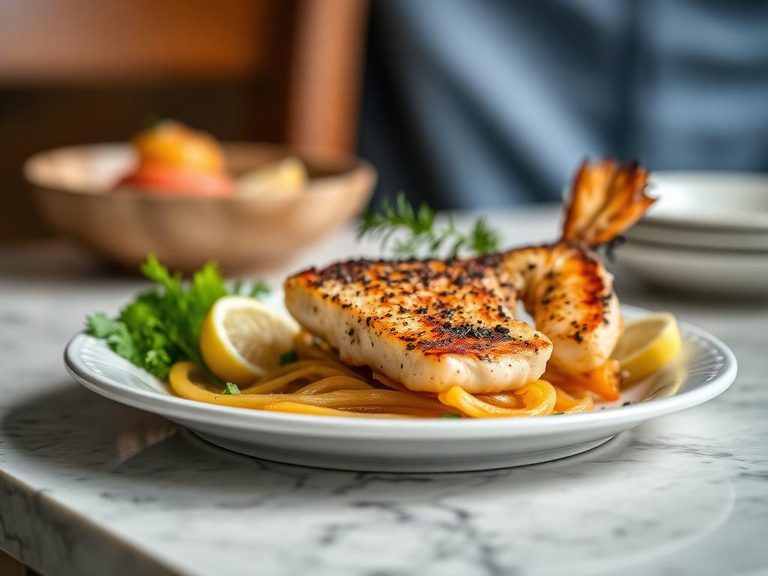
🍽️ Popular dishes
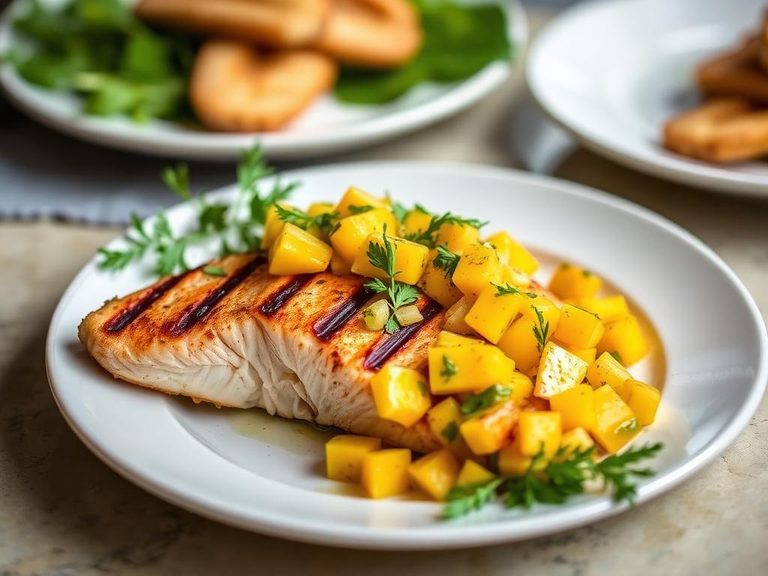
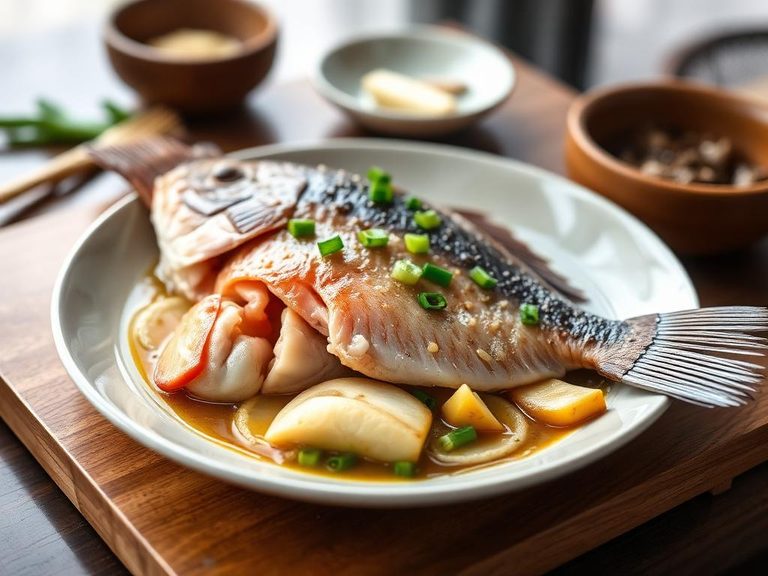
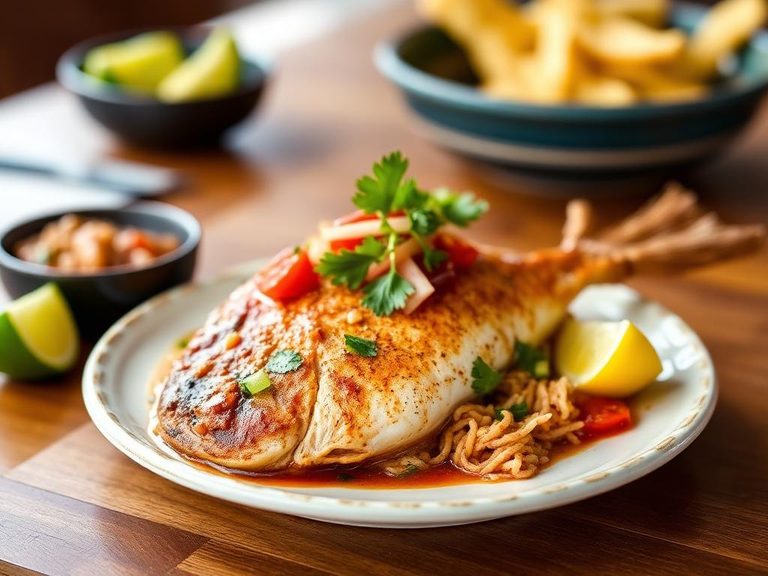
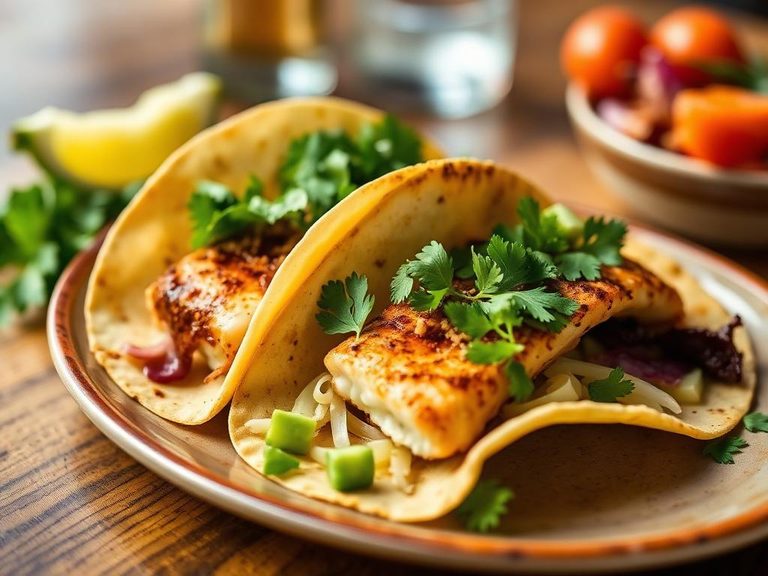

🌍 Where it's eaten
💡 Did you know?
The vibrant red color of many snapper species comes from their diet of shrimp and other crustaceans, which contain carotenoid pigments that are deposited in their skin and scales.
Full nutrition (USDA data · scales with serving)
| Water | 76.9 g |
| Energy | 100 kcal |
| Energy | 418 kj |
| Protein | 20.5 g |
| Total lipid (fat) | 1.3 g |
| Ash | 1.3 g |
| Carbohydrate, by difference | 0.00 g |
| Fiber, total dietary | 0.00 g |
| Total Sugars | 0.00 g |
| Calcium, Ca | 32.0 mg |
| Iron, Fe | 0.18 mg |
| Magnesium, Mg | 32.0 mg |
| Phosphorus, P | 198 mg |
| Potassium, K | 417 mg |
| Sodium, Na | 64.0 mg |
| Zinc, Zn | 0.36 mg |
| Copper, Cu | 0.03 mg |
| Manganese, Mn | 0.01 mg |
| Selenium, Se | 38.2 ug |
| Vitamin C, total ascorbic acid | 1.6 mg |
| Thiamin | 0.05 mg |
| Riboflavin | 0.00 mg |
| Niacin | 0.28 mg |
| Pantothenic acid | 0.75 mg |
| Vitamin B-6 | 0.40 mg |
| Folate, total | 5.0 ug |
| Folic acid | 0.00 ug |
| Folate, food | 5.0 ug |
| Folate, DFE | 5.0 ug |
| Choline, total | 65.0 mg |
| Vitamin B-12 | 3.0 ug |
| Vitamin B-12, added | 0.00 ug |
| Vitamin A, RAE | 32.0 ug |
| Retinol | 32.0 ug |
| Carotene, beta | 0.00 ug |
| Carotene, alpha | 0.00 ug |
| Cryptoxanthin, beta | 0.00 ug |
| Vitamin A, IU | 106 iu |
| Lycopene | 0.00 ug |
| Lutein + zeaxanthin | 0.00 ug |
| Vitamin E (alpha-tocopherol) | 0.96 mg |
| Vitamin E, added | 0.00 mg |
| Vitamin D (D2 + D3), International Units | 408 iu |
| Vitamin D (D2 + D3) | 10.2 ug |
| Vitamin D3 (cholecalciferol) | 10.2 ug |
| Vitamin K (phylloquinone) | 0.10 ug |
| Alcohol, ethyl | 0.00 g |
| Caffeine | 0.00 mg |
| Theobromine | 0.00 mg |
Fat & fatty acid profile (per 100g)
| Fatty acids, total saturated | 0.28 g |
| SFA 4:0 | 0.00 g |
| SFA 6:0 | 0.00 g |
| SFA 8:0 | 0.00 g |
| SFA 10:0 | 0.00 g |
| SFA 12:0 | 0.00 g |
| SFA 14:0 | 0.04 g |
| SFA 16:0 | 0.16 g |
| SFA 18:0 | 0.08 g |
| Fatty acids, total monounsaturated | 0.25 g |
| MUFA 16:1 | 0.06 g |
| MUFA 18:1 | 0.17 g |
| MUFA 20:1 | 0.02 g |
| MUFA 22:1 | 0.00 g |
| Fatty acids, total polyunsaturated | 0.46 g |
| PUFA 18:2 | 0.02 g |
| PUFA 18:3 | 0.00 g |
| PUFA 18:4 | 0.01 g |
| PUFA 20:4 | 0.05 g |
| PUFA 20:5 n-3 (EPA) | 0.05 g |
| PUFA 22:5 n-3 (DPA) | 0.07 g |
| PUFA 22:6 n-3 (DHA) | 0.26 g |
| Cholesterol | 37.0 mg |
Amino acid profile (per 100g)
| Tryptophan | 0.23 g |
| Threonine | 0.90 g |
| Isoleucine | 0.94 g |
| Leucine | 1.7 g |
| Lysine | 1.9 g |
| Methionine | 0.61 g |
| Cystine | 0.22 g |
| Phenylalanine | 0.80 g |
| Tyrosine | 0.69 g |
| Valine | 1.1 g |
| Arginine | 1.2 g |
| Histidine | 0.60 g |
| Alanine | 1.2 g |
| Aspartic acid | 2.1 g |
| Glutamic acid | 3.1 g |
| Glycine | 0.98 g |
| Proline | 0.72 g |
| Serine | 0.84 g |
FAQ
What's the difference between red snapper and other snappers?
Red snapper is the most famous, known for its sweet, nutty flavor. Other species like mangrove snapper or yellowtail snapper have similar firm textures but slightly different flavor profiles, often milder. All are part of the Lutjanidae family.
How can I tell if snapper is fresh at the market?
Look for clear, bright eyes, red or pink gills, and firm flesh that springs back when pressed. The smell should be clean and reminiscent of the ocean, not 'fishy' or ammonia-like.
Is snapper a sustainable seafood choice?
Sustainability varies by species and region. Look for snapper certified by the Marine Stewardship Council (MSC) or rated 'Best Choice' by the Monterey Bay Aquarium Seafood Watch, often indicating well-managed fisheries.
Nutrient density (calculated · NRF9.3)
Nutrient Rich Foods index: beneficial nutrients (protein, fiber, vitamins, minerals) minus saturated fat, added sugar & sodium, per 100 kcal.
NRF9.3 index — Fulgoni, Keast & Drewnowski, 2009. Computed from USDA nutrients.
Weight-loss friendliness (composite index)
Energy density 1.00 kcal/g · 82% calories from protein · 0.0 g fiber · 0.0 g sugar per 100 g.
Composite of energy density (Rolls et al., 1999), protein & fiber satiety, minus sugar. A calculated heuristic — ranks satiety-per-calorie, not a clinical measure.
Dietary load (calculated from USDA values)
Potential renal acid load. Positive = acid-forming, negative = alkaline-forming.
Sodium-to-potassium ratio: 0.15 (lower is better — aim for ≤ 1)
Sodium:potassium per WHO potassium guidance. Computed from USDA nutrients.