

Drumstick leaves, cooked, boiled, drained, without salt
Whole food · Vegetables and Vegetable Products

Photo: Wikipedia
Drumstick leaves, also known as moringa leaves, are the tender greens from the Moringa oleifera tree. When boiled and drained, they have a mild, slightly earthy flavor with a tender, spinach-like texture. They are a nutritional powerhouse, delivering an impressive 5.27g of protein per 100g for just 60 calories.
Calorie split: 28% protein · 60% carbs · 11% fat
↓ Full nutrition💚 Why it's loved
People love drumstick leaves for their ability to add a deep, savory, and nutritious boost to soups, stews, and curries without overpowering other flavors. They are a cornerstone of home cooking in many tropical regions, valued for turning simple meals into nutrient-dense fare.
⚠️ Watch-outs & how to enjoy it better
The leaves contain natural compounds like oxalates and a mild bitterness that some may find unpalatable. To counteract this, always boil them in ample water and drain thoroughly before use, which reduces oxalate content and softens the flavor. Pairing them with acidic ingredients like tamarind or tomatoes can also balance any residual bitterness.
Key benefits
- Excellent source of plant-based protein
- Rich in fiber for digestive health
- Low in calories and fat
- Contains iron and calcium
- A good source of vitamins A and C
🍽️ Popular dishes
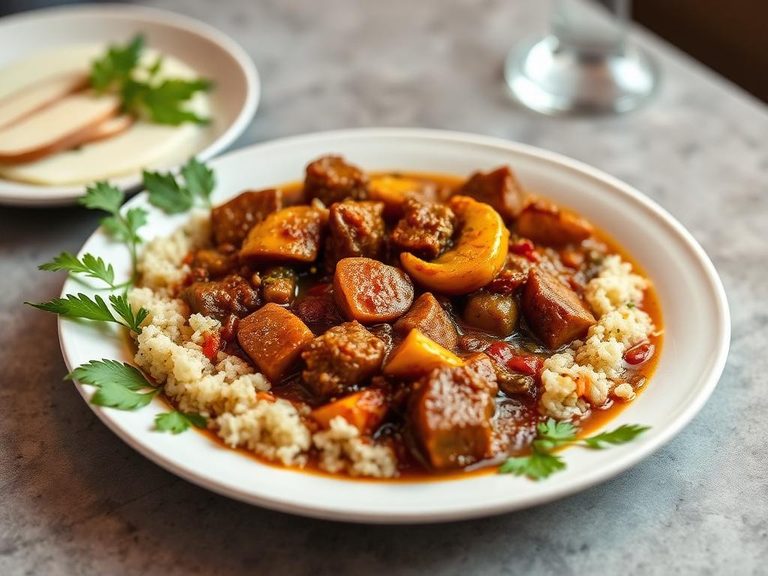
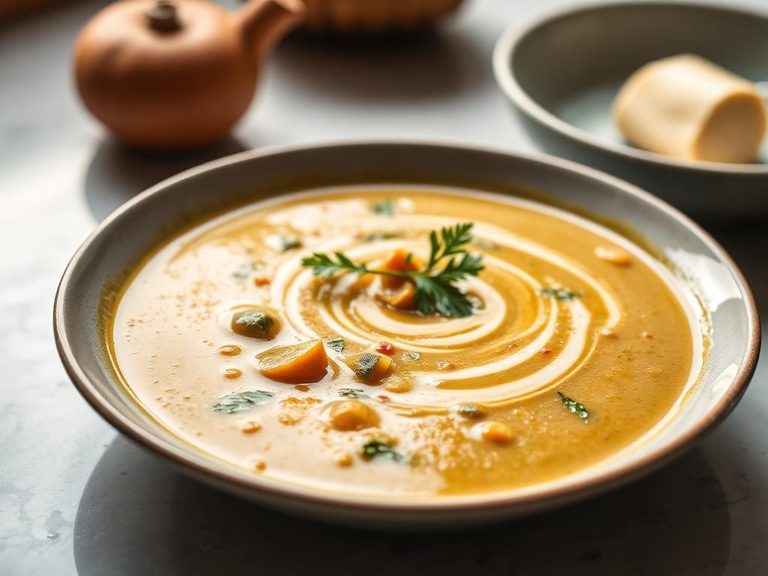
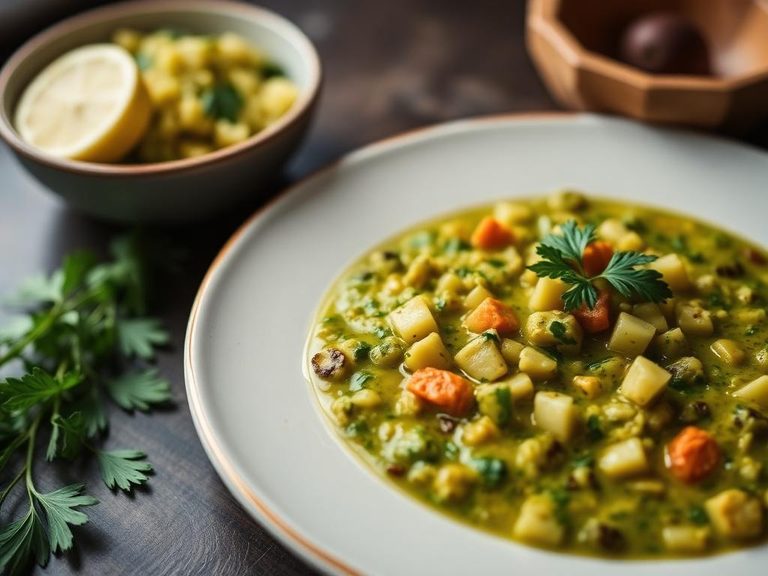
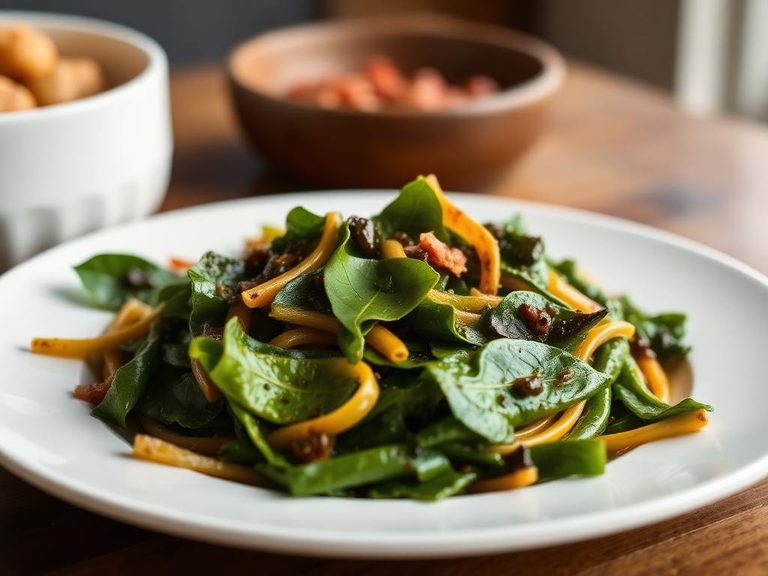
🌍 Where it's eaten
💡 Did you know?
The Moringa tree is often called the 'miracle tree' or 'tree of life' because nearly every part of it—leaves, pods, seeds, and roots—is edible or has traditional uses.
Full nutrition (USDA data · scales with serving)
| Water | 81.7 g |
| Energy | 60.0 kcal |
| Energy | 251 kj |
| Protein | 5.3 g |
| Total lipid (fat) | 0.93 g |
| Ash | 1.0 g |
| Carbohydrate, by difference | 11.2 g |
| Fiber, total dietary | 2.0 g |
| Total Sugars | 1.0 g |
| Calcium, Ca | 151 mg |
| Iron, Fe | 2.3 mg |
| Magnesium, Mg | 34.0 mg |
| Phosphorus, P | 67.0 mg |
| Potassium, K | 344 mg |
| Sodium, Na | 9.0 mg |
| Zinc, Zn | 0.49 mg |
| Copper, Cu | 0.09 mg |
| Manganese, Mn | 0.87 mg |
| Selenium, Se | 0.90 ug |
| Vitamin C, total ascorbic acid | 31.0 mg |
| Thiamin | 0.22 mg |
| Riboflavin | 0.51 mg |
| Niacin | 2.0 mg |
| Pantothenic acid | 0.10 mg |
| Vitamin B-6 | 0.93 mg |
| Folate, total | 23.0 ug |
| Folic acid | 0.00 ug |
| Folate, food | 23.0 ug |
| Folate, DFE | 23.0 ug |
| Choline, total | 21.0 mg |
| Vitamin B-12 | 0.00 ug |
| Vitamin B-12, added | 0.00 ug |
| Vitamin A, RAE | 351 ug |
| Retinol | 0.00 ug |
| Carotene, beta | 4208 ug |
| Carotene, alpha | 0.00 ug |
| Cryptoxanthin, beta | 0.00 ug |
| Vitamin A, IU | 7013 iu |
| Lycopene | 0.00 ug |
| Lutein + zeaxanthin | 1747 ug |
| Vitamin E (alpha-tocopherol) | 0.10 mg |
| Vitamin E, added | 0.00 mg |
| Vitamin D (D2 + D3), International Units | 0.00 iu |
| Vitamin D (D2 + D3) | 0.00 ug |
| Vitamin K (phylloquinone) | 108 ug |
| Alcohol, ethyl | 0.00 g |
| Caffeine | 0.00 mg |
| Theobromine | 0.00 mg |
Fat & fatty acid profile (per 100g)
| Fatty acids, total saturated | 0.15 g |
| SFA 4:0 | 0.00 g |
| SFA 6:0 | 0.00 g |
| SFA 8:0 | 0.00 g |
| SFA 10:0 | 0.00 g |
| SFA 12:0 | 0.00 g |
| SFA 14:0 | 0.00 g |
| SFA 16:0 | 0.03 g |
| SFA 18:0 | 0.06 g |
| Fatty acids, total monounsaturated | 0.47 g |
| MUFA 16:1 | 0.00 g |
| MUFA 18:1 | 0.47 g |
| MUFA 20:1 | 0.00 g |
| MUFA 22:1 | 0.00 g |
| Fatty acids, total polyunsaturated | 0.01 g |
| PUFA 18:2 | 0.01 g |
| PUFA 18:3 | 0.00 g |
| PUFA 18:4 | 0.00 g |
| PUFA 20:4 | 0.00 g |
| PUFA 20:5 n-3 (EPA) | 0.00 g |
| PUFA 22:5 n-3 (DPA) | 0.00 g |
| PUFA 22:6 n-3 (DHA) | 0.00 g |
| Fatty acids, total trans | 0.00 g |
| Cholesterol | 0.00 mg |
Amino acid profile (per 100g)
| Tryptophan | 0.08 g |
| Threonine | 0.23 g |
| Isoleucine | 0.25 g |
| Leucine | 0.44 g |
| Lysine | 0.30 g |
| Methionine | 0.07 g |
| Cystine | 0.08 g |
| Phenylalanine | 0.27 g |
| Tyrosine | 0.20 g |
| Valine | 0.34 g |
| Arginine | 0.30 g |
| Histidine | 0.11 g |
| Alanine | 0.40 g |
| Aspartic acid | 0.52 g |
| Glutamic acid | 0.58 g |
| Glycine | 0.29 g |
| Proline | 0.25 g |
| Serine | 0.23 g |
FAQ
How do I prepare fresh drumstick leaves for cooking?
Strip the leaves from the tough central stems. Rinse them well, then boil in water for 5-10 minutes, draining and discarding the water. This step is crucial to remove bitterness and reduce oxalates before adding them to your dish.
Can I use dried or powdered moringa leaves instead?
Yes, dried leaves or moringa powder are convenient alternatives. Use them in smaller quantities as the flavor is more concentrated. They are excellent stirred into soups, stews, or smoothies at the end of cooking.
Are drumstick leaves safe for everyone to eat?
For most people, they are safe and highly nutritious. However, due to their oxalate content, individuals with a history of kidney stones should consume them in moderation and ensure they are well-cooked and drained. Always consult a healthcare provider for specific dietary concerns.
Nutrient density (calculated · NRF9.3)
Nutrient Rich Foods index: beneficial nutrients (protein, fiber, vitamins, minerals) minus saturated fat, added sugar & sodium, per 100 kcal.
NRF9.3 index — Fulgoni, Keast & Drewnowski, 2009. Computed from USDA nutrients.
Weight-loss friendliness (composite index)
Energy density 0.60 kcal/g · 35% calories from protein · 2.0 g fiber · 1.0 g sugar per 100 g.
Composite of energy density (Rolls et al., 1999), protein & fiber satiety, minus sugar. A calculated heuristic — ranks satiety-per-calorie, not a clinical measure.
Dietary load (calculated from USDA values)
Potential renal acid load. Positive = acid-forming, negative = alkaline-forming.
Sodium-to-potassium ratio: 0.03 (lower is better — aim for ≤ 1)
Sodium:potassium per WHO potassium guidance. Computed from USDA nutrients.