

Chickpeas (garbanzo beans, bengal gram), mature seeds, cooked, boiled, without salt
Whole food · Legumes and Legume Products
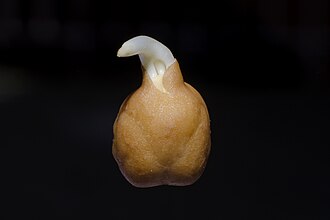
Photo: Wikipedia
Boiled mature chickpeas are the humble, nutty foundation of countless global dishes, offering a satisfyingly firm yet creamy bite. With nearly 8 grams of protein and over 7 grams of fiber per 100g, they are a plant-based powerhouse that keeps you full and fueled.
Calorie split: 21% protein · 65% carbs · 14% fat
↓ Full nutrition💚 Why it's loved
People adore chickpeas for their incredibly versatile, earthy flavor that absorbs spices beautifully, making them a staple in everything from creamy hummus to spicy curries. Their satisfying texture and nutritional heft make them a beloved, reliable protein source across cultures.
⚠️ Watch-outs & how to enjoy it better
As a legume, chickpeas contain oligosaccharides that can cause gas and bloating in some individuals. To mitigate this, start with smaller portions, rinse canned chickpeas thoroughly, or soak and cook dried ones from scratch. They also contain moderate oxalates; those prone to kidney stones should maintain adequate hydration and consult a healthcare provider.
Key benefits
- Excellent source of plant-based protein for muscle maintenance.
- High in soluble fiber, which supports healthy digestion and cholesterol levels.
- Provides sustained energy due to its low glycemic index and complex carbs.
- Rich in minerals like folate, iron, and manganese.
- Naturally low in fat and sodium when prepared without added salt.
🍽️ Popular dishes
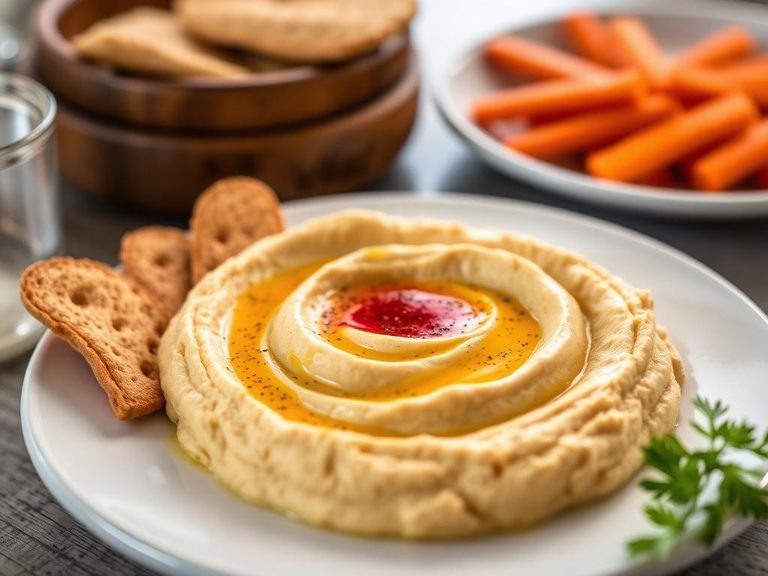
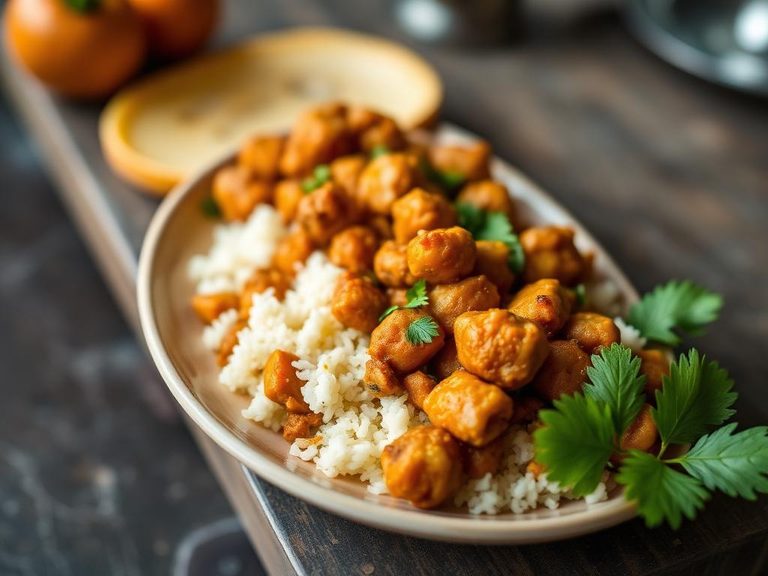
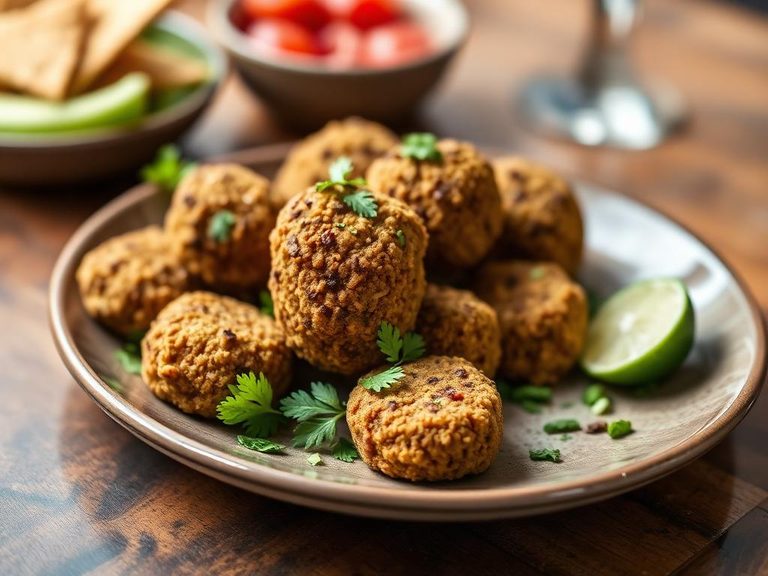


🌍 Where it's eaten
💡 Did you know?
Archaeological evidence suggests chickpeas were one of the earliest cultivated legumes, with remains found in the Middle East dating back over 10,000 years.
Full nutrition (USDA data · scales with serving)
| Water | 60.2 g |
| Energy | 164 kcal |
| Energy | 686 kj |
| Protein | 8.9 g |
| Total lipid (fat) | 2.6 g |
| Ash | 0.92 g |
| Carbohydrate, by difference | 27.4 g |
| Fiber, total dietary | 7.6 g |
| Total Sugars | 4.8 g |
| Calcium, Ca | 49.0 mg |
| Iron, Fe | 2.9 mg |
| Magnesium, Mg | 48.0 mg |
| Phosphorus, P | 168 mg |
| Potassium, K | 291 mg |
| Sodium, Na | 7.0 mg |
| Zinc, Zn | 1.5 mg |
| Copper, Cu | 0.35 mg |
| Manganese, Mn | 1.0 mg |
| Selenium, Se | 3.7 ug |
| Vitamin C, total ascorbic acid | 1.3 mg |
| Thiamin | 0.12 mg |
| Riboflavin | 0.06 mg |
| Niacin | 0.53 mg |
| Pantothenic acid | 0.29 mg |
| Vitamin B-6 | 0.14 mg |
| Folate, total | 172 ug |
| Folic acid | 0.00 ug |
| Folate, food | 172 ug |
| Folate, DFE | 172 ug |
| Choline, total | 42.8 mg |
| Vitamin B-12 | 0.00 ug |
| Vitamin B-12, added | 0.00 ug |
| Vitamin A, RAE | 1.0 ug |
| Retinol | 0.00 ug |
| Carotene, beta | 16.0 ug |
| Carotene, alpha | 0.00 ug |
| Cryptoxanthin, beta | 0.00 ug |
| Vitamin A, IU | 27.0 iu |
| Lycopene | 0.00 ug |
| Lutein + zeaxanthin | 0.00 ug |
| Vitamin E (alpha-tocopherol) | 0.35 mg |
| Vitamin E, added | 0.00 mg |
| Vitamin D (D2 + D3), International Units | 0.00 iu |
| Vitamin D (D2 + D3) | 0.00 ug |
| Vitamin K (phylloquinone) | 4.0 ug |
| Alcohol, ethyl | 0.00 g |
| Caffeine | 0.00 mg |
| Theobromine | 0.00 mg |
Fat & fatty acid profile (per 100g)
| Fatty acids, total saturated | 0.27 g |
| SFA 4:0 | 0.00 g |
| SFA 6:0 | 0.00 g |
| SFA 8:0 | 0.00 g |
| SFA 10:0 | 0.00 g |
| SFA 12:0 | 0.00 g |
| SFA 14:0 | 0.00 g |
| SFA 16:0 | 0.21 g |
| SFA 18:0 | 0.04 g |
| Fatty acids, total monounsaturated | 0.58 g |
| MUFA 16:1 | 0.01 g |
| MUFA 18:1 | 0.58 g |
| MUFA 20:1 | 0.00 g |
| MUFA 22:1 | 0.00 g |
| Fatty acids, total polyunsaturated | 1.2 g |
| PUFA 18:2 | 1.1 g |
| PUFA 18:3 | 0.04 g |
| PUFA 18:4 | 0.00 g |
| PUFA 20:4 | 0.00 g |
| PUFA 20:5 n-3 (EPA) | 0.00 g |
| PUFA 22:5 n-3 (DPA) | 0.00 g |
| PUFA 22:6 n-3 (DHA) | 0.00 g |
| Fatty acids, total trans | 0.00 g |
| Cholesterol | 0.00 mg |
Amino acid profile (per 100g)
| Tryptophan | 0.09 g |
| Threonine | 0.33 g |
| Isoleucine | 0.38 g |
| Leucine | 0.63 g |
| Lysine | 0.59 g |
| Methionine | 0.12 g |
| Cystine | 0.12 g |
| Phenylalanine | 0.47 g |
| Tyrosine | 0.22 g |
| Valine | 0.37 g |
| Arginine | 0.83 g |
| Histidine | 0.24 g |
| Alanine | 0.38 g |
| Aspartic acid | 1.0 g |
| Glutamic acid | 1.6 g |
| Glycine | 0.37 g |
| Proline | 0.37 g |
| Serine | 0.45 g |
FAQ
Are canned chickpeas as nutritious as dried, cooked ones?
Yes, nutritionally they are very similar. Canned chickpeas are pre-cooked and convenient. The main difference is often sodium content; choosing 'no salt added' or rinsing them well reduces sodium significantly.
Why are my boiled chickpeas not soft?
Older dried chickpeas can be stubborn. Adding a pinch of baking soda to the soaking or cooking water can help soften the skins and reduce cooking time. Ensure they are fully submerged in water while boiling.
Can I eat the cooking liquid (aquafaba)?
Absolutely. The starchy cooking liquid, known as aquafaba, is a fantastic vegan egg white substitute for whipping into meringues or binding in baking.
Nutrient density (calculated · NRF9.3)
Nutrient Rich Foods index: beneficial nutrients (protein, fiber, vitamins, minerals) minus saturated fat, added sugar & sodium, per 100 kcal.
NRF9.3 index — Fulgoni, Keast & Drewnowski, 2009. Computed from USDA nutrients.
Weight-loss friendliness (composite index)
Energy density 1.64 kcal/g · 22% calories from protein · 7.6 g fiber · 4.8 g sugar per 100 g.
Composite of energy density (Rolls et al., 1999), protein & fiber satiety, minus sugar. A calculated heuristic — ranks satiety-per-calorie, not a clinical measure.
Dietary load (calculated from USDA values)
Potential renal acid load. Positive = acid-forming, negative = alkaline-forming.
Sodium-to-potassium ratio: 0.02 (lower is better — aim for ≤ 1)
Sodium:potassium per WHO potassium guidance. Computed from USDA nutrients.