Chicken, broiler or fryers, breast, skinless, boneless, meat only, cooked, braised
Whole food · Poultry Products
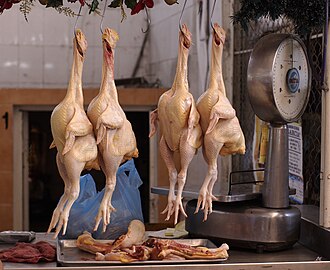
Photo: Wikipedia
This is the lean, tender meat from a young chicken's breast, braised to a succulent, fork-tender finish. Its flavor is mild and clean, with a texture that's moist and easily shredded, making it a perfect canvas for sauces and seasonings. Nutritionally, it's a powerhouse of lean protein, offering over 32 grams per 100g with minimal fat and zero carbohydrates.
💚 Why it's loved
People love it for its incredible versatility and mild flavor that absorbs marinades and spices beautifully. It's a dietary staple across cultures, from American comfort food to Asian stir-fries, because it's a reliable, lean protein source that cooks relatively quickly.
⚠️ Watch-outs & how to enjoy it better
The primary downside is its potential for dryness if overcooked, as it's a very lean cut. To counteract this, braising (as in this preparation) or marinating before cooking helps retain moisture. Also, while low in fat, it's not a source of omega-3s, so pairing it with fatty fish or seeds can balance the diet.
Key benefits
- Exceptionally high in lean protein for muscle maintenance and satiety.
- Very low in fat, particularly saturated fat, supporting heart health.
- Zero carbohydrates, making it ideal for low-carb and ketogenic diets.
- A rich source of B vitamins, especially niacin and B6, for energy metabolism.
- Provides essential minerals like selenium and phosphorus.
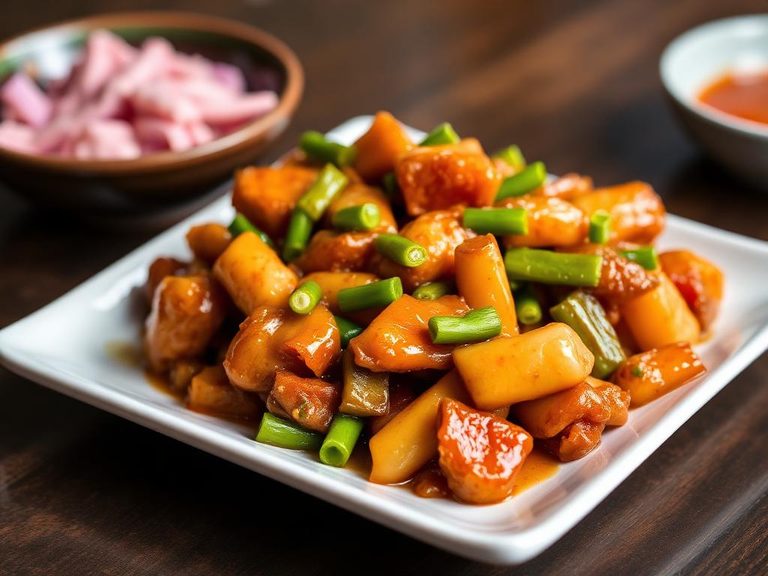
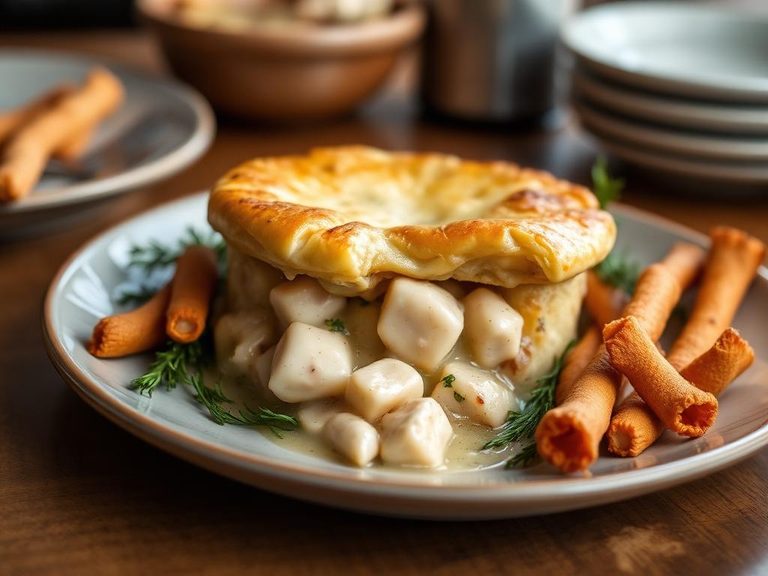
🍽️ Popular dishes

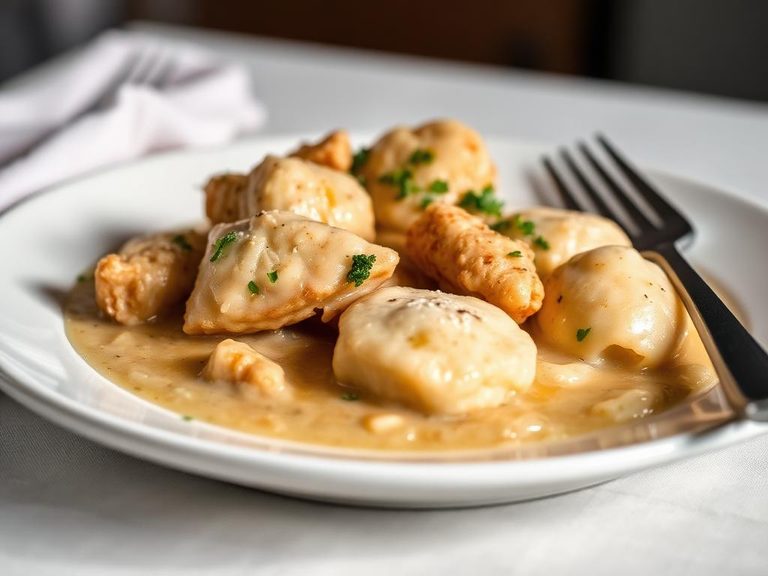
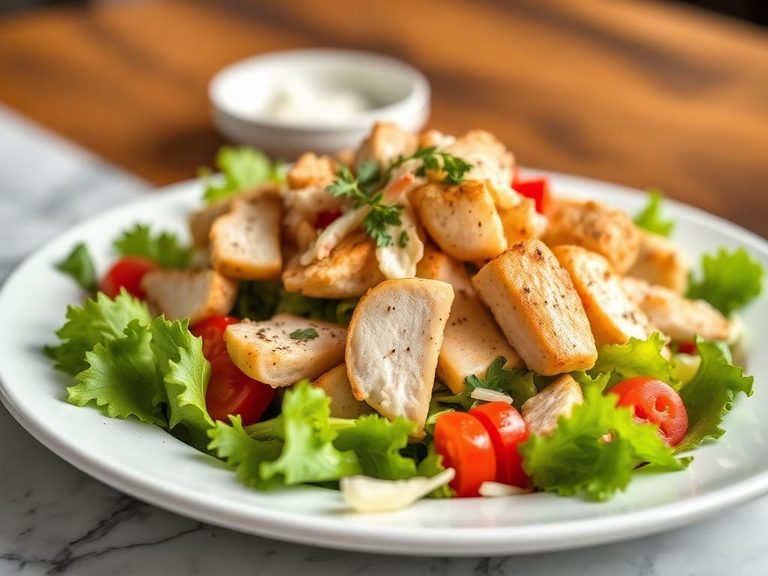
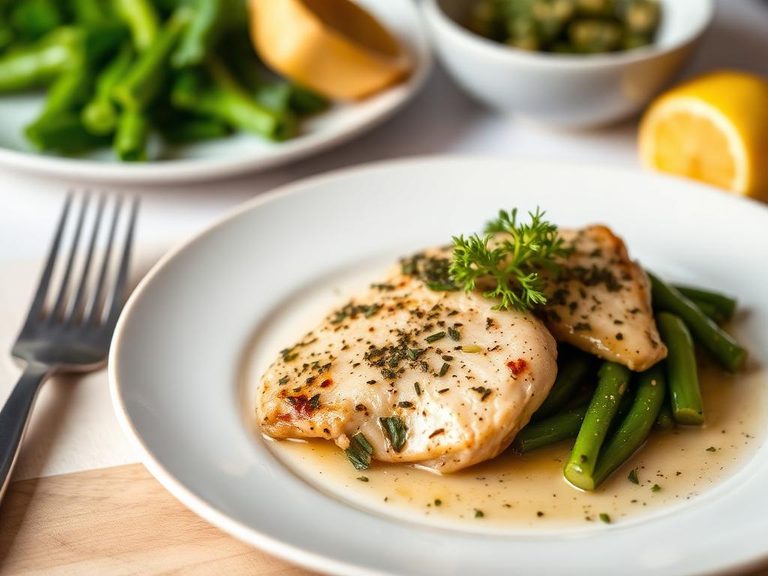
🌍 Where it's eaten
💡 Did you know?
The breast meat of a chicken is primarily made of fast-twitch muscle fibers, which are designed for short bursts of flight, making it leaner and quicker to cook than the dark meat of the legs, which contains more slow-twitch fibers for endurance.
Full nutrition (scales with serving)
| Water | 65.3 g |
| Energy (Atwater General Factors) | 158 kcal |
| Energy (Atwater Specific Factors) | 166 kcal |
| Energy | 166 kcal |
| Energy | 695 kj |
| Nitrogen | 5.1 g |
| Protein | 32.1 g |
| Total lipid (fat) | 3.2 g |
| Total fat (NLEA) | 3.0 g |
| Ash | 1.2 g |
| Carbohydrate, by difference | 0.00 g |
| Calcium, Ca | 6.0 mg |
| Iron, Fe | 0.49 mg |
| Magnesium, Mg | 32.0 mg |
| Phosphorus, P | 241 mg |
| Potassium, K | 343 mg |
| Sodium, Na | 47.0 mg |
| Zinc, Zn | 0.96 mg |
| Copper, Cu | 0.04 mg |
| Manganese, Mn | 0.01 mg |
| Selenium, Se | 31.9 ug |
| Thiamin | 0.10 mg |
| Riboflavin | 0.19 mg |
| Niacin | 9.4 mg |
| Pantothenic acid | 1.6 mg |
| Vitamin B-6 | 0.92 mg |
| Vitamin B-12 | 0.20 ug |
| Vitamin E (alpha-tocopherol) | 0.33 mg |
| Tocopherol, beta | 0.00 mg |
| Tocopherol, gamma | 0.07 mg |
| Tocopherol, delta | 0.01 mg |
| Tocotrienol, alpha | 0.00 mg |
| Tocotrienol, beta | 0.00 mg |
| Tocotrienol, gamma | 0.00 mg |
| Tocotrienol, delta | 0.00 mg |
| Fatty acids, total saturated | 1.0 g |
| SFA 4:0 | 0.00 g |
| SFA 6:0 | 0.00 g |
| SFA 8:0 | 0.00 g |
| SFA 10:0 | 0.01 g |
| SFA 11:0 | 0.00 g |
| SFA 12:0 | 0.01 g |
| SFA 14:0 | 0.02 g |
| SFA 15:0 | 0.00 g |
| SFA 16:0 | 0.75 g |
| SFA 17:0 | 0.00 g |
| SFA 18:0 | 0.21 g |
| SFA 20:0 | 0.00 g |
| SFA 22:0 | 0.01 g |
| SFA 24:0 | 0.00 g |
| Fatty acids, total monounsaturated | 1.3 g |
| MUFA 14:1 c | 0.01 g |
| MUFA 15:1 | 0.00 g |
| MUFA 16:1 c | 0.15 g |
| MUFA 17:1 | 0.00 g |
| MUFA 17:1 c | 0.00 g |
| MUFA 18:1 c | 1.1 g |
| MUFA 20:1 | 0.02 g |
| MUFA 20:1 c | 0.02 g |
| MUFA 22:1 c | 0.00 g |
| MUFA 24:1 c | 0.00 g |
| Fatty acids, total polyunsaturated | 0.77 g |
| PUFA 18:2 c | 0.60 g |
| PUFA 18:2 n-6 c,c | 0.60 g |
| PUFA 18:2 CLAs | 0.00 g |
| PUFA 18:3 c | 0.03 g |
| PUFA 18:3 n-3 c,c,c (ALA) | 0.03 g |
| PUFA 18:3 n-6 c,c,c | 0.00 g |
| PUFA 18:3i | 0.00 g |
| PUFA 18:4 | 0.00 g |
| PUFA 20:2 c | 0.01 g |
| PUFA 20:2 n-6 c,c | 0.01 g |
| PUFA 20:3 c | 0.02 g |
| PUFA 20:3 n-3 | 0.00 g |
| PUFA 20:3 n-6 | 0.02 g |
| PUFA 20:3 n-9 | 0.00 g |
| PUFA 20:4 | 0.09 g |
| PUFA 20:4c | 0.09 g |
| PUFA 20:5c | 0.00 g |
| PUFA 20:5 n-3 (EPA) | 0.00 g |
| PUFA 22:2 | 0.00 g |
| PUFA 22:5 c | 0.01 g |
| PUFA 22:4 | 0.02 g |
| PUFA 22:5 n-3 (DPA) | 0.01 g |
| PUFA 22:6 c | 0.01 g |
| PUFA 22:6 n-3 (DHA) | 0.01 g |
| Fatty acids, total trans | 0.01 g |
| Fatty acids, total trans-monoenoic | 0.01 g |
| TFA 16:1 t | 0.00 g |
| TFA 18:1 t | 0.01 g |
| TFA 22:1 t | 0.00 g |
| Fatty acids, total trans-dienoic | 0.00 g |
| TFA 18:2 t not further defined | 0.00 g |
| Cholesterol | 116 mg |
FAQ
How does braising differ from other cooking methods for chicken breast?
Braising involves searing the chicken first, then slowly cooking it in a flavorful liquid (like broth, wine, or sauce) at a low temperature. This method breaks down connective tissue, resulting in exceptionally tender, moist meat that absorbs the cooking liquid's flavor, unlike dry-heat methods like grilling or baking which can dry it out.
Is this the same as 'chicken breast' from the grocery store?
Yes, it is a specific preparation of chicken breast. The label indicates it's from a broiler/fryer (a young chicken), has had the skin and bones removed, and was cooked via braising. The nutritional values reflect this specific cooked state.
Why is the fat content listed as 3.24g if it's 'skinless, boneless, meat only'?
Even without skin, chicken breast meat contains a small amount of intramuscular fat (marbling). The 3.24g per 100g is a typical value for cooked, braised breast meat, which can vary slightly based on the exact cut and cooking method.