

Cheese, brie
Whole food · Dairy and Egg Products

Photo: Wikipedia
Brie is a soft, creamy, edible-rind cheese from France, characterized by its buttery texture and mild, earthy flavor that deepens with age. It is a high-fat, high-protein dairy product with virtually no carbohydrates, making it a dense source of energy and essential nutrients like calcium.
Calorie split: 25% protein · 1% carbs · 75% fat
↓ Full nutrition💚 Why it's loved
People adore Brie for its luxurious, melt-in-your-mouth texture and its ability to pair beautifully with a wide range of foods, from sweet fruits to savory crackers. It is a staple of French cuisine and a centerpiece of elegant cheese boards worldwide, symbolizing sophistication and indulgence.
⚠️ Watch-outs & how to enjoy it better
Brie is very high in saturated fat and sodium, which can be a concern for those monitoring heart health or blood pressure. To counteract this, enjoy it in moderation as part of a balanced meal, pair it with fiber-rich fruits or vegetables, and choose lower-sodium varieties if available. It is also a common dairy allergen for those with lactose intolerance or milk protein sensitivity.
Key benefits
- Excellent source of calcium for bone health
- High in protein for muscle maintenance
- Rich in vitamin B12 for nerve function
- Contains conjugated linoleic acid (CLA), a type of healthy fat
- Low in carbohydrates, suitable for low-carb diets
🍽️ Popular dishes
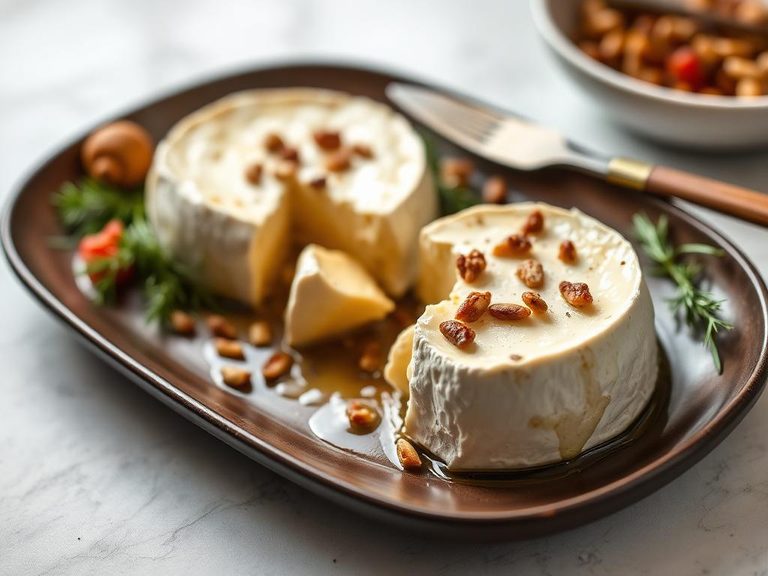
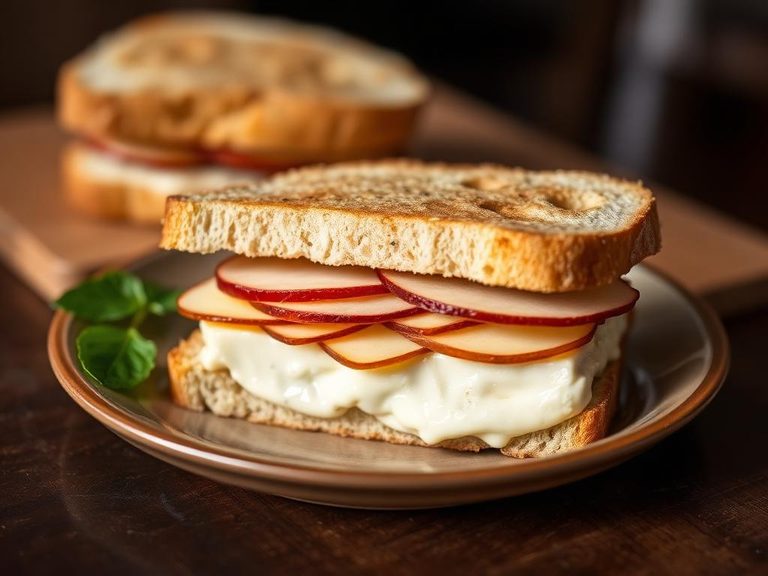




🌍 Where it's eaten
💡 Did you know?
Brie is often called 'The Queen of Cheeses' and was famously served at the coronation of King Louis XVI in 1775, where it was declared the best cheese in the world.
Full nutrition (USDA data · scales with serving)
| Water | 48.4 g |
| Energy | 334 kcal |
| Energy | 1396 kj |
| Protein | 20.8 g |
| Total lipid (fat) | 27.7 g |
| Ash | 2.7 g |
| Carbohydrate, by difference | 0.45 g |
| Fiber, total dietary | 0.00 g |
| Total Sugars | 0.45 g |
| Calcium, Ca | 184 mg |
| Iron, Fe | 0.50 mg |
| Magnesium, Mg | 20.0 mg |
| Phosphorus, P | 188 mg |
| Potassium, K | 152 mg |
| Sodium, Na | 629 mg |
| Zinc, Zn | 2.4 mg |
| Copper, Cu | 0.02 mg |
| Manganese, Mn | 0.03 mg |
| Selenium, Se | 14.5 ug |
| Vitamin C, total ascorbic acid | 0.00 mg |
| Thiamin | 0.07 mg |
| Riboflavin | 0.52 mg |
| Niacin | 0.38 mg |
| Pantothenic acid | 0.69 mg |
| Vitamin B-6 | 0.23 mg |
| Folate, total | 65.0 ug |
| Folic acid | 0.00 ug |
| Folate, food | 65.0 ug |
| Folate, DFE | 65.0 ug |
| Choline, total | 15.4 mg |
| Vitamin B-12 | 1.6 ug |
| Vitamin B-12, added | 0.00 ug |
| Vitamin A, RAE | 174 ug |
| Retinol | 173 ug |
| Carotene, beta | 9.0 ug |
| Carotene, alpha | 0.00 ug |
| Cryptoxanthin, beta | 0.00 ug |
| Vitamin A, IU | 592 iu |
| Lycopene | 0.00 ug |
| Lutein + zeaxanthin | 0.00 ug |
| Vitamin E (alpha-tocopherol) | 0.24 mg |
| Vitamin E, added | 0.00 mg |
| Vitamin D (D2 + D3), International Units | 20.0 iu |
| Vitamin D (D2 + D3) | 0.50 ug |
| Vitamin D3 (cholecalciferol) | 0.50 ug |
| Vitamin K (phylloquinone) | 2.3 ug |
| Alcohol, ethyl | 0.00 g |
| Caffeine | 0.00 mg |
| Theobromine | 0.00 mg |
Fat & fatty acid profile (per 100g)
| Fatty acids, total saturated | 17.4 g |
| SFA 4:0 | 0.56 g |
| SFA 6:0 | 0.32 g |
| SFA 8:0 | 0.30 g |
| SFA 10:0 | 0.67 g |
| SFA 12:0 | 0.50 g |
| SFA 14:0 | 3.1 g |
| SFA 16:0 | 8.2 g |
| SFA 18:0 | 2.9 g |
| Fatty acids, total monounsaturated | 8.0 g |
| MUFA 16:1 | 1.0 g |
| MUFA 18:1 | 6.6 g |
| MUFA 20:1 | 0.00 g |
| MUFA 22:1 | 0.00 g |
| Fatty acids, total polyunsaturated | 0.83 g |
| PUFA 18:2 | 0.51 g |
| PUFA 18:3 | 0.31 g |
| PUFA 18:4 | 0.00 g |
| PUFA 20:4 | 0.00 g |
| PUFA 20:5 n-3 (EPA) | 0.00 g |
| PUFA 22:5 n-3 (DPA) | 0.00 g |
| PUFA 22:6 n-3 (DHA) | 0.00 g |
| Cholesterol | 100 mg |
Amino acid profile (per 100g)
| Tryptophan | 0.32 g |
| Threonine | 0.75 g |
| Isoleucine | 1.0 g |
| Leucine | 1.9 g |
| Lysine | 1.9 g |
| Methionine | 0.59 g |
| Cystine | 0.11 g |
| Phenylalanine | 1.2 g |
| Tyrosine | 1.2 g |
| Valine | 1.3 g |
| Arginine | 0.73 g |
| Histidine | 0.72 g |
| Alanine | 0.86 g |
| Aspartic acid | 1.4 g |
| Glutamic acid | 4.4 g |
| Glycine | 0.40 g |
| Proline | 2.5 g |
| Serine | 1.2 g |
FAQ
What is the difference between Brie and Camembert?
Brie is typically milder and creamier, with a thinner rind, while Camembert has a stronger, more pungent flavor and a thicker, more robust rind. Both are soft, bloomy-rind cheeses from France.
Is the rind of Brie edible?
Yes, the white, edible rind is a key part of Brie's flavor and texture. It is safe to eat and contributes to the cheese's earthy, mushroom-like notes.
How should Brie be stored?
Store Brie in the refrigerator in its original wrapping or in wax paper, then place it in a loosely closed container to allow it to breathe. It is best consumed within a week of purchase for optimal freshness.
Nutrient density (calculated · NRF9.3)
Nutrient Rich Foods index: beneficial nutrients (protein, fiber, vitamins, minerals) minus saturated fat, added sugar & sodium, per 100 kcal.
NRF9.3 index — Fulgoni, Keast & Drewnowski, 2009. Computed from USDA nutrients.
Weight-loss friendliness (composite index)
Energy density 3.34 kcal/g · 25% calories from protein · 0.0 g fiber · 0.5 g sugar per 100 g.
Composite of energy density (Rolls et al., 1999), protein & fiber satiety, minus sugar. A calculated heuristic — ranks satiety-per-calorie, not a clinical measure.
Dietary load (calculated from USDA values)
Potential renal acid load. Positive = acid-forming, negative = alkaline-forming.
Sodium-to-potassium ratio: 4.14 (lower is better — aim for ≤ 1)
Sodium:potassium per WHO potassium guidance. Computed from USDA nutrients.