

Candies, marshmallows
Whole food · Sweets
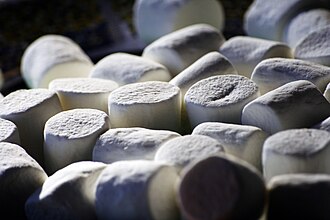
Photo: Wikipedia
A light, airy confection made primarily of sugar, water, and gelatin, whipped to a pillowy, spongy texture. It offers a pure, intensely sweet flavor with a melt-in-your-mouth quality that dissolves into a slightly sticky foam. Nutritionally, it is almost entirely simple carbohydrates, providing a quick burst of energy with virtually no fat, protein, or fiber.
Calorie split: 2% protein · 97% carbs · 1% fat
↓ Full nutrition💚 Why it's loved
People adore marshmallows for their unique, cloud-like texture and nostalgic sweetness, which evokes cozy campfire gatherings and childhood treats. Their versatility allows them to be enjoyed toasted, melted into recipes, or simply eaten by the handful.
⚠️ Watch-outs & how to enjoy it better
The high sugar content (over 57g per 100g) can cause rapid blood-sugar spikes, making it unsuitable for those managing diabetes or insulin resistance. To counteract this, pair a small portion with a source of protein or fat (like nuts or chocolate) to slow sugar absorption, and practice strict portion control. Additionally, the sticky texture can be a hazard for young children and a concern for dental health.
Key benefits
- Quick source of simple carbohydrates for energy
- Fat-free and cholesterol-free
- Low in sodium
- Gluten-free (when made with standard ingredients)
- Versatile ingredient in desserts and snacks
🍽️ Popular dishes
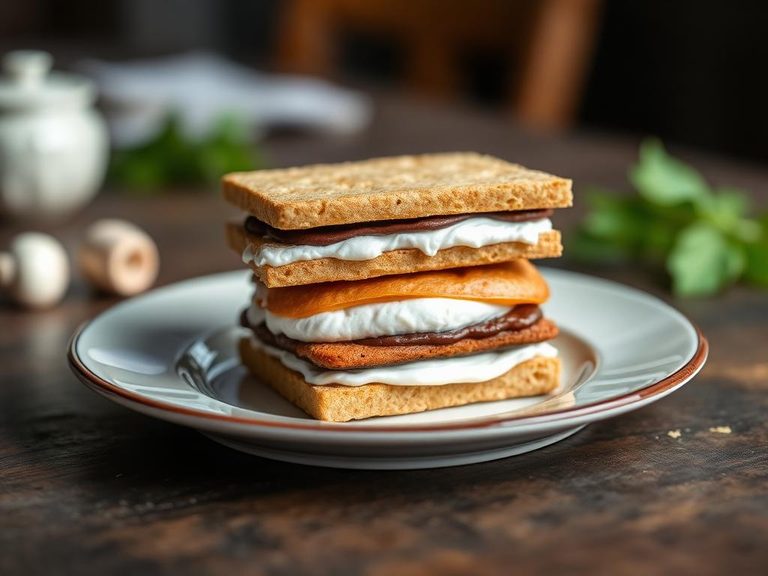
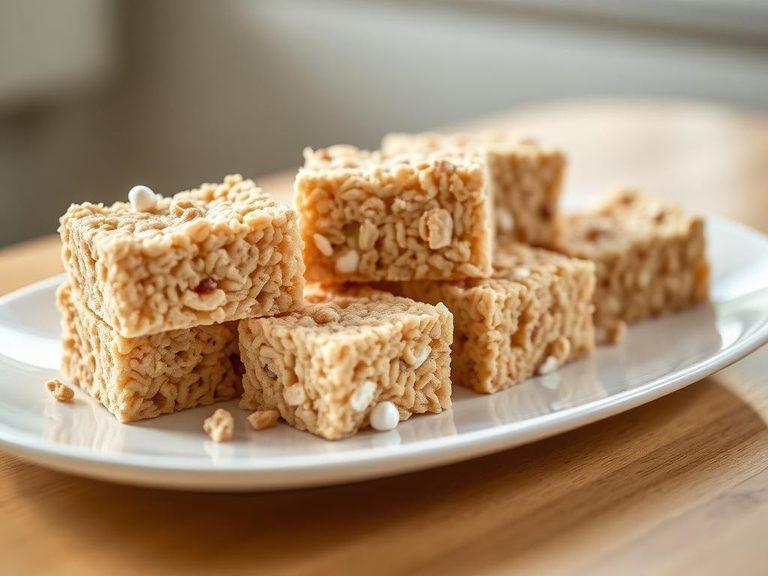


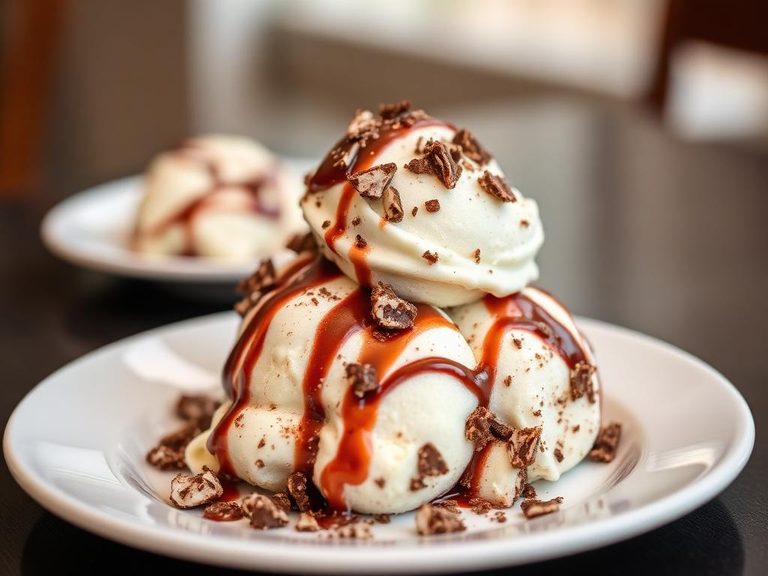
🌍 Where it's eaten
💡 Did you know?
The name 'marshmallow' comes from the mallow plant (Althaea officinalis), whose root was historically used to make a medicinal confection, though modern marshmallows no longer contain this ingredient.
Full nutrition (USDA data · scales with serving)
| Water | 16.4 g |
| Energy | 318 kcal |
| Energy | 1331 kj |
| Protein | 1.8 g |
| Total lipid (fat) | 0.20 g |
| Ash | 0.30 g |
| Carbohydrate, by difference | 81.3 g |
| Fiber, total dietary | 0.10 g |
| Total Sugars | 57.6 g |
| Calcium, Ca | 3.0 mg |
| Iron, Fe | 0.23 mg |
| Magnesium, Mg | 2.0 mg |
| Phosphorus, P | 8.0 mg |
| Potassium, K | 5.0 mg |
| Sodium, Na | 80.0 mg |
| Zinc, Zn | 0.04 mg |
| Copper, Cu | 0.10 mg |
| Manganese, Mn | 0.01 mg |
| Selenium, Se | 1.7 ug |
| Vitamin C, total ascorbic acid | 0.00 mg |
| Thiamin | 0.00 mg |
| Riboflavin | 0.00 mg |
| Niacin | 0.08 mg |
| Pantothenic acid | 0.01 mg |
| Vitamin B-6 | 0.00 mg |
| Folate, total | 1.0 ug |
| Folic acid | 0.00 ug |
| Folate, food | 1.0 ug |
| Folate, DFE | 1.0 ug |
| Choline, total | 0.10 mg |
| Vitamin B-12 | 0.00 ug |
| Vitamin B-12, added | 0.00 ug |
| Vitamin A, RAE | 0.00 ug |
| Retinol | 0.00 ug |
| Carotene, beta | 0.00 ug |
| Carotene, alpha | 0.00 ug |
| Cryptoxanthin, beta | 0.00 ug |
| Vitamin A, IU | 0.00 iu |
| Lycopene | 0.00 ug |
| Lutein + zeaxanthin | 0.00 ug |
| Vitamin E (alpha-tocopherol) | 0.00 mg |
| Vitamin E, added | 0.00 mg |
| Vitamin D (D2 + D3), International Units | 0.00 iu |
| Vitamin D (D2 + D3) | 0.00 ug |
| Vitamin K (phylloquinone) | 0.00 ug |
| Alcohol, ethyl | 0.00 g |
| Caffeine | 0.00 mg |
| Theobromine | 0.00 mg |
Fat & fatty acid profile (per 100g)
| Fatty acids, total saturated | 0.06 g |
| SFA 4:0 | 0.00 g |
| SFA 6:0 | 0.00 g |
| SFA 8:0 | 0.00 g |
| SFA 10:0 | 0.00 g |
| SFA 12:0 | 0.00 g |
| SFA 14:0 | 0.00 g |
| SFA 16:0 | 0.04 g |
| SFA 18:0 | 0.01 g |
| Fatty acids, total monounsaturated | 0.08 g |
| MUFA 16:1 | 0.00 g |
| MUFA 18:1 | 0.08 g |
| MUFA 20:1 | 0.00 g |
| MUFA 22:1 | 0.00 g |
| Fatty acids, total polyunsaturated | 0.05 g |
| PUFA 18:2 | 0.04 g |
| PUFA 18:3 | 0.00 g |
| PUFA 18:4 | 0.00 g |
| PUFA 20:4 | 0.00 g |
| PUFA 20:5 n-3 (EPA) | 0.00 g |
| PUFA 22:5 n-3 (DPA) | 0.00 g |
| PUFA 22:6 n-3 (DHA) | 0.00 g |
| Cholesterol | 0.00 mg |
Amino acid profile (per 100g)
| Tryptophan | 0.00 g |
| Threonine | 0.04 g |
| Isoleucine | 0.03 g |
| Leucine | 0.07 g |
| Lysine | 0.08 g |
| Methionine | 0.01 g |
| Cystine | 0.00 g |
| Phenylalanine | 0.04 g |
| Tyrosine | 0.01 g |
| Valine | 0.05 g |
| Arginine | 0.15 g |
| Histidine | 0.02 g |
| Alanine | 0.18 g |
| Aspartic acid | 0.12 g |
| Glutamic acid | 0.21 g |
| Glycine | 0.42 g |
| Proline | 0.28 g |
| Serine | 0.06 g |
FAQ
Are marshmallows vegan?
Traditional marshmallows are not vegan because they contain gelatin, which is an animal-derived protein. However, vegan versions made with plant-based gelling agents like agar-agar are widely available.
Why do marshmallows get sticky when toasted?
Toasting caramelizes the sugars on the surface, creating a sticky, molten layer. The heat also melts the gelatin structure, causing the interior to become gooey and expand.
What is the main ingredient in marshmallows?
The main ingredients are sugar (or corn syrup), water, and gelatin, which are whipped to incorporate air and create the signature fluffy texture.
Nutrient density (calculated · NRF9.3)
Nutrient Rich Foods index: beneficial nutrients (protein, fiber, vitamins, minerals) minus saturated fat, added sugar & sodium, per 100 kcal.
NRF9.3 index — Fulgoni, Keast & Drewnowski, 2009. Computed from USDA nutrients.
Weight-loss friendliness (composite index)
Energy density 3.18 kcal/g · 2% calories from protein · 0.1 g fiber · 57.6 g sugar per 100 g.
Composite of energy density (Rolls et al., 1999), protein & fiber satiety, minus sugar. A calculated heuristic — ranks satiety-per-calorie, not a clinical measure.
Dietary load (calculated from USDA values)
Potential renal acid load. Positive = acid-forming, negative = alkaline-forming.
Sodium-to-potassium ratio: 16.00 (lower is better — aim for ≤ 1)
Sodium:potassium per WHO potassium guidance. Computed from USDA nutrients.