

Candies, confectioner's coating, yogurt
Whole food · Sweets
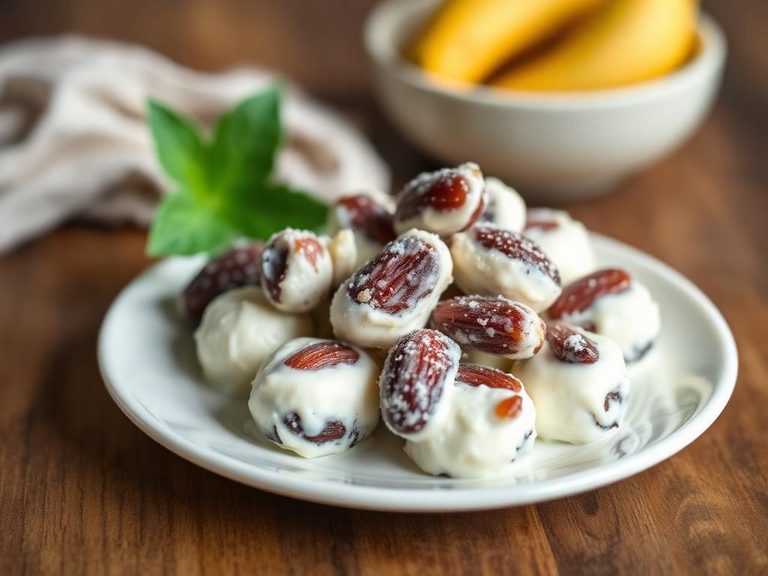
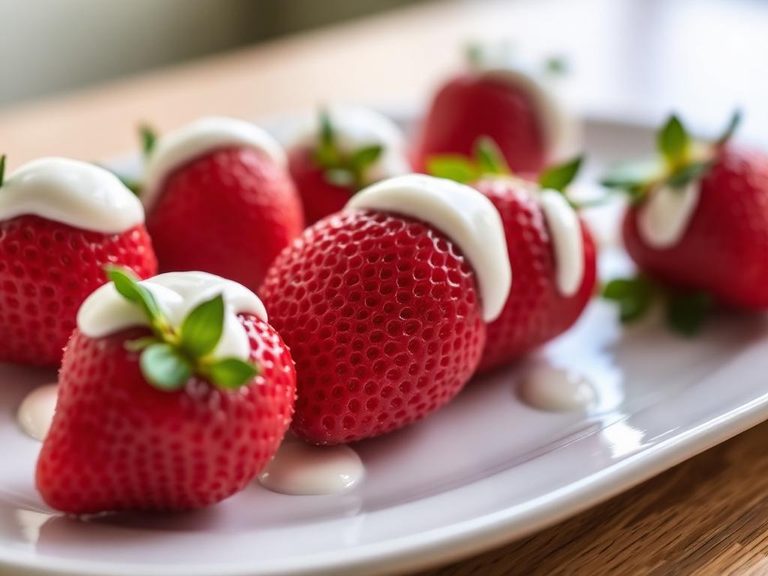
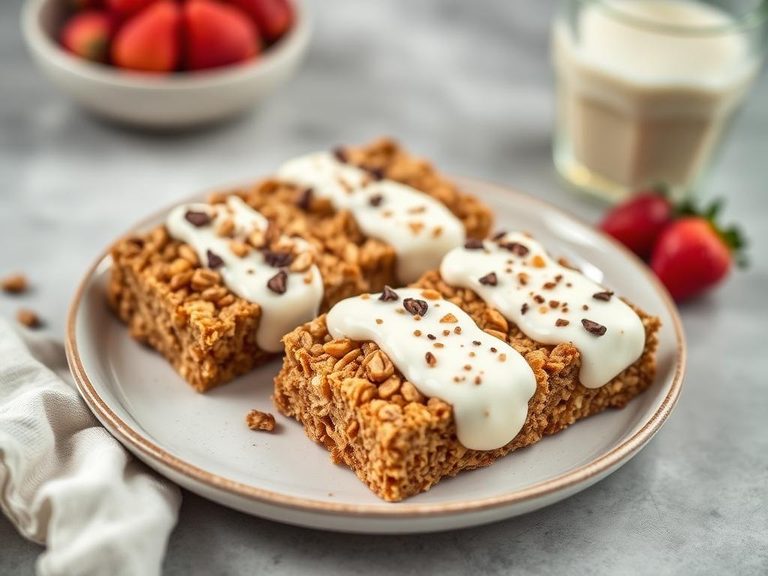
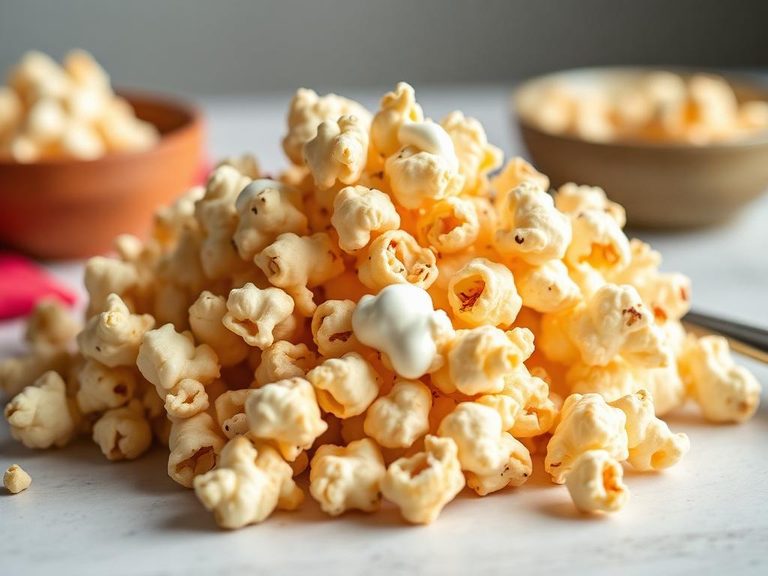
Confectioner's yogurt coating is a sweet, creamy shell made from sugar, vegetable fat, and milk solids, often used to enrobe fruits, nuts, and pretzels. It offers a smooth, melt-in-your-mouth texture with a tangy, sweet flavor reminiscent of yogurt but with a much higher sugar content. Nutritionally, it is a dense source of energy, providing over 500 calories per 100g, primarily from carbohydrates and fat.
Calorie split: 4% protein · 49% carbs · 47% fat
↓ Full nutrition💚 Why it's loved
People love it for its sweet, tangy taste and creamy texture that pairs perfectly with crunchy snacks like pretzels or dried fruits. It's a versatile ingredient in baking and confectionery, making it a favorite for creating indulgent treats and adding a pop of flavor to everyday foods.
⚠️ Watch-outs & how to enjoy it better
The high sugar content (over 62g per 100g) can lead to blood sugar spikes, making it unsuitable for those managing diabetes or insulin resistance. To counteract this, pair it with protein or fat (like nuts or seeds) to slow sugar absorption, and practice strict portion control by limiting servings to a small handful. Additionally, it often contains vegetable oils and may be a common allergen for those sensitive to dairy or soy, so check labels carefully.
Key benefits
- Provides quick energy from carbohydrates
- Adds a creamy, tangy flavor to snacks
- Enhances the texture of baked goods and confections
- Offers a convenient coating for fruits and nuts
- Contains some protein from milk solids
🍽️ Popular dishes


🌍 Where it's eaten
💡 Did you know?
Despite being called 'yogurt coating,' many commercial versions contain little to no actual yogurt; they are primarily made from sugar, vegetable fat, and milk solids to mimic the tangy flavor.
Full nutrition (USDA data · scales with serving)
| Water | 1.9 g |
| Energy | 522 kcal |
| Energy | 2185 kj |
| Protein | 5.9 g |
| Total lipid (fat) | 27.0 g |
| Ash | 1.3 g |
| Carbohydrate, by difference | 63.9 g |
| Fiber, total dietary | 0.00 g |
| Total Sugars | 62.4 g |
| Calcium, Ca | 205 mg |
| Iron, Fe | 0.14 mg |
| Magnesium, Mg | 18.0 mg |
| Phosphorus, P | 157 mg |
| Potassium, K | 290 mg |
| Sodium, Na | 88.0 mg |
| Zinc, Zn | 0.70 mg |
| Copper, Cu | 0.01 mg |
| Manganese, Mn | 0.00 mg |
| Selenium, Se | 4.7 ug |
| Vitamin C, total ascorbic acid | 0.50 mg |
| Thiamin | 0.06 mg |
| Riboflavin | 0.26 mg |
| Niacin | 0.15 mg |
| Pantothenic acid | 0.59 mg |
| Vitamin B-6 | 0.06 mg |
| Folate, total | 8.0 ug |
| Folic acid | 0.00 ug |
| Folate, food | 8.0 ug |
| Folate, DFE | 8.0 ug |
| Choline, total | 24.8 mg |
| Vitamin B-12 | 0.65 ug |
| Vitamin B-12, added | 0.00 ug |
| Vitamin A, RAE | 1.0 ug |
| Retinol | 1.0 ug |
| Carotene, beta | 0.00 ug |
| Carotene, alpha | 0.00 ug |
| Cryptoxanthin, beta | 0.00 ug |
| Vitamin A, IU | 4.0 iu |
| Lycopene | 0.00 ug |
| Lutein + zeaxanthin | 0.00 ug |
| Vitamin E (alpha-tocopherol) | 1.1 mg |
| Vitamin E, added | 0.00 mg |
| Vitamin D (D2 + D3), International Units | 0.00 iu |
| Vitamin D (D2 + D3) | 0.00 ug |
| Vitamin K (phylloquinone) | 9.4 ug |
| Alcohol, ethyl | 0.00 g |
| Caffeine | 0.00 mg |
| Theobromine | 0.00 mg |
Fat & fatty acid profile (per 100g)
| Fatty acids, total saturated | 24.1 g |
| SFA 4:0 | 0.03 g |
| SFA 6:0 | 0.04 g |
| SFA 8:0 | 0.68 g |
| SFA 10:0 | 0.85 g |
| SFA 12:0 | 14.5 g |
| SFA 14:0 | 5.2 g |
| SFA 16:0 | 2.3 g |
| SFA 18:0 | 0.57 g |
| SFA 20:0 | 0.01 g |
| Fatty acids, total monounsaturated | 0.53 g |
| MUFA 16:1 | 0.00 g |
| MUFA 18:1 | 0.52 g |
| MUFA 20:1 | 0.00 g |
| MUFA 22:1 | 0.00 g |
| Fatty acids, total polyunsaturated | 0.52 g |
| PUFA 18:2 | 0.48 g |
| PUFA 18:3 | 0.05 g |
| PUFA 18:4 | 0.00 g |
| PUFA 20:4 | 0.00 g |
| PUFA 20:5 n-3 (EPA) | 0.00 g |
| PUFA 22:5 n-3 (DPA) | 0.00 g |
| PUFA 22:6 n-3 (DHA) | 0.00 g |
| Fatty acids, total trans | 0.00 g |
| Cholesterol | 1.0 mg |
Amino acid profile (per 100g)
Estimated from Candies, honey-combed, with peanut butter — USDA does not publish this profile for Candies.
| Tryptophan | 0.09 g |
| Threonine | 0.21 g |
| Isoleucine | 0.24 g |
| Leucine | 0.61 g |
| Lysine | 0.27 g |
| Methionine | 0.10 g |
| Cystine | 0.09 g |
| Phenylalanine | 0.47 g |
| Tyrosine | 0.33 g |
| Valine | 0.31 g |
| Arginine | 1.1 g |
| Histidine | 0.22 g |
| Alanine | 0.36 g |
| Aspartic acid | 1.2 g |
| Glutamic acid | 2.0 g |
| Glycine | 0.56 g |
| Proline | 0.55 g |
| Serine | 0.58 g |
FAQ
Is confectioner's yogurt coating the same as real yogurt?
No, it is a sweetened confection made from sugar, vegetable fat, and milk solids, designed to mimic the tangy flavor of yogurt but with a much higher sugar and fat content.
Can I use yogurt coating in baking?
Yes, it's commonly used as a coating for fruits, nuts, or pretzels, or as a frosting for cakes and cookies. However, due to its high sugar content, it's best used in moderation.
Is yogurt coating suitable for vegans?
Most yogurt coatings contain milk solids or dairy derivatives, so they are not vegan. Always check the ingredients list for dairy or other animal-derived components.
Nutrient density (calculated · NRF9.3)
Nutrient Rich Foods index: beneficial nutrients (protein, fiber, vitamins, minerals) minus saturated fat, added sugar & sodium, per 100 kcal.
NRF9.3 index — Fulgoni, Keast & Drewnowski, 2009. Computed from USDA nutrients.
Weight-loss friendliness (composite index)
Energy density 5.22 kcal/g · 4% calories from protein · 0.0 g fiber · 62.4 g sugar per 100 g.
Composite of energy density (Rolls et al., 1999), protein & fiber satiety, minus sugar. A calculated heuristic — ranks satiety-per-calorie, not a clinical measure.
Dietary load (calculated from USDA values)
Potential renal acid load. Positive = acid-forming, negative = alkaline-forming.
Sodium-to-potassium ratio: 0.30 (lower is better — aim for ≤ 1)
Sodium:potassium per WHO potassium guidance. Computed from USDA nutrients.