

Bread, white, commercial
Whole food · Baked Products
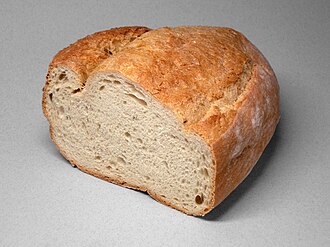
Photo: Wikipedia
Commercial white bread is a soft, pillowy loaf made from refined wheat flour, known for its mild, slightly sweet flavor and uniform, airy crumb. Its texture is tender and easily compressed, making it a staple for sandwiches and toast. While often low in fiber and micronutrients, it provides quick energy from its carbohydrate content.
💚 Why it's loved
People love it for its neutral, comforting flavor and soft texture that pairs with almost any filling or spread. It's a cultural staple in many households, symbolizing simplicity and convenience for daily meals.
⚠️ Watch-outs & how to enjoy it better
It can cause rapid blood-sugar spikes due to its high glycemic index and low fiber content, and may contain added sodium. To counteract, pair it with protein (like eggs or cheese) or healthy fats (like avocado) to slow digestion, and opt for whole-grain versions when possible.
Key benefits
- Provides quick energy from carbohydrates
- Soft texture is easy to chew and digest
- Versatile base for sandwiches and toast
- Long shelf life when packaged
- Affordable and widely available
🍽️ Popular dishes
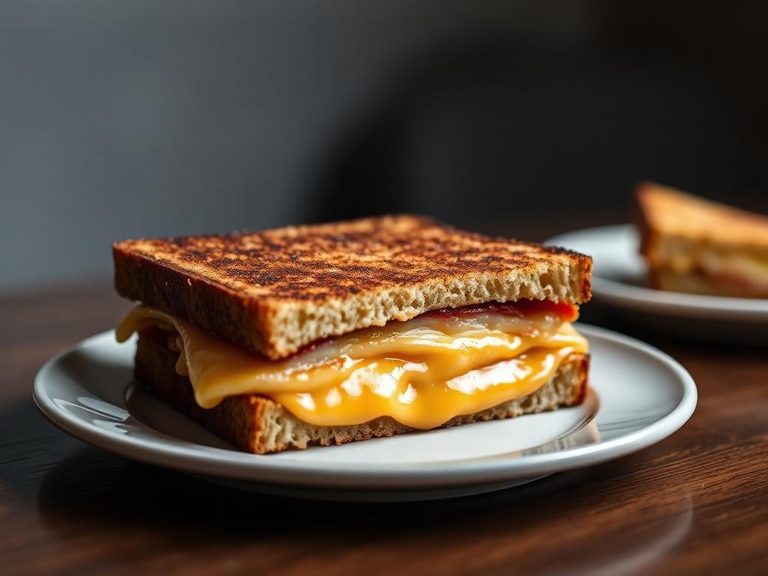

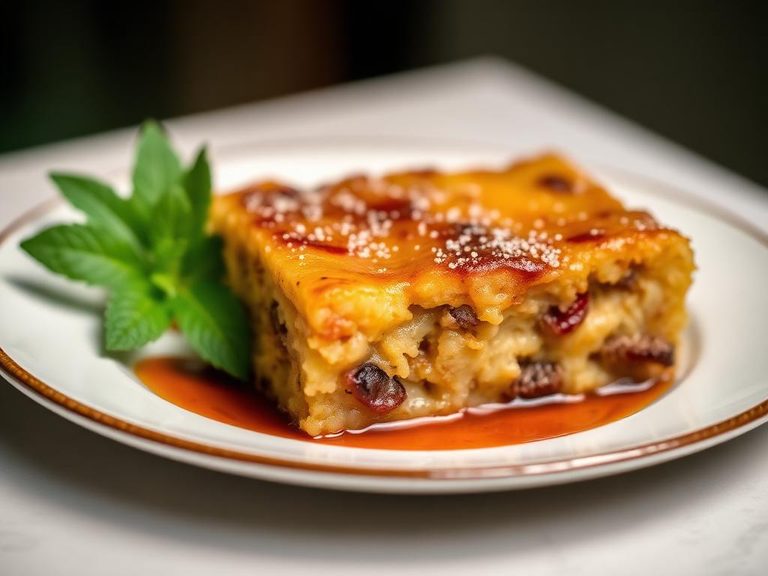
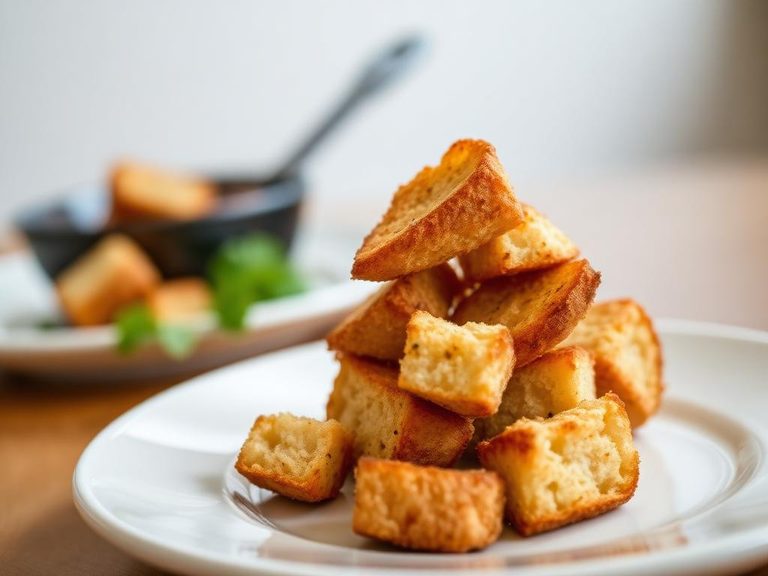
🌍 Where it's eaten
💡 Did you know?
The soft, uniform texture of commercial white bread is achieved by bleaching flour with chlorine gas or benzoyl peroxide, which breaks down proteins and whitens the grain.
Full nutrition (USDA data · scales with serving)
| Water | 35.6 g |
| Ash | 2.1 g |
| Calcium, Ca | 288 mg |
| Iron, Fe | 4.1 mg |
| Magnesium, Mg | 22.4 mg |
| Phosphorus, P | 86.7 mg |
| Potassium, K | 115 mg |
| Sodium, Na | 420 mg |
| Zinc, Zn | 0.77 mg |
| Copper, Cu | 0.12 mg |
| Manganese, Mn | 0.52 mg |
| Thiamin | 0.48 mg |
| Riboflavin | 0.30 mg |
| Niacin | 6.0 mg |
| Biotin | 2.5 ug |
| Folate, total | 157 ug |
Fat & fatty acid profile (per 100g)
Estimated from Bread, salvadoran sweet cheese (quesadilla salvadorena) — USDA does not publish this profile for Bread.
| Fatty acids, total saturated | 4.6 g |
| SFA 4:0 | 0.16 g |
| SFA 6:0 | 0.03 g |
| SFA 8:0 | 0.02 g |
| SFA 10:0 | 0.06 g |
| SFA 12:0 | 0.05 g |
| SFA 14:0 | 0.17 g |
| SFA 15:0 | 0.02 g |
| SFA 16:0 | 2.4 g |
| SFA 17:0 | 0.03 g |
| SFA 18:0 | 1.6 g |
| SFA 20:0 | 0.05 g |
| SFA 22:0 | 0.04 g |
| SFA 24:0 | 0.01 g |
| Fatty acids, total monounsaturated | 6.8 g |
| MUFA 14:1 | 0.01 g |
| MUFA 15:1 | 0.00 g |
| MUFA 16:1 | 0.10 g |
| MUFA 16:1 c | 0.09 g |
| MUFA 17:1 | 0.01 g |
| MUFA 18:1 | 6.6 g |
| MUFA 18:1 c | 4.7 g |
| MUFA 20:1 | 0.06 g |
| MUFA 22:1 | 0.00 g |
| MUFA 22:1 c | 0.00 g |
| MUFA 24:1 c | 0.00 g |
| Fatty acids, total polyunsaturated | 4.4 g |
| PUFA 18:2 | 3.8 g |
| PUFA 18:2 n-6 c,c | 3.6 g |
| PUFA 18:2 CLAs | 0.02 g |
| PUFA 18:3 | 0.53 g |
| PUFA 18:3 n-3 c,c,c (ALA) | 0.49 g |
| PUFA 18:3 n-6 c,c,c | 0.04 g |
| PUFA 18:4 | 0.00 g |
| PUFA 20:2 n-6 c,c | 0.01 g |
| PUFA 20:3 | 0.01 g |
| PUFA 20:3 n-3 | 0.00 g |
| PUFA 20:3 n-6 | 0.01 g |
| PUFA 20:4 | 0.05 g |
| PUFA 20:5 n-3 (EPA) | 0.00 g |
| PUFA 22:4 | 0.01 g |
| PUFA 22:5 n-3 (DPA) | 0.00 g |
| PUFA 22:6 n-3 (DHA) | 0.01 g |
| Fatty acids, total trans | 2.0 g |
| Fatty acids, total trans-monoenoic | 1.9 g |
| TFA 16:1 t | 0.01 g |
| TFA 18:1 t | 1.9 g |
| TFA 22:1 t | 0.00 g |
| TFA 18:2 t not further defined | 0.15 g |
| Fatty acids, total trans-polyenoic | 0.15 g |
| Cholesterol | 59.0 mg |
Amino acid profile (per 100g)
Estimated from Bread, salvadoran sweet cheese (quesadilla salvadorena) — USDA does not publish this profile for Bread.
| Tryptophan | 0.07 g |
| Threonine | 0.21 g |
| Isoleucine | 0.30 g |
| Leucine | 0.65 g |
| Lysine | 0.50 g |
| Methionine | 0.28 g |
| Cystine | 0.06 g |
| Phenylalanine | 0.37 g |
| Tyrosine | 0.23 g |
| Valine | 0.43 g |
| Arginine | 0.25 g |
| Histidine | 0.15 g |
| Alanine | 0.36 g |
| Aspartic acid | 0.59 g |
| Glutamic acid | 1.3 g |
| Glycine | 0.20 g |
| Proline | 0.83 g |
| Serine | 0.45 g |
| Hydroxyproline | 0.00 g |
FAQ
Is white bread unhealthy?
It can be part of a balanced diet in moderation, but it's lower in fiber and nutrients than whole-grain bread. Pairing it with protein and vegetables can help balance meals.
Why does white bread have a high glycemic index?
The refining process removes the bran and germ, leaving mostly starch that digests quickly, causing blood sugar to rise faster than whole-grain bread.
Can white bread be part of a weight-loss diet?
Yes, in controlled portions, but it's less filling than whole-grain bread due to lower fiber. Opt for smaller servings and pair with high-protein foods to increase satiety.
Dietary load (calculated from USDA values)
Sodium-to-potassium ratio: 3.64 (lower is better — aim for ≤ 1)
Sodium:potassium per WHO potassium guidance. Computed from USDA nutrients.