

Bread, mulitgrain, commercial
Whole food · Baked Products
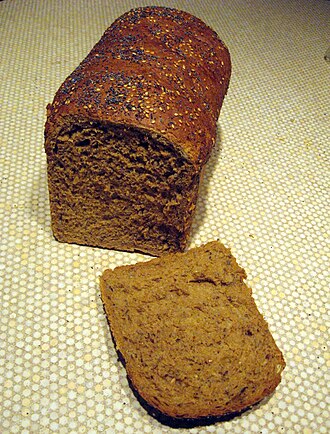
Photo: Wikipedia
Commercial multigrain bread is a hearty, sliced loaf that blends wheat with other grains like oats, barley, or millet, offering a pleasantly chewy texture and a nutty, slightly sweet flavor. Its speckled crumb and firm crust make it a staple for sandwiches and toast, with a nutritional profile that emphasizes complex carbohydrates and dietary fiber. While it often boasts a wholesome appearance, its exact composition varies widely by brand, making it a versatile but sometimes inconsistent choice for everyday meals.
💚 Why it's loved
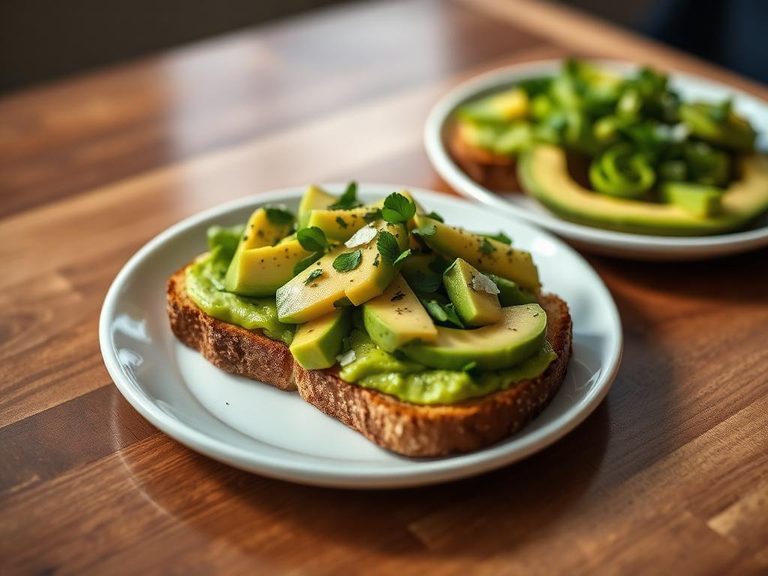
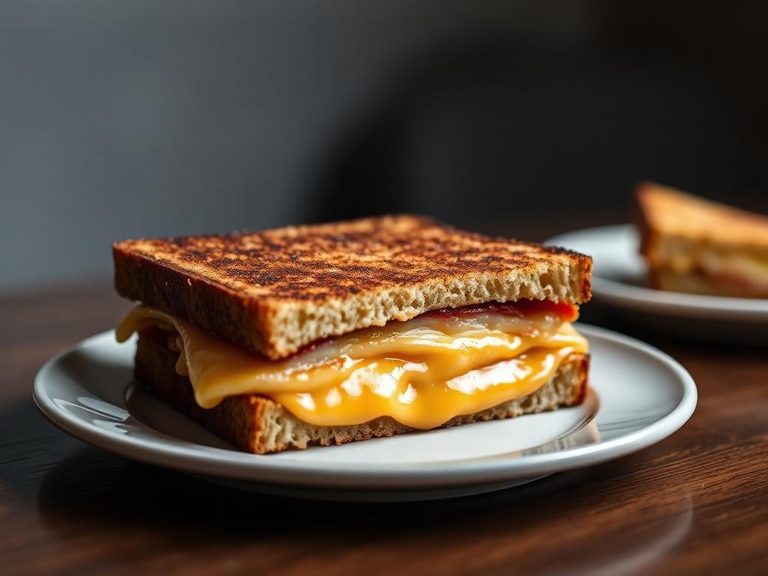
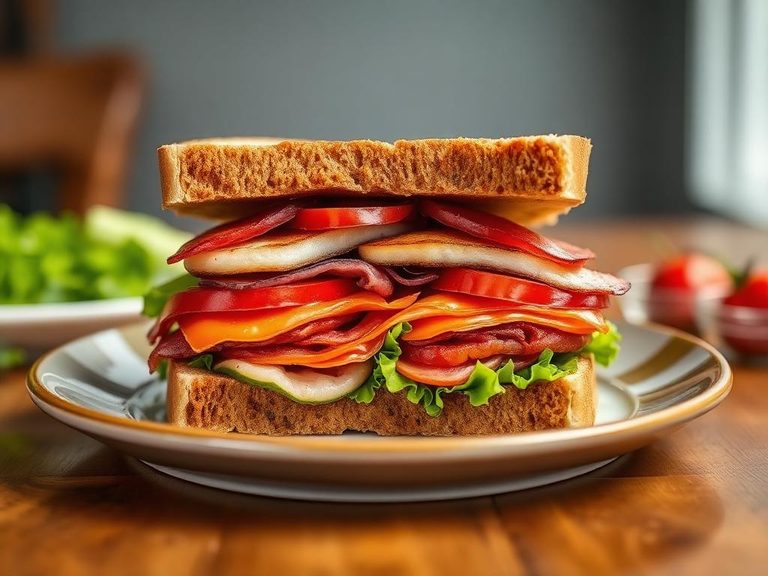
People love multigrain bread for its satisfying chew and earthy, nutty flavor that elevates simple sandwiches and toast. Its versatility makes it a go-to for everything from avocado toast to hearty deli stacks, blending comfort with a perceived healthfulness.
⚠️ Watch-outs & how to enjoy it better
Some commercial multigrain breads can be surprisingly high in added sugars or sodium, which may concern those monitoring blood sugar or blood pressure. To counteract this, opt for brands with minimal added sugar, pair it with protein or healthy fats (like hummus or eggs), and practice portion control by sticking to one or two slices per meal.
Key benefits
- Provides a source of dietary fiber from mixed grains
- Offers more complex carbohydrates than refined white bread
- Contains a variety of grains for diverse micronutrients
- Commonly fortified with B vitamins and iron
- Serves as a convenient, ready-to-eat base for meals
🍽️ Popular dishes

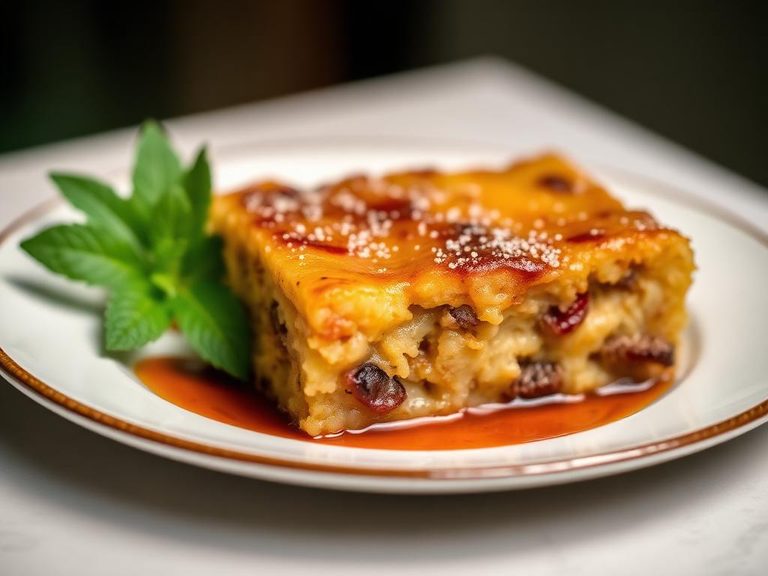
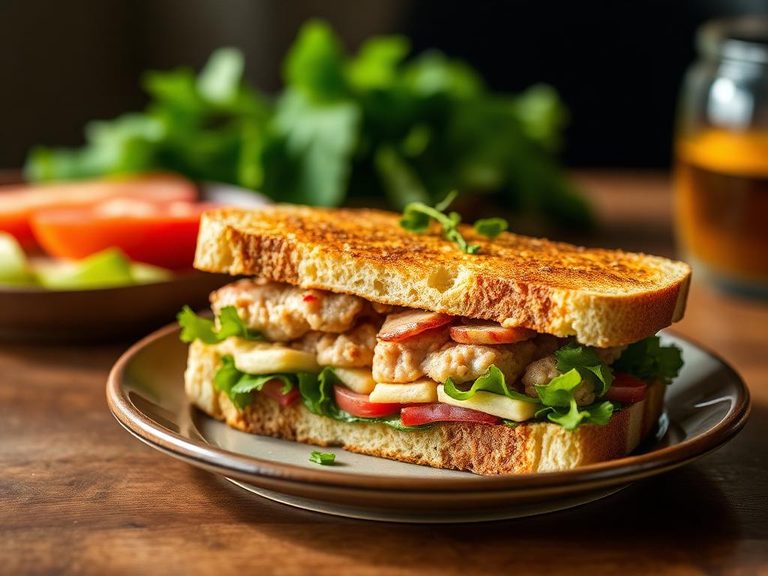
🌍 Where it's eaten
💡 Did you know?
The term 'multigrain' can be misleading—some commercial loaves contain as little as 5% non-wheat grains, while true whole-grain breads must have at least 51% whole grains by weight.
Full nutrition (USDA data · scales with serving)
| Water | 36.4 g |
| Ash | 1.9 g |
| Calcium, Ca | 107 mg |
| Iron, Fe | 2.4 mg |
| Magnesium, Mg | 67.3 mg |
| Phosphorus, P | 186 mg |
| Potassium, K | 198 mg |
| Sodium, Na | 401 mg |
| Zinc, Zn | 1.5 mg |
| Copper, Cu | 0.25 mg |
| Manganese, Mn | 1.5 mg |
| Thiamin | 0.26 mg |
| Riboflavin | 0.16 mg |
| Niacin | 4.1 mg |
| Biotin | 4.8 ug |
| Folate, total | 64.5 ug |
Fat & fatty acid profile (per 100g)
Estimated from Bread, salvadoran sweet cheese (quesadilla salvadorena) — USDA does not publish this profile for Bread.
| Fatty acids, total saturated | 4.6 g |
| SFA 4:0 | 0.16 g |
| SFA 6:0 | 0.03 g |
| SFA 8:0 | 0.02 g |
| SFA 10:0 | 0.06 g |
| SFA 12:0 | 0.05 g |
| SFA 14:0 | 0.17 g |
| SFA 15:0 | 0.02 g |
| SFA 16:0 | 2.4 g |
| SFA 17:0 | 0.03 g |
| SFA 18:0 | 1.6 g |
| SFA 20:0 | 0.05 g |
| SFA 22:0 | 0.04 g |
| SFA 24:0 | 0.01 g |
| Fatty acids, total monounsaturated | 6.8 g |
| MUFA 14:1 | 0.01 g |
| MUFA 15:1 | 0.00 g |
| MUFA 16:1 | 0.10 g |
| MUFA 16:1 c | 0.09 g |
| MUFA 17:1 | 0.01 g |
| MUFA 18:1 | 6.6 g |
| MUFA 18:1 c | 4.7 g |
| MUFA 20:1 | 0.06 g |
| MUFA 22:1 | 0.00 g |
| MUFA 22:1 c | 0.00 g |
| MUFA 24:1 c | 0.00 g |
| Fatty acids, total polyunsaturated | 4.4 g |
| PUFA 18:2 | 3.8 g |
| PUFA 18:2 n-6 c,c | 3.6 g |
| PUFA 18:2 CLAs | 0.02 g |
| PUFA 18:3 | 0.53 g |
| PUFA 18:3 n-3 c,c,c (ALA) | 0.49 g |
| PUFA 18:3 n-6 c,c,c | 0.04 g |
| PUFA 18:4 | 0.00 g |
| PUFA 20:2 n-6 c,c | 0.01 g |
| PUFA 20:3 | 0.01 g |
| PUFA 20:3 n-3 | 0.00 g |
| PUFA 20:3 n-6 | 0.01 g |
| PUFA 20:4 | 0.05 g |
| PUFA 20:5 n-3 (EPA) | 0.00 g |
| PUFA 22:4 | 0.01 g |
| PUFA 22:5 n-3 (DPA) | 0.00 g |
| PUFA 22:6 n-3 (DHA) | 0.01 g |
| Fatty acids, total trans | 2.0 g |
| Fatty acids, total trans-monoenoic | 1.9 g |
| TFA 16:1 t | 0.01 g |
| TFA 18:1 t | 1.9 g |
| TFA 22:1 t | 0.00 g |
| TFA 18:2 t not further defined | 0.15 g |
| Fatty acids, total trans-polyenoic | 0.15 g |
| Cholesterol | 59.0 mg |
Amino acid profile (per 100g)
Estimated from Bread, salvadoran sweet cheese (quesadilla salvadorena) — USDA does not publish this profile for Bread.
| Tryptophan | 0.07 g |
| Threonine | 0.21 g |
| Isoleucine | 0.30 g |
| Leucine | 0.65 g |
| Lysine | 0.50 g |
| Methionine | 0.28 g |
| Cystine | 0.06 g |
| Phenylalanine | 0.37 g |
| Tyrosine | 0.23 g |
| Valine | 0.43 g |
| Arginine | 0.25 g |
| Histidine | 0.15 g |
| Alanine | 0.36 g |
| Aspartic acid | 0.59 g |
| Glutamic acid | 1.3 g |
| Glycine | 0.20 g |
| Proline | 0.83 g |
| Serine | 0.45 g |
| Hydroxyproline | 0.00 g |
FAQ
Is multigrain bread healthier than white bread?
Multigrain bread often has more fiber and nutrients than white bread, but it depends on the ingredients—look for whole grains and minimal added sugars.
Can multigrain bread spike blood sugar?
Yes, especially if it contains refined flours or added sugars; pairing it with protein or fat can help slow glucose absorption.
What grains are typically in multigrain bread?
Common grains include wheat, oats, barley, rye, millet, and flaxseed, but the exact blend varies by brand.
Is multigrain bread gluten-free?
No, most multigrain breads contain wheat and are not gluten-free; look for certified gluten-free versions if needed.
Dietary load (calculated from USDA values)
Sodium-to-potassium ratio: 2.03 (lower is better — aim for ≤ 1)
Sodium:potassium per WHO potassium guidance. Computed from USDA nutrients.