

Beverages, tea, instant, lemon, sweetened, powder
Whole food · Beverages

Photo: Wikipedia
Instant lemon tea powder is a quick-dissolving, granular mix that transforms water into a bright, sweet-tart beverage with a characteristic cloudy, frothy texture. Its primary nutritional feature is its very high carbohydrate content, almost entirely from added sugars, providing a rapid energy boost but minimal protein, fat, or fiber.
Calorie split: 0% protein · 98% carbs · 2% fat
↓ Full nutrition💚 Why it's loved
People love it for its nostalgic, comforting flavor that perfectly balances sweet and sour, and its incredible convenience—a cold, refreshing drink is ready in seconds, making it a staple for busy days, outdoor activities, and casual gatherings.
⚠️ Watch-outs & how to enjoy it better
The extremely high sugar content (over 95g per 100g of powder) can cause rapid blood sugar spikes and contributes to empty calories. To counteract this, practice strict portion control (using half the recommended scoop), dilute it with more water than instructed, or pair it with a source of protein or healthy fat (like nuts or yogurt) to slow sugar absorption.
Key benefits
- Provides quick energy from simple carbohydrates
- Offers a convenient and portable way to make a flavored drink
- Contains trace amounts of Vitamin C if fortified
- Can be a palatable way to increase fluid intake
🍽️ Popular dishes
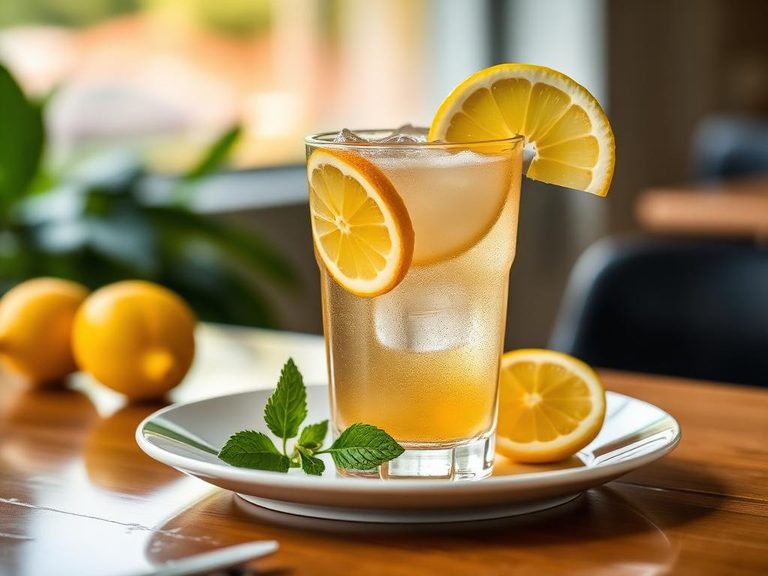
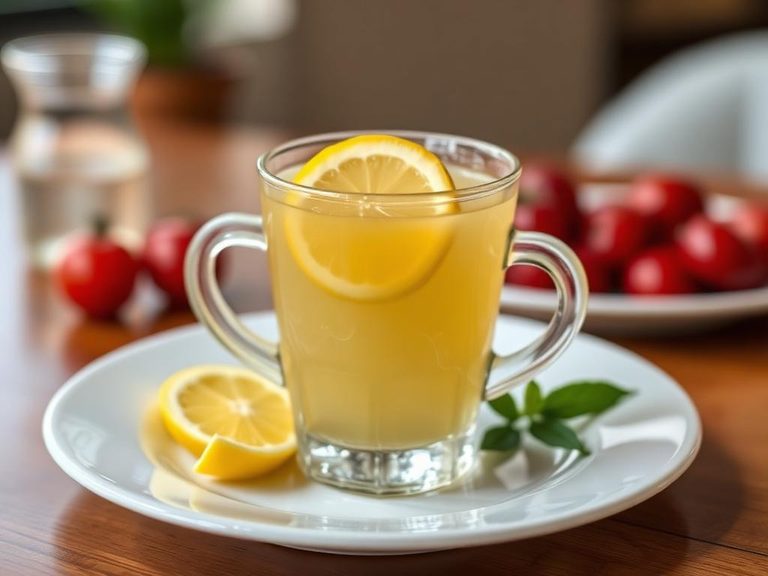
🌍 Where it's eaten
💡 Did you know?
The 'instant' tea process was pioneered in the 1950s, but the lemon-flavored powder version became a global icon of convenience in the 1970s and 80s, often sold in distinctive yellow canisters.
Full nutrition (USDA data · scales with serving)
| Water | 0.13 g |
| Energy | 401 kcal |
| Energy | 1679 kj |
| Protein | 0.12 g |
| Total lipid (fat) | 0.73 g |
| Ash | 0.47 g |
| Carbohydrate, by difference | 98.5 g |
| Fiber, total dietary | 0.70 g |
| Total Sugars | 95.3 g |
| Starch | 0.00 g |
| Calcium, Ca | 2.0 mg |
| Iron, Fe | 0.21 mg |
| Magnesium, Mg | 3.0 mg |
| Phosphorus, P | 2.0 mg |
| Potassium, K | 169 mg |
| Sodium, Na | 5.0 mg |
| Zinc, Zn | 0.03 mg |
| Copper, Cu | 0.01 mg |
| Manganese, Mn | 1.4 mg |
| Selenium, Se | 0.60 ug |
| Fluoride, F | 584 ug |
| Vitamin C, total ascorbic acid | 0.00 mg |
| Thiamin | 0.01 mg |
| Riboflavin | 0.00 mg |
| Niacin | 0.13 mg |
| Pantothenic acid | 0.00 mg |
| Vitamin B-6 | 0.01 mg |
| Folate, total | 1.0 ug |
| Folic acid | 0.00 ug |
| Folate, food | 1.0 ug |
| Folate, DFE | 1.0 ug |
| Choline, total | 1.1 mg |
| Vitamin B-12 | 0.00 ug |
| Vitamin B-12, added | 0.00 ug |
| Vitamin A, RAE | 0.00 ug |
| Retinol | 0.00 ug |
| Carotene, beta | 0.00 ug |
| Carotene, alpha | 0.00 ug |
| Cryptoxanthin, beta | 0.00 ug |
| Vitamin A, IU | 0.00 iu |
| Lycopene | 0.00 ug |
| Lutein + zeaxanthin | 0.00 ug |
| Vitamin E (alpha-tocopherol) | 0.00 mg |
| Vitamin E, added | 0.00 mg |
| Vitamin D (D2 + D3), International Units | 0.00 iu |
| Vitamin D (D2 + D3) | 0.00 ug |
| Vitamin K (phylloquinone) | 0.00 ug |
| Alcohol, ethyl | 0.00 g |
| Caffeine | 35.0 mg |
| Theobromine | 1.0 mg |
Fat & fatty acid profile (per 100g)
| Fatty acids, total saturated | 0.10 g |
| SFA 4:0 | 0.00 g |
| SFA 6:0 | 0.00 g |
| SFA 8:0 | 0.00 g |
| SFA 10:0 | 0.00 g |
| SFA 12:0 | 0.00 g |
| SFA 14:0 | 0.00 g |
| SFA 16:0 | 0.08 g |
| SFA 18:0 | 0.01 g |
| Fatty acids, total monounsaturated | 0.03 g |
| MUFA 16:1 | 0.00 g |
| MUFA 18:1 | 0.03 g |
| MUFA 20:1 | 0.00 g |
| MUFA 22:1 | 0.00 g |
| Fatty acids, total polyunsaturated | 0.22 g |
| PUFA 18:2 | 0.15 g |
| PUFA 18:3 | 0.06 g |
| PUFA 18:4 | 0.00 g |
| PUFA 20:4 | 0.00 g |
| PUFA 20:5 n-3 (EPA) | 0.00 g |
| PUFA 22:5 n-3 (DPA) | 0.00 g |
| PUFA 22:6 n-3 (DHA) | 0.00 g |
| Fatty acids, total trans | 0.00 g |
| Cholesterol | 0.00 mg |
Amino acid profile (per 100g)
Estimated from Beverages, carbonated, tonic water — USDA does not publish this profile for Beverages.
| Tryptophan | 0.00 g |
| Threonine | 0.00 g |
| Isoleucine | 0.00 g |
| Leucine | 0.00 g |
| Lysine | 0.00 g |
| Methionine | 0.00 g |
| Cystine | 0.00 g |
| Phenylalanine | 0.00 g |
| Tyrosine | 0.00 g |
| Valine | 0.00 g |
| Arginine | 0.00 g |
| Histidine | 0.00 g |
| Alanine | 0.00 g |
| Aspartic acid | 0.00 g |
| Glutamic acid | 0.00 g |
| Glycine | 0.00 g |
| Proline | 0.00 g |
| Serine | 0.00 g |
FAQ
Does instant lemon tea contain real tea or lemon?
It typically contains tea extract or tea solids for flavor and caffeine, but the lemon flavor is usually from artificial or natural flavorings, not fresh juice. Some brands may include small amounts of real lemon powder.
How does it differ from making tea from a bag and adding lemon?
Instant powder is pre-mixed with sugar and flavorings for a consistent taste and convenience. Brewing from a bag gives you control over sweetness and uses fresh lemon, often resulting in less sugar and a fresher flavor profile.
Is there caffeine in instant lemon tea?
Yes, most versions contain caffeine from the tea component, though the amount is generally lower than a freshly brewed cup of black tea. The exact amount varies by brand.
Nutrient density (calculated · NRF9.3)
Nutrient Rich Foods index: beneficial nutrients (protein, fiber, vitamins, minerals) minus saturated fat, added sugar & sodium, per 100 kcal.
NRF9.3 index — Fulgoni, Keast & Drewnowski, 2009. Computed from USDA nutrients.
Weight-loss friendliness (composite index)
Energy density 4.01 kcal/g · 0% calories from protein · 0.7 g fiber · 95.3 g sugar per 100 g.
Composite of energy density (Rolls et al., 1999), protein & fiber satiety, minus sugar. A calculated heuristic — ranks satiety-per-calorie, not a clinical measure.
Dietary load (calculated from USDA values)
Potential renal acid load. Positive = acid-forming, negative = alkaline-forming.
Sodium-to-potassium ratio: 0.03 (lower is better — aim for ≤ 1)
Sodium:potassium per WHO potassium guidance. Computed from USDA nutrients.