

Beverages, tea, black, brewed, prepared with tap water, decaffeinated
Whole food · Beverages
Decaffeinated black tea, brewed with tap water, is a dark, aromatic infusion with a smooth, malty body and a subtle, lingering bitterness. It delivers a mere 1 calorie per 100g, making it an exceptionally light, zero-fat, zero-sugar beverage that offers the robust character of black tea without the stimulant effects of caffeine.
Calorie split: 0% protein · 100% carbs · 0% fat
↓ Full nutrition💚 Why it's loved
People love it for its comforting, full-bodied flavor that mimics traditional black tea without the jitters, making it a perfect ritual for any time of day. Its versatility allows it to be enjoyed plain, with milk, or as a base for iced tea, fitting seamlessly into diverse cultural tea traditions.
⚠️ Watch-outs & how to enjoy it better
Some find decaffeinated black tea can taste slightly flat or less complex than its caffeinated counterpart due to the decaffeination process. For those sensitive to tannins, it may cause mild stomach discomfort; pairing it with a small amount of milk or food can help mitigate this.
Key benefits
- Provides a gentle, caffeine-free alternative for evening consumption.
- Contains antioxidants like theaflavins, which are formed during the black tea oxidation process.
- Supports hydration with negligible calories and no sugar.
- May aid in relaxation and stress reduction due to the absence of caffeine.
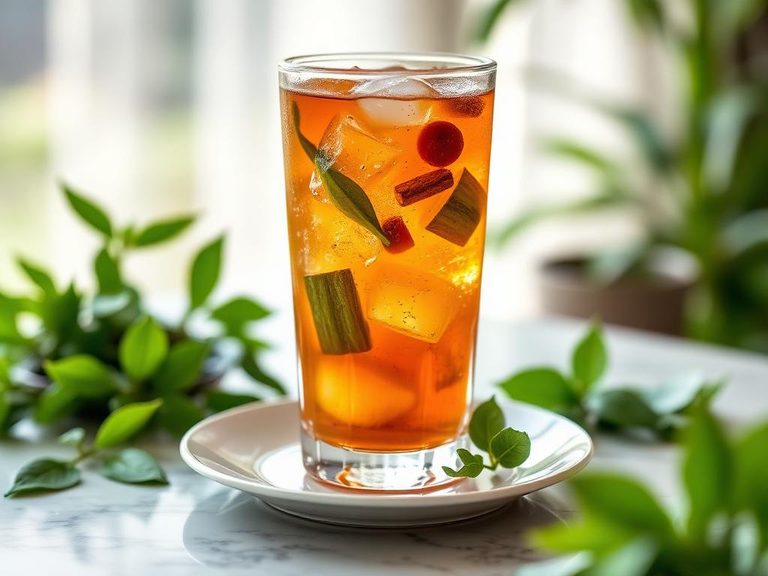
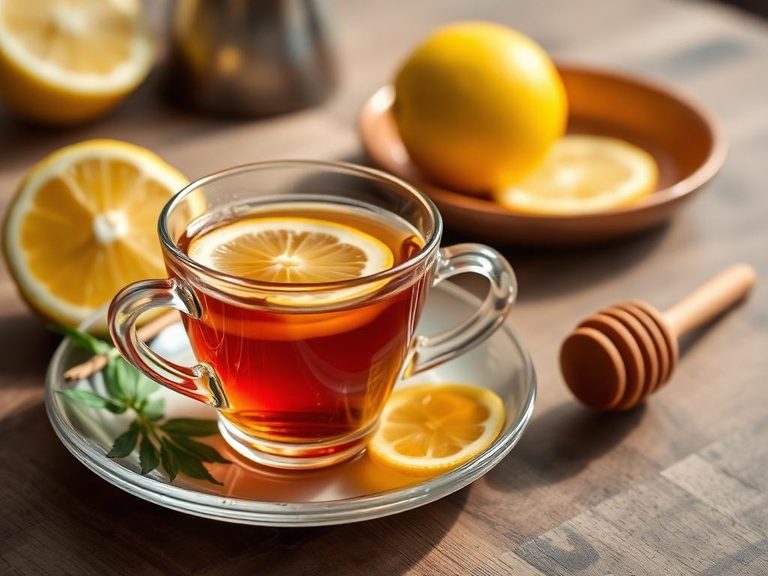
🍽️ Popular dishes


🌍 Where it's eaten
💡 Did you know?
The decaffeination process often uses ethyl acetate or carbon dioxide to remove caffeine, but it can also strip away some of the tea's natural flavor compounds, which is why some brands add back 'natural flavors' to restore taste.
Full nutrition (USDA data · scales with serving)
| Water | 99.7 g |
| Energy | 1.0 kcal |
| Energy | 4.0 kj |
| Protein | 0.00 g |
| Total lipid (fat) | 0.00 g |
| Ash | 0.04 g |
| Carbohydrate, by difference | 0.30 g |
| Fiber, total dietary | 0.00 g |
| Total Sugars | 0.00 g |
| Calcium, Ca | 0.00 mg |
| Iron, Fe | 0.02 mg |
| Magnesium, Mg | 3.0 mg |
| Phosphorus, P | 1.0 mg |
| Potassium, K | 37.0 mg |
| Sodium, Na | 3.0 mg |
| Zinc, Zn | 0.02 mg |
| Copper, Cu | 0.01 mg |
| Manganese, Mn | 0.22 mg |
| Selenium, Se | 0.00 ug |
| Vitamin C, total ascorbic acid | 0.00 mg |
| Thiamin | 0.00 mg |
| Riboflavin | 0.01 mg |
| Niacin | 0.00 mg |
| Pantothenic acid | 0.01 mg |
| Vitamin B-6 | 0.00 mg |
| Folate, total | 5.0 ug |
| Folic acid | 0.00 ug |
| Folate, food | 5.0 ug |
| Folate, DFE | 5.0 ug |
| Choline, total | 0.40 mg |
| Vitamin B-12 | 0.00 ug |
| Vitamin B-12, added | 0.00 ug |
| Vitamin A, RAE | 0.00 ug |
| Retinol | 0.00 ug |
| Carotene, beta | 0.00 ug |
| Carotene, alpha | 0.00 ug |
| Cryptoxanthin, beta | 0.00 ug |
| Vitamin A, IU | 0.00 iu |
| Lycopene | 0.00 ug |
| Lutein + zeaxanthin | 0.00 ug |
| Vitamin E (alpha-tocopherol) | 0.00 mg |
| Vitamin E, added | 0.00 mg |
| Vitamin D (D2 + D3), International Units | 0.00 iu |
| Vitamin D (D2 + D3) | 0.00 ug |
| Vitamin K (phylloquinone) | 0.00 ug |
| Alcohol, ethyl | 0.00 g |
| Caffeine | 1.0 mg |
| Theobromine | 0.00 mg |
Fat & fatty acid profile (per 100g)
| Fatty acids, total saturated | 0.00 g |
| SFA 4:0 | 0.00 g |
| SFA 6:0 | 0.00 g |
| SFA 8:0 | 0.00 g |
| SFA 10:0 | 0.00 g |
| SFA 12:0 | 0.00 g |
| SFA 14:0 | 0.00 g |
| SFA 16:0 | 0.00 g |
| SFA 18:0 | 0.00 g |
| Fatty acids, total monounsaturated | 0.00 g |
| MUFA 16:1 | 0.00 g |
| MUFA 18:1 | 0.00 g |
| MUFA 20:1 | 0.00 g |
| MUFA 22:1 | 0.00 g |
| Fatty acids, total polyunsaturated | 0.00 g |
| PUFA 18:2 | 0.00 g |
| PUFA 18:3 | 0.00 g |
| PUFA 18:4 | 0.00 g |
| PUFA 20:4 | 0.00 g |
| PUFA 20:5 n-3 (EPA) | 0.00 g |
| PUFA 22:5 n-3 (DPA) | 0.00 g |
| PUFA 22:6 n-3 (DHA) | 0.00 g |
| Fatty acids, total trans | 0.00 g |
| Cholesterol | 0.00 mg |
Amino acid profile (per 100g)
| Tryptophan | 0.00 g |
| Threonine | 0.00 g |
| Isoleucine | 0.00 g |
| Leucine | 0.00 g |
| Lysine | 0.00 g |
| Methionine | 0.00 g |
| Cystine | 0.00 g |
| Phenylalanine | 0.00 g |
| Tyrosine | 0.00 g |
| Valine | 0.00 g |
| Arginine | 0.00 g |
| Histidine | 0.00 g |
| Alanine | 0.00 g |
| Aspartic acid | 0.00 g |
| Glutamic acid | 0.00 g |
| Glycine | 0.00 g |
| Proline | 0.00 g |
| Serine | 0.00 g |
FAQ
Is decaffeinated black tea completely caffeine-free?
No, it typically contains 2-10 mg of caffeine per cup, compared to 40-70 mg in regular black tea. It's considered 'decaffeinated' but not 'caffeine-free.'
Does brewing decaf black tea with tap water affect its taste?
Yes, tap water with high mineral content can make the tea taste flat or metallic. Using filtered water can improve the flavor profile.
Can decaf black tea be consumed by people with anxiety?
Generally yes, as it lacks caffeine, but individual responses vary. It's best to start with a small amount to assess tolerance.
Nutrient density (calculated · NRF9.3)
Nutrient Rich Foods index: beneficial nutrients (protein, fiber, vitamins, minerals) minus saturated fat, added sugar & sodium, per 100 kcal.
NRF9.3 index — Fulgoni, Keast & Drewnowski, 2009. Computed from USDA nutrients.
Weight-loss friendliness (composite index)
Energy density 0.01 kcal/g · 0% calories from protein · 0.0 g fiber · 0.0 g sugar per 100 g.
Composite of energy density (Rolls et al., 1999), protein & fiber satiety, minus sugar. A calculated heuristic — ranks satiety-per-calorie, not a clinical measure.
Dietary load (calculated from USDA values)
Potential renal acid load. Positive = acid-forming, negative = alkaline-forming.
Sodium-to-potassium ratio: 0.08 (lower is better — aim for ≤ 1)
Sodium:potassium per WHO potassium guidance. Computed from USDA nutrients.