

Beverages, rice milk, unsweetened
Whole food · Beverages

Photo: Wikipedia
Unsweetened rice milk is a thin, watery, plant-based beverage with a subtly sweet, clean, and starchy flavor. Its nutrition profile is defined by its high carbohydrate content from rice starch and very low protein and fat. It provides a light, neutral base that doesn't overpower other ingredients.
Calorie split: 2% protein · 79% carbs · 19% fat
↓ Full nutrition💚 Why it's loved
People love its mild, slightly sweet taste and smooth, thin texture that blends seamlessly into smoothies, cereals, and baked goods without a strong 'beany' or nutty aftertaste. It's a versatile, hypoallergenic alternative for those avoiding dairy, soy, and nuts.
⚠️ Watch-outs & how to enjoy it better
Its high carbohydrate and sugar content can lead to rapid blood-sugar spikes, making it less ideal for diabetics or low-carb diets. It is also nutritionally sparse in protein and fiber. To mitigate blood-sugar impact, always pair it with a source of protein (like nuts or seeds) or healthy fat (like nut butter) and consider it a treat rather than a primary milk substitute.
Key benefits
- Dairy-free and lactose-free option
- Naturally free of cholesterol and saturated fat
- Light, neutral flavor for blending
- Fortified versions are a common source of calcium and vitamin D
- Suitable for many vegan and plant-based diets
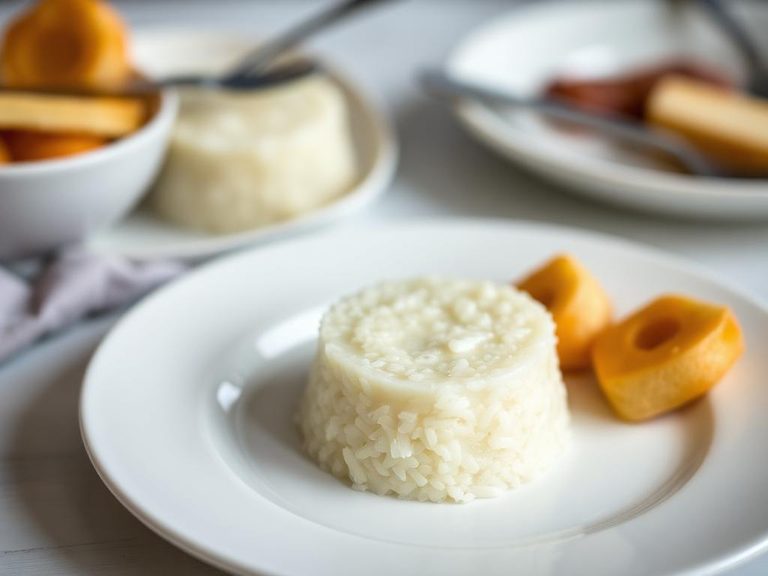
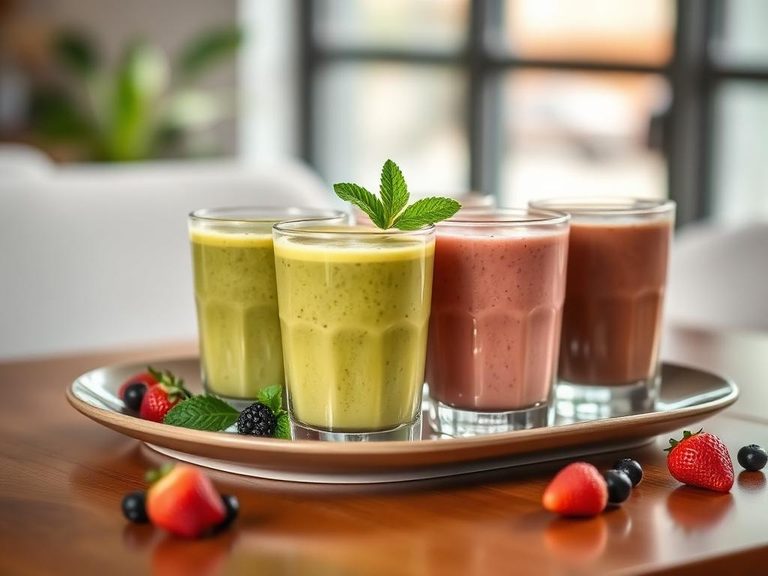
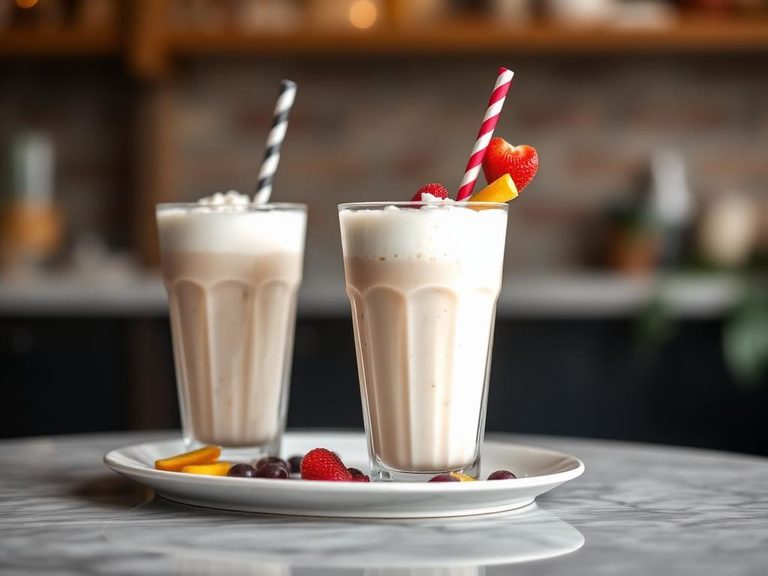
🍽️ Popular dishes


🌍 Where it's eaten
💡 Did you know?
Unsweetened rice milk often contains more sugar by weight than unsweetened almond or soy milk, as the enzymes used in production break down rice starches into simple sugars like maltose.
Full nutrition (USDA data · scales with serving)
| Water | 89.3 g |
| Energy | 47.0 kcal |
| Energy | 195 kj |
| Protein | 0.28 g |
| Total lipid (fat) | 0.97 g |
| Ash | 0.30 g |
| Carbohydrate, by difference | 9.2 g |
| Fiber, total dietary | 0.30 g |
| Total Sugars | 5.3 g |
| Calcium, Ca | 118 mg |
| Iron, Fe | 0.20 mg |
| Magnesium, Mg | 11.0 mg |
| Phosphorus, P | 56.0 mg |
| Potassium, K | 27.0 mg |
| Sodium, Na | 39.0 mg |
| Zinc, Zn | 0.13 mg |
| Copper, Cu | 0.04 mg |
| Manganese, Mn | 0.28 mg |
| Selenium, Se | 2.2 ug |
| Vitamin C, total ascorbic acid | 0.00 mg |
| Thiamin | 0.03 mg |
| Riboflavin | 0.14 mg |
| Niacin | 0.39 mg |
| Pantothenic acid | 0.15 mg |
| Vitamin B-6 | 0.04 mg |
| Folate, total | 2.0 ug |
| Folic acid | 0.00 ug |
| Folate, food | 2.0 ug |
| Folate, DFE | 2.0 ug |
| Choline, total | 2.1 mg |
| Vitamin B-12 | 0.63 ug |
| Vitamin B-12, added | 0.63 ug |
| Vitamin A, RAE | 63.0 ug |
| Retinol | 63.0 ug |
| Carotene, beta | 0.00 ug |
| Carotene, alpha | 0.00 ug |
| Cryptoxanthin, beta | 0.00 ug |
| Vitamin A, IU | 208 iu |
| Lycopene | 0.00 ug |
| Lutein + zeaxanthin | 0.00 ug |
| Vitamin E (alpha-tocopherol) | 0.47 mg |
| Vitamin E, added | 0.13 mg |
| Vitamin D (D2 + D3), International Units | 42.0 iu |
| Vitamin D (D2 + D3) | 1.0 ug |
| Vitamin D2 (ergocalciferol) | 1.0 ug |
| Vitamin K (phylloquinone) | 0.20 ug |
| Alcohol, ethyl | 0.00 g |
| Caffeine | 0.00 mg |
| Theobromine | 0.00 mg |
Fat & fatty acid profile (per 100g)
| Fatty acids, total saturated | 0.00 g |
| SFA 4:0 | 0.00 g |
| SFA 6:0 | 0.00 g |
| SFA 8:0 | 0.00 g |
| SFA 10:0 | 0.00 g |
| SFA 12:0 | 0.00 g |
| SFA 14:0 | 0.00 g |
| SFA 16:0 | 0.00 g |
| SFA 18:0 | 0.00 g |
| Fatty acids, total monounsaturated | 0.63 g |
| MUFA 16:1 | 0.00 g |
| MUFA 18:1 | 0.62 g |
| MUFA 20:1 | 0.00 g |
| MUFA 22:1 | 0.00 g |
| Fatty acids, total polyunsaturated | 0.31 g |
| PUFA 18:2 | 0.30 g |
| PUFA 18:3 | 0.01 g |
| PUFA 18:4 | 0.00 g |
| PUFA 20:4 | 0.00 g |
| PUFA 20:5 n-3 (EPA) | 0.00 g |
| PUFA 22:5 n-3 (DPA) | 0.00 g |
| PUFA 22:6 n-3 (DHA) | 0.00 g |
| Fatty acids, total trans | 0.00 g |
| Cholesterol | 0.00 mg |
Amino acid profile (per 100g)
Estimated from Beverages, carbonated, tonic water — USDA does not publish this profile for Beverages.
| Tryptophan | 0.00 g |
| Threonine | 0.00 g |
| Isoleucine | 0.00 g |
| Leucine | 0.00 g |
| Lysine | 0.00 g |
| Methionine | 0.00 g |
| Cystine | 0.00 g |
| Phenylalanine | 0.00 g |
| Tyrosine | 0.00 g |
| Valine | 0.00 g |
| Arginine | 0.00 g |
| Histidine | 0.00 g |
| Alanine | 0.00 g |
| Aspartic acid | 0.00 g |
| Glutamic acid | 0.00 g |
| Glycine | 0.00 g |
| Proline | 0.00 g |
| Serine | 0.00 g |
FAQ
Is rice milk high in sugar?
Yes, even unsweetened varieties are naturally high in carbohydrates (about 22g per cup) which the body converts to sugar. The 'unsweetened' label means no added sugar, but the natural rice starches provide a sweet taste and a high glycemic load.
Is rice milk a good source of protein?
No, it is very low in protein (typically less than 1g per cup). It is not a suitable replacement for dairy or soy milk for those seeking significant protein intake.
Can I use rice milk in cooking and baking?
Yes, its neutral flavor makes it excellent for baking, sauces, and soups where you don't want a strong competing taste. However, its thin consistency may require adjustments in recipes expecting the thickness of dairy milk.
Nutrient density (calculated · NRF9.3)
Nutrient Rich Foods index: beneficial nutrients (protein, fiber, vitamins, minerals) minus saturated fat, added sugar & sodium, per 100 kcal.
NRF9.3 index — Fulgoni, Keast & Drewnowski, 2009. Computed from USDA nutrients.
Weight-loss friendliness (composite index)
Energy density 0.47 kcal/g · 2% calories from protein · 0.3 g fiber · 5.3 g sugar per 100 g.
Composite of energy density (Rolls et al., 1999), protein & fiber satiety, minus sugar. A calculated heuristic — ranks satiety-per-calorie, not a clinical measure.
Dietary load (calculated from USDA values)
Potential renal acid load. Positive = acid-forming, negative = alkaline-forming.
Sodium-to-potassium ratio: 1.44 (lower is better — aim for ≤ 1)
Sodium:potassium per WHO potassium guidance. Computed from USDA nutrients.