

Beverages, carbonated, cola, without caffeine
Whole food · Beverages
This is the classic, caffeine-free version of the world's most iconic cola, offering the same sweet, caramel-vanilla fizz without the stimulant. It delivers a pure, sugary punch with a crisp, bubbly mouthfeel. Nutritionally, it's a source of quick energy from 10.58g of sugar per 100ml, with no protein, fat, or fiber.
Calorie split: 0% protein · 100% carbs · 0% fat
↓ Full nutrition💚 Why it's loved
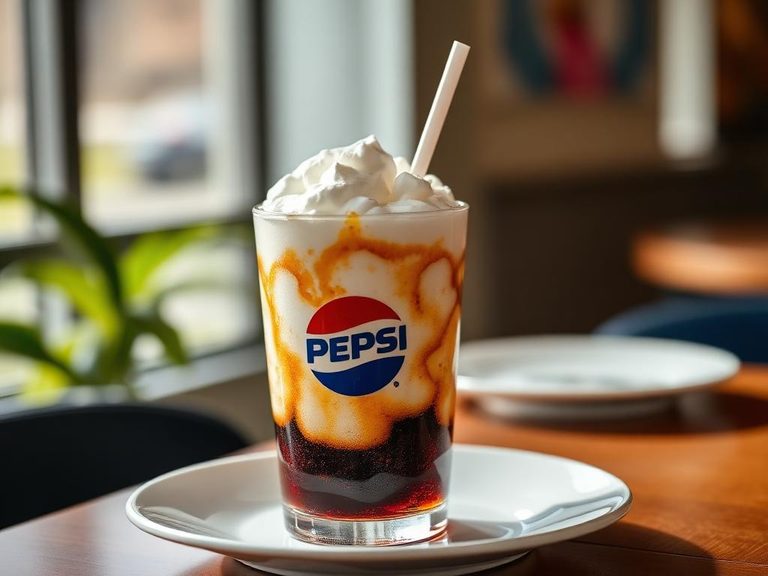
People love its nostalgic, sweet, and fizzy flavor profile that pairs perfectly with salty, fatty foods like burgers and pizza. It's a cultural staple for celebrations, movie nights, and casual gatherings.
⚠️ Watch-outs & how to enjoy it better
The high sugar content can lead to rapid blood-sugar spikes and contributes empty calories, posing risks for weight management and dental health. To counteract, practice strict portion control (e.g., a 12-oz can as an occasional treat), rinse your mouth with water after drinking, and pair it with a meal containing protein and fiber to slow sugar absorption.
Key benefits
- Provides quick energy from simple carbohydrates
- Caffeine-free option for evening consumption
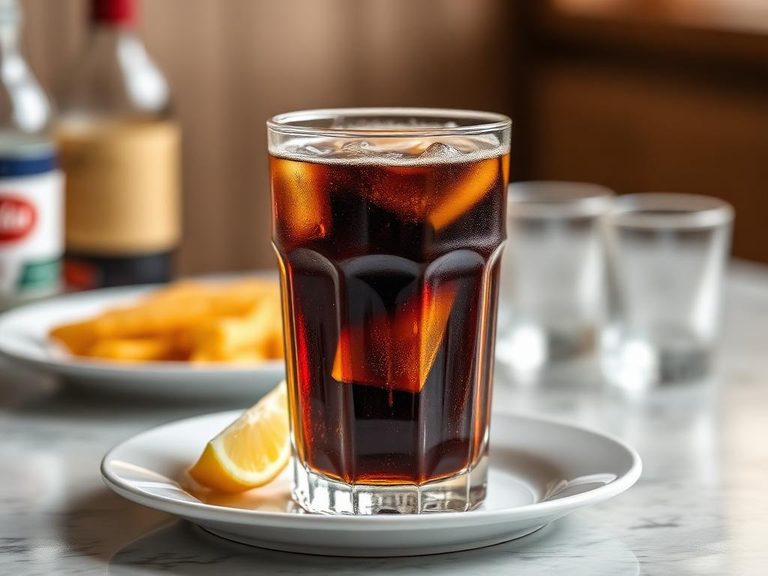
- Commonly used as a mixer in cocktails and mocktails
- Can aid in settling mild stomach upset for some individuals
- Widely available and consistent in taste
🍽️ Popular dishes
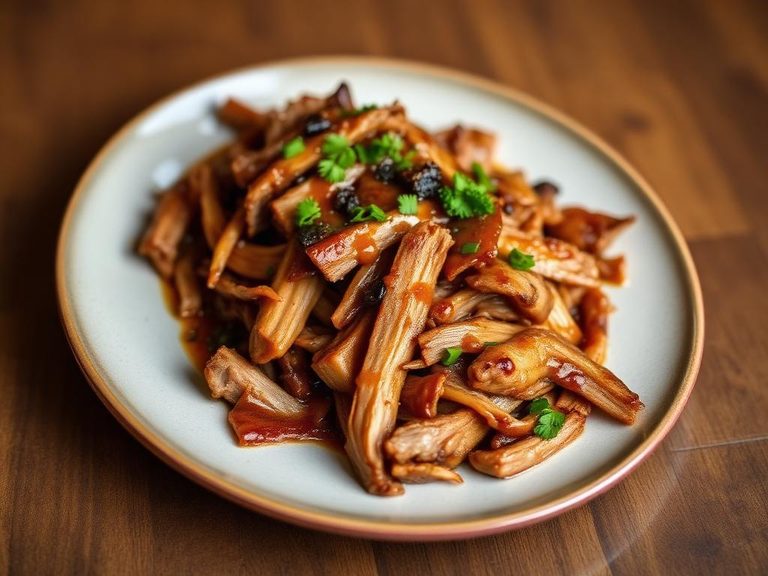
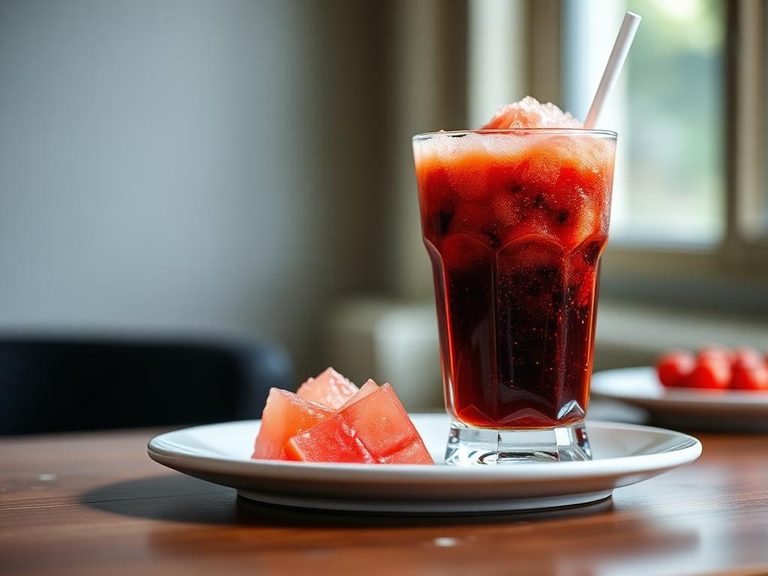
🌍 Where it's eaten
💡 Did you know?
The original recipe for Coca-Cola, created in 1886, contained cocaine extract from coca leaves, which was removed by 1903.
Full nutrition (USDA data · scales with serving)
| Water | 89.6 g |
| Energy | 41.0 kcal |
| Energy | 171 kj |
| Protein | 0.00 g |
| Total lipid (fat) | 0.00 g |
| Ash | 0.06 g |
| Carbohydrate, by difference | 10.6 g |
| Fiber, total dietary | 0.00 g |
| Total Sugars | 10.6 g |
| Sucrose | 0.00 g |
| Glucose | 4.5 g |
| Fructose | 6.1 g |
| Calcium, Ca | 2.0 mg |
| Iron, Fe | 0.02 mg |
| Magnesium, Mg | 0.00 mg |
| Phosphorus, P | 11.0 mg |
| Potassium, K | 3.0 mg |
| Sodium, Na | 4.0 mg |
| Zinc, Zn | 0.01 mg |
| Copper, Cu | 0.00 mg |
| Manganese, Mn | 0.00 mg |
| Selenium, Se | 0.10 ug |
| Vitamin C, total ascorbic acid | 0.00 mg |
| Thiamin | 0.00 mg |
| Riboflavin | 0.00 mg |
| Niacin | 0.00 mg |
| Pantothenic acid | 0.00 mg |
| Vitamin B-6 | 0.00 mg |
| Folate, total | 0.00 ug |
| Folic acid | 0.00 ug |
| Folate, food | 0.00 ug |
| Folate, DFE | 0.00 ug |
| Choline, total | 0.30 mg |
| Vitamin B-12 | 0.00 ug |
| Vitamin B-12, added | 0.00 ug |
| Vitamin A, RAE | 0.00 ug |
| Retinol | 0.00 ug |
| Carotene, beta | 0.00 ug |
| Carotene, alpha | 0.00 ug |
| Cryptoxanthin, beta | 0.00 ug |
| Vitamin A, IU | 0.00 iu |
| Lycopene | 0.00 ug |
| Lutein + zeaxanthin | 0.00 ug |
| Vitamin E (alpha-tocopherol) | 0.00 mg |
| Vitamin E, added | 0.00 mg |
| Vitamin D (D2 + D3), International Units | 0.00 iu |
| Vitamin D (D2 + D3) | 0.00 ug |
| Vitamin K (phylloquinone) | 0.00 ug |
| Alcohol, ethyl | 0.00 g |
| Caffeine | 0.00 mg |
| Theobromine | 0.00 mg |
Fat & fatty acid profile (per 100g)
| Fatty acids, total saturated | 0.00 g |
| SFA 4:0 | 0.00 g |
| SFA 6:0 | 0.00 g |
| SFA 8:0 | 0.00 g |
| SFA 10:0 | 0.00 g |
| SFA 12:0 | 0.00 g |
| SFA 14:0 | 0.00 g |
| SFA 16:0 | 0.00 g |
| SFA 18:0 | 0.00 g |
| Fatty acids, total monounsaturated | 0.00 g |
| MUFA 16:1 | 0.00 g |
| MUFA 18:1 | 0.00 g |
| MUFA 20:1 | 0.00 g |
| MUFA 22:1 | 0.00 g |
| Fatty acids, total polyunsaturated | 0.00 g |
| PUFA 18:2 | 0.00 g |
| PUFA 18:3 | 0.00 g |
| PUFA 18:4 | 0.00 g |
| PUFA 20:4 | 0.00 g |
| PUFA 20:5 n-3 (EPA) | 0.00 g |
| PUFA 22:5 n-3 (DPA) | 0.00 g |
| PUFA 22:6 n-3 (DHA) | 0.00 g |
| Fatty acids, total trans | 0.00 g |
| Cholesterol | 0.00 mg |
Amino acid profile (per 100g)
Estimated from Beverages, carbonated, tonic water — USDA does not publish this profile for Beverages.
| Tryptophan | 0.00 g |
| Threonine | 0.00 g |
| Isoleucine | 0.00 g |
| Leucine | 0.00 g |
| Lysine | 0.00 g |
| Methionine | 0.00 g |
| Cystine | 0.00 g |
| Phenylalanine | 0.00 g |
| Tyrosine | 0.00 g |
| Valine | 0.00 g |
| Arginine | 0.00 g |
| Histidine | 0.00 g |
| Alanine | 0.00 g |
| Aspartic acid | 0.00 g |
| Glutamic acid | 0.00 g |
| Glycine | 0.00 g |
| Proline | 0.00 g |
| Serine | 0.00 g |
FAQ
Is caffeine-free cola healthier than regular cola?
It eliminates caffeine, which can be beneficial for those sensitive to it or avoiding it for health reasons. However, the sugar content and calorie count are typically identical to the regular version.
Can I use this in baking?
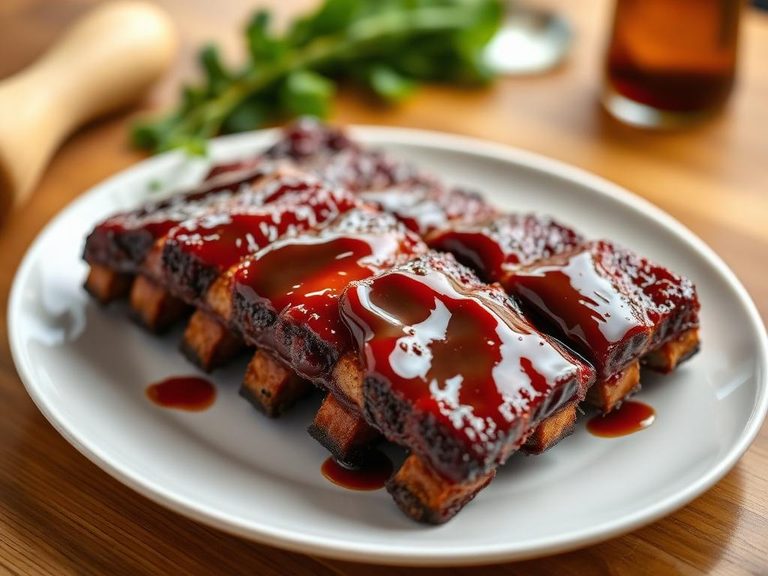
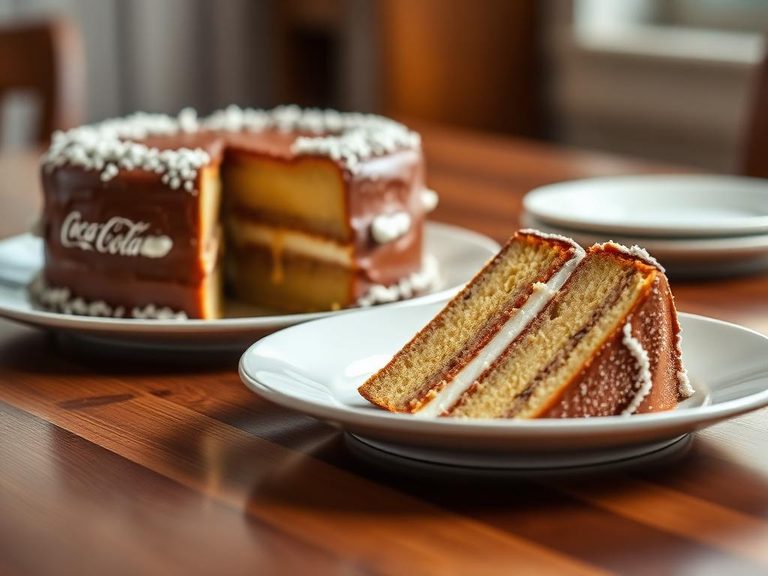
Absolutely. It's a popular ingredient in moist chocolate cakes, glazes for meats, and as a liquid base for sweet breads, adding moisture and a subtle caramel flavor.
Why does it taste different from the regular version?
While the core flavor profile is designed to be identical, some tasters note a subtle difference because caffeine itself has a slightly bitter taste that can influence the overall flavor balance.
Nutrient density (calculated · NRF9.3)
Nutrient Rich Foods index: beneficial nutrients (protein, fiber, vitamins, minerals) minus saturated fat, added sugar & sodium, per 100 kcal.
NRF9.3 index — Fulgoni, Keast & Drewnowski, 2009. Computed from USDA nutrients.
Weight-loss friendliness (composite index)
Energy density 0.41 kcal/g · 0% calories from protein · 0.0 g fiber · 10.6 g sugar per 100 g.
Composite of energy density (Rolls et al., 1999), protein & fiber satiety, minus sugar. A calculated heuristic — ranks satiety-per-calorie, not a clinical measure.
Dietary load (calculated from USDA values)
Potential renal acid load. Positive = acid-forming, negative = alkaline-forming.
Sodium-to-potassium ratio: 1.33 (lower is better — aim for ≤ 1)
Sodium:potassium per WHO potassium guidance. Computed from USDA nutrients.