

Beverage, instant breakfast powder, chocolate, not reconstituted
Whole food · Dairy and Egg Products

Photo: Wikipedia
A finely milled, dry powder blend of cocoa, sugar, and milk solids, designed to dissolve into a creamy, sweet chocolate milk with a rich, comforting aroma. Its nutrition is dominated by a very high carbohydrate content, primarily from added sugars, with a moderate protein boost from dairy. It delivers a quick, indulgent chocolate hit in a shelf-stable, convenient form.
Calorie split: 22% protein · 74% carbs · 4% fat
↓ Full nutrition💚 Why it's loved
People love it for the nostalgic, comforting taste of a warm chocolate milk or cold chocolate shake that requires minimal effort. Its versatility makes it a go-to pantry staple for quick drinks, baking, and no-cook desserts.
⚠️ Watch-outs & how to enjoy it better
The very high sugar content (over 65g per 100g) can cause rapid blood-sugar spikes, making it unsuitable for those managing diabetes or seeking low-sugar options. To counteract this, always mix it with a source of protein and fat (like whole milk or a scoop of protein powder) to slow absorption, and use strict portion control (e.g., half a serving). It also contains milk solids, a common allergen.
Key benefits
- Provides a rapid source of energy and calories.
- Offers a convenient way to increase protein intake from dairy sources.
- Shelf-stable and requires no refrigeration for storage.
- Enables consistent chocolate flavor and sweetness in recipes.
🍽️ Popular dishes
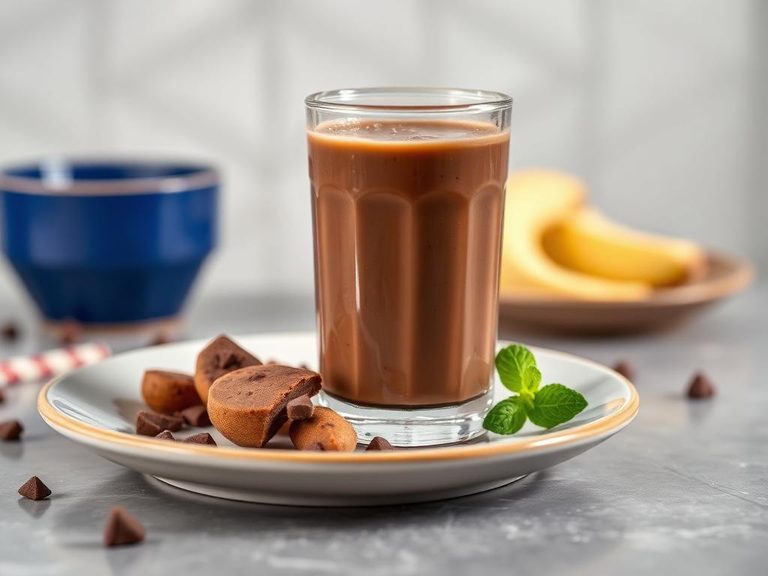
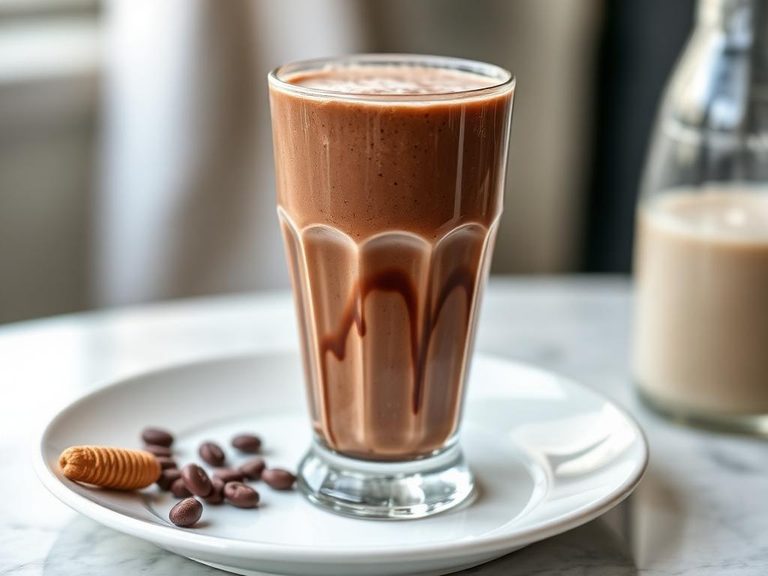
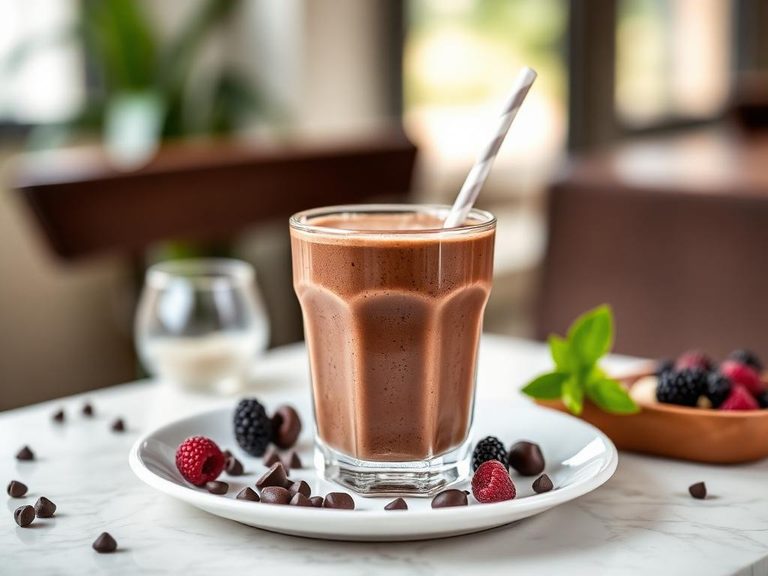



🌍 Where it's eaten
💡 Did you know?
The concept of a dry chocolate-milk mix was popularized in the 1950s by companies like Nestlé (with Nesquik) and Carnation, capitalizing on the post-war boom in convenience foods and home freezers.
Full nutrition (USDA data · scales with serving)
| Water | 7.4 g |
| Energy | 353 kcal |
| Energy | 1477 kj |
| Protein | 19.9 g |
| Total lipid (fat) | 1.4 g |
| Ash | 5.1 g |
| Carbohydrate, by difference | 66.2 g |
| Fiber, total dietary | 0.40 g |
| Total Sugars | 65.8 g |
| Calcium, Ca | 285 mg |
| Iron, Fe | 12.8 mg |
| Magnesium, Mg | 228 mg |
| Phosphorus, P | 427 mg |
| Potassium, K | 947 mg |
| Sodium, Na | 385 mg |
| Zinc, Zn | 8.6 mg |
| Copper, Cu | 1.4 mg |
| Selenium, Se | 12.1 ug |
| Vitamin C, total ascorbic acid | 76.9 mg |
| Thiamin | 0.85 mg |
| Riboflavin | 0.20 mg |
| Niacin | 14.2 mg |
| Vitamin B-6 | 1.1 mg |
| Folate, total | 285 ug |
| Folic acid | 285 ug |
| Folate, food | 0.00 ug |
| Folate, DFE | 485 ug |
| Choline, total | 148 mg |
| Vitamin B-12 | 1.7 ug |
| Vitamin B-12, added | 1.0 ug |
| Vitamin A, RAE | 625 ug |
| Retinol | 625 ug |
| Carotene, beta | 0.00 ug |
| Carotene, alpha | 0.00 ug |
| Cryptoxanthin, beta | 0.00 ug |
| Vitamin A, IU | 2083 iu |
| Lycopene | 0.00 ug |
| Lutein + zeaxanthin | 0.00 ug |
| Vitamin E (alpha-tocopherol) | 9.4 mg |
| Vitamin E, added | 9.4 mg |
| Vitamin D (D2 + D3), International Units | 0.00 iu |
| Vitamin D (D2 + D3) | 0.00 ug |
| Vitamin D3 (cholecalciferol) | 0.00 ug |
| Vitamin K (phylloquinone) | 90.0 ug |
| Alcohol, ethyl | 0.00 g |
| Caffeine | 25.0 mg |
| Theobromine | 290 mg |
Fat & fatty acid profile (per 100g)
| Fatty acids, total saturated | 0.56 g |
| SFA 4:0 | 0.01 g |
| SFA 6:0 | 0.00 g |
| SFA 8:0 | 0.00 g |
| SFA 10:0 | 0.01 g |
| SFA 12:0 | 0.00 g |
| SFA 14:0 | 0.02 g |
| SFA 16:0 | 0.29 g |
| SFA 18:0 | 0.22 g |
| Fatty acids, total monounsaturated | 0.31 g |
| MUFA 16:1 | 0.01 g |
| MUFA 18:1 | 0.30 g |
| MUFA 20:1 | 0.00 g |
| MUFA 22:1 | 0.00 g |
| Fatty acids, total polyunsaturated | 0.28 g |
| PUFA 18:2 | 0.25 g |
| PUFA 18:3 | 0.03 g |
| PUFA 18:4 | 0.00 g |
| PUFA 20:4 | 0.00 g |
| PUFA 20:5 n-3 (EPA) | 0.00 g |
| PUFA 22:5 n-3 (DPA) | 0.00 g |
| PUFA 22:6 n-3 (DHA) | 0.00 g |
| Cholesterol | 12.0 mg |
Amino acid profile (per 100g)
Estimated from Milk, chocolate beverage, hot cocoa, homemade — USDA does not publish this profile for Beverage.
| Tryptophan | 0.04 g |
| Threonine | 0.10 g |
| Isoleucine | 0.17 g |
| Leucine | 0.30 g |
| Lysine | 0.21 g |
| Methionine | 0.08 g |
| Cystine | 0.10 g |
| Phenylalanine | 0.15 g |
| Tyrosine | 0.14 g |
| Valine | 0.20 g |
| Arginine | 0.10 g |
| Histidine | 0.07 g |
| Alanine | 0.10 g |
| Aspartic acid | 0.28 g |
| Glutamic acid | 0.72 g |
| Glycine | 0.06 g |
| Proline | 0.34 g |
| Serine | 0.18 g |
FAQ
Can I use this to make hot chocolate?
Yes, it's a common base. Whisk the powder into hot milk or water for a simple hot cocoa. For a richer drink, use milk and add a pinch of salt.
Is the protein in it from real milk?
Typically, yes. The protein comes from nonfat dry milk or whey protein concentrate, which are derived from dairy milk.
How does it differ from cocoa powder?
This is a complete, sweetened mix containing sugar, milk solids, and cocoa. Unsweetened cocoa powder is just pure ground cocoa beans with no sugar or dairy.
Nutrient density (calculated · NRF9.3)
Nutrient Rich Foods index: beneficial nutrients (protein, fiber, vitamins, minerals) minus saturated fat, added sugar & sodium, per 100 kcal.
NRF9.3 index — Fulgoni, Keast & Drewnowski, 2009. Computed from USDA nutrients.
Weight-loss friendliness (composite index)
Energy density 3.53 kcal/g · 23% calories from protein · 0.4 g fiber · 65.8 g sugar per 100 g.
Composite of energy density (Rolls et al., 1999), protein & fiber satiety, minus sugar. A calculated heuristic — ranks satiety-per-calorie, not a clinical measure.
Dietary load (calculated from USDA values)
Potential renal acid load. Positive = acid-forming, negative = alkaline-forming.
Sodium-to-potassium ratio: 0.41 (lower is better — aim for ≤ 1)
Sodium:potassium per WHO potassium guidance. Computed from USDA nutrients.