

Beef, short loin, porterhouse steak, separable lean and fat, trimmed to 0" fat, all grades, cooked, broiled
Whole food · Beef Products

Photo: Wikipedia
The porterhouse steak is the king of the T-bone family, featuring a generous portion of tenderloin alongside the robust strip steak, all separated by a distinctive T-shaped bone. When broiled to a perfect medium-rare, it offers a symphony of textures: the buttery, melt-in-your-mouth tenderloin contrasts beautifully with the firmer, deeply beefy strip. With nearly 24 grams of high-quality protein per 100g and zero carbs, it's a powerhouse of pure, carnivorous nutrition.
Calorie split: 36% protein · 0% carbs · 64% fat
↓ Full nutrition💚 Why it's loved
People adore the porterhouse for its dramatic presentation and the luxury of enjoying two distinct steak experiences in one cut. Its rich, beefy flavor and satisfying chew make it the centerpiece of celebratory meals and steakhouses worldwide.
⚠️ Watch-outs & how to enjoy it better
As a fatty cut, it's high in saturated fat and calories, which those monitoring heart health or calorie intake should consider. The bone-in presentation can also make portion control tricky, and the price point is significantly higher than other cuts. To counteract, practice strict portion control (see below) and pair it with fiber-rich, non-starchy vegetables like grilled asparagus or a leafy salad to balance the meal.
Key benefits
- Excellent source of complete, high-quality protein for muscle maintenance.
- Rich in bioavailable iron and zinc for immune function.
- Provides B vitamins, especially B12, crucial for nerve health.
- Zero carbohydrates, making it suitable for ketogenic and low-carb diets.
🍽️ Popular dishes
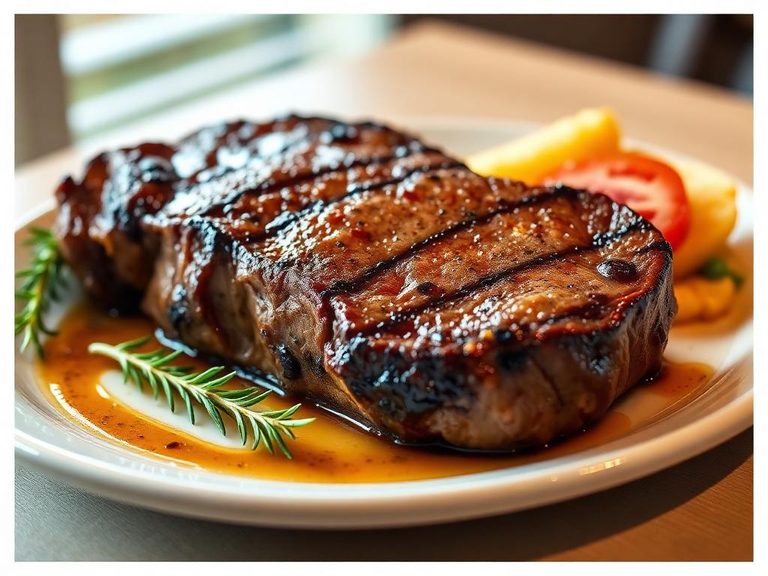
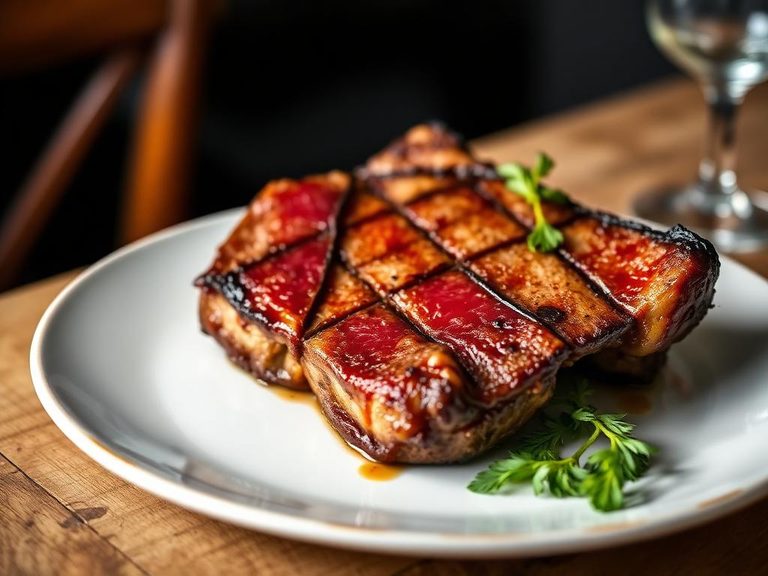
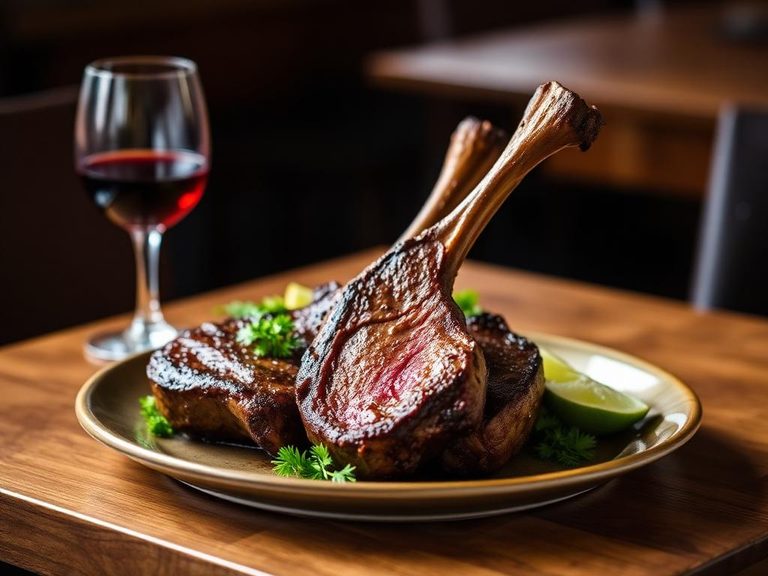
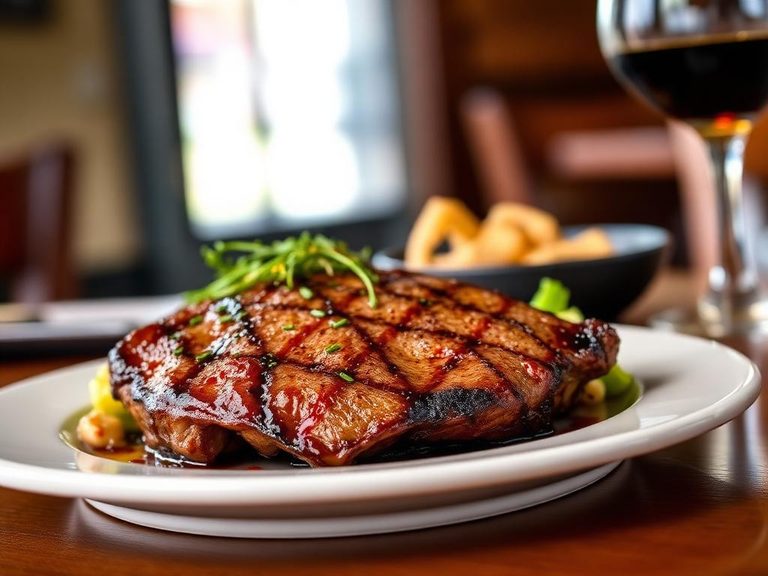
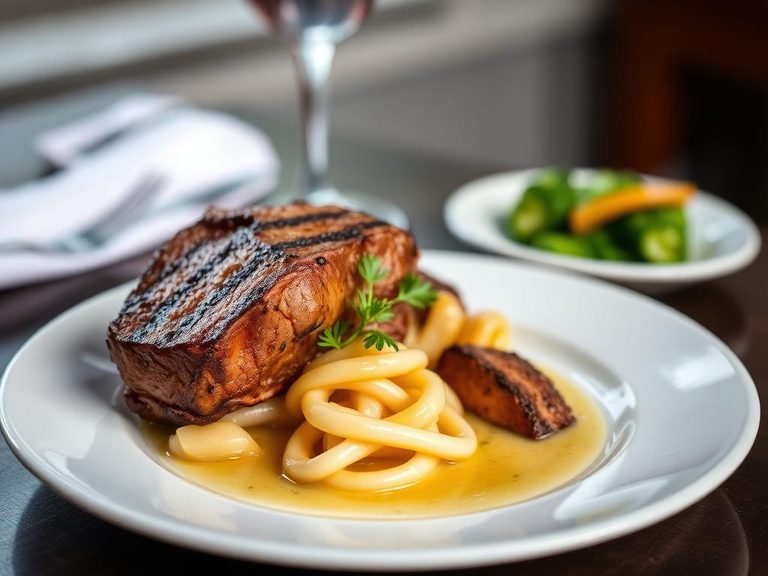
🌍 Where it's eaten
💡 Did you know?
The porterhouse cut is legally defined in the U.S. by the size of its tenderloin; it must have a tenderloin section at least 1.25 inches wide at its widest point, distinguishing it from the smaller T-bone.
Full nutrition (USDA data · scales with serving)
| Water | 54.7 g |
| Energy | 276 kcal |
| Energy | 1155 kj |
| Protein | 24.0 g |
| Total lipid (fat) | 19.3 g |
| Ash | 1.2 g |
| Carbohydrate, by difference | 0.00 g |
| Fiber, total dietary | 0.00 g |
| Total Sugars | 0.00 g |
| Calcium, Ca | 7.0 mg |
| Iron, Fe | 2.9 mg |
| Magnesium, Mg | 22.0 mg |
| Phosphorus, P | 193 mg |
| Potassium, K | 299 mg |
| Sodium, Na | 65.0 mg |
| Zinc, Zn | 4.6 mg |
| Copper, Cu | 0.13 mg |
| Manganese, Mn | 0.01 mg |
| Selenium, Se | 19.6 ug |
| Vitamin C, total ascorbic acid | 0.00 mg |
| Thiamin | 0.10 mg |
| Riboflavin | 0.23 mg |
| Niacin | 4.2 mg |
| Pantothenic acid | 0.31 mg |
| Vitamin B-6 | 0.36 mg |
| Folate, total | 7.0 ug |
| Folic acid | 0.00 ug |
| Folate, food | 7.0 ug |
| Folate, DFE | 7.0 ug |
| Choline, total | 91.3 mg |
| Vitamin B-12 | 2.2 ug |
| Vitamin B-12, added | 0.00 ug |
| Vitamin A, RAE | 0.00 ug |
| Retinol | 0.00 ug |
| Carotene, beta | 0.00 ug |
| Carotene, alpha | 0.00 ug |
| Cryptoxanthin, beta | 0.00 ug |
| Vitamin A, IU | 0.00 iu |
| Lycopene | 0.00 ug |
| Lutein + zeaxanthin | 0.00 ug |
| Vitamin E (alpha-tocopherol) | 0.18 mg |
| Vitamin E, added | 0.00 mg |
| Alcohol, ethyl | 0.00 g |
| Caffeine | 0.00 mg |
| Theobromine | 0.00 mg |
Fat & fatty acid profile (per 100g)
| Fatty acids, total saturated | 7.3 g |
| SFA 4:0 | 0.00 g |
| SFA 6:0 | 0.00 g |
| SFA 8:0 | 0.00 g |
| SFA 10:0 | 0.04 g |
| SFA 12:0 | 0.04 g |
| SFA 14:0 | 0.51 g |
| SFA 16:0 | 4.5 g |
| SFA 18:0 | 2.1 g |
| SFA 20:0 | 0.01 g |
| Fatty acids, total monounsaturated | 8.7 g |
| MUFA 14:1 | 0.10 g |
| MUFA 16:1 | 0.69 g |
| MUFA 18:1 | 7.8 g |
| MUFA 20:1 | 0.02 g |
| MUFA 22:1 | 0.00 g |
| Fatty acids, total polyunsaturated | 0.69 g |
| PUFA 18:2 | 0.47 g |
| PUFA 18:3 | 0.19 g |
| PUFA 18:4 | 0.00 g |
| PUFA 20:4 | 0.03 g |
| PUFA 20:5 n-3 (EPA) | 0.00 g |
| PUFA 22:5 n-3 (DPA) | 0.00 g |
| PUFA 22:6 n-3 (DHA) | 0.00 g |
| Cholesterol | 67.0 mg |
Amino acid profile (per 100g)
| Tryptophan | 0.26 g |
| Threonine | 1.1 g |
| Isoleucine | 1.2 g |
| Leucine | 2.1 g |
| Lysine | 2.2 g |
| Methionine | 0.68 g |
| Cystine | 0.26 g |
| Phenylalanine | 1.0 g |
| Tyrosine | 0.87 g |
| Valine | 1.3 g |
| Arginine | 1.6 g |
| Histidine | 0.78 g |
| Alanine | 1.4 g |
| Aspartic acid | 2.4 g |
| Glutamic acid | 3.8 g |
| Glycine | 1.1 g |
| Proline | 1.0 g |
| Serine | 0.96 g |
| Hydroxyproline | 0.10 g |
FAQ
What's the difference between a porterhouse and a T-bone steak?
Both are cut from the short loin and have a T-shaped bone, but the porterhouse is cut from the rear end of the loin and has a significantly larger portion of tenderloin (filet) than a T-bone.
How should I cook a porterhouse steak at home?
For best results, bring the steak to room temperature, season generously, and use a very hot grill or cast-iron skillet. Sear both sides, then finish in a 400°F (200°C) oven until it reaches your desired doneness (130°F/54°C for medium-rare). Rest for 5-10 minutes before carving off the bone.
Is the fat on a porterhouse steak edible?
Yes, the fat is a key source of flavor and juiciness. Trimmed to 0" as specified, it means the external fat cap is removed, but the intramuscular marbling and fat within the strip section remain, contributing to its rich taste and texture.
Nutrient density (calculated · NRF9.3)
Nutrient Rich Foods index: beneficial nutrients (protein, fiber, vitamins, minerals) minus saturated fat, added sugar & sodium, per 100 kcal.
NRF9.3 index — Fulgoni, Keast & Drewnowski, 2009. Computed from USDA nutrients.
Weight-loss friendliness (composite index)
Energy density 2.76 kcal/g · 35% calories from protein · 0.0 g fiber · 0.0 g sugar per 100 g.
Composite of energy density (Rolls et al., 1999), protein & fiber satiety, minus sugar. A calculated heuristic — ranks satiety-per-calorie, not a clinical measure.
Dietary load (calculated from USDA values)
Potential renal acid load. Positive = acid-forming, negative = alkaline-forming.
Sodium-to-potassium ratio: 0.22 (lower is better — aim for ≤ 1)
Sodium:potassium per WHO potassium guidance. Computed from USDA nutrients.