

Beans, pinto, mature seeds, canned, solids and liquids, low sodium
Whole food · Legumes and Legume Products

Photo: Wikipedia
These are mature pinto beans, canned in a low-sodium brine, offering a soft, creamy texture and a mild, earthy flavor that readily absorbs seasonings. Nutritionally, they are a standout source of plant-based protein and dietary fiber while being very low in fat. The canning process makes them a convenient, ready-to-eat pantry staple.
Calorie split: 22% protein · 72% carbs · 6% fat
↓ Full nutrition💚 Why it's loved
People love their velvety, comforting texture and their incredible versatility—they act as a blank canvas for bold spices, smoky meats, or bright acids. They are a foundational, affordable protein in many cultures, forming the hearty base of beloved comfort foods.
⚠️ Watch-outs & how to enjoy it better
The canning liquid can still contain residual sodium despite being 'low sodium,' and the high fiber content may cause digestive discomfort for some. To counteract, rinse the beans thoroughly under water to reduce sodium by up to 40%, and introduce them gradually into your diet while drinking plenty of water.
Key benefits
- Excellent source of dietary fiber for digestive health.
- Provides plant-based protein for muscle maintenance.
- Naturally low in fat and contains no cholesterol.
- Rich in folate, iron, and magnesium.
- Convenient, pre-cooked, and shelf-stable.
🍽️ Popular dishes
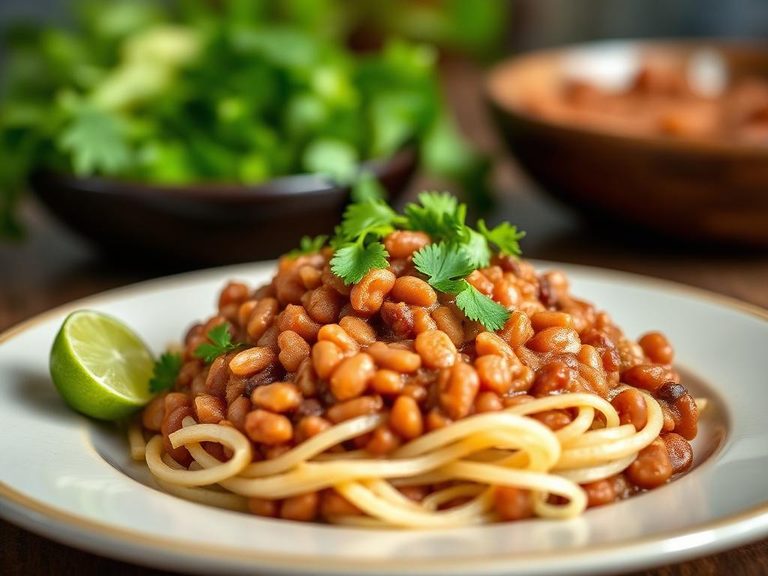
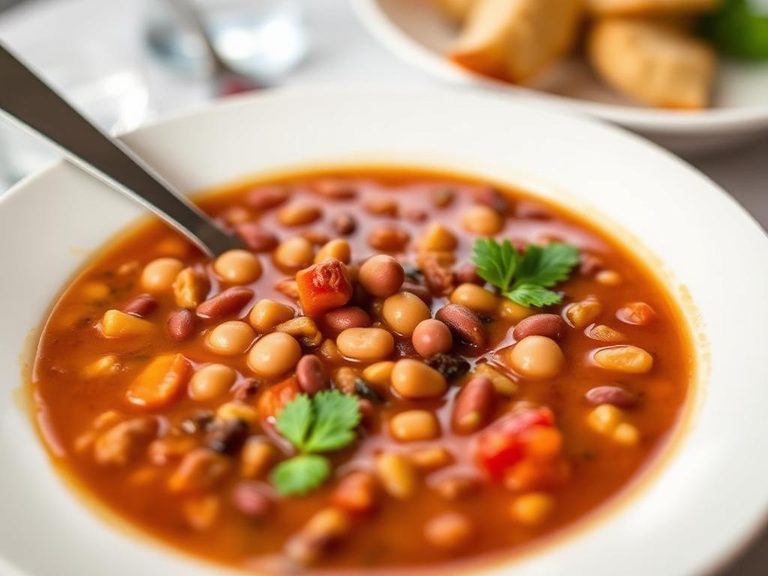
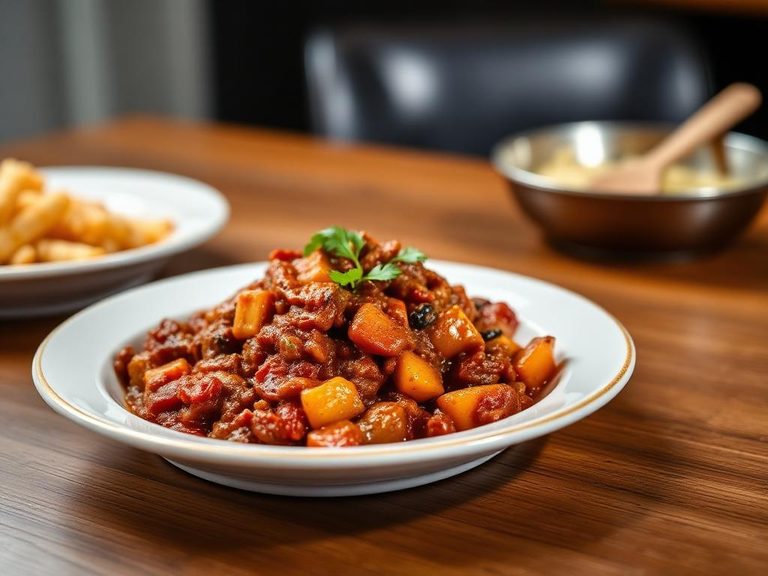

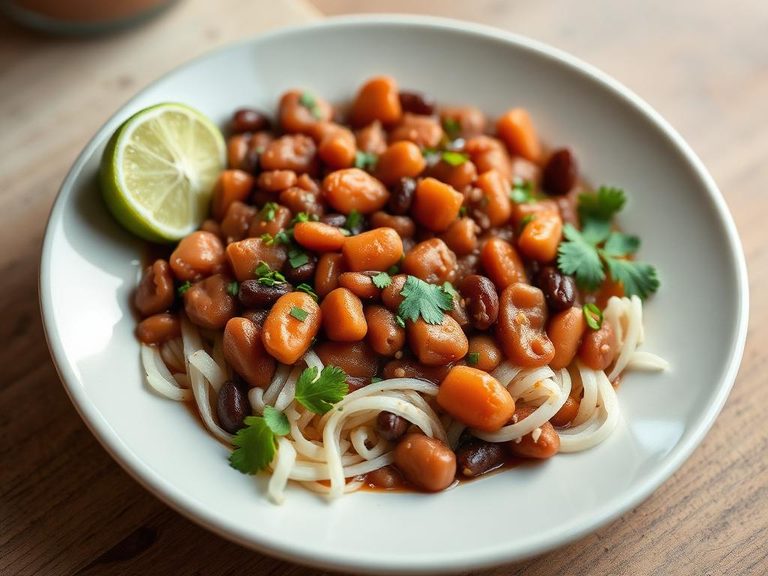
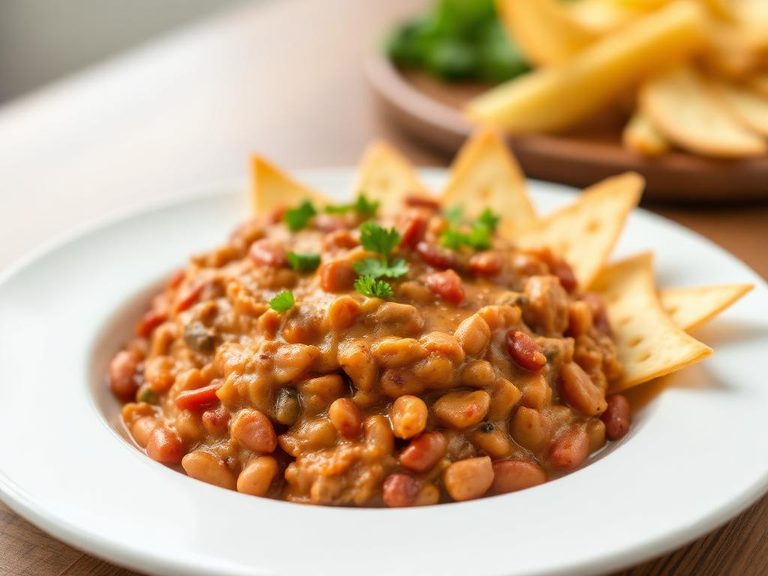
🌍 Where it's eaten
💡 Did you know?
Pinto beans get their name from the Spanish word for 'painted,' referring to their speckled appearance, which disappears when cooked, turning a uniform pinkish-brown.
Full nutrition (USDA data · scales with serving)
| Water | 78.2 g |
| Energy | 82.0 kcal |
| Energy | 345 kj |
| Protein | 4.6 g |
| Total lipid (fat) | 0.56 g |
| Ash | 1.5 g |
| Carbohydrate, by difference | 15.2 g |
| Fiber, total dietary | 4.6 g |
| Total Sugars | 1.0 g |
| Calcium, Ca | 47.0 mg |
| Iron, Fe | 1.5 mg |
| Magnesium, Mg | 33.0 mg |
| Phosphorus, P | 92.0 mg |
| Potassium, K | 276 mg |
| Sodium, Na | 146 mg |
| Zinc, Zn | 0.56 mg |
| Copper, Cu | 0.16 mg |
| Manganese, Mn | 0.32 mg |
| Selenium, Se | 3.7 ug |
| Vitamin C, total ascorbic acid | 0.70 mg |
| Thiamin | 0.05 mg |
| Riboflavin | 0.02 mg |
| Niacin | 0.27 mg |
| Pantothenic acid | 0.14 mg |
| Vitamin B-6 | 0.14 mg |
| Folate, total | 24.0 ug |
| Folic acid | 0.00 ug |
| Folate, food | 24.0 ug |
| Folate, DFE | 24.0 ug |
| Choline, total | 20.8 mg |
| Vitamin B-12 | 0.00 ug |
| Vitamin B-12, added | 0.00 ug |
| Vitamin A, RAE | 0.00 ug |
| Retinol | 0.00 ug |
| Carotene, beta | 0.00 ug |
| Carotene, alpha | 0.00 ug |
| Cryptoxanthin, beta | 0.00 ug |
| Vitamin A, IU | 0.00 iu |
| Lycopene | 0.00 ug |
| Lutein + zeaxanthin | 0.00 ug |
| Vitamin E (alpha-tocopherol) | 0.55 mg |
| Vitamin E, added | 0.00 mg |
| Vitamin D (D2 + D3), International Units | 0.00 iu |
| Vitamin D (D2 + D3) | 0.00 ug |
| Vitamin K (phylloquinone) | 2.1 ug |
| Alcohol, ethyl | 0.00 g |
| Caffeine | 0.00 mg |
| Theobromine | 0.00 mg |
Fat & fatty acid profile (per 100g)
| Fatty acids, total saturated | 0.12 g |
| SFA 4:0 | 0.00 g |
| SFA 6:0 | 0.00 g |
| SFA 8:0 | 0.00 g |
| SFA 10:0 | 0.00 g |
| SFA 12:0 | 0.00 g |
| SFA 14:0 | 0.00 g |
| SFA 16:0 | 0.11 g |
| SFA 18:0 | 0.00 g |
| Fatty acids, total monounsaturated | 0.11 g |
| MUFA 16:1 | 0.00 g |
| MUFA 18:1 | 0.11 g |
| MUFA 20:1 | 0.00 g |
| MUFA 22:1 | 0.00 g |
| Fatty acids, total polyunsaturated | 0.20 g |
| PUFA 18:2 | 0.09 g |
| PUFA 18:3 | 0.12 g |
| PUFA 18:4 | 0.00 g |
| PUFA 20:4 | 0.00 g |
| PUFA 20:5 n-3 (EPA) | 0.00 g |
| PUFA 22:5 n-3 (DPA) | 0.00 g |
| PUFA 22:6 n-3 (DHA) | 0.00 g |
| Fatty acids, total trans | 0.00 g |
| Cholesterol | 0.00 mg |
Amino acid profile (per 100g)
| Tryptophan | 0.05 g |
| Threonine | 0.18 g |
| Isoleucine | 0.19 g |
| Leucine | 0.34 g |
| Lysine | 0.29 g |
| Methionine | 0.06 g |
| Cystine | 0.04 g |
| Phenylalanine | 0.24 g |
| Tyrosine | 0.09 g |
| Valine | 0.22 g |
| Arginine | 0.24 g |
| Histidine | 0.12 g |
| Alanine | 0.19 g |
| Aspartic acid | 0.49 g |
| Glutamic acid | 0.66 g |
| Glycine | 0.17 g |
| Proline | 0.23 g |
| Serine | 0.25 g |
FAQ
Do I need to cook canned pinto beans?
No, they are fully cooked and safe to eat straight from the can. They are typically rinsed and heated for recipes or served warm as a side dish.
How can I reduce the sodium content further?
Rinsing and draining canned beans can reduce sodium content by approximately 35-40%. Using no-salt-added canned beans gives you full control over seasoning.
What is the difference between pinto and black beans?
Pinto beans are larger, speckled, and turn pinkish-brown when cooked with a creamier texture. Black beans are smaller, hold their shape better, and have a denser, more earthy flavor.
Nutrient density (calculated · NRF9.3)
Nutrient Rich Foods index: beneficial nutrients (protein, fiber, vitamins, minerals) minus saturated fat, added sugar & sodium, per 100 kcal.
NRF9.3 index — Fulgoni, Keast & Drewnowski, 2009. Computed from USDA nutrients.
Weight-loss friendliness (composite index)
Energy density 0.82 kcal/g · 22% calories from protein · 4.6 g fiber · 1.0 g sugar per 100 g.
Composite of energy density (Rolls et al., 1999), protein & fiber satiety, minus sugar. A calculated heuristic — ranks satiety-per-calorie, not a clinical measure.
Dietary load (calculated from USDA values)
Potential renal acid load. Positive = acid-forming, negative = alkaline-forming.
Sodium-to-potassium ratio: 0.53 (lower is better — aim for ≤ 1)
Sodium:potassium per WHO potassium guidance. Computed from USDA nutrients.