

Beans, black, mature seeds, cooked, boiled, without salt
Whole food · Legumes and Legume Products

Photo: Wikipedia
These are the glossy, jet-black seeds of the black turtle bean, cooked until tender with a satisfyingly creamy interior and a subtle, earthy, slightly sweet flavor. They are a nutritional powerhouse, delivering an exceptional 8.7 grams of fiber and nearly 9 grams of plant-based protein per 100 grams for minimal fat.
Calorie split: 26% protein · 70% carbs · 4% fat
↓ Full nutrition💚 Why it's loved
People love black beans for their deep, savory flavor that forms the backbone of countless comfort foods, and for their incredible versatility—they absorb spices beautifully and provide a hearty, satisfying texture in everything from soups to tacos.
⚠️ Watch-outs & how to enjoy it better
They contain oligosaccharides, which can cause gas and bloating in some individuals. To counteract this, soak dried beans thoroughly (changing the water) and cook them well; starting with a small portion and gradually increasing intake also helps your digestive system adapt.
Key benefits
- Excellent source of dietary fiber for digestive health.
- High in plant-based protein for muscle maintenance.
- Rich in antioxidants like anthocyanins (from their black color).
- Good source of folate, iron, and magnesium.
- Low in fat and naturally cholesterol-free.
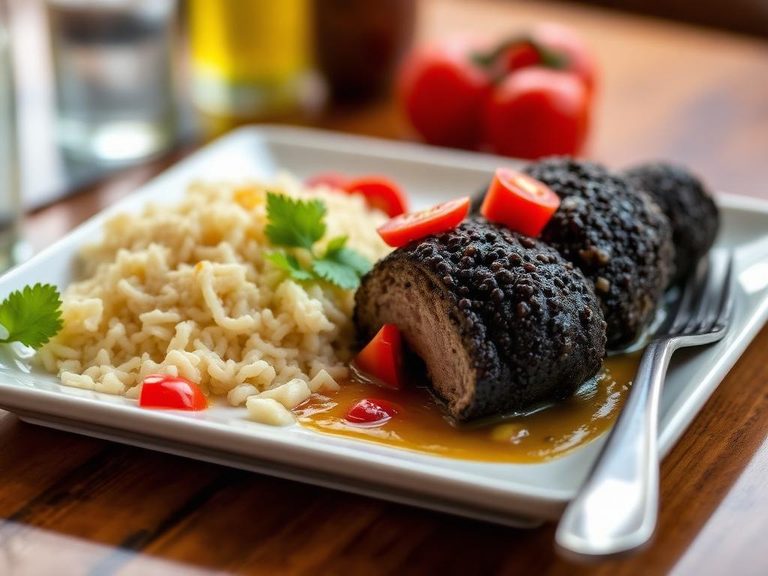
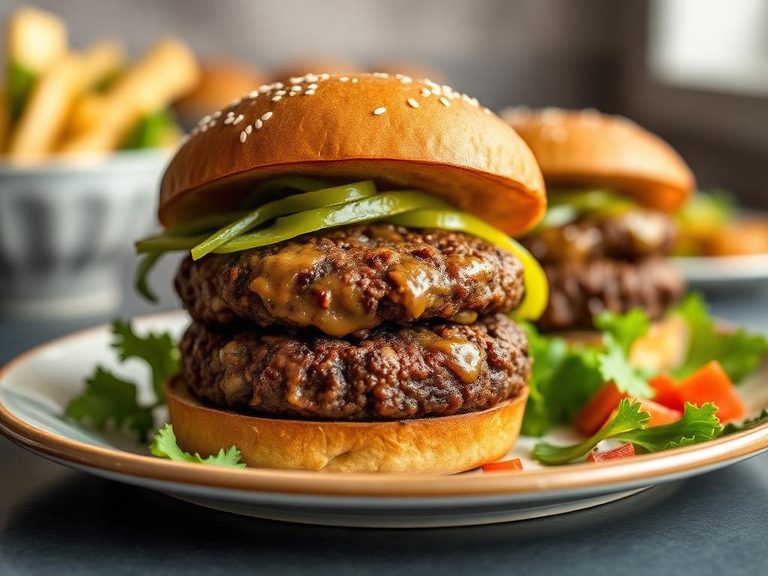
🍽️ Popular dishes
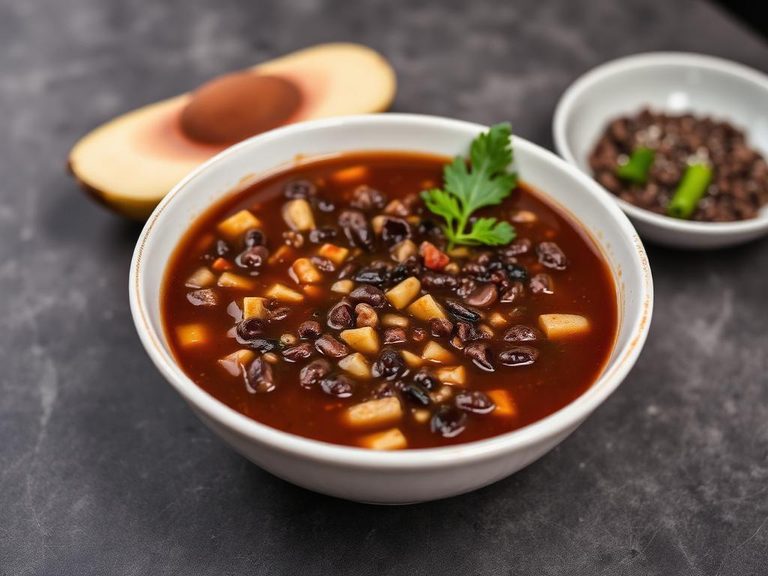
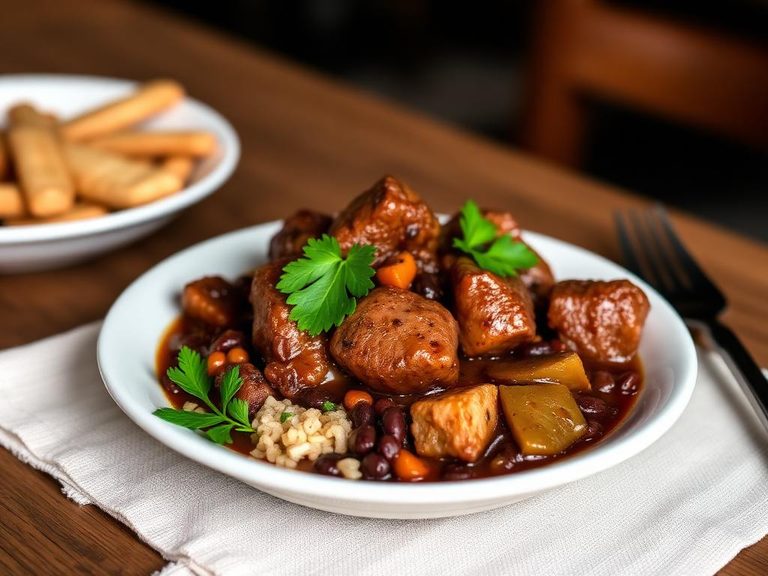
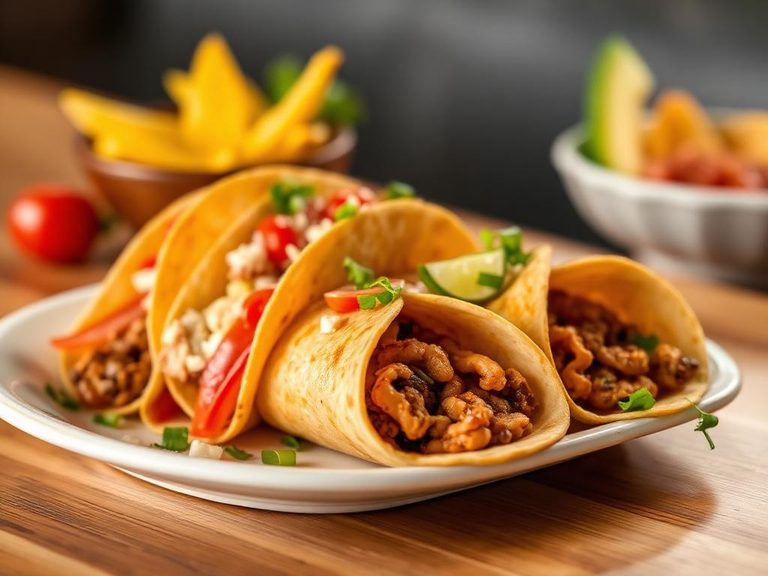
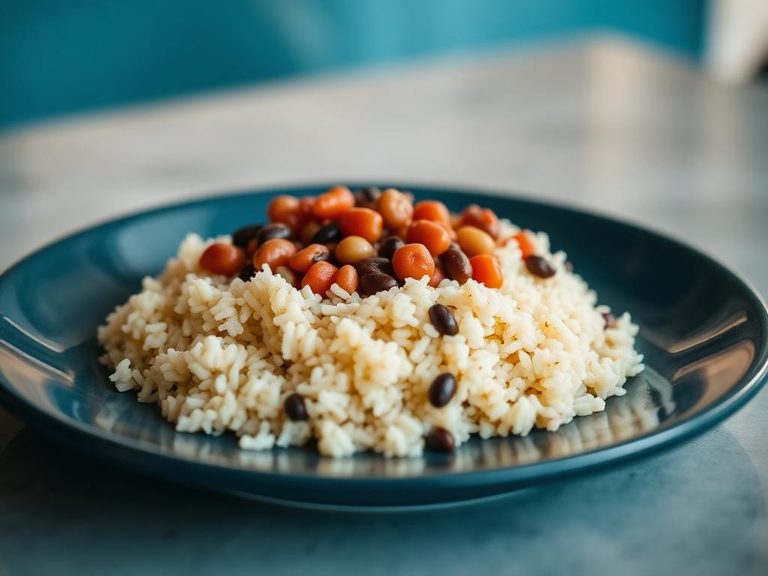
🌍 Where it's eaten
💡 Did you know?
The dark pigment in black bean skins is so potent it can dye cooking water a deep purple and has been used as a natural fabric dye.
Full nutrition (USDA data · scales with serving)
| Water | 65.7 g |
| Energy | 132 kcal |
| Energy | 552 kj |
| Protein | 8.9 g |
| Total lipid (fat) | 0.54 g |
| Ash | 1.1 g |
| Carbohydrate, by difference | 23.7 g |
| Fiber, total dietary | 8.7 g |
| Total Sugars | 0.32 g |
| Calcium, Ca | 27.0 mg |
| Iron, Fe | 2.1 mg |
| Magnesium, Mg | 70.0 mg |
| Phosphorus, P | 140 mg |
| Potassium, K | 355 mg |
| Sodium, Na | 1.0 mg |
| Zinc, Zn | 1.1 mg |
| Copper, Cu | 0.21 mg |
| Manganese, Mn | 0.44 mg |
| Selenium, Se | 1.2 ug |
| Vitamin C, total ascorbic acid | 0.00 mg |
| Thiamin | 0.24 mg |
| Riboflavin | 0.06 mg |
| Niacin | 0.51 mg |
| Pantothenic acid | 0.24 mg |
| Vitamin B-6 | 0.07 mg |
| Folate, total | 149 ug |
| Folic acid | 0.00 ug |
| Folate, food | 149 ug |
| Folate, DFE | 149 ug |
| Choline, total | 32.6 mg |
| Vitamin B-12 | 0.00 ug |
| Vitamin B-12, added | 0.00 ug |
| Vitamin A, RAE | 0.00 ug |
| Retinol | 0.00 ug |
| Carotene, beta | 0.00 ug |
| Carotene, alpha | 0.00 ug |
| Cryptoxanthin, beta | 0.00 ug |
| Vitamin A, IU | 6.0 iu |
| Lycopene | 0.00 ug |
| Lutein + zeaxanthin | 0.00 ug |
| Vitamin E (alpha-tocopherol) | 0.87 mg |
| Vitamin E, added | 0.00 mg |
| Vitamin D (D2 + D3), International Units | 0.00 iu |
| Vitamin D (D2 + D3) | 0.00 ug |
| Vitamin K (phylloquinone) | 3.3 ug |
| Alcohol, ethyl | 0.00 g |
| Caffeine | 0.00 mg |
| Theobromine | 0.00 mg |
Fat & fatty acid profile (per 100g)
| Fatty acids, total saturated | 0.14 g |
| SFA 4:0 | 0.00 g |
| SFA 6:0 | 0.00 g |
| SFA 8:0 | 0.00 g |
| SFA 10:0 | 0.00 g |
| SFA 12:0 | 0.00 g |
| SFA 14:0 | 0.00 g |
| SFA 16:0 | 0.13 g |
| SFA 18:0 | 0.01 g |
| Fatty acids, total monounsaturated | 0.05 g |
| MUFA 16:1 | 0.00 g |
| MUFA 18:1 | 0.05 g |
| MUFA 20:1 | 0.00 g |
| MUFA 22:1 | 0.00 g |
| Fatty acids, total polyunsaturated | 0.23 g |
| PUFA 18:2 | 0.13 g |
| PUFA 18:3 | 0.10 g |
| PUFA 18:4 | 0.00 g |
| PUFA 20:4 | 0.00 g |
| PUFA 20:5 n-3 (EPA) | 0.00 g |
| PUFA 22:5 n-3 (DPA) | 0.00 g |
| PUFA 22:6 n-3 (DHA) | 0.00 g |
| Fatty acids, total trans | 0.00 g |
| Cholesterol | 0.00 mg |
Amino acid profile (per 100g)
| Tryptophan | 0.10 g |
| Threonine | 0.37 g |
| Isoleucine | 0.39 g |
| Leucine | 0.71 g |
| Lysine | 0.61 g |
| Methionine | 0.13 g |
| Cystine | 0.10 g |
| Phenylalanine | 0.48 g |
| Tyrosine | 0.25 g |
| Valine | 0.46 g |
| Arginine | 0.55 g |
| Histidine | 0.25 g |
| Alanine | 0.37 g |
| Aspartic acid | 1.1 g |
| Glutamic acid | 1.4 g |
| Glycine | 0.35 g |
| Proline | 0.38 g |
| Serine | 0.48 g |
FAQ
Are canned black beans as healthy as dried?
Yes, nutritionally they are very similar. The main difference is sodium; choose 'no salt added' cans or rinse them thoroughly under water to reduce sodium content by about 40%.
Why do my black beans sometimes turn greyish when cooked?
This is a natural reaction between the anthocyanin pigments and alkaline water or certain minerals. Adding a splash of acid like vinegar or tomato juice during cooking can help maintain their deep black color.
Can I eat the cooking liquid?
Absolutely! The 'bean broth' is rich in nutrients, flavor, and soluble fiber. It's perfect for thickening soups and stews or as a flavorful cooking liquid for rice.
Nutrient density (calculated · NRF9.3)
Nutrient Rich Foods index: beneficial nutrients (protein, fiber, vitamins, minerals) minus saturated fat, added sugar & sodium, per 100 kcal.
NRF9.3 index — Fulgoni, Keast & Drewnowski, 2009. Computed from USDA nutrients.
Weight-loss friendliness (composite index)
Energy density 1.32 kcal/g · 27% calories from protein · 8.7 g fiber · 0.3 g sugar per 100 g.
Composite of energy density (Rolls et al., 1999), protein & fiber satiety, minus sugar. A calculated heuristic — ranks satiety-per-calorie, not a clinical measure.
Dietary load (calculated from USDA values)
Potential renal acid load. Positive = acid-forming, negative = alkaline-forming.
Sodium-to-potassium ratio: 0.00 (lower is better — aim for ≤ 1)
Sodium:potassium per WHO potassium guidance. Computed from USDA nutrients.