

Beans, black, mature seeds, cooked, boiled, with salt
Whole food · Legumes and Legume Products
The black bean is a small, glossy, and creamy legume with a deep, earthy flavor and a satisfyingly soft texture when cooked. Nutritionally, it's a standout for its high fiber and plant-based protein content, making it a filling and nutrient-dense staple. With a mild, slightly sweet undertone, it serves as a versatile canvas for a wide array of spices and seasonings.
Calorie split: 26% protein · 70% carbs · 4% fat
↓ Full nutrition💚 Why it's loved
People adore black beans for their rich, velvety texture and ability to absorb the flavors of garlic, cumin, and chili in savory dishes. They are a beloved, affordable protein cornerstone in countless cuisines, from Latin American to Southern US cooking.
⚠️ Watch-outs & how to enjoy it better
The added salt in canned or pre-cooked versions can be a concern for those monitoring sodium intake. To counteract this, rinse canned beans thoroughly under water. Their high fiber content may cause digestive discomfort for some; start with smaller portions and ensure adequate water intake. Soaking and cooking dried beans from scratch gives you full control over sodium and texture.
Key benefits
- Excellent source of plant-based protein (8.86g per 100g).
- High in dietary fiber (8.7g per 100g) for digestive health.
- Low in fat (0.54g per 100g) and naturally cholesterol-free.
- Rich in complex carbohydrates for sustained energy.
- Contains essential minerals like iron, magnesium, and folate.
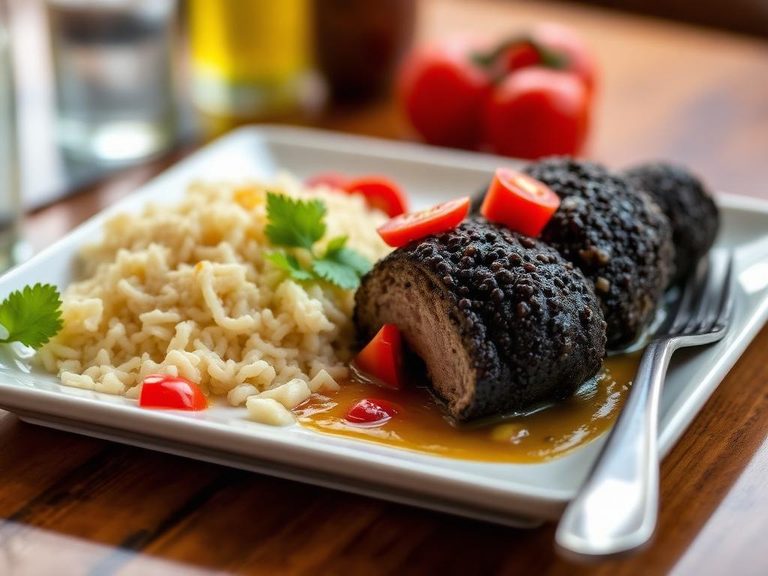
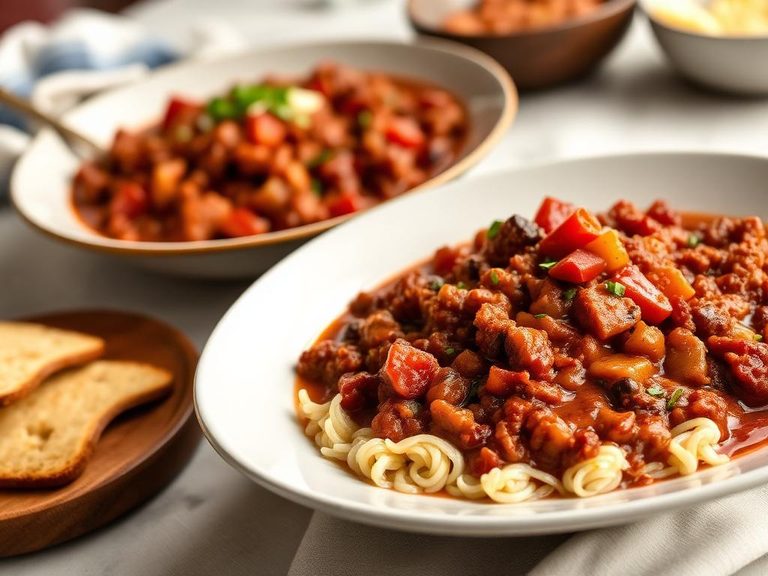
🍽️ Popular dishes
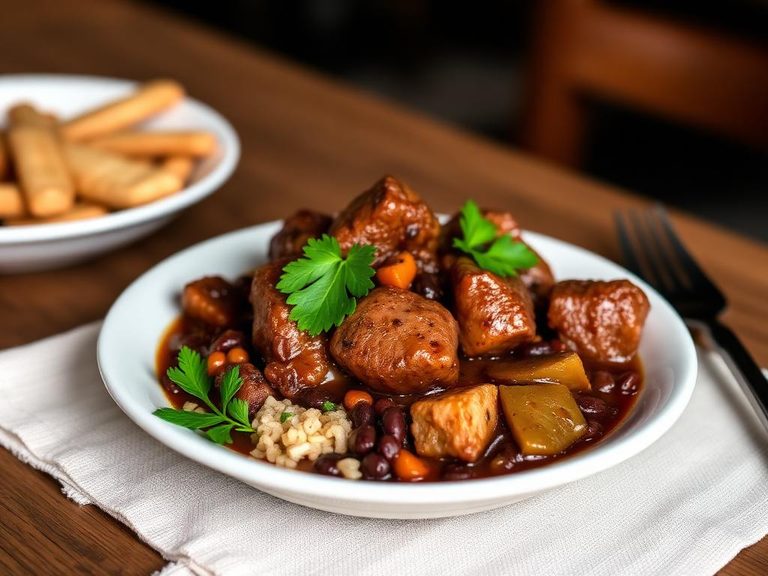
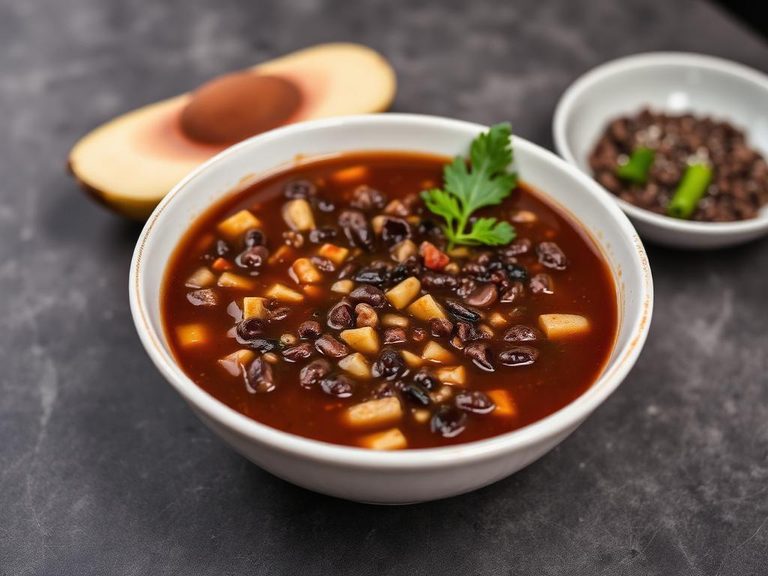
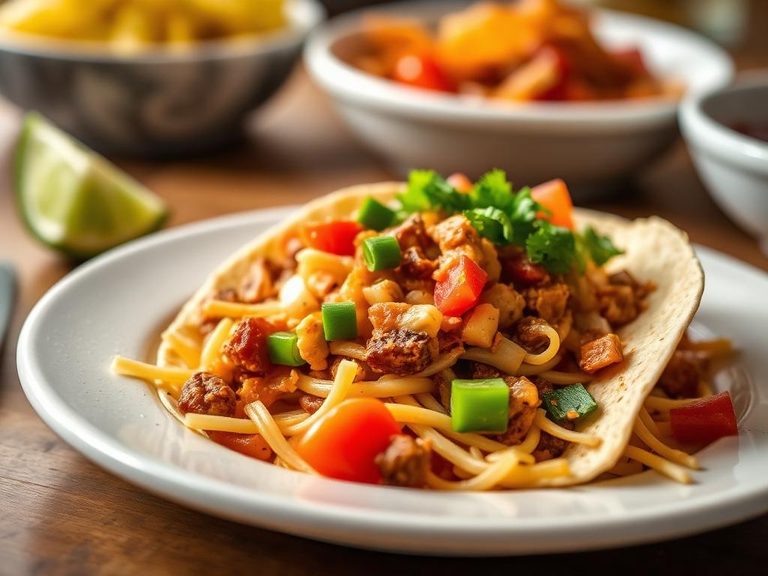
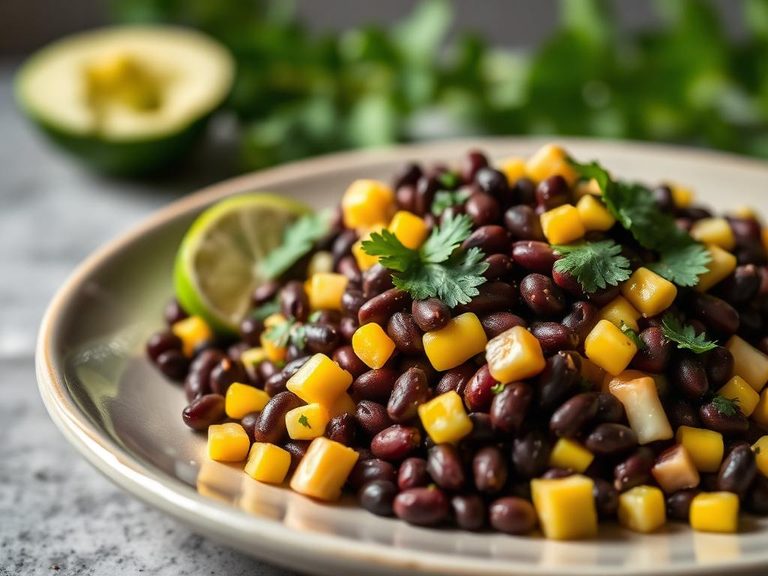
🌍 Where it's eaten
💡 Did you know?
The dark pigment in black beans comes from anthocyanins, the same powerful antioxidants found in blueberries and red wine.
Full nutrition (USDA data · scales with serving)
| Water | 65.7 g |
| Energy | 132 kcal |
| Energy | 552 kj |
| Protein | 8.9 g |
| Total lipid (fat) | 0.54 g |
| Ash | 1.1 g |
| Carbohydrate, by difference | 23.7 g |
| Fiber, total dietary | 8.7 g |
| Total Sugars | 0.32 g |
| Calcium, Ca | 27.0 mg |
| Iron, Fe | 2.1 mg |
| Magnesium, Mg | 70.0 mg |
| Phosphorus, P | 140 mg |
| Potassium, K | 355 mg |
| Sodium, Na | 237 mg |
| Zinc, Zn | 1.1 mg |
| Copper, Cu | 0.21 mg |
| Manganese, Mn | 0.44 mg |
| Selenium, Se | 1.2 ug |
| Vitamin C, total ascorbic acid | 0.00 mg |
| Thiamin | 0.24 mg |
| Riboflavin | 0.06 mg |
| Niacin | 0.51 mg |
| Pantothenic acid | 0.24 mg |
| Vitamin B-6 | 0.07 mg |
| Folate, total | 149 ug |
| Folic acid | 0.00 ug |
| Folate, food | 149 ug |
| Folate, DFE | 149 ug |
| Choline, total | 32.6 mg |
| Vitamin B-12 | 0.00 ug |
| Vitamin B-12, added | 0.00 ug |
| Vitamin A, RAE | 0.00 ug |
| Retinol | 0.00 ug |
| Carotene, beta | 0.00 ug |
| Carotene, alpha | 0.00 ug |
| Cryptoxanthin, beta | 0.00 ug |
| Vitamin A, IU | 6.0 iu |
| Lycopene | 0.00 ug |
| Lutein + zeaxanthin | 0.00 ug |
| Vitamin E (alpha-tocopherol) | 0.87 mg |
| Vitamin E, added | 0.00 mg |
| Vitamin D (D2 + D3), International Units | 0.00 iu |
| Vitamin D (D2 + D3) | 0.00 ug |
| Vitamin K (phylloquinone) | 3.3 ug |
| Alcohol, ethyl | 0.00 g |
| Caffeine | 0.00 mg |
| Theobromine | 0.00 mg |
Fat & fatty acid profile (per 100g)
| Fatty acids, total saturated | 0.14 g |
| SFA 4:0 | 0.00 g |
| SFA 6:0 | 0.00 g |
| SFA 8:0 | 0.00 g |
| SFA 10:0 | 0.00 g |
| SFA 12:0 | 0.00 g |
| SFA 14:0 | 0.00 g |
| SFA 16:0 | 0.13 g |
| SFA 18:0 | 0.01 g |
| Fatty acids, total monounsaturated | 0.05 g |
| MUFA 16:1 | 0.00 g |
| MUFA 18:1 | 0.05 g |
| MUFA 20:1 | 0.00 g |
| MUFA 22:1 | 0.00 g |
| Fatty acids, total polyunsaturated | 0.23 g |
| PUFA 18:2 | 0.13 g |
| PUFA 18:3 | 0.10 g |
| PUFA 18:4 | 0.00 g |
| PUFA 20:4 | 0.00 g |
| PUFA 20:5 n-3 (EPA) | 0.00 g |
| PUFA 22:5 n-3 (DPA) | 0.00 g |
| PUFA 22:6 n-3 (DHA) | 0.00 g |
| Fatty acids, total trans | 0.00 g |
| Cholesterol | 0.00 mg |
Amino acid profile (per 100g)
| Tryptophan | 0.10 g |
| Threonine | 0.37 g |
| Isoleucine | 0.39 g |
| Leucine | 0.71 g |
| Lysine | 0.61 g |
| Methionine | 0.13 g |
| Cystine | 0.10 g |
| Phenylalanine | 0.48 g |
| Tyrosine | 0.25 g |
| Valine | 0.46 g |
| Arginine | 0.55 g |
| Histidine | 0.25 g |
| Alanine | 0.37 g |
| Aspartic acid | 1.1 g |
| Glutamic acid | 1.4 g |
| Glycine | 0.35 g |
| Proline | 0.38 g |
| Serine | 0.48 g |
FAQ
Are canned black beans as healthy as dried?
Yes, nutritionally they are very similar. The main difference is sodium content in the canning liquid. Rinsing canned beans can reduce their sodium by up to 40%.
Do I need to soak dried black beans?
Soaking is recommended to reduce cooking time and may help improve digestibility by breaking down some complex sugars. A quick-soak method involves boiling for 2 minutes, then letting them stand off-heat for an hour.
Why do my black beans sometimes turn purple when cooked?
This is a natural reaction between the anthocyanin pigments in the bean's skin and the alkaline minerals in your cooking water. It's harmless and doesn't affect flavor.
Nutrient density (calculated · NRF9.3)
Nutrient Rich Foods index: beneficial nutrients (protein, fiber, vitamins, minerals) minus saturated fat, added sugar & sodium, per 100 kcal.
NRF9.3 index — Fulgoni, Keast & Drewnowski, 2009. Computed from USDA nutrients.
Weight-loss friendliness (composite index)
Energy density 1.32 kcal/g · 27% calories from protein · 8.7 g fiber · 0.3 g sugar per 100 g.
Composite of energy density (Rolls et al., 1999), protein & fiber satiety, minus sugar. A calculated heuristic — ranks satiety-per-calorie, not a clinical measure.
Dietary load (calculated from USDA values)
Potential renal acid load. Positive = acid-forming, negative = alkaline-forming.
Sodium-to-potassium ratio: 0.67 (lower is better — aim for ≤ 1)
Sodium:potassium per WHO potassium guidance. Computed from USDA nutrients.