

Babyfood, fruit, bananas and pineapple with tapioca, strained
Whole food · Baby Foods

Photo: Wikipedia
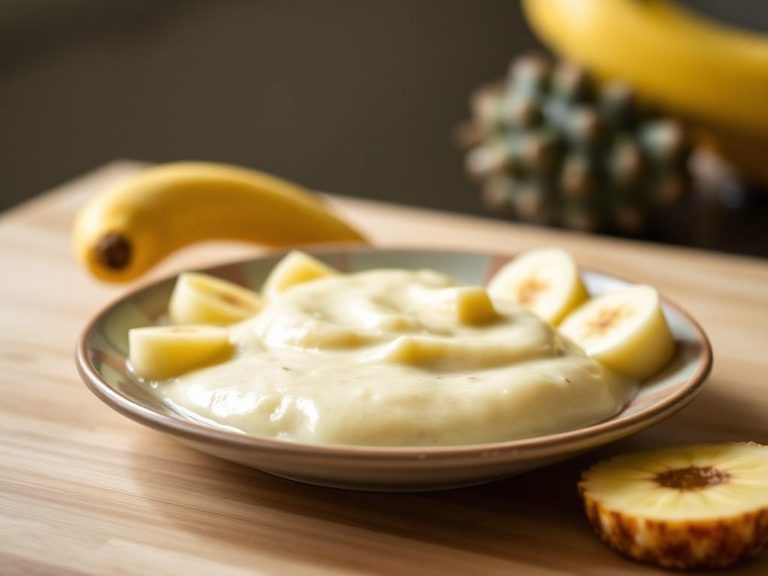
This is a smooth, velvety baby food puree blending the creamy sweetness of ripe bananas with the bright, tropical tang of pineapple, all thickened with subtle tapioca starch. Its texture is perfectly silky and strain-free, designed for gentle digestion. Nutritionally, it's a simple, low-fat energy source, primarily offering quick-release natural sugars and a modest amount of fiber.
Calorie split: 1% protein · 99% carbs · 0% fat
↓ Full nutrition💚 Why it's loved
Parents and caregivers love it for its naturally sweet, kid-approved flavor combination that makes introducing fruit simple. The smooth, consistent texture is ideal for babies transitioning to solids, and it serves as a convenient, no-prep snack.
⚠️ Watch-outs & how to enjoy it better
The high sugar content (over 10g per 100g) can contribute to blood sugar spikes if consumed in large quantities, especially for toddlers. To mitigate this, serve small portions and pair it with a source of protein or fat, like a smear of nut butter on a side of toast or a spoonful of full-fat yogurt. Pineapple is a common oral irritant for some; if it causes mouth irritation, the strained form is usually milder, but monitor intake.
Key benefits
- Provides quick, easily digestible energy from natural fruit sugars
- Offers a gentle source of dietary fiber for digestive health
- Naturally fat-free and low in protein, suitable for early weaning
- Contains no added sodium or artificial ingredients
- Banana provides potassium, while pineapple offers vitamin C
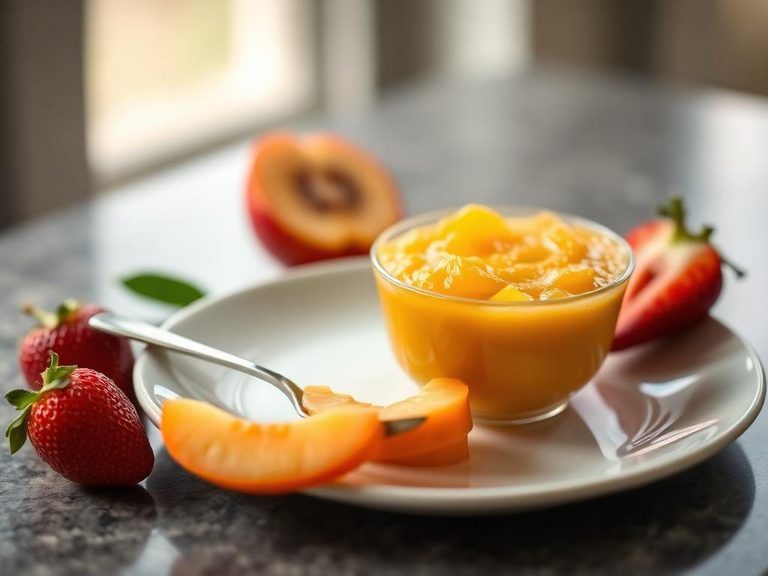
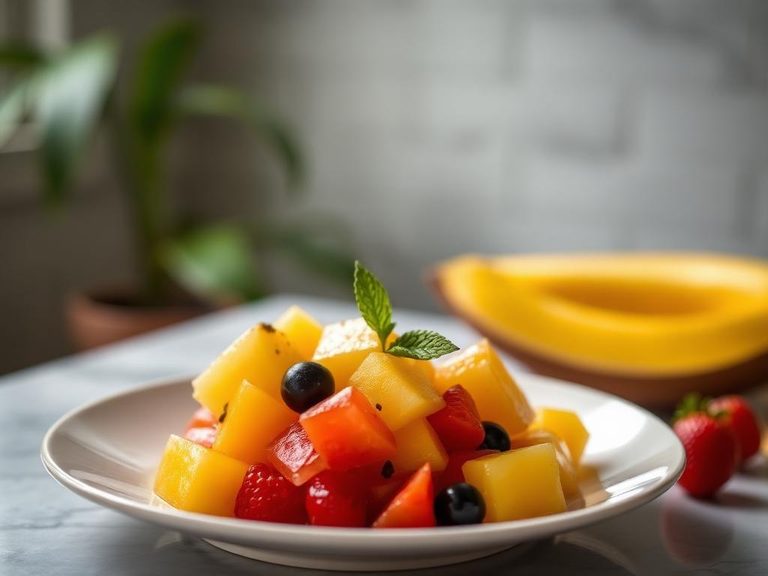
🍽️ Popular dishes
🌍 Where it's eaten
💡 Did you know?
Tapioca, derived from cassava root, was historically used as a starch thickener in baby foods long before cornstarch became common, prized for its neutral flavor and ability to create a glossy, smooth texture without altering the fruit's taste.
Full nutrition (USDA data · scales with serving)
| Water | 81.7 g |
| Energy | 65.0 kcal |
| Energy | 272 kj |
| Protein | 0.20 g |
| Total lipid (fat) | 0.00 g |
| Ash | 0.53 g |
| Carbohydrate, by difference | 17.8 g |
| Fiber, total dietary | 1.6 g |
| Total Sugars | 10.7 g |
| Sucrose | 3.9 g |
| Glucose | 3.4 g |
| Fructose | 3.4 g |
| Lactose | 0.00 g |
| Maltose | 0.01 g |
| Galactose | 0.00 g |
| Calcium, Ca | 7.0 mg |
| Iron, Fe | 0.23 mg |
| Magnesium, Mg | 6.0 mg |
| Phosphorus, P | 5.0 mg |
| Potassium, K | 68.0 mg |
| Sodium, Na | 0.00 mg |
| Zinc, Zn | 0.04 mg |
| Copper, Cu | 0.04 mg |
| Selenium, Se | 0.60 ug |
| Vitamin C, total ascorbic acid | 19.2 mg |
| Thiamin | 0.02 mg |
| Riboflavin | 0.02 mg |
| Niacin | 0.17 mg |
| Pantothenic acid | 0.14 mg |
| Vitamin B-6 | 0.08 mg |
| Folate, total | 18.0 ug |
| Folic acid | 0.00 ug |
| Folate, food | 18.0 ug |
| Folate, DFE | 18.0 ug |
| Choline, total | 6.9 mg |
| Vitamin B-12 | 0.00 ug |
| Vitamin B-12, added | 0.00 ug |
| Vitamin A, RAE | 3.0 ug |
| Retinol | 0.00 ug |
| Carotene, beta | 30.0 ug |
| Carotene, alpha | 12.0 ug |
| Cryptoxanthin, beta | 0.00 ug |
| Vitamin A, IU | 60.0 iu |
| Lycopene | 0.00 ug |
| Lutein + zeaxanthin | 11.0 ug |
| Vitamin E (alpha-tocopherol) | 0.06 mg |
| Vitamin E, added | 0.00 mg |
| Vitamin D (D2 + D3), International Units | 0.00 iu |
| Vitamin D (D2 + D3) | 0.00 ug |
| Vitamin K (phylloquinone) | 0.60 ug |
| Alcohol, ethyl | 0.00 g |
| Caffeine | 0.00 mg |
| Theobromine | 0.00 mg |
Fat & fatty acid profile (per 100g)
| Fatty acids, total saturated | 0.00 g |
| SFA 4:0 | 0.00 g |
| SFA 6:0 | 0.00 g |
| SFA 8:0 | 0.00 g |
| SFA 10:0 | 0.00 g |
| SFA 12:0 | 0.00 g |
| SFA 14:0 | 0.00 g |
| SFA 16:0 | 0.00 g |
| SFA 18:0 | 0.00 g |
| Fatty acids, total monounsaturated | 0.00 g |
| MUFA 16:1 | 0.00 g |
| MUFA 18:1 | 0.00 g |
| MUFA 20:1 | 0.00 g |
| MUFA 22:1 | 0.00 g |
| Fatty acids, total polyunsaturated | 0.00 g |
| PUFA 18:2 | 0.00 g |
| PUFA 18:3 | 0.00 g |
| PUFA 18:4 | 0.00 g |
| PUFA 20:4 | 0.00 g |
| PUFA 20:5 n-3 (EPA) | 0.00 g |
| PUFA 22:5 n-3 (DPA) | 0.00 g |
| PUFA 22:6 n-3 (DHA) | 0.00 g |
| Cholesterol | 0.00 mg |
Amino acid profile (per 100g)
Estimated from Babyfood, grape juice, no sugar, canned — USDA does not publish this profile for Babyfood.
| Threonine | 0.02 g |
| Isoleucine | 0.01 g |
| Leucine | 0.02 g |
| Lysine | 0.02 g |
| Methionine | 0.03 g |
| Cystine | 0.01 g |
| Phenylalanine | 0.02 g |
| Tyrosine | 0.02 g |
| Valine | 0.02 g |
| Arginine | 0.06 g |
| Histidine | 0.03 g |
| Alanine | 0.04 g |
| Aspartic acid | 0.10 g |
| Glutamic acid | 0.18 g |
| Glycine | 0.03 g |
| Proline | 0.03 g |
| Serine | 0.04 g |
FAQ
Is this a good first food for babies?
Yes, its smooth, strained texture and single-fruit (though blended) composition make it a common early weaning food. Always introduce new foods one at a time to watch for allergies.
Can I mix this with other foods?
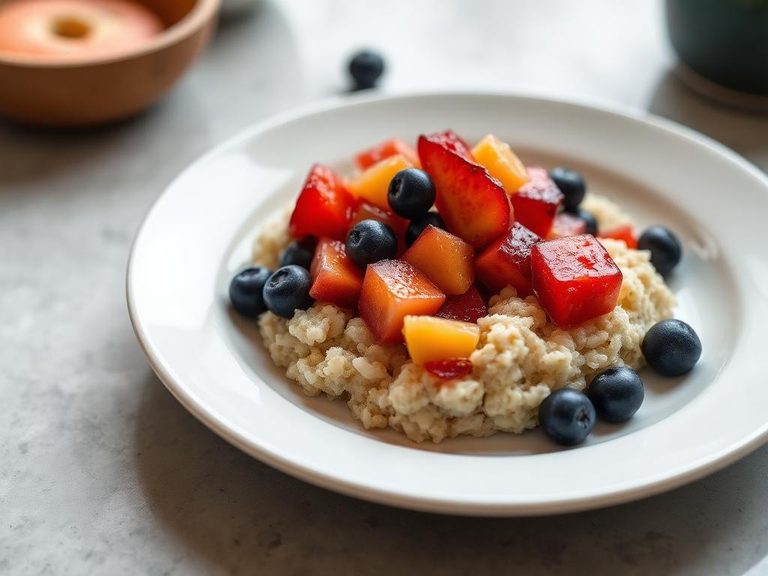
Absolutely. It's often mixed with iron-fortified baby cereal, stirred into plain yogurt for older babies, or swirled into oatmeal to add natural sweetness.
Why is tapioca used instead of just mashing the fruit?
Tapioca starch acts as a stabilizer and thickener, giving the puree a consistent, smooth, and spoonable texture that prevents separation and makes it easier for babies to eat.
Nutrient density (calculated · NRF9.3)
Nutrient Rich Foods index: beneficial nutrients (protein, fiber, vitamins, minerals) minus saturated fat, added sugar & sodium, per 100 kcal.
NRF9.3 index — Fulgoni, Keast & Drewnowski, 2009. Computed from USDA nutrients.
Weight-loss friendliness (composite index)
Energy density 0.65 kcal/g · 1% calories from protein · 1.6 g fiber · 10.7 g sugar per 100 g.
Composite of energy density (Rolls et al., 1999), protein & fiber satiety, minus sugar. A calculated heuristic — ranks satiety-per-calorie, not a clinical measure.
Dietary load (calculated from USDA values)
Potential renal acid load. Positive = acid-forming, negative = alkaline-forming.
Sodium-to-potassium ratio: 0.00 (lower is better — aim for ≤ 1)
Sodium:potassium per WHO potassium guidance. Computed from USDA nutrients.