

Babyfood, cookies
Whole food · Baby Foods

Photo: Wikipedia
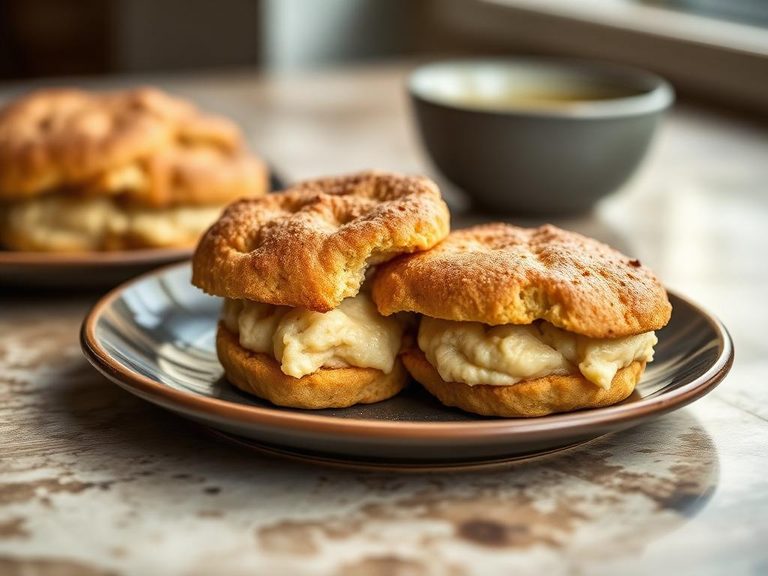
These are soft, crumbly, and mildly sweet biscuits specifically engineered for teething infants and toddlers, often with a simple, wholesome flavor profile. Nutritionally, they are a dense source of quick energy from carbohydrates and sugar, with a notable protein content for a baked good. Their texture is designed to dissolve easily in a baby's mouth, minimizing choking hazards.
Calorie split: 11% protein · 62% carbs · 27% fat
↓ Full nutrition💚 Why it's loved
Parents love them for their convenience and the developmental milestone they support—a baby's first independent snack. The mild, universally palatable flavor is rarely rejected by little ones.
⚠️ Watch-outs & how to enjoy it better
The high sugar content (24.2g per 100g) can contribute to unhealthy eating habits and dental caries if overused. They are also low in fiber, offering little digestive benefit. To counteract this, use them sparingly as a treat, not a dietary staple, and always pair with a source of protein or healthy fat (like mashed avocado or cheese) to blunt the blood sugar spike.
Key benefits
- Convenient, portable snack for on-the-go feeding
- Provides quick energy from easily digestible carbohydrates
- Offers a source of protein for growing infants
- Often fortified with iron and other essential vitamins
- Dissolves easily, supporting early self-feeding skills
🍽️ Popular dishes
🌍 Where it's eaten
💡 Did you know?
The modern baby cookie, or 'teething biscuit,' became a mass-market product in the mid-20th century alongside the rise of commercial baby food, but the concept of hard biscuits for infants dates back to 19th-century Europe.
Full nutrition (USDA data · scales with serving)
| Water | 5.9 g |
| Energy | 433 kcal |
| Energy | 1812 kj |
| Protein | 11.8 g |
| Total lipid (fat) | 13.2 g |
| Ash | 2.0 g |
| Carbohydrate, by difference | 67.1 g |
| Fiber, total dietary | 0.20 g |
| Total Sugars | 24.2 g |
| Calcium, Ca | 101 mg |
| Iron, Fe | 4.2 mg |
| Magnesium, Mg | 49.0 mg |
| Phosphorus, P | 179 mg |
| Potassium, K | 501 mg |
| Sodium, Na | 300 mg |
| Zinc, Zn | 1.1 mg |
| Copper, Cu | 0.07 mg |
| Manganese, Mn | 0.35 mg |
| Selenium, Se | 17.2 ug |
| Vitamin C, total ascorbic acid | 7.0 mg |
| Thiamin | 1.5 mg |
| Riboflavin | 3.2 mg |
| Niacin | 16.0 mg |
| Pantothenic acid | 0.53 mg |
| Vitamin B-6 | 5.9 mg |
| Folate, total | 93.0 ug |
| Folic acid | 74.0 ug |
| Folate, food | 19.0 ug |
| Folate, DFE | 145 ug |
| Choline, total | 28.3 mg |
| Vitamin B-12 | 0.46 ug |
| Vitamin B-12, added | 0.00 ug |
| Vitamin A, RAE | 6.0 ug |
| Retinol | 6.0 ug |
| Carotene, beta | 1.0 ug |
| Carotene, alpha | 0.00 ug |
| Cryptoxanthin, beta | 0.00 ug |
| Vitamin A, IU | 23.0 iu |
| Lycopene | 0.00 ug |
| Lutein + zeaxanthin | 9.0 ug |
| Vitamin E (alpha-tocopherol) | 0.46 mg |
| Vitamin E, added | 0.00 mg |
| Vitamin D (D2 + D3), International Units | 0.00 iu |
| Vitamin D (D2 + D3) | 0.00 ug |
| Vitamin D3 (cholecalciferol) | 0.00 ug |
| Vitamin K (phylloquinone) | 1.1 ug |
| Alcohol, ethyl | 0.00 g |
| Caffeine | 0.00 mg |
| Theobromine | 0.00 mg |
Fat & fatty acid profile (per 100g)
| Fatty acids, total saturated | 2.4 g |
| SFA 4:0 | 0.08 g |
| SFA 6:0 | 0.02 g |
| SFA 8:0 | 0.03 g |
| SFA 10:0 | 0.06 g |
| SFA 12:0 | 0.06 g |
| SFA 14:0 | 0.27 g |
| SFA 15:0 | 0.00 g |
| SFA 16:0 | 1.1 g |
| SFA 17:0 | 0.00 g |
| SFA 18:0 | 0.59 g |
| SFA 20:0 | 0.03 g |
| SFA 22:0 | 0.08 g |
| Fatty acids, total monounsaturated | 6.0 g |
| MUFA 16:1 | 0.12 g |
| MUFA 18:1 | 5.9 g |
| MUFA 20:1 | 0.02 g |
| MUFA 22:1 | 0.00 g |
| Fatty acids, total polyunsaturated | 2.9 g |
| PUFA 18:2 | 2.8 g |
| PUFA 18:3 | 0.03 g |
| PUFA 18:4 | 0.00 g |
| PUFA 20:4 | 0.00 g |
| PUFA 20:5 n-3 (EPA) | 0.00 g |
| PUFA 22:5 n-3 (DPA) | 0.00 g |
| PUFA 22:6 n-3 (DHA) | 0.00 g |
| Fatty acids, total trans | 0.02 g |
| Cholesterol | 12.0 mg |
Amino acid profile (per 100g)
Estimated from Babyfood, grape juice, no sugar, canned — USDA does not publish this profile for Babyfood.
| Threonine | 0.02 g |
| Isoleucine | 0.01 g |
| Leucine | 0.02 g |
| Lysine | 0.02 g |
| Methionine | 0.03 g |
| Cystine | 0.01 g |
| Phenylalanine | 0.02 g |
| Tyrosine | 0.02 g |
| Valine | 0.02 g |
| Arginine | 0.06 g |
| Histidine | 0.03 g |
| Alanine | 0.04 g |
| Aspartic acid | 0.10 g |
| Glutamic acid | 0.18 g |
| Glycine | 0.03 g |
| Proline | 0.03 g |
| Serine | 0.04 g |
FAQ
At what age can a baby have these cookies?
Typically introduced around 6-8 months, when a baby can sit up unassisted and has started solids. The key is their ability to dissolve the cookie safely with their gums or emerging teeth.
Are these cookies nutritionally necessary?
No. They are a convenience food and a tool for self-feeding practice. A balanced diet for a baby should come from a variety of whole foods like fruits, vegetables, proteins, and grains.
How do they differ from regular cookies?
Baby cookies are specifically formulated to be lower in fat and salt, often fortified with vitamins, and have a texture that dissolves easily to prevent choking. They are not meant to taste like a decadent dessert.
Nutrient density (calculated · NRF9.3)
Nutrient Rich Foods index: beneficial nutrients (protein, fiber, vitamins, minerals) minus saturated fat, added sugar & sodium, per 100 kcal.
NRF9.3 index — Fulgoni, Keast & Drewnowski, 2009. Computed from USDA nutrients.
Weight-loss friendliness (composite index)
Energy density 4.33 kcal/g · 11% calories from protein · 0.2 g fiber · 24.2 g sugar per 100 g.
Composite of energy density (Rolls et al., 1999), protein & fiber satiety, minus sugar. A calculated heuristic — ranks satiety-per-calorie, not a clinical measure.
Dietary load (calculated from USDA values)
Potential renal acid load. Positive = acid-forming, negative = alkaline-forming.
Sodium-to-potassium ratio: 0.60 (lower is better — aim for ≤ 1)
Sodium:potassium per WHO potassium guidance. Computed from USDA nutrients.