

Asparagus, frozen, cooked, boiled, drained, with salt
Whole food · Vegetables and Vegetable Products
Frozen asparagus, once boiled and drained, offers a tender-crisp bite with a mild, earthy-sweet flavor that's a convenient year-round staple. Nutritionally, it's a standout low-calorie vegetable, delivering a solid 2.95g of protein and 1.6g of fiber per 100g while remaining very low in fat and sugar.
Calorie split: 51% protein · 33% carbs · 16% fat
↓ Full nutrition💚 Why it's loved
People love its delicate, grassy sweetness and satisfying snap, which pairs beautifully with everything from eggs to steak. Its versatility and ease of preparation make it a weeknight hero, adding a touch of elegance and nutrition to any plate.
⚠️ Watch-outs & how to enjoy it better
The blanching process for freezing can slightly soften its signature crispness, and the added salt (0.32g per 100g) may concern those monitoring sodium intake. To counteract, rinse the spears after boiling to reduce sodium, and pair with a healthy fat like olive oil or a protein source to enhance nutrient absorption and balance the meal.
Key benefits
- Excellent source of plant-based protein for a vegetable
- High in dietary fiber for digestive health
- Very low in calories, supporting weight management
- Provides essential vitamins like K and folate
- Convenient and reduces food waste with long freezer life
🍽️ Popular dishes
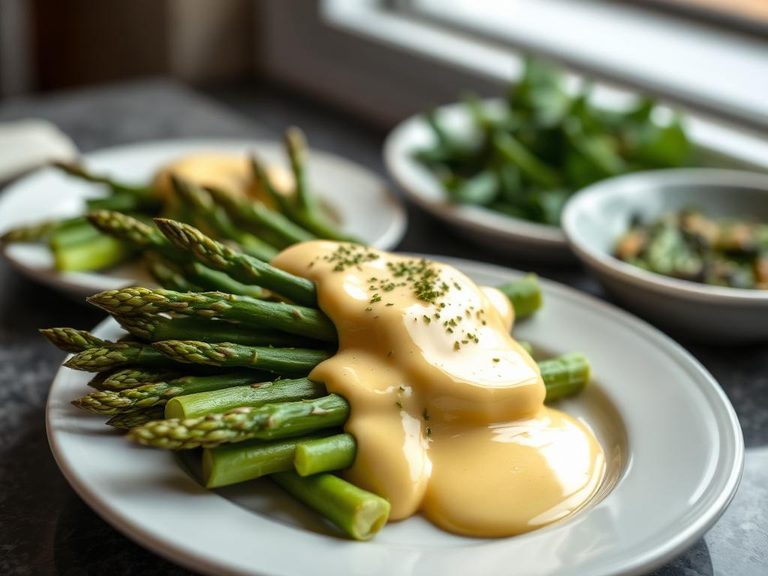

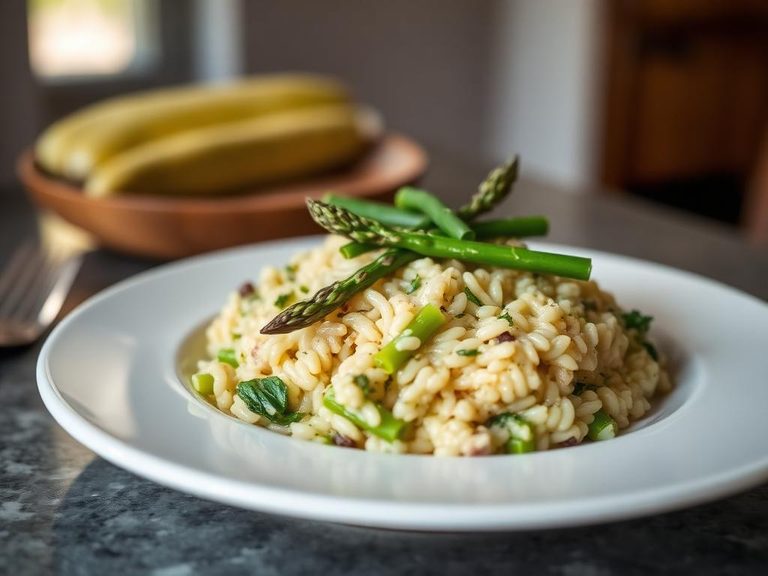
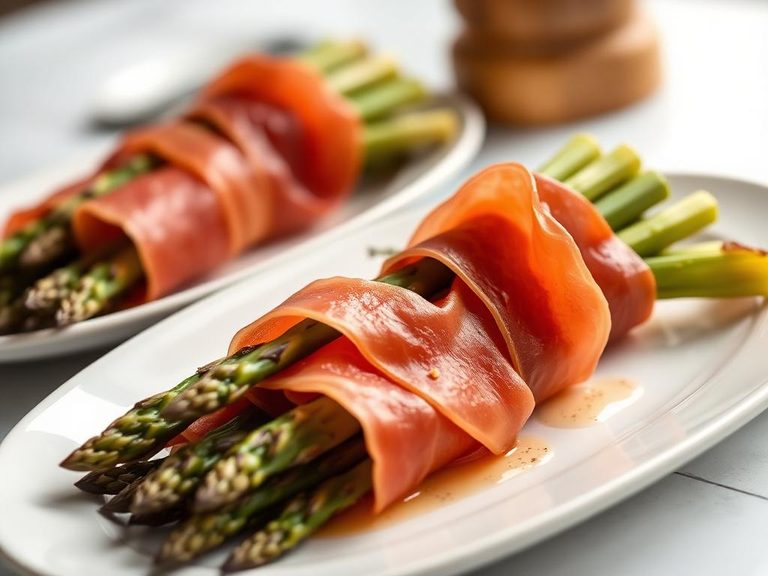
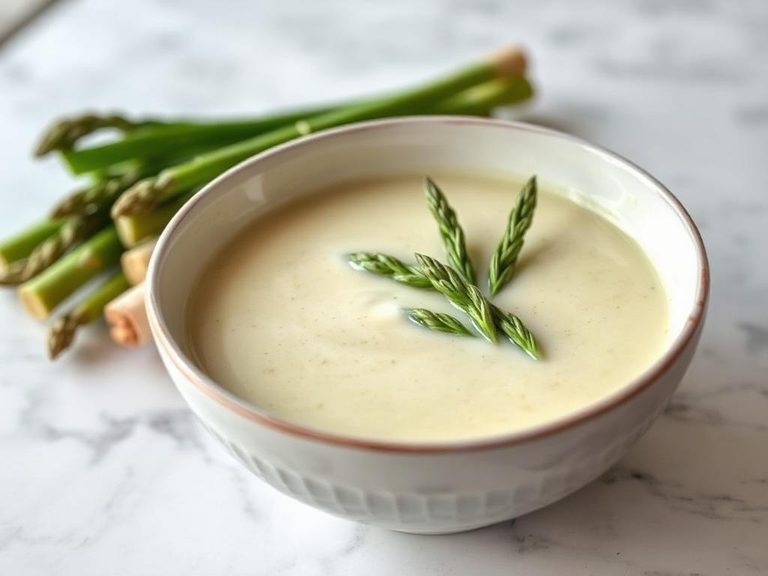
🌍 Where it's eaten
💡 Did you know?
Asparagus is a member of the lily family and is one of the few vegetables that can grow several inches in a single day during its peak season.
Full nutrition (USDA data · scales with serving)
| Water | 94.1 g |
| Energy | 18.0 kcal |
| Energy | 74.0 kj |
| Protein | 3.0 g |
| Total lipid (fat) | 0.42 g |
| Ash | 0.61 g |
| Carbohydrate, by difference | 1.9 g |
| Fiber, total dietary | 1.6 g |
| Total Sugars | 0.32 g |
| Calcium, Ca | 18.0 mg |
| Iron, Fe | 0.56 mg |
| Magnesium, Mg | 10.0 mg |
| Phosphorus, P | 49.0 mg |
| Potassium, K | 172 mg |
| Sodium, Na | 240 mg |
| Zinc, Zn | 0.41 mg |
| Copper, Cu | 0.10 mg |
| Manganese, Mn | 0.14 mg |
| Selenium, Se | 3.9 ug |
| Vitamin C, total ascorbic acid | 24.4 mg |
| Thiamin | 0.07 mg |
| Riboflavin | 0.10 mg |
| Niacin | 1.0 mg |
| Pantothenic acid | 0.16 mg |
| Vitamin B-6 | 0.02 mg |
| Folate, total | 135 ug |
| Folic acid | 0.00 ug |
| Folate, food | 135 ug |
| Folate, DFE | 135 ug |
| Choline, total | 20.9 mg |
| Betaine | 0.70 mg |
| Vitamin B-12 | 0.00 ug |
| Vitamin B-12, added | 0.00 ug |
| Vitamin A, RAE | 40.0 ug |
| Retinol | 0.00 ug |
| Carotene, beta | 483 ug |
| Carotene, alpha | 0.00 ug |
| Cryptoxanthin, beta | 0.00 ug |
| Vitamin A, IU | 806 iu |
| Lycopene | 24.0 ug |
| Lutein + zeaxanthin | 618 ug |
| Vitamin E (alpha-tocopherol) | 1.2 mg |
| Vitamin E, added | 0.00 mg |
| Tocopherol, beta | 0.02 mg |
| Tocopherol, gamma | 0.17 mg |
| Tocopherol, delta | 0.00 mg |
| Tocotrienol, alpha | 0.02 mg |
| Tocotrienol, beta | 0.00 mg |
| Tocotrienol, gamma | 0.00 mg |
| Tocotrienol, delta | 0.00 mg |
| Vitamin D (D2 + D3), International Units | 0.00 iu |
| Vitamin D (D2 + D3) | 0.00 ug |
| Vitamin K (phylloquinone) | 80.0 ug |
| Caffeine | 0.00 mg |
| Theobromine | 0.00 mg |
Fat & fatty acid profile (per 100g)
| Fatty acids, total saturated | 0.10 g |
| SFA 12:0 | 0.00 g |
| SFA 14:0 | 0.00 g |
| SFA 16:0 | 0.09 g |
| SFA 18:0 | 0.01 g |
| Fatty acids, total monounsaturated | 0.01 g |
| MUFA 16:1 | 0.00 g |
| MUFA 18:1 | 0.01 g |
| Fatty acids, total polyunsaturated | 0.18 g |
| PUFA 18:2 | 0.17 g |
| PUFA 18:3 | 0.01 g |
| Fatty acids, total trans | 0.00 g |
| Cholesterol | 0.00 mg |
Amino acid profile (per 100g)
| Tryptophan | 0.03 g |
| Threonine | 0.08 g |
| Isoleucine | 0.11 g |
| Leucine | 0.13 g |
| Lysine | 0.14 g |
| Methionine | 0.03 g |
| Cystine | 0.04 g |
| Phenylalanine | 0.07 g |
| Tyrosine | 0.05 g |
| Valine | 0.11 g |
| Arginine | 0.14 g |
| Histidine | 0.05 g |
| Alanine | 0.14 g |
| Aspartic acid | 0.34 g |
| Glutamic acid | 0.48 g |
| Glycine | 0.10 g |
| Proline | 0.16 g |
| Serine | 0.11 g |
FAQ
Does freezing affect asparagus nutrition?
Flash-freezing generally preserves nutrients very well, often locking in vitamins better than fresh asparagus that has traveled long distances. The brief boiling step is key for texture and safety.
Why is frozen asparagus sometimes mushy?
Overcooking during the boiling step before freezing can break down its cell structure. For best results, boil just until bright green and tender-crisp, then immediately shock in ice water.
Is the salt in frozen asparagus necessary?
The salt is often added to help preserve color and flavor. You can look for 'no salt added' varieties, or simply rinse the spears after cooking to reduce the sodium content significantly.
Nutrient density (calculated · NRF9.3)
Nutrient Rich Foods index: beneficial nutrients (protein, fiber, vitamins, minerals) minus saturated fat, added sugar & sodium, per 100 kcal.
NRF9.3 index — Fulgoni, Keast & Drewnowski, 2009. Computed from USDA nutrients.
Weight-loss friendliness (composite index)
Energy density 0.18 kcal/g · 66% calories from protein · 1.6 g fiber · 0.3 g sugar per 100 g.
Composite of energy density (Rolls et al., 1999), protein & fiber satiety, minus sugar. A calculated heuristic — ranks satiety-per-calorie, not a clinical measure.
Dietary load (calculated from USDA values)
Potential renal acid load. Positive = acid-forming, negative = alkaline-forming.
Sodium-to-potassium ratio: 1.40 (lower is better — aim for ≤ 1)
Sodium:potassium per WHO potassium guidance. Computed from USDA nutrients.