Biscuits, plain or buttermilk, refrigerated dough, higher fat
Whole food · Baked Products

Photo: Wikipedia
These are the pre-made, refrigerated dough rounds you pop open from a tube, ready to bake into fluffy, golden biscuits. They offer a tender, flaky texture with a rich, buttery flavor, often enhanced by the slight tang of buttermilk. Nutritionally, they are a dense source of energy, primarily from refined carbohydrates and fats.
💚 Why it's loved
People adore the comforting, homestyle taste and the satisfying, flaky layers that emerge after baking. Their ultimate versatility makes them a beloved staple for everything from a simple breakfast side to the foundation of a hearty dinner.
⚠️ Watch-outs & how to enjoy it better
The high refined carbohydrate and fat content can lead to blood sugar spikes and may not align with low-carb or heart-healthy diets. To counteract this, pair them with protein (like eggs or sausage) and fiber (like berries or a side salad) to slow digestion, and practice strict portion control by enjoying just one biscuit.
Key benefits
- Provides quick, accessible energy from carbohydrates
- Contains some protein from wheat flour and dairy ingredients
- Offers dietary convenience for fast meal preparation
- Source of calcium and small amounts of B vitamins from enriched flour
🍽️ Popular dishes

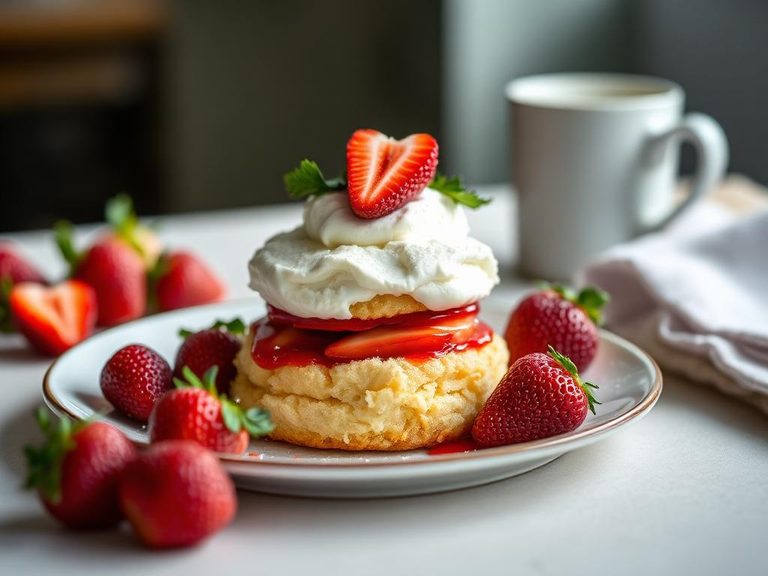
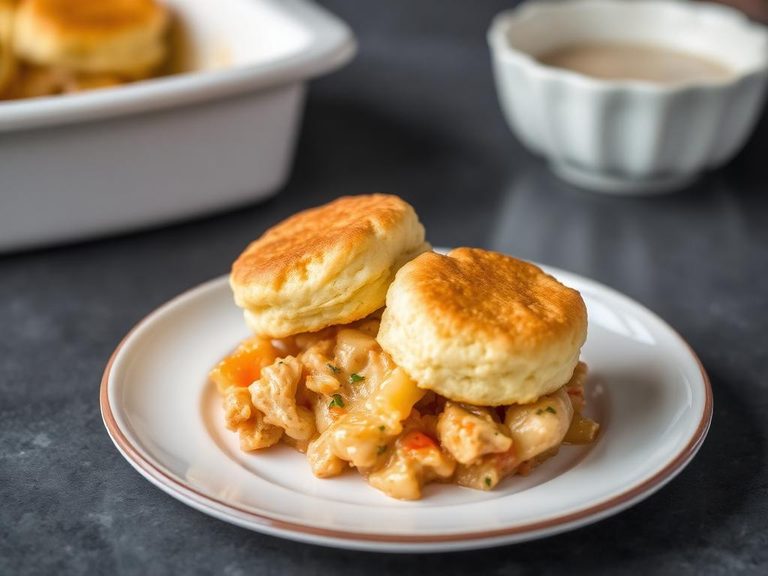
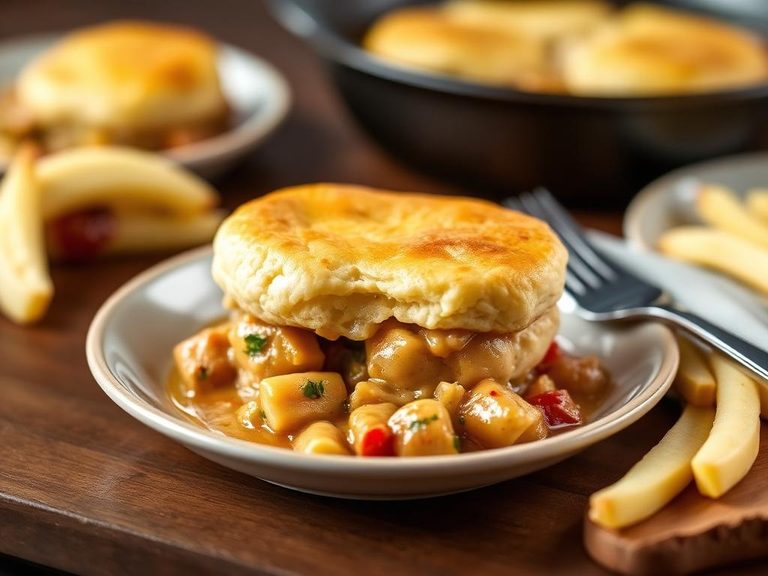
🌍 Where it's eaten
💡 Did you know?
The refrigerated biscuit tube was invented in 1931 by Clay Goldhamer, and the iconic 'pop' sound it makes when opened is a result of the pressurized dough rapidly expanding.
Full nutrition (scales with serving)
| Water | 33.1 g |
| Energy | 307 kcal |
| Energy | 1285 kj |
| Protein | 6.7 g |
| Total lipid (fat) | 10.6 g |
| Ash | 3.3 g |
| Carbohydrate, by difference | 46.3 g |
| Fiber, total dietary | 0.70 g |
| Total Sugars | 7.4 g |
| Calcium, Ca | 51.0 mg |
| Iron, Fe | 2.5 mg |
| Magnesium, Mg | 17.0 mg |
| Phosphorus, P | 470 mg |
| Potassium, K | 162 mg |
| Sodium, Na | 977 mg |
| Zinc, Zn | 0.50 mg |
| Copper, Cu | 0.09 mg |
| Manganese, Mn | 0.44 mg |
| Selenium, Se | 8.0 ug |
| Vitamin C, total ascorbic acid | 0.10 mg |
| Thiamin | 0.39 mg |
| Riboflavin | 0.29 mg |
| Niacin | 3.3 mg |
| Pantothenic acid | 0.35 mg |
| Vitamin B-6 | 0.06 mg |
| Folate, total | 57.0 ug |
| Folic acid | 46.0 ug |
| Folate, food | 11.0 ug |
| Folate, DFE | 89.0 ug |
| Vitamin B-12 | 0.05 ug |
| Vitamin B-12, added | 0.00 ug |
| Vitamin A, RAE | 2.0 ug |
| Retinol | 2.0 ug |
| Carotene, beta | 0.00 ug |
| Carotene, alpha | 0.00 ug |
| Cryptoxanthin, beta | 0.00 ug |
| Vitamin A, IU | 8.0 iu |
| Lycopene | 0.00 ug |
| Lutein + zeaxanthin | 8.0 ug |
| Vitamin E (alpha-tocopherol) | 0.69 mg |
| Vitamin E, added | 0.00 mg |
| Tocotrienol, delta | 0.00 mg |
| Vitamin K (phylloquinone) | 6.2 ug |
| Alcohol, ethyl | 0.00 g |
| Caffeine | 0.00 mg |
| Theobromine | 0.00 mg |
Fat & fatty acid profile (per 100g)
| Fatty acids, total saturated | 2.8 g |
| SFA 4:0 | 0.00 g |
| SFA 6:0 | 0.00 g |
| SFA 8:0 | 0.00 g |
| SFA 10:0 | 0.00 g |
| SFA 12:0 | 0.00 g |
| SFA 14:0 | 0.01 g |
| SFA 15:0 | 0.00 g |
| SFA 16:0 | 1.2 g |
| SFA 17:0 | 0.01 g |
| SFA 18:0 | 1.5 g |
| SFA 20:0 | 0.04 g |
| SFA 22:0 | 0.04 g |
| SFA 24:0 | 0.00 g |
| Fatty acids, total monounsaturated | 6.6 g |
| MUFA 14:1 | 0.00 g |
| MUFA 15:1 | 0.00 g |
| MUFA 16:1 | 0.01 g |
| MUFA 17:1 | 0.00 g |
| MUFA 18:1 | 6.5 g |
| MUFA 20:1 | 0.03 g |
| MUFA 22:1 | 0.00 g |
| Fatty acids, total polyunsaturated | 0.68 g |
| PUFA 18:2 | 0.65 g |
| PUFA 18:3 | 0.04 g |
| PUFA 18:3 n-3 c,c,c (ALA) | 0.04 g |
| PUFA 18:3 n-6 c,c,c | 0.00 g |
| PUFA 20:2 n-6 c,c | 0.00 g |
| PUFA 20:3 | 0.00 g |
| PUFA 20:4 | 0.00 g |
| PUFA 20:5 n-3 (EPA) | 0.00 g |
| PUFA 22:5 n-3 (DPA) | 0.00 g |
| PUFA 22:6 n-3 (DHA) | 0.00 g |
| Fatty acids, total trans | 3.4 g |
| Cholesterol | 1.0 mg |
Amino acid profile (per 100g)
| Tryptophan | 0.06 g |
| Threonine | 0.17 g |
| Isoleucine | 0.21 g |
| Leucine | 0.39 g |
| Lysine | 0.21 g |
| Methionine | 0.10 g |
| Cystine | 0.12 g |
| Phenylalanine | 0.24 g |
| Tyrosine | 0.10 g |
| Valine | 0.26 g |
| Arginine | 0.21 g |
| Histidine | 0.12 g |
| Alanine | 0.17 g |
| Aspartic acid | 0.27 g |
| Glutamic acid | 1.6 g |
| Glycine | 0.18 g |
| Proline | 0.57 g |
| Serine | 0.25 g |
FAQ
What makes these biscuits 'higher fat'?
They contain a greater proportion of shortening, butter, or oil in the dough compared to standard or 'light' versions, which contributes to a richer flavor and more tender, flaky texture.
Can I freeze the unbaked dough?
Yes, you can freeze the unbaked dough rounds. Place them on a baking sheet to freeze individually, then transfer to a freezer bag. Bake from frozen, adding a few extra minutes to the cooking time.
Why do they sometimes turn out dense instead of flaky?
Overworking the dough or using an oven that isn't hot enough can prevent proper rise. Handle the dough as little as possible and ensure your oven is fully preheated to the temperature specified on the package.