

Plums, canned, purple, light syrup pack, solids and liquids
Whole food · Fruits and Fruit Juices

Photo: Wikipedia
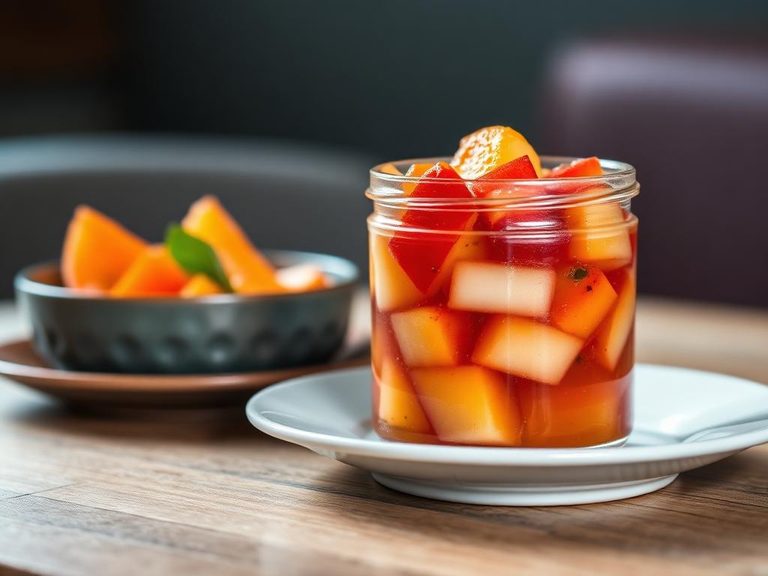
These are tender, jewel-toned purple plum halves or slices, preserved in a light syrup that infuses them with a gentle sweetness and a silky, yielding texture. With only 63 calories per 100g, they offer a modest yet satisfying energy boost, primarily from their 15.35g of natural and added sugars. The soft, juicy flesh makes them a convenient and refreshing fruit option, perfect for a quick snack or a versatile ingredient.
Calorie split: 2% protein · 96% carbs · 1% fat
↓ Full nutrition💚 Why it's loved
People love them for their consistently sweet, mellow flavor and soft, spoonable texture that requires no peeling or pitting. They are a nostalgic comfort food, often enjoyed straight from the can as a simple dessert or used to add a burst of fruity sweetness to breakfasts and baked goods.
⚠️ Watch-outs & how to enjoy it better
The primary downside is the added sugar from the light syrup, which can contribute to blood-sugar spikes if consumed in large quantities. To counteract this, practice portion control (e.g., stick to a 1/2 cup serving) and pair the plums with a source of protein or healthy fat, like a handful of nuts or a dollop of Greek yogurt, to slow sugar absorption. Additionally, some canned fruits can have a slightly mushy texture compared to fresh, which some may find less appealing.
Key benefits
- Low in fat, with only 0.1g per 100g.
- Provides a quick source of energy from carbohydrates.
- Contains a small amount of dietary fiber (0.9g per 100g).
- Offers a convenient, ready-to-eat fruit option with a long shelf life.
- Rich in antioxidants, particularly anthocyanins from the purple skin.
🍽️ Popular dishes
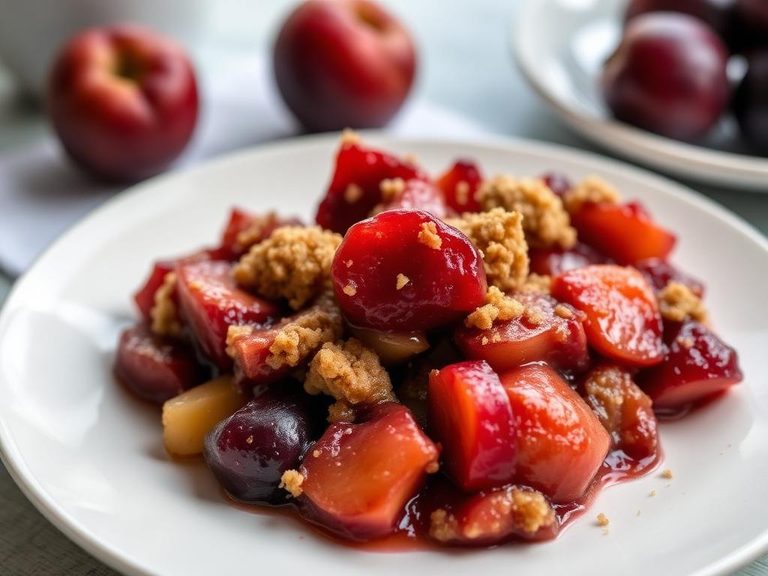
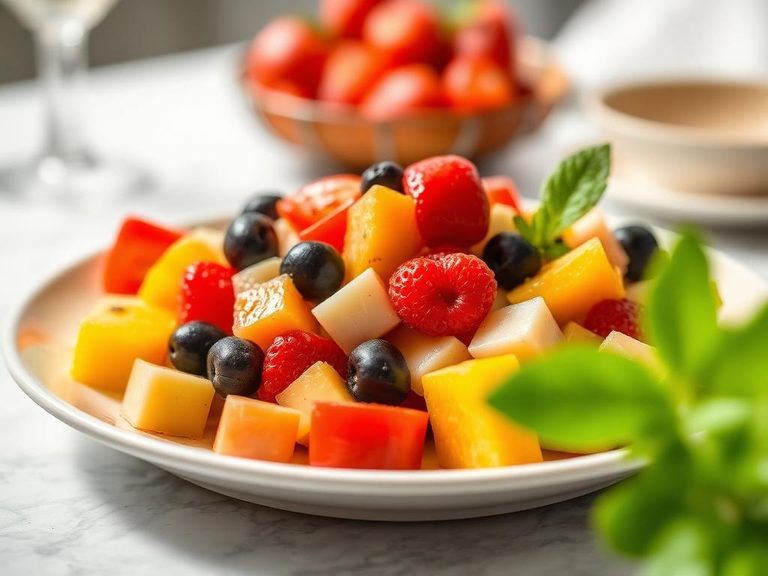
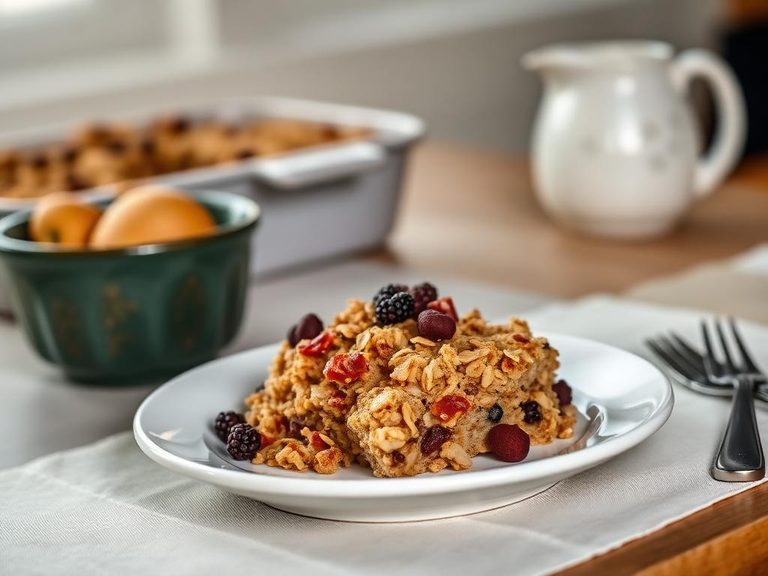
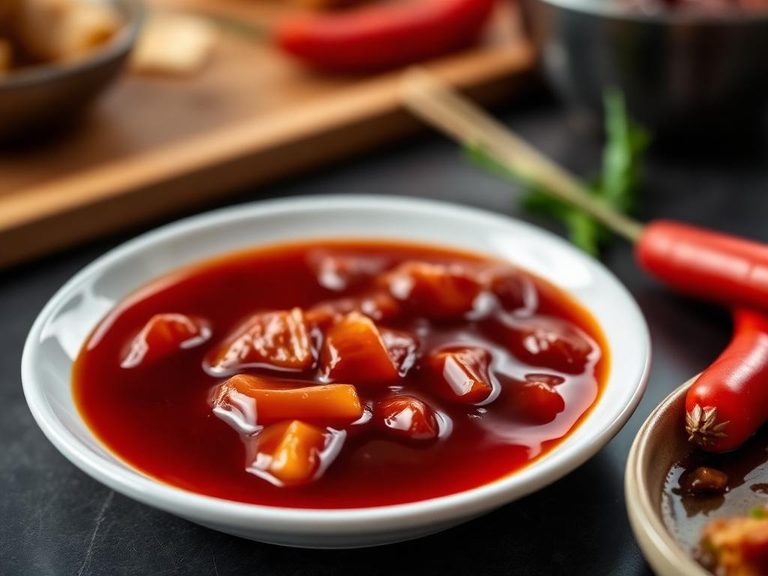
🌍 Where it's eaten
💡 Did you know?
The purple color in these plums comes from anthocyanins, powerful antioxidants that are more concentrated in the skin and can help protect cells from damage.
Full nutrition (USDA data · scales with serving)
| Water | 83.0 g |
| Energy | 63.0 kcal |
| Energy | 264 kj |
| Protein | 0.37 g |
| Total lipid (fat) | 0.10 g |
| Ash | 0.25 g |
| Carbohydrate, by difference | 16.3 g |
| Fiber, total dietary | 0.90 g |
| Total Sugars | 15.3 g |
| Calcium, Ca | 9.0 mg |
| Iron, Fe | 0.86 mg |
| Magnesium, Mg | 5.0 mg |
| Phosphorus, P | 13.0 mg |
| Potassium, K | 93.0 mg |
| Sodium, Na | 20.0 mg |
| Zinc, Zn | 0.08 mg |
| Copper, Cu | 0.04 mg |
| Manganese, Mn | 0.03 mg |
| Selenium, Se | 0.00 ug |
| Vitamin C, total ascorbic acid | 0.40 mg |
| Thiamin | 0.02 mg |
| Riboflavin | 0.04 mg |
| Niacin | 0.30 mg |
| Pantothenic acid | 0.07 mg |
| Vitamin B-6 | 0.03 mg |
| Folate, total | 3.0 ug |
| Folic acid | 0.00 ug |
| Folate, food | 3.0 ug |
| Folate, DFE | 3.0 ug |
| Choline, total | 1.3 mg |
| Vitamin B-12 | 0.00 ug |
| Vitamin B-12, added | 0.00 ug |
| Vitamin A, RAE | 12.0 ug |
| Retinol | 0.00 ug |
| Carotene, beta | 127 ug |
| Carotene, alpha | 0.00 ug |
| Cryptoxanthin, beta | 23.0 ug |
| Vitamin A, IU | 231 iu |
| Lycopene | 0.00 ug |
| Lutein + zeaxanthin | 49.0 ug |
| Vitamin E (alpha-tocopherol) | 0.18 mg |
| Vitamin E, added | 0.00 mg |
| Vitamin D (D2 + D3), International Units | 0.00 iu |
| Vitamin D (D2 + D3) | 0.00 ug |
| Vitamin K (phylloquinone) | 4.3 ug |
| Alcohol, ethyl | 0.00 g |
| Caffeine | 0.00 mg |
| Theobromine | 0.00 mg |
Fat & fatty acid profile (per 100g)
| Fatty acids, total saturated | 0.01 g |
| SFA 4:0 | 0.00 g |
| SFA 6:0 | 0.00 g |
| SFA 8:0 | 0.00 g |
| SFA 10:0 | 0.00 g |
| SFA 12:0 | 0.00 g |
| SFA 14:0 | 0.00 g |
| SFA 16:0 | 0.01 g |
| SFA 18:0 | 0.00 g |
| Fatty acids, total monounsaturated | 0.07 g |
| MUFA 16:1 | 0.00 g |
| MUFA 18:1 | 0.07 g |
| MUFA 20:1 | 0.00 g |
| MUFA 22:1 | 0.00 g |
| Fatty acids, total polyunsaturated | 0.02 g |
| PUFA 18:2 | 0.02 g |
| PUFA 18:3 | 0.00 g |
| PUFA 18:4 | 0.00 g |
| PUFA 20:4 | 0.00 g |
| PUFA 20:5 n-3 (EPA) | 0.00 g |
| PUFA 22:5 n-3 (DPA) | 0.00 g |
| PUFA 22:6 n-3 (DHA) | 0.00 g |
| Fatty acids, total trans | 0.00 g |
| Cholesterol | 0.00 mg |
Amino acid profile (per 100g)
| Threonine | 0.01 g |
| Isoleucine | 0.01 g |
| Leucine | 0.01 g |
| Lysine | 0.01 g |
| Methionine | 0.00 g |
| Cystine | 0.00 g |
| Phenylalanine | 0.01 g |
| Tyrosine | 0.00 g |
| Valine | 0.01 g |
| Arginine | 0.01 g |
| Histidine | 0.01 g |
| Alanine | 0.01 g |
| Aspartic acid | 0.12 g |
| Glutamic acid | 0.02 g |
| Glycine | 0.01 g |
| Proline | 0.02 g |
| Serine | 0.01 g |
FAQ
Are canned plums as nutritious as fresh plums?
Canned plums retain most of their vitamins and fiber but have added sugar from the syrup, making them higher in calories and sugar than fresh plums. For a lower-sugar option, look for plums packed in water or 100% juice.
How can I reduce the sugar content of canned plums?
You can rinse the plums under cold water to remove some of the surface syrup. Alternatively, choose plums packed in water or light juice, or use them in recipes where you can control the sweetness, like in a savory sauce or a baked dish with less added sugar.
What is the best way to store leftover canned plums?
Once opened, transfer the plums and their liquid to a sealed, airtight container and refrigerate. They will typically keep for 3-5 days. For longer storage, you can freeze them in a freezer-safe bag or container for up to 3 months, though the texture may become softer upon thawing.
Nutrient density (calculated · NRF9.3)
Nutrient Rich Foods index: beneficial nutrients (protein, fiber, vitamins, minerals) minus saturated fat, added sugar & sodium, per 100 kcal.
NRF9.3 index — Fulgoni, Keast & Drewnowski, 2009. Computed from USDA nutrients.
Weight-loss friendliness (composite index)
Energy density 0.63 kcal/g · 2% calories from protein · 0.9 g fiber · 15.3 g sugar per 100 g.
Composite of energy density (Rolls et al., 1999), protein & fiber satiety, minus sugar. A calculated heuristic — ranks satiety-per-calorie, not a clinical measure.
Dietary load (calculated from USDA values)
Potential renal acid load. Positive = acid-forming, negative = alkaline-forming.
Sodium-to-potassium ratio: 0.22 (lower is better — aim for ≤ 1)
Sodium:potassium per WHO potassium guidance. Computed from USDA nutrients.