

Yogurt, fruit variety, nonfat
Whole food · Dairy and Egg Products
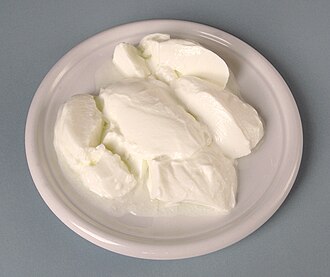
Photo: Wikipedia
This is a smooth, creamy, nonfat yogurt swirled with a sweet fruit purée, typically strawberry or raspberry. It offers a light, tangy base with a burst of fruity sweetness, making it a popular low-calorie snack. Nutritionally, it's a solid source of protein and carbohydrates, but its sugar content is notable.
Calorie split: 18% protein · 80% carbs · 2% fat
↓ Full nutrition💚 Why it's loved
People love it for the perfect balance of creamy tang and sweet fruit flavor, making it feel like an indulgent treat. It's incredibly versatile—eaten straight from the container, blended into smoothies, or used as a base for parfaits and dressings.
⚠️ Watch-outs & how to enjoy it better
The primary downside is the high sugar content (19g per 100g), which can cause blood-sugar spikes, especially for those with insulin sensitivity. To counteract this, pair it with a source of fat or fiber, like a handful of nuts or chia seeds, to slow sugar absorption. Also, check labels for added sugars beyond the fruit purée.
Key benefits
- Good source of protein for muscle maintenance
- Provides calcium for bone health
- Contains probiotics for gut health
- Low in fat, making it a lighter snack option
- Convenient, portable source of energy
🍽️ Popular dishes

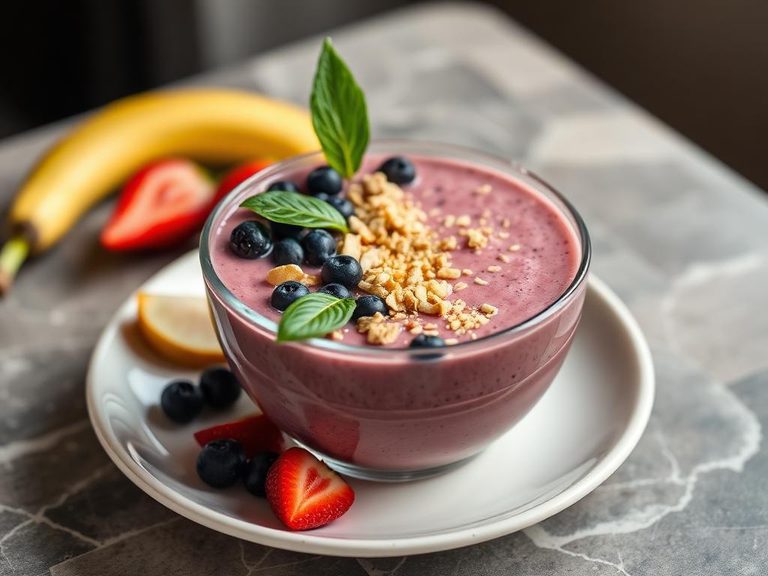

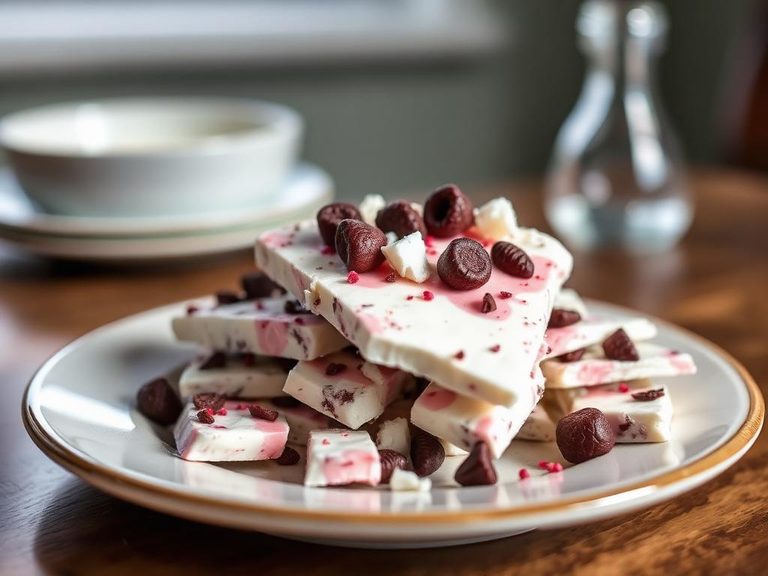


🌍 Where it's eaten
💡 Did you know?
The practice of fermenting milk into yogurt is believed to have originated in the Fertile Crescent around 5000 BC, possibly by accident when milk stored in warm animal-skin bags curdled.
Full nutrition (USDA data · scales with serving)
| Water | 75.4 g |
| Energy | 95.0 kcal |
| Energy | 399 kj |
| Protein | 4.4 g |
| Total lipid (fat) | 0.20 g |
| Ash | 1.0 g |
| Carbohydrate, by difference | 19.0 g |
| Fiber, total dietary | 0.00 g |
| Total Sugars | 19.0 g |
| Calcium, Ca | 152 mg |
| Iron, Fe | 0.07 mg |
| Magnesium, Mg | 15.0 mg |
| Phosphorus, P | 119 mg |
| Potassium, K | 194 mg |
| Sodium, Na | 58.0 mg |
| Zinc, Zn | 0.74 mg |
| Copper, Cu | 0.01 mg |
| Manganese, Mn | 0.04 mg |
| Selenium, Se | 6.0 ug |
| Vitamin C, total ascorbic acid | 0.70 mg |
| Thiamin | 0.04 mg |
| Riboflavin | 0.18 mg |
| Niacin | 0.10 mg |
| Vitamin B-6 | 0.04 mg |
| Folate, total | 9.0 ug |
| Folic acid | 0.00 ug |
| Folate, food | 9.0 ug |
| Folate, DFE | 9.0 ug |
| Choline, total | 16.4 mg |
| Betaine | 0.70 mg |
| Vitamin B-12 | 0.47 ug |
| Vitamin B-12, added | 0.00 ug |
| Vitamin A, RAE | 2.0 ug |
| Retinol | 2.0 ug |
| Carotene, beta | 4.0 ug |
| Carotene, alpha | 0.00 ug |
| Cryptoxanthin, beta | 0.00 ug |
| Vitamin A, IU | 12.0 iu |
| Lycopene | 0.00 ug |
| Lutein + zeaxanthin | 8.0 ug |
| Vitamin E (alpha-tocopherol) | 0.06 mg |
| Vitamin E, added | 0.00 mg |
| Vitamin D (D2 + D3), International Units | 0.00 iu |
| Vitamin D (D2 + D3) | 0.00 ug |
| Vitamin K (phylloquinone) | 1.1 ug |
| Alcohol, ethyl | 0.00 g |
| Caffeine | 0.00 mg |
| Theobromine | 0.00 mg |
Fat & fatty acid profile (per 100g)
| Fatty acids, total saturated | 0.12 g |
| SFA 4:0 | 0.01 g |
| SFA 6:0 | 0.00 g |
| SFA 8:0 | 0.00 g |
| SFA 10:0 | 0.00 g |
| SFA 12:0 | 0.00 g |
| SFA 14:0 | 0.02 g |
| SFA 16:0 | 0.06 g |
| SFA 18:0 | 0.02 g |
| Fatty acids, total monounsaturated | 0.05 g |
| MUFA 16:1 | 0.01 g |
| MUFA 18:1 | 0.04 g |
| MUFA 20:1 | 0.00 g |
| MUFA 22:1 | 0.00 g |
| Fatty acids, total polyunsaturated | 0.02 g |
| PUFA 18:2 | 0.01 g |
| PUFA 18:3 | 0.01 g |
| PUFA 18:4 | 0.00 g |
| PUFA 20:4 | 0.00 g |
| PUFA 20:5 n-3 (EPA) | 0.00 g |
| PUFA 22:5 n-3 (DPA) | 0.00 g |
| PUFA 22:6 n-3 (DHA) | 0.00 g |
| Cholesterol | 2.0 mg |
Amino acid profile (per 100g)
| Tryptophan | 0.03 g |
| Threonine | 0.20 g |
| Isoleucine | 0.27 g |
| Leucine | 0.50 g |
| Lysine | 0.44 g |
| Methionine | 0.14 g |
| Cystine | 0.04 g |
| Phenylalanine | 0.27 g |
| Tyrosine | 0.25 g |
| Valine | 0.41 g |
| Arginine | 0.15 g |
| Histidine | 0.12 g |
| Alanine | 0.21 g |
| Aspartic acid | 0.39 g |
| Glutamic acid | 0.97 g |
| Glycine | 0.12 g |
| Proline | 0.58 g |
| Serine | 0.30 g |
FAQ
Is nonfat fruit yogurt healthy?
It can be a healthy part of a diet, providing protein, calcium, and probiotics. However, its high sugar content means it should be consumed in moderation, especially by those monitoring sugar intake.
How does it differ from plain yogurt?
Plain yogurt has no added sugars, containing only naturally occurring lactose. Fruit varieties have fruit purée and often added sugars, making them sweeter but higher in calories and carbohydrates.
Can I use it in cooking?
Yes, it works well in marinades to tenderize meat, in dressings for a creamy tang, or as a base for dips. Avoid high-heat cooking, as it may curdle; add it to dishes after they are removed from heat.
Nutrient density (calculated · NRF9.3)
Nutrient Rich Foods index: beneficial nutrients (protein, fiber, vitamins, minerals) minus saturated fat, added sugar & sodium, per 100 kcal.
NRF9.3 index — Fulgoni, Keast & Drewnowski, 2009. Computed from USDA nutrients.
Weight-loss friendliness (composite index)
Energy density 0.95 kcal/g · 19% calories from protein · 0.0 g fiber · 19.0 g sugar per 100 g.
Composite of energy density (Rolls et al., 1999), protein & fiber satiety, minus sugar. A calculated heuristic — ranks satiety-per-calorie, not a clinical measure.
Dietary load (calculated from USDA values)
Potential renal acid load. Positive = acid-forming, negative = alkaline-forming.
Sodium-to-potassium ratio: 0.30 (lower is better — aim for ≤ 1)
Sodium:potassium per WHO potassium guidance. Computed from USDA nutrients.