

Turkey, light and dark meat, roasted, skin not eaten
Common food
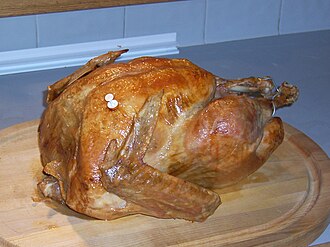
Photo: Wikipedia
Roasted turkey, with skin removed, is a lean, savory protein powerhouse. Its white meat is tender and mild, while the dark meat offers a richer, more robust flavor and slightly juicier texture. With nearly 28 grams of protein per 100g and virtually no fat or carbs, it's a cornerstone of clean-eating and high-protein diets.
Calorie split: 77% protein · 0% carbs · 23% fat
↓ Full nutrition💚 Why it's loved
People love roasted turkey for its comforting, savory flavor that anchors holiday traditions like Thanksgiving, while its mildness makes it a perfect canvas for global spices and sauces. Its lean profile allows for generous portions without guilt, fitting seamlessly into everything from sandwiches to salads.
⚠️ Watch-outs & how to enjoy it better
The main downside is its potential dryness, especially in the breast meat, which can make it unappealing. To counteract this, brine the turkey beforehand or use a meat thermometer to avoid overcooking. Those watching sodium should be mindful of pre-brined or processed turkey products and opt for fresh, unseasoned cuts.
Key benefits
- Excellent source of complete protein for muscle maintenance and satiety.
- Very low in fat and carbohydrates, making it ideal for weight management.
- Rich in B vitamins, particularly niacin (B3) and B6, for energy metabolism.
- Provides essential minerals like selenium and phosphorus.
- Versatile base for countless healthy meal preparations.
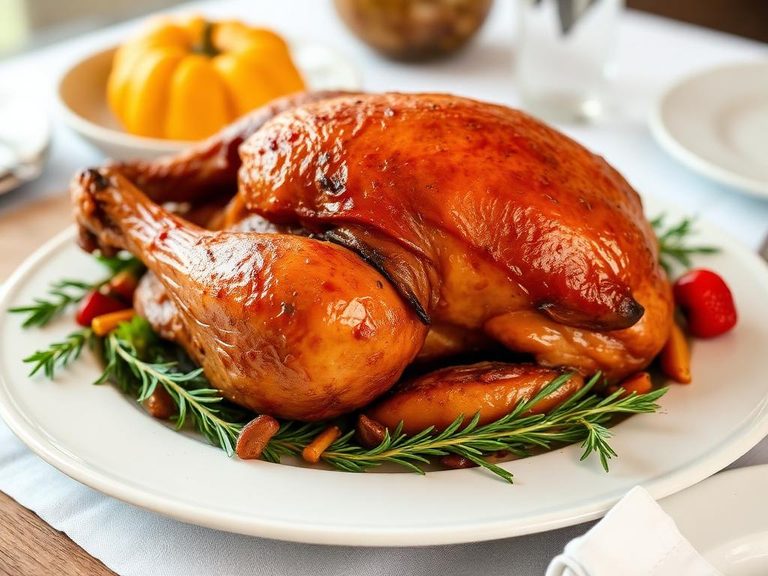
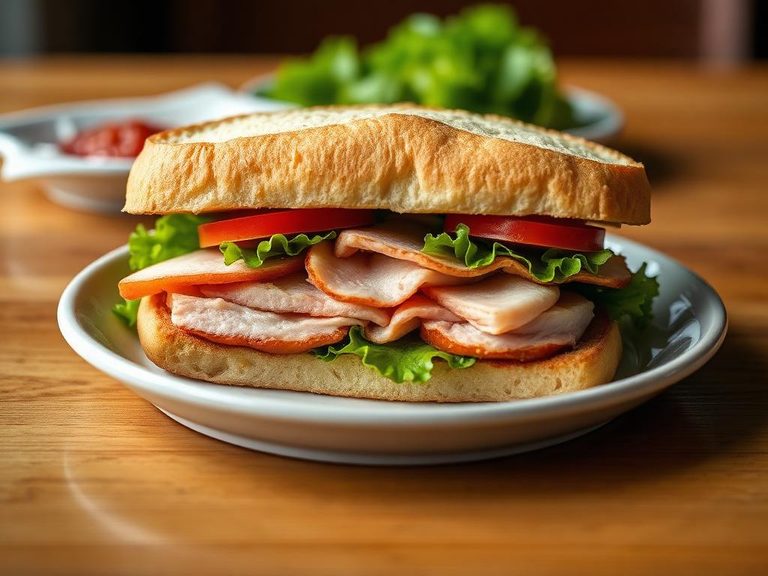
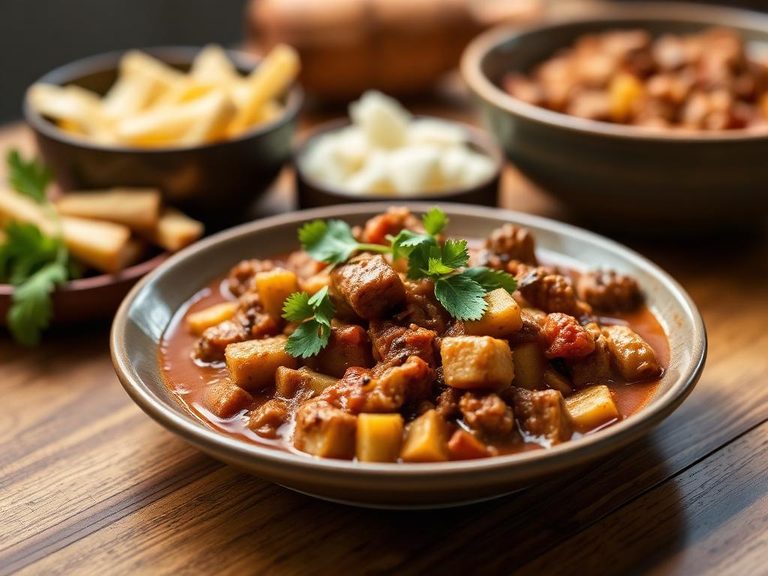
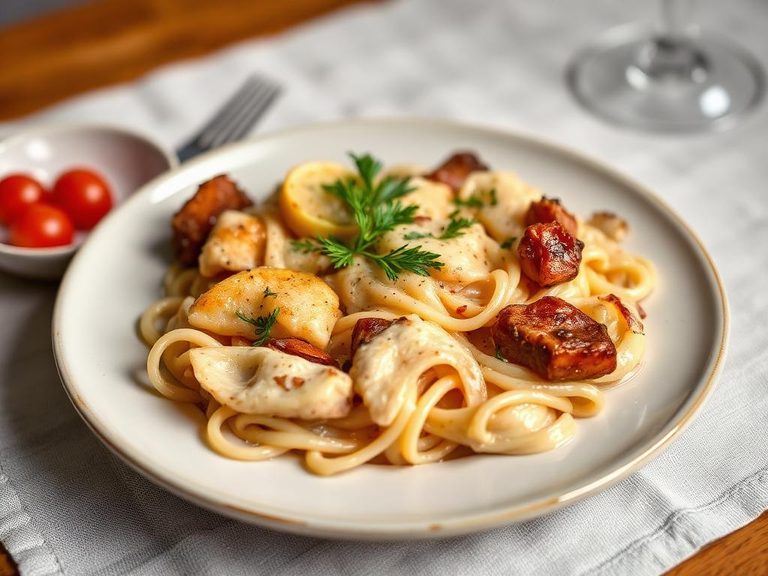
🍽️ Popular dishes


🌍 Where it's eaten
💡 Did you know?
The wild turkey was so admired by Benjamin Franklin that he proposed it as the national bird of the United States, calling it a 'Bird of Courage' and a 'true original Native of America' in a letter to his daughter.
Full nutrition (USDA data · scales with serving)
| Water | 66.9 g |
| Energy | 151 kcal |
| Protein | 28.0 g |
| Total lipid (fat) | 3.8 g |
| Carbohydrate, by difference | 0.00 g |
| Fiber, total dietary | 0.00 g |
| Total Sugars | 0.00 g |
| Calcium, Ca | 14.0 mg |
| Iron, Fe | 0.93 mg |
| Magnesium, Mg | 28.0 mg |
| Phosphorus, P | 225 mg |
| Potassium, K | 237 mg |
| Sodium, Na | 464 mg |
| Zinc, Zn | 2.4 mg |
| Copper, Cu | 0.09 mg |
| Selenium, Se | 30.4 ug |
| Vitamin C, total ascorbic acid | 0.00 mg |
| Thiamin | 0.05 mg |
| Riboflavin | 0.27 mg |
| Niacin | 9.5 mg |
| Vitamin B-6 | 0.62 mg |
| Folate, total | 9.0 ug |
| Folic acid | 0.00 ug |
| Folate, food | 9.0 ug |
| Folate, DFE | 9.0 ug |
| Choline, total | 84.6 mg |
| Vitamin B-12 | 1.2 ug |
| Vitamin B-12, added | 0.00 ug |
| Vitamin A, RAE | 4.0 ug |
| Retinol | 4.0 ug |
| Carotene, beta | 0.00 ug |
| Carotene, alpha | 0.00 ug |
| Cryptoxanthin, beta | 0.00 ug |
| Lycopene | 0.00 ug |
| Lutein + zeaxanthin | 0.00 ug |
| Vitamin E (alpha-tocopherol) | 0.06 mg |
| Vitamin E, added | 0.00 mg |
| Vitamin D (D2 + D3) | 0.30 ug |
| Vitamin K (phylloquinone) | 0.00 ug |
| Alcohol, ethyl | 0.00 g |
| Caffeine | 0.00 mg |
| Theobromine | 0.00 mg |
Fat & fatty acid profile (per 100g)
| Fatty acids, total saturated | 1.1 g |
| SFA 4:0 | 0.00 g |
| SFA 6:0 | 0.00 g |
| SFA 8:0 | 0.00 g |
| SFA 10:0 | 0.01 g |
| SFA 12:0 | 0.01 g |
| SFA 14:0 | 0.04 g |
| SFA 16:0 | 0.71 g |
| SFA 18:0 | 0.32 g |
| Fatty acids, total monounsaturated | 1.2 g |
| MUFA 16:1 | 0.11 g |
| MUFA 18:1 | 1.1 g |
| MUFA 20:1 | 0.02 g |
| MUFA 22:1 | 0.00 g |
| Fatty acids, total polyunsaturated | 1.0 g |
| PUFA 18:2 | 0.86 g |
| PUFA 18:3 | 0.04 g |
| PUFA 18:4 | 0.00 g |
| PUFA 20:4 | 0.06 g |
| PUFA 20:5 n-3 (EPA) | 0.01 g |
| PUFA 22:5 n-3 (DPA) | 0.01 g |
| PUFA 22:6 n-3 (DHA) | 0.00 g |
| Cholesterol | 94.0 mg |
Amino acid profile (per 100g)
Estimated from Turkey, mechanically deboned, from turkey frames, raw — USDA does not publish this profile for Turkey.
| Tryptophan | 0.11 g |
| Threonine | 0.64 g |
| Isoleucine | 0.50 g |
| Leucine | 1.1 g |
| Lysine | 1.2 g |
| Methionine | 0.37 g |
| Cystine | 0.10 g |
| Phenylalanine | 0.55 g |
| Tyrosine | 0.47 g |
| Valine | 0.54 g |
| Arginine | 0.87 g |
| Histidine | 0.50 g |
| Alanine | 0.87 g |
| Aspartic acid | 1.4 g |
| Glutamic acid | 2.2 g |
| Glycine | 0.78 g |
| Proline | 0.65 g |
| Serine | 0.62 g |
FAQ
Is white meat or dark meat healthier?
White meat (breast) is leaner and lower in calories and fat. Dark meat (thigh, leg) has more iron, zinc, and B vitamins, and a higher fat content which can make it more flavorful and moist. Both are excellent protein sources.
How do I keep roasted turkey from drying out?
Key methods include brining (soaking in salt water) before cooking, basting with pan juices, cooking at a lower temperature, and most importantly, using a meat thermometer to pull it out when the thickest part reaches 165°F (74°C).
What's the difference between roasted and deli turkey?
Fresh roasted turkey is minimally processed, typically lower in sodium, and has no added preservatives. Deli or lunch meat turkey is often pre-cooked, sliced, and can contain significant amounts of sodium, nitrates, and other additives for preservation and flavor.
Nutrient density (calculated · NRF9.3)
Nutrient Rich Foods index: beneficial nutrients (protein, fiber, vitamins, minerals) minus saturated fat, added sugar & sodium, per 100 kcal.
NRF9.3 index — Fulgoni, Keast & Drewnowski, 2009. Computed from USDA nutrients.
Weight-loss friendliness (composite index)
Energy density 1.51 kcal/g · 74% calories from protein · 0.0 g fiber · 0.0 g sugar per 100 g.
Composite of energy density (Rolls et al., 1999), protein & fiber satiety, minus sugar. A calculated heuristic — ranks satiety-per-calorie, not a clinical measure.
Dietary load (calculated from USDA values)
Potential renal acid load. Positive = acid-forming, negative = alkaline-forming.
Sodium-to-potassium ratio: 1.96 (lower is better — aim for ≤ 1)
Sodium:potassium per WHO potassium guidance. Computed from USDA nutrients.