

Turkey, light or dark meat, smoked, skin not eaten
Common food
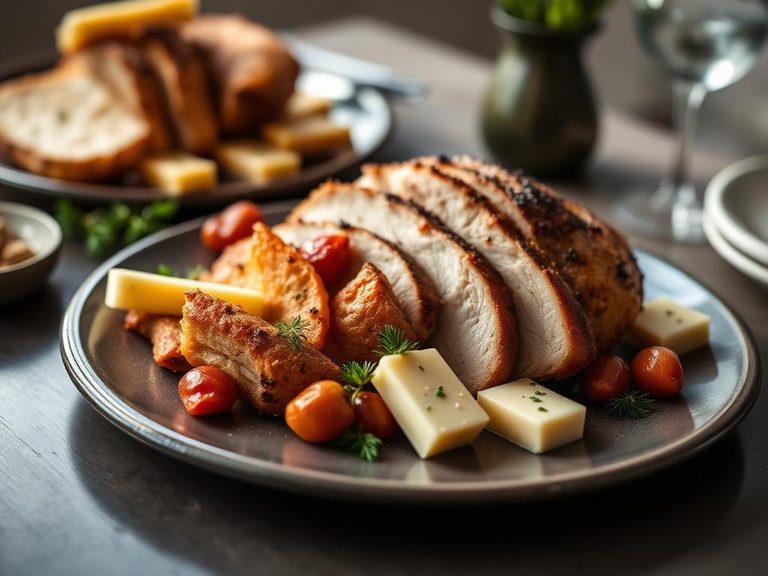
Smoked turkey, whether light or dark meat, delivers a deep, woodsy aroma and a firm, slightly chewy texture with a pronounced savory, salty punch. With nearly 30 grams of protein and zero carbs per 100 grams, it is a lean powerhouse that provides a satisfying, low-calorie option for meal prep. The smoking process infuses the meat with a rich, complex flavor that elevates it beyond standard roasted poultry.
Calorie split: 72% protein · 0% carbs · 28% fat
↓ Full nutrition💚 Why it's loved
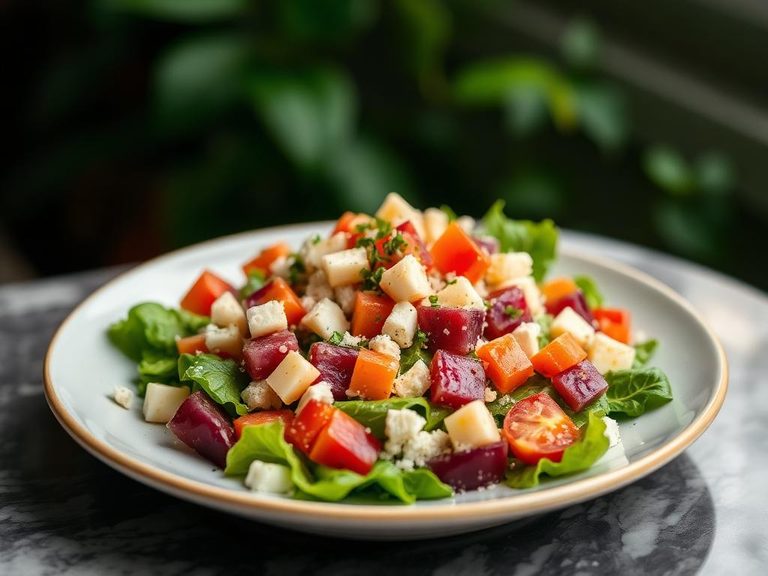
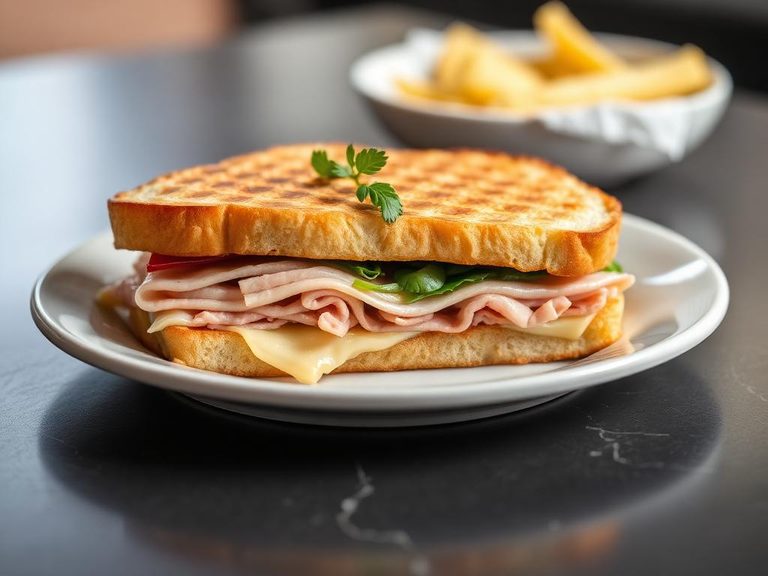
People love smoked turkey for its intense, savory flavor profile that requires no additional seasoning, making it a convenient and delicious protein source. Its ability to be sliced thin or cubed makes it a staple for everything from sandwiches to salads, blending seamlessly into various cuisines.
⚠️ Watch-outs & how to enjoy it better
The smoking process often results in high sodium content, which can be a concern for those monitoring salt intake or blood pressure. To mitigate this, pair it with potassium-rich vegetables like spinach or avocado, and be sure to rinse or soak the meat briefly if it's particularly salty. Additionally, some individuals may find the texture of smoked meat slightly tougher than fresh, so it's best used in dishes where it can be warmed or shredded.
Key benefits
- Exceptionally high in protein for muscle maintenance
- Virtually zero carbohydrates, making it ideal for low-carb diets
- Low calorie density at 162 kcal per 100g
- Rich in B vitamins and essential minerals like selenium
- Highly versatile for quick, nutrient-dense meal assembly
🍽️ Popular dishes

🌍 Where it's eaten
💡 Did you know?
Smoked turkey was popularized in the United States during the 19th century as a way to preserve meat, but it truly became a holiday staple in the 20th century as a leaner alternative to traditional roasted turkey.
Full nutrition (USDA data · scales with serving)
| Water | 64.9 g |
| Energy | 162 kcal |
| Protein | 29.3 g |
| Total lipid (fat) | 5.0 g |
| Carbohydrate, by difference | 0.00 g |
| Fiber, total dietary | 0.00 g |
| Total Sugars | 0.00 g |
| Calcium, Ca | 25.0 mg |
| Iron, Fe | 1.8 mg |
| Magnesium, Mg | 26.0 mg |
| Phosphorus, P | 213 mg |
| Potassium, K | 298 mg |
| Sodium, Na | 996 mg |
| Zinc, Zn | 3.1 mg |
| Copper, Cu | 0.09 mg |
| Selenium, Se | 43.0 ug |
| Vitamin C, total ascorbic acid | 0.00 mg |
| Thiamin | 0.06 mg |
| Riboflavin | 0.18 mg |
| Niacin | 5.4 mg |
| Vitamin B-6 | 0.46 mg |
| Folate, total | 7.0 ug |
| Folic acid | 0.00 ug |
| Folate, food | 7.0 ug |
| Folate, DFE | 7.0 ug |
| Choline, total | 82.3 mg |
| Vitamin B-12 | 0.37 ug |
| Vitamin B-12, added | 0.00 ug |
| Vitamin A, RAE | 0.00 ug |
| Retinol | 0.00 ug |
| Carotene, beta | 0.00 ug |
| Carotene, alpha | 0.00 ug |
| Cryptoxanthin, beta | 0.00 ug |
| Lycopene | 0.00 ug |
| Lutein + zeaxanthin | 0.00 ug |
| Vitamin E (alpha-tocopherol) | 0.33 mg |
| Vitamin E, added | 0.00 mg |
| Vitamin D (D2 + D3) | 0.10 ug |
| Vitamin K (phylloquinone) | 0.00 ug |
| Alcohol, ethyl | 0.00 g |
| Caffeine | 0.00 mg |
| Theobromine | 0.00 mg |
Fat & fatty acid profile (per 100g)
| Fatty acids, total saturated | 1.4 g |
| SFA 4:0 | 0.00 g |
| SFA 6:0 | 0.00 g |
| SFA 8:0 | 0.00 g |
| SFA 10:0 | 0.00 g |
| SFA 12:0 | 0.02 g |
| SFA 14:0 | 0.03 g |
| SFA 16:0 | 0.82 g |
| SFA 18:0 | 0.49 g |
| Fatty acids, total monounsaturated | 1.0 g |
| MUFA 16:1 | 0.15 g |
| MUFA 18:1 | 0.85 g |
| MUFA 20:1 | 0.02 g |
| MUFA 22:1 | 0.02 g |
| Fatty acids, total polyunsaturated | 1.4 g |
| PUFA 18:2 | 1.1 g |
| PUFA 18:3 | 0.04 g |
| PUFA 18:4 | 0.00 g |
| PUFA 20:4 | 0.21 g |
| PUFA 20:5 n-3 (EPA) | 0.00 g |
| PUFA 22:5 n-3 (DPA) | 0.03 g |
| PUFA 22:6 n-3 (DHA) | 0.04 g |
| Cholesterol | 76.0 mg |
Amino acid profile (per 100g)
Estimated from Turkey, mechanically deboned, from turkey frames, raw — USDA does not publish this profile for Turkey.
| Tryptophan | 0.11 g |
| Threonine | 0.64 g |
| Isoleucine | 0.50 g |
| Leucine | 1.1 g |
| Lysine | 1.2 g |
| Methionine | 0.37 g |
| Cystine | 0.10 g |
| Phenylalanine | 0.55 g |
| Tyrosine | 0.47 g |
| Valine | 0.54 g |
| Arginine | 0.87 g |
| Histidine | 0.50 g |
| Alanine | 0.87 g |
| Aspartic acid | 1.4 g |
| Glutamic acid | 2.2 g |
| Glycine | 0.78 g |
| Proline | 0.65 g |
| Serine | 0.62 g |
FAQ
Is smoked turkey healthier than regular turkey?
Smoked turkey is comparable in protein and fat content to regular turkey but can be higher in sodium due to the curing process. It's a lean protein source, but watch the salt intake.
Can I use smoked turkey in place of deli meat?
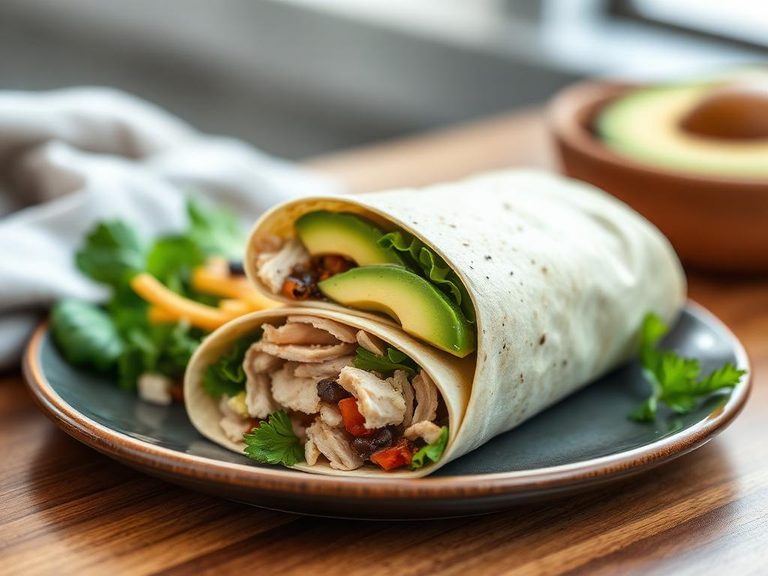
Yes, smoked turkey is an excellent substitute for deli meat, offering a richer flavor and often fewer additives. It works well in sandwiches, wraps, and salads.
How long does smoked turkey last in the fridge?
Properly stored in an airtight container, smoked turkey can last 3-5 days in the refrigerator. For longer storage, it can be frozen for up to 2 months.
Nutrient density (calculated · NRF9.3)
Nutrient Rich Foods index: beneficial nutrients (protein, fiber, vitamins, minerals) minus saturated fat, added sugar & sodium, per 100 kcal.
NRF9.3 index — Fulgoni, Keast & Drewnowski, 2009. Computed from USDA nutrients.
Weight-loss friendliness (composite index)
Energy density 1.62 kcal/g · 72% calories from protein · 0.0 g fiber · 0.0 g sugar per 100 g.
Composite of energy density (Rolls et al., 1999), protein & fiber satiety, minus sugar. A calculated heuristic — ranks satiety-per-calorie, not a clinical measure.
Dietary load (calculated from USDA values)
Potential renal acid load. Positive = acid-forming, negative = alkaline-forming.
Sodium-to-potassium ratio: 3.34 (lower is better — aim for ≤ 1)
Sodium:potassium per WHO potassium guidance. Computed from USDA nutrients.