

Turkey, light or dark meat, fried, coated, skin not eaten
Common food

Photo: Wikipedia
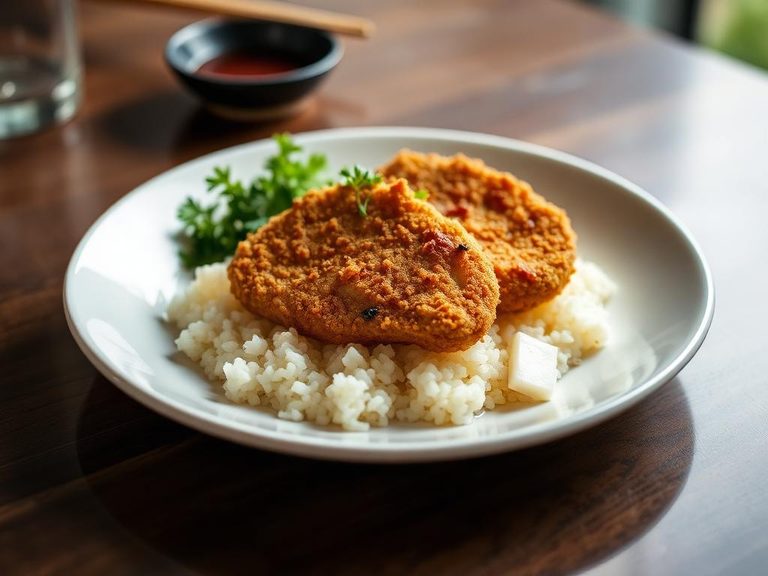
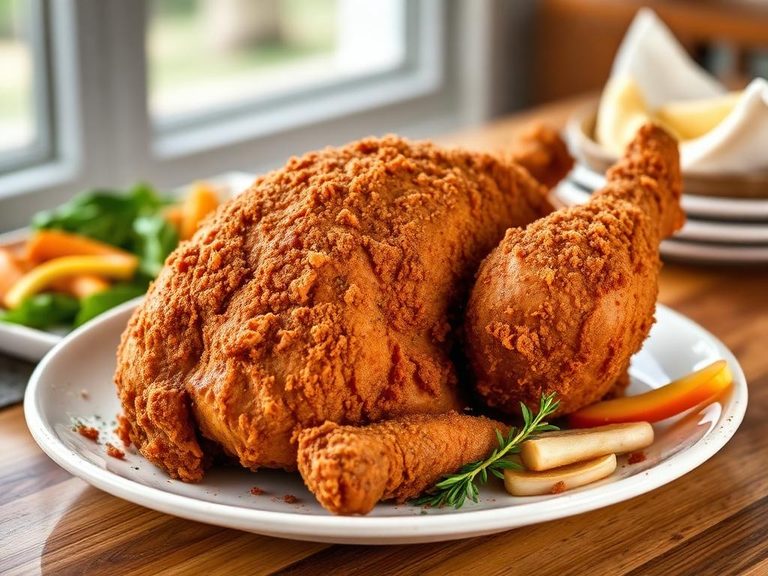
This is lean, protein-packed turkey meat that's been breaded or battered and fried until golden, with the skin removed for a cleaner, lighter bite. The texture is satisfyingly crisp on the outside with a moist, tender interior, while the flavor is savory and mild, often enhanced by the seasoning in the coating. It's a high-protein, low-carb option that delivers a hearty meal with minimal sugars.
Calorie split: 68% protein · 4% carbs · 28% fat
↓ Full nutrition💚 Why it's loved
People love it for the satisfying crunch of the fried coating paired with the lean, juicy turkey meat, making it a comfort food that feels indulgent without being overly heavy. It's also incredibly versatile, working well in salads, wraps, or as a standalone main, and it's a popular choice for family meals and holiday leftovers.
⚠️ Watch-outs & how to enjoy it better
The frying process can add extra fat and calories, and the coating may contain sodium or allergens like gluten, which can be a concern for those watching salt intake or with sensitivities. To counteract this, opt for baking or air-frying to reduce fat, choose low-sodium seasonings, and pair with fiber-rich vegetables like broccoli or a side salad to balance the meal and support digestion.
Key benefits
- High-quality protein source (27g per 100g) for muscle maintenance
- Very low carbohydrate content (1.42g per 100g), suitable for low-carb diets
- Low sugar content (0.11g per 100g) to avoid blood-sugar spikes
- Skinless preparation reduces overall fat and calorie density
- Versatile ingredient for meal prep and quick dinners
🍽️ Popular dishes
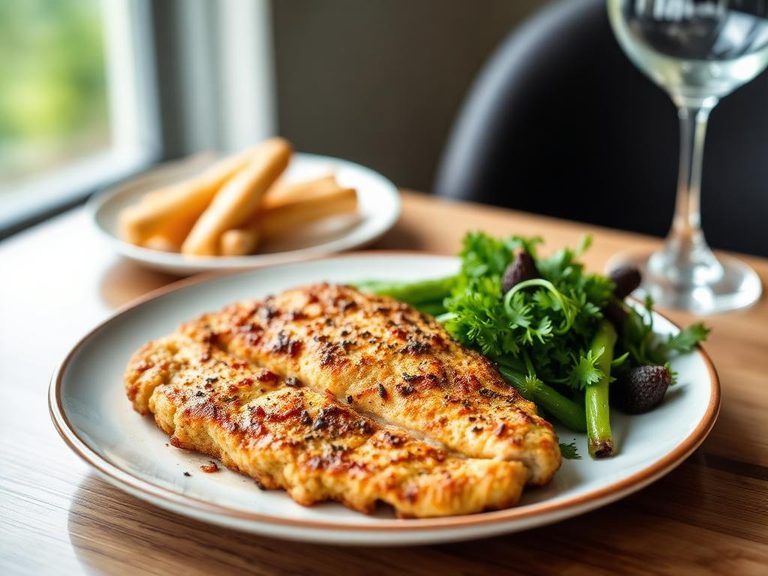
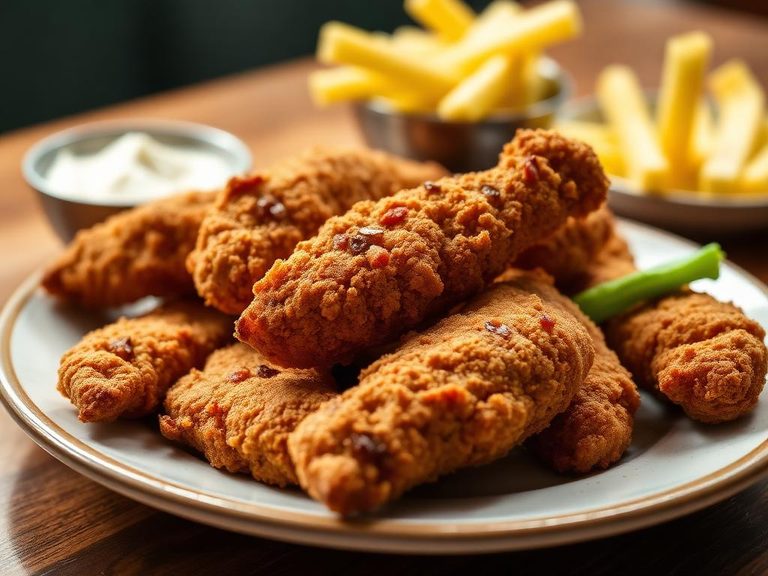
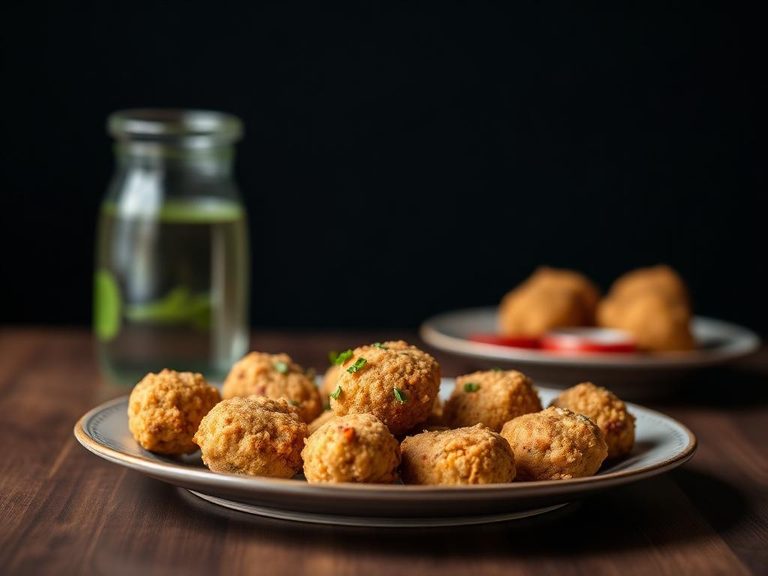
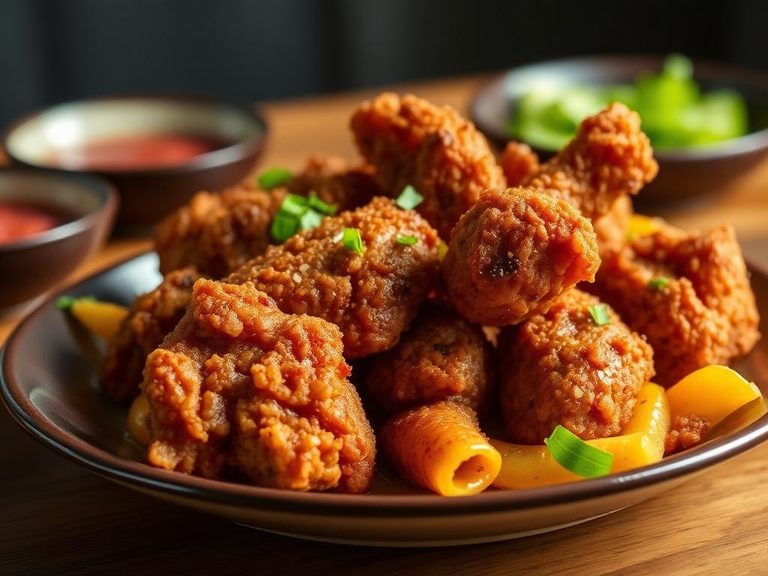
🌍 Where it's eaten
💡 Did you know?
Turkey was first domesticated by Indigenous peoples in Mesoamerica around 800 BCE, long before it became a Thanksgiving staple in the United States.
Full nutrition (USDA data · scales with serving)
| Water | 65.4 g |
| Energy | 165 kcal |
| Protein | 27.2 g |
| Total lipid (fat) | 5.1 g |
| Carbohydrate, by difference | 1.4 g |
| Fiber, total dietary | 0.00 g |
| Total Sugars | 0.11 g |
| Calcium, Ca | 16.0 mg |
| Iron, Fe | 1.0 mg |
| Magnesium, Mg | 28.0 mg |
| Phosphorus, P | 221 mg |
| Potassium, K | 235 mg |
| Sodium, Na | 274 mg |
| Zinc, Zn | 2.4 mg |
| Copper, Cu | 0.09 mg |
| Selenium, Se | 29.8 ug |
| Vitamin C, total ascorbic acid | 0.00 mg |
| Thiamin | 0.06 mg |
| Riboflavin | 0.27 mg |
| Niacin | 9.2 mg |
| Vitamin B-6 | 0.60 mg |
| Folate, total | 11.0 ug |
| Folic acid | 1.0 ug |
| Folate, food | 9.0 ug |
| Folate, DFE | 12.0 ug |
| Choline, total | 84.3 mg |
| Vitamin B-12 | 1.1 ug |
| Vitamin B-12, added | 0.00 ug |
| Vitamin A, RAE | 6.0 ug |
| Retinol | 6.0 ug |
| Carotene, beta | 0.00 ug |
| Carotene, alpha | 0.00 ug |
| Cryptoxanthin, beta | 0.00 ug |
| Lycopene | 0.00 ug |
| Lutein + zeaxanthin | 5.0 ug |
| Vitamin E (alpha-tocopherol) | 0.15 mg |
| Vitamin E, added | 0.00 mg |
| Vitamin D (D2 + D3) | 0.30 ug |
| Vitamin K (phylloquinone) | 0.70 ug |
| Alcohol, ethyl | 0.00 g |
| Caffeine | 0.00 mg |
| Theobromine | 0.00 mg |
Fat & fatty acid profile (per 100g)
| Fatty acids, total saturated | 1.4 g |
| SFA 4:0 | 0.00 g |
| SFA 6:0 | 0.00 g |
| SFA 8:0 | 0.00 g |
| SFA 10:0 | 0.01 g |
| SFA 12:0 | 0.01 g |
| SFA 14:0 | 0.04 g |
| SFA 16:0 | 0.88 g |
| SFA 18:0 | 0.47 g |
| Fatty acids, total monounsaturated | 1.8 g |
| MUFA 16:1 | 0.11 g |
| MUFA 18:1 | 1.6 g |
| MUFA 20:1 | 0.02 g |
| MUFA 22:1 | 0.00 g |
| Fatty acids, total polyunsaturated | 1.4 g |
| PUFA 18:2 | 1.2 g |
| PUFA 18:3 | 0.07 g |
| PUFA 18:4 | 0.00 g |
| PUFA 20:4 | 0.06 g |
| PUFA 20:5 n-3 (EPA) | 0.01 g |
| PUFA 22:5 n-3 (DPA) | 0.01 g |
| PUFA 22:6 n-3 (DHA) | 0.00 g |
| Cholesterol | 95.0 mg |
Amino acid profile (per 100g)
Estimated from Turkey, mechanically deboned, from turkey frames, raw — USDA does not publish this profile for Turkey.
| Tryptophan | 0.11 g |
| Threonine | 0.64 g |
| Isoleucine | 0.50 g |
| Leucine | 1.1 g |
| Lysine | 1.2 g |
| Methionine | 0.37 g |
| Cystine | 0.10 g |
| Phenylalanine | 0.55 g |
| Tyrosine | 0.47 g |
| Valine | 0.54 g |
| Arginine | 0.87 g |
| Histidine | 0.50 g |
| Alanine | 0.87 g |
| Aspartic acid | 1.4 g |
| Glutamic acid | 2.2 g |
| Glycine | 0.78 g |
| Proline | 0.65 g |
| Serine | 0.62 g |
FAQ
Is fried turkey healthier than fried chicken?
Fried turkey is generally leaner than fried chicken, with less fat and more protein per serving, but the coating and cooking method can still add calories. For a healthier option, try baking or air-frying the turkey to reduce fat content.
Can I eat fried turkey on a low-carb diet?
Yes, fried turkey is low in carbs (1.42g per 100g), making it suitable for low-carb diets like keto. Just be mindful of the coating, which may contain some carbs, and opt for a light breading or use almond flour for a lower-carb version.
How do I store leftover fried turkey?
Store leftover fried turkey in an airtight container in the refrigerator for up to 3-4 days. For longer storage, freeze it for up to 3 months, but note that the coating may lose its crispness when reheated.
Nutrient density (calculated · NRF9.3)
Nutrient Rich Foods index: beneficial nutrients (protein, fiber, vitamins, minerals) minus saturated fat, added sugar & sodium, per 100 kcal.
NRF9.3 index — Fulgoni, Keast & Drewnowski, 2009. Computed from USDA nutrients.
Weight-loss friendliness (composite index)
Energy density 1.65 kcal/g · 66% calories from protein · 0.0 g fiber · 0.1 g sugar per 100 g.
Composite of energy density (Rolls et al., 1999), protein & fiber satiety, minus sugar. A calculated heuristic — ranks satiety-per-calorie, not a clinical measure.
Dietary load (calculated from USDA values)
Potential renal acid load. Positive = acid-forming, negative = alkaline-forming.
Sodium-to-potassium ratio: 1.17 (lower is better — aim for ≤ 1)
Sodium:potassium per WHO potassium guidance. Computed from USDA nutrients.