

Turkey, light or dark meat, stewed, skin not eaten
Common food

Photo: Wikipedia
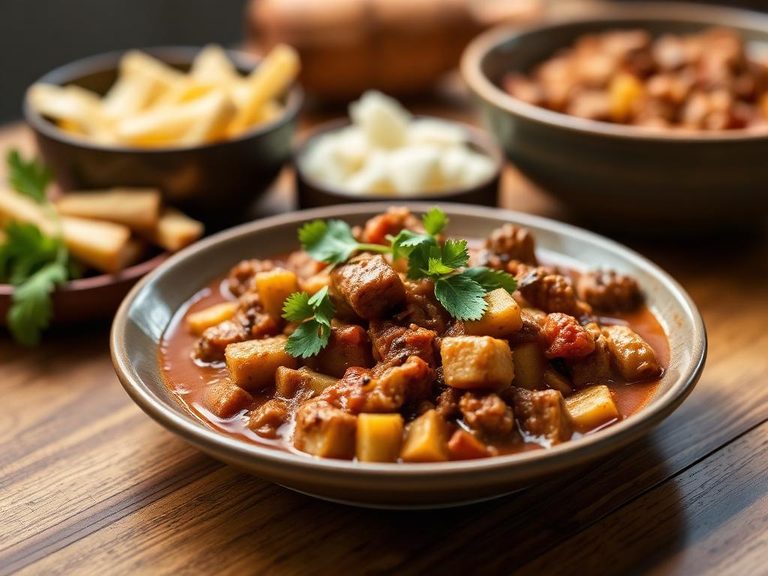
Stewed turkey, whether from the lean light meat of the breast or the richer dark meat of the legs and thighs, is a tender, savory protein powerhouse. With its moist, flaky texture and deep, comforting flavor, it's a staple for nourishing meals. Nutritionally, it's exceptionally high in protein (over 31g per 100g) while being virtually free of carbohydrates and sugars.
Calorie split: 83% protein · 1% carbs · 16% fat
↓ Full nutrition💚 Why it's loved
People love stewed turkey for its comforting, savory flavor and incredibly tender, fall-apart texture that absorbs broths and seasonings beautifully. It's a versatile centerpiece for family meals, from holiday feasts to simple weeknight soups, deeply embedded in American and European culinary traditions.
⚠️ Watch-outs & how to enjoy it better
While lean, stewed turkey can be perceived as bland or dry if overcooked, and its high protein content may not suit those with specific kidney conditions. To counteract dryness, ensure it's stewed in a flavorful liquid (broth, wine, or tomato) and avoid overcooking; for those monitoring sodium, use low-sodium broth and season with herbs and spices instead.
Key benefits
- Exceptionally high in lean protein for muscle maintenance and satiety.
- Very low in carbohydrates and sugars, making it ideal for low-carb diets.
- Naturally low in fat, especially when skin is removed.
- Rich source of B vitamins, particularly niacin and B6, for energy metabolism.
- Provides essential minerals like selenium and phosphorus.
🍽️ Popular dishes
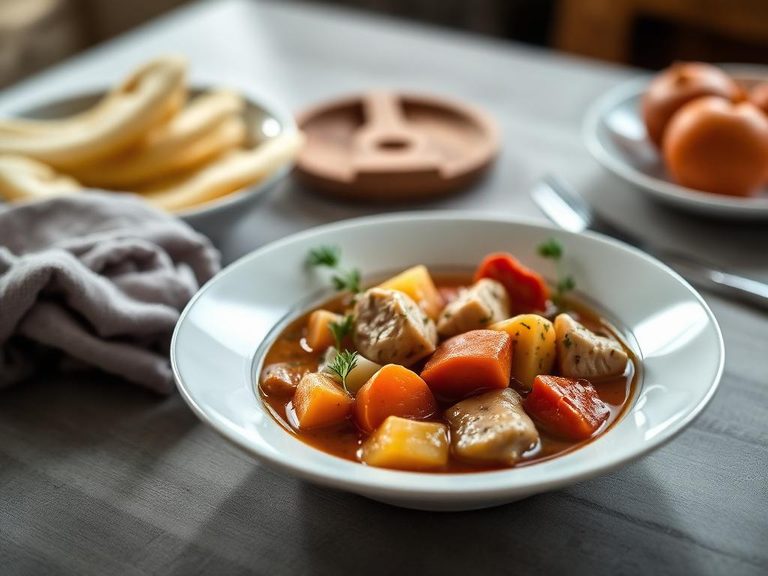
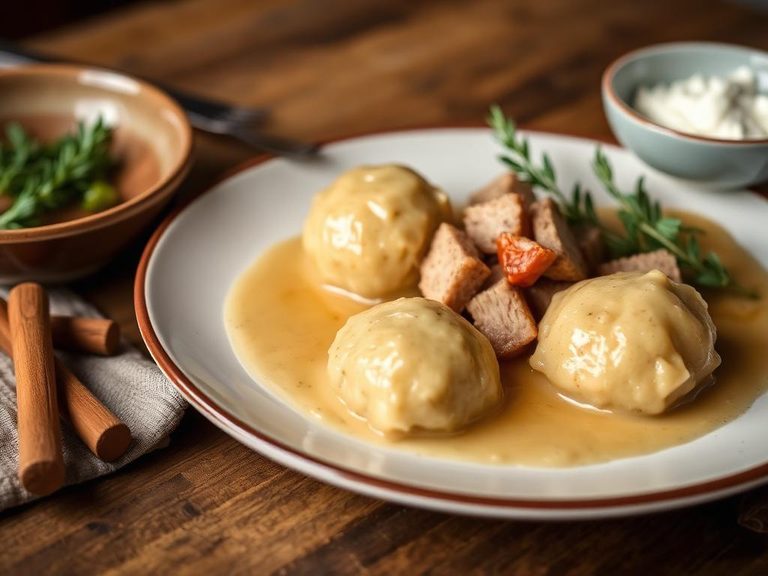
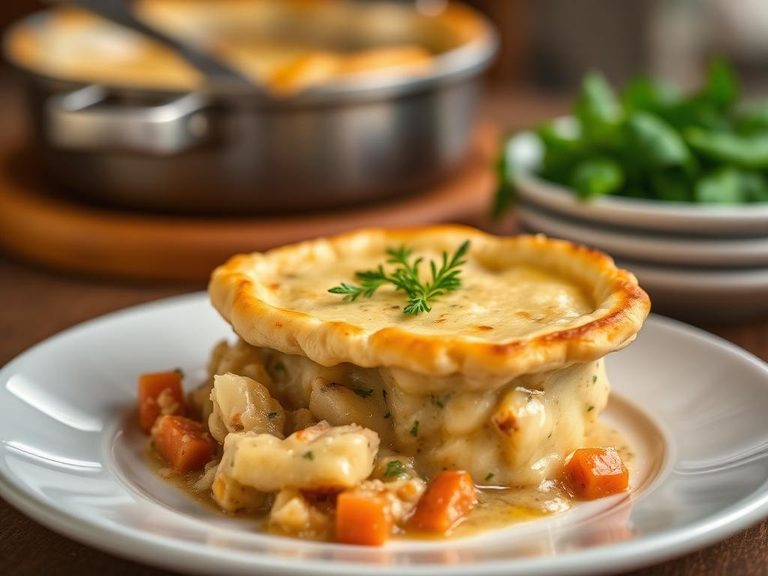
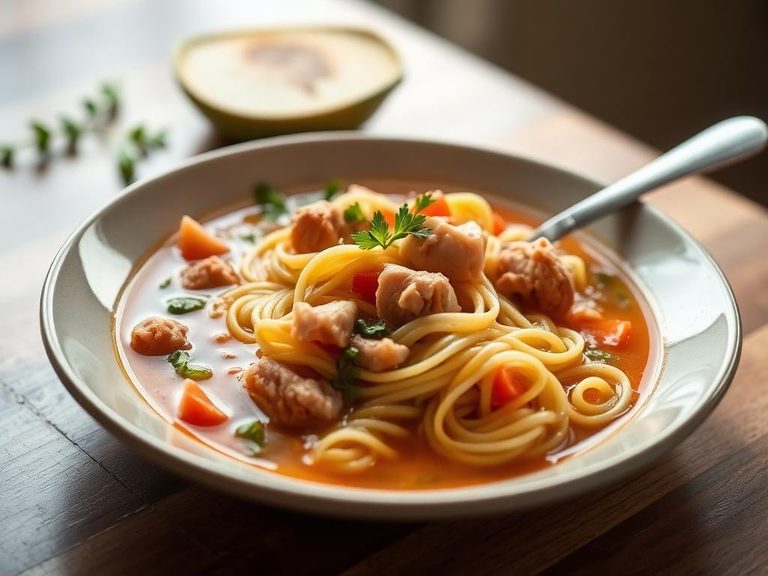
🌍 Where it's eaten
💡 Did you know?
The dark meat of turkey contains more myoglobin (an oxygen-storing protein) than white meat, which is why it has a richer color and a slightly higher fat content, making it more forgiving in slow-cooking methods like stewing.
Full nutrition (USDA data · scales with serving)
| Water | 64.9 g |
| Energy | 158 kcal |
| Protein | 31.2 g |
| Total lipid (fat) | 2.7 g |
| Carbohydrate, by difference | 0.19 g |
| Fiber, total dietary | 0.00 g |
| Total Sugars | 0.10 g |
| Calcium, Ca | 16.0 mg |
| Iron, Fe | 1.2 mg |
| Magnesium, Mg | 37.0 mg |
| Phosphorus, P | 262 mg |
| Potassium, K | 324 mg |
| Sodium, Na | 610 mg |
| Zinc, Zn | 2.5 mg |
| Copper, Cu | 0.11 mg |
| Selenium, Se | 31.1 ug |
| Vitamin C, total ascorbic acid | 0.00 mg |
| Thiamin | 0.07 mg |
| Riboflavin | 0.26 mg |
| Niacin | 11.2 mg |
| Vitamin B-6 | 0.90 mg |
| Folate, total | 10.0 ug |
| Folic acid | 0.00 ug |
| Folate, food | 10.0 ug |
| Folate, DFE | 10.0 ug |
| Choline, total | 82.9 mg |
| Vitamin B-12 | 1.7 ug |
| Vitamin B-12, added | 0.00 ug |
| Vitamin A, RAE | 12.0 ug |
| Retinol | 12.0 ug |
| Carotene, beta | 0.00 ug |
| Carotene, alpha | 0.00 ug |
| Cryptoxanthin, beta | 0.00 ug |
| Lycopene | 0.00 ug |
| Lutein + zeaxanthin | 0.00 ug |
| Vitamin E (alpha-tocopherol) | 0.12 mg |
| Vitamin E, added | 0.00 mg |
| Vitamin D (D2 + D3) | 0.30 ug |
| Vitamin K (phylloquinone) | 0.00 ug |
| Alcohol, ethyl | 0.00 g |
| Caffeine | 0.00 mg |
| Theobromine | 0.00 mg |
Fat & fatty acid profile (per 100g)
| Fatty acids, total saturated | 0.63 g |
| SFA 4:0 | 0.00 g |
| SFA 6:0 | 0.00 g |
| SFA 8:0 | 0.00 g |
| SFA 10:0 | 0.00 g |
| SFA 12:0 | 0.01 g |
| SFA 14:0 | 0.02 g |
| SFA 16:0 | 0.40 g |
| SFA 18:0 | 0.19 g |
| Fatty acids, total monounsaturated | 0.66 g |
| MUFA 16:1 | 0.06 g |
| MUFA 18:1 | 0.58 g |
| MUFA 20:1 | 0.01 g |
| MUFA 22:1 | 0.00 g |
| Fatty acids, total polyunsaturated | 0.57 g |
| PUFA 18:2 | 0.47 g |
| PUFA 18:3 | 0.02 g |
| PUFA 18:4 | 0.00 g |
| PUFA 20:4 | 0.04 g |
| PUFA 20:5 n-3 (EPA) | 0.00 g |
| PUFA 22:5 n-3 (DPA) | 0.00 g |
| PUFA 22:6 n-3 (DHA) | 0.00 g |
| Cholesterol | 92.0 mg |
Amino acid profile (per 100g)
Estimated from Turkey, mechanically deboned, from turkey frames, raw — USDA does not publish this profile for Turkey.
| Tryptophan | 0.11 g |
| Threonine | 0.64 g |
| Isoleucine | 0.50 g |
| Leucine | 1.1 g |
| Lysine | 1.2 g |
| Methionine | 0.37 g |
| Cystine | 0.10 g |
| Phenylalanine | 0.55 g |
| Tyrosine | 0.47 g |
| Valine | 0.54 g |
| Arginine | 0.87 g |
| Histidine | 0.50 g |
| Alanine | 0.87 g |
| Aspartic acid | 1.4 g |
| Glutamic acid | 2.2 g |
| Glycine | 0.78 g |
| Proline | 0.65 g |
| Serine | 0.62 g |
FAQ
Is stewed turkey healthier than roasted turkey?
Stewing and roasting are both healthy cooking methods for turkey. The key difference is that stewing involves cooking in liquid, which can help retain moisture and nutrients, but may also add calories if using a rich broth or adding fat. Roasting can result in a drier texture but allows fat to render out. Both are excellent lean protein sources.
How can I make stewed turkey more flavorful without adding fat?
Use a flavorful low-sodium broth (chicken, turkey, or vegetable) as the stewing liquid. Add aromatic vegetables like onions, carrots, and celery, and herbs such as thyme, rosemary, and bay leaves. A splash of vinegar or lemon juice at the end can brighten the flavor without adding fat.
Can I use both light and dark meat for stewing?
Yes, using a mix of light and dark meat can provide a balance of flavors and textures. The dark meat tends to be more tender and flavorful in stews, while the light meat is leaner. Cooking them together allows the dark meat's richness to enhance the overall dish.
Nutrient density (calculated · NRF9.3)
Nutrient Rich Foods index: beneficial nutrients (protein, fiber, vitamins, minerals) minus saturated fat, added sugar & sodium, per 100 kcal.
NRF9.3 index — Fulgoni, Keast & Drewnowski, 2009. Computed from USDA nutrients.
Weight-loss friendliness (composite index)
Energy density 1.58 kcal/g · 79% calories from protein · 0.0 g fiber · 0.1 g sugar per 100 g.
Composite of energy density (Rolls et al., 1999), protein & fiber satiety, minus sugar. A calculated heuristic — ranks satiety-per-calorie, not a clinical measure.
Dietary load (calculated from USDA values)
Potential renal acid load. Positive = acid-forming, negative = alkaline-forming.
Sodium-to-potassium ratio: 1.88 (lower is better — aim for ≤ 1)
Sodium:potassium per WHO potassium guidance. Computed from USDA nutrients.