

Turkey light or dark meat, stewed, skin eaten
Common food

Photo: Wikipedia
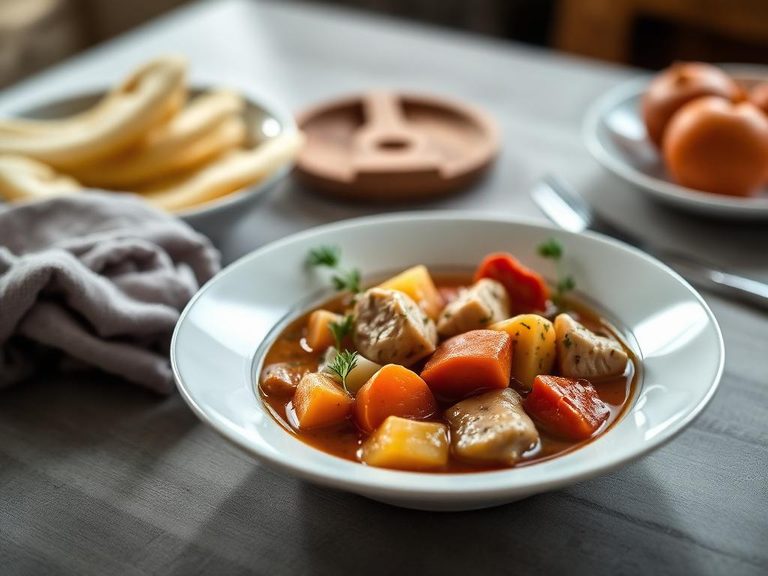
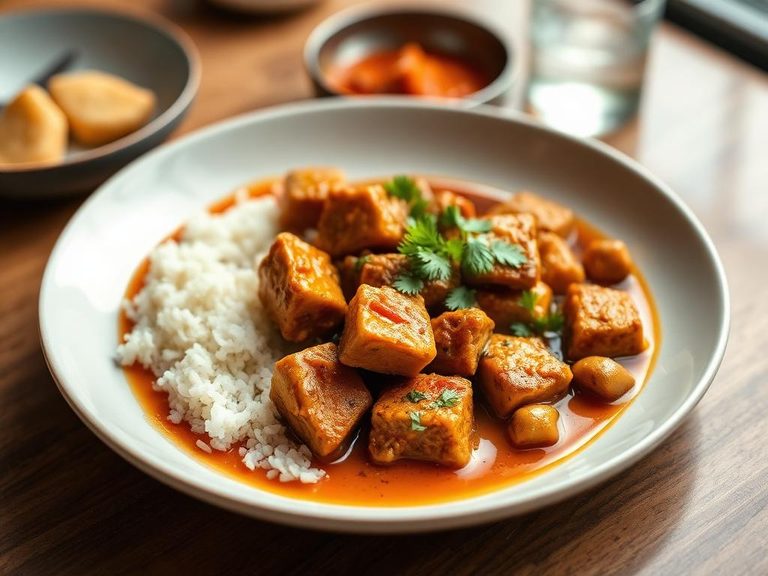
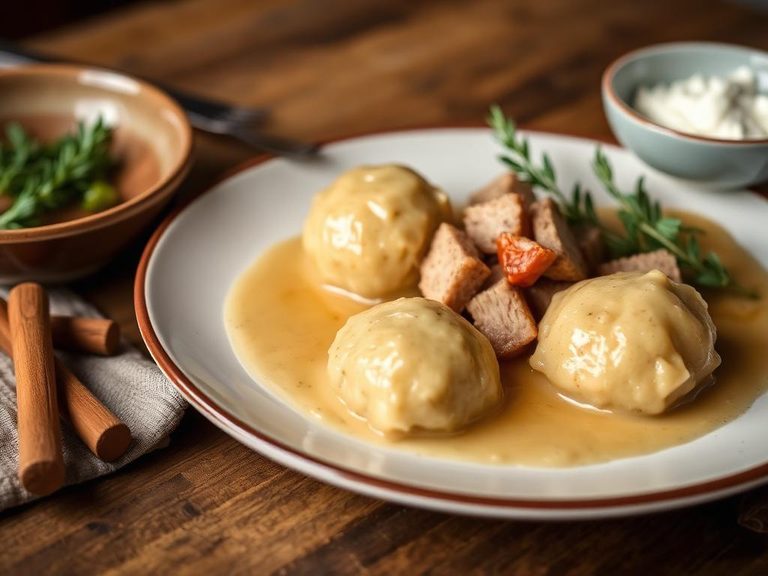
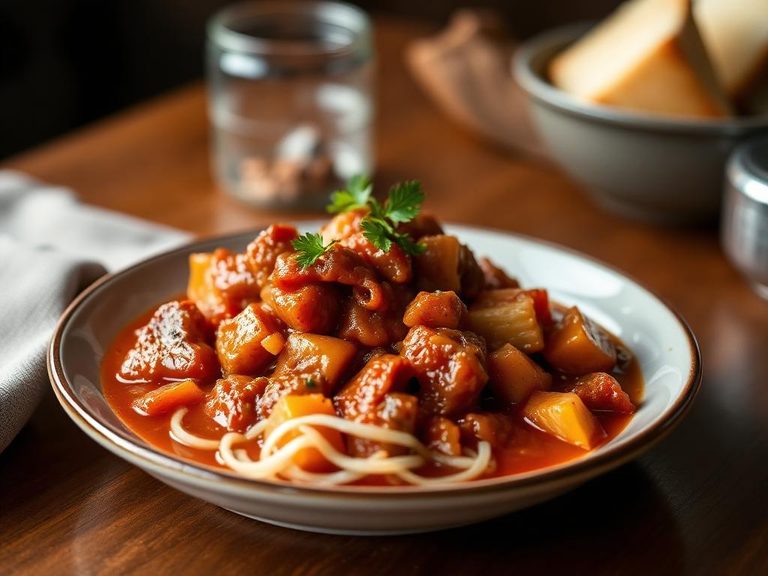
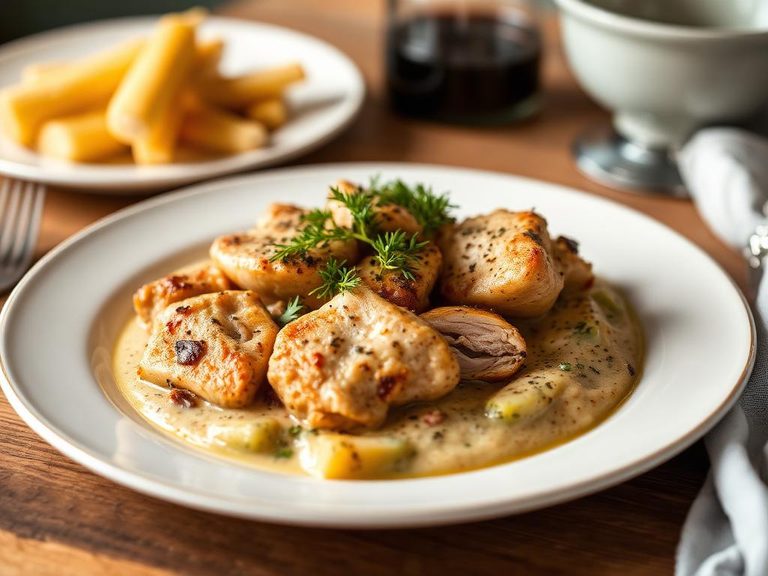
Stewed turkey, with its skin on, is a succulent, fall-apart tender dish where the dark and light meat have absorbed the savory braising liquid. The skin adds a rich, gelatinous texture and amplifies the deep, savory flavor, making the meat exceptionally moist. Nutritionally, it's a powerhouse of protein with a significant fat content, primarily from the skin, and virtually zero carbohydrates.
Calorie split: 61% protein · 0% carbs · 39% fat
↓ Full nutrition💚 Why it's loved
People love stewed turkey for its comforting, home-cooked appeal and the way the meat becomes incredibly tender and infused with the flavors of the broth and aromatics. The skin, when stewed, transforms into a savory, melt-in-your-mouth delicacy that many consider the best part.
⚠️ Watch-outs & how to enjoy it better
The primary downside is the high fat and calorie density from the skin, which may not suit low-fat diets. For those monitoring sodium intake, the stewing liquid can be high in salt. To counteract this, use a low-sodium broth and skim excess fat from the liquid before serving. Pairing it with a large portion of fiber-rich vegetables can balance the meal and aid satiety.
Key benefits
- Excellent source of high-quality protein for muscle maintenance
- Rich in B vitamins like niacin (B3) and B6 for energy metabolism
- Contains minerals like selenium and phosphorus
- The skin provides dietary collagen and healthy fats
- Slow stewing makes nutrients more bioavailable
🍽️ Popular dishes

🌍 Where it's eaten
💡 Did you know?
Turkey is a New World bird domesticated by Indigenous peoples of Mesoamerica, meaning dishes like turkey stew are a culinary tradition that originated in the Americas before spreading globally.
Full nutrition (USDA data · scales with serving)
| Water | 60.2 g |
| Energy | 204 kcal |
| Protein | 30.3 g |
| Total lipid (fat) | 8.5 g |
| Carbohydrate, by difference | 0.14 g |
| Fiber, total dietary | 0.00 g |
| Total Sugars | 0.07 g |
| Calcium, Ca | 13.0 mg |
| Iron, Fe | 0.96 mg |
| Magnesium, Mg | 22.0 mg |
| Phosphorus, P | 177 mg |
| Potassium, K | 174 mg |
| Sodium, Na | 576 mg |
| Zinc, Zn | 2.2 mg |
| Copper, Cu | 0.09 mg |
| Selenium, Se | 29.9 ug |
| Vitamin C, total ascorbic acid | 0.00 mg |
| Thiamin | 0.04 mg |
| Riboflavin | 0.23 mg |
| Niacin | 6.9 mg |
| Vitamin B-6 | 0.46 mg |
| Folate, total | 6.0 ug |
| Folic acid | 0.00 ug |
| Folate, food | 6.0 ug |
| Folate, DFE | 6.0 ug |
| Choline, total | 58.5 mg |
| Vitamin B-12 | 0.67 ug |
| Vitamin B-12, added | 0.00 ug |
| Vitamin A, RAE | 17.0 ug |
| Retinol | 17.0 ug |
| Carotene, beta | 0.00 ug |
| Carotene, alpha | 0.00 ug |
| Cryptoxanthin, beta | 0.00 ug |
| Lycopene | 0.00 ug |
| Lutein + zeaxanthin | 1.0 ug |
| Vitamin E (alpha-tocopherol) | 0.13 mg |
| Vitamin E, added | 0.00 mg |
| Vitamin D (D2 + D3) | 0.40 ug |
| Vitamin K (phylloquinone) | 0.00 ug |
| Alcohol, ethyl | 0.00 g |
| Caffeine | 0.00 mg |
| Theobromine | 0.00 mg |
Fat & fatty acid profile (per 100g)
| Fatty acids, total saturated | 2.0 g |
| SFA 4:0 | 0.00 g |
| SFA 6:0 | 0.00 g |
| SFA 8:0 | 0.00 g |
| SFA 10:0 | 0.01 g |
| SFA 12:0 | 0.03 g |
| SFA 14:0 | 0.07 g |
| SFA 16:0 | 1.3 g |
| SFA 18:0 | 0.49 g |
| Fatty acids, total monounsaturated | 3.2 g |
| MUFA 16:1 | 0.31 g |
| MUFA 18:1 | 2.8 g |
| MUFA 20:1 | 0.04 g |
| MUFA 22:1 | 0.01 g |
| Fatty acids, total polyunsaturated | 2.6 g |
| PUFA 18:2 | 2.3 g |
| PUFA 18:3 | 0.14 g |
| PUFA 18:4 | 0.00 g |
| PUFA 20:4 | 0.08 g |
| PUFA 20:5 n-3 (EPA) | 0.00 g |
| PUFA 22:5 n-3 (DPA) | 0.01 g |
| PUFA 22:6 n-3 (DHA) | 0.01 g |
| Cholesterol | 98.0 mg |
Amino acid profile (per 100g)
Estimated from Turkey, dark meat from whole, meat and skin, with added solution, cooked, roasted — USDA does not publish this profile for Turkey light or dark meat.
| Tryptophan | 0.26 g |
| Threonine | 0.89 g |
| Isoleucine | 0.70 g |
| Leucine | 1.7 g |
| Lysine | 2.0 g |
| Methionine | 0.64 g |
| Cystine | 0.23 g |
| Phenylalanine | 0.80 g |
| Tyrosine | 0.72 g |
| Valine | 0.80 g |
| Arginine | 1.5 g |
| Histidine | 0.66 g |
| Alanine | 1.4 g |
| Aspartic acid | 2.0 g |
| Glutamic acid | 3.4 g |
| Glycine | 1.4 g |
| Proline | 1.5 g |
| Serine | 0.99 g |
FAQ
Is the skin on stewed turkey healthy to eat?
The skin is a significant source of the dish's fat and calories, but it also contains collagen and adds substantial flavor. It can be part of a balanced diet if consumed in moderation. For a leaner option, you can remove the skin before eating.
How do I keep the turkey from drying out when stewing?
The key is low and slow cooking in a covered pot with enough liquid (broth, wine, or tomatoes) to come about halfway up the meat. Dark meat (legs, thighs) is more forgiving and flavorful for stewing than breast meat.
What's the difference between stewed and braised turkey?
The terms are often used interchangeably. Technically, stewing involves smaller pieces of meat fully submerged in liquid, while braising uses larger cuts partially submerged. Both are moist-heat methods that result in tender meat.
Nutrient density (calculated · NRF9.3)
Nutrient Rich Foods index: beneficial nutrients (protein, fiber, vitamins, minerals) minus saturated fat, added sugar & sodium, per 100 kcal.
NRF9.3 index — Fulgoni, Keast & Drewnowski, 2009. Computed from USDA nutrients.
Weight-loss friendliness (composite index)
Energy density 2.04 kcal/g · 59% calories from protein · 0.0 g fiber · 0.1 g sugar per 100 g.
Composite of energy density (Rolls et al., 1999), protein & fiber satiety, minus sugar. A calculated heuristic — ranks satiety-per-calorie, not a clinical measure.
Dietary load (calculated from USDA values)
Potential renal acid load. Positive = acid-forming, negative = alkaline-forming.
Sodium-to-potassium ratio: 3.31 (lower is better — aim for ≤ 1)
Sodium:potassium per WHO potassium guidance. Computed from USDA nutrients.