

Syrups, chocolate, fudge-type
Whole food · Sweets

Photo: Wikipedia
Chocolate fudge syrup is a thick, glossy, and intensely sweet sauce, typically made from cocoa, sugar, and a dairy or corn syrup base. It delivers a deep, rich chocolate flavor with a smooth, viscous texture that coats the tongue. Nutritionally, it is a concentrated source of quick energy, with over 60g of carbohydrates per 100g, almost all from sugar.
Calorie split: 5% protein · 72% carbs · 23% fat
↓ Full nutrition💚 Why it's loved
People adore its decadent, indulgent chocolate flavor and velvety texture that instantly elevates simple treats like ice cream or pancakes. Its versatility as a topping, drizzle, or mix-in makes it a beloved staple in dessert culture worldwide.
⚠️ Watch-outs & how to enjoy it better
The very high sugar content (nearly 35g per 100g) can cause rapid blood-sugar spikes, making it a poor choice for those managing diabetes or insulin resistance. To mitigate this, always pair it with a source of protein or healthy fat (like nuts, Greek yogurt, or whole-grain waffles) to slow sugar absorption, and practice strict portion control.
Key benefits
- Provides a quick source of energy (350 kcal/100g).
- Contains small amounts of minerals from cocoa, like iron and magnesium.
- A versatile flavor enhancer for desserts and beverages.
- Can be a comforting treat in moderation.
🍽️ Popular dishes

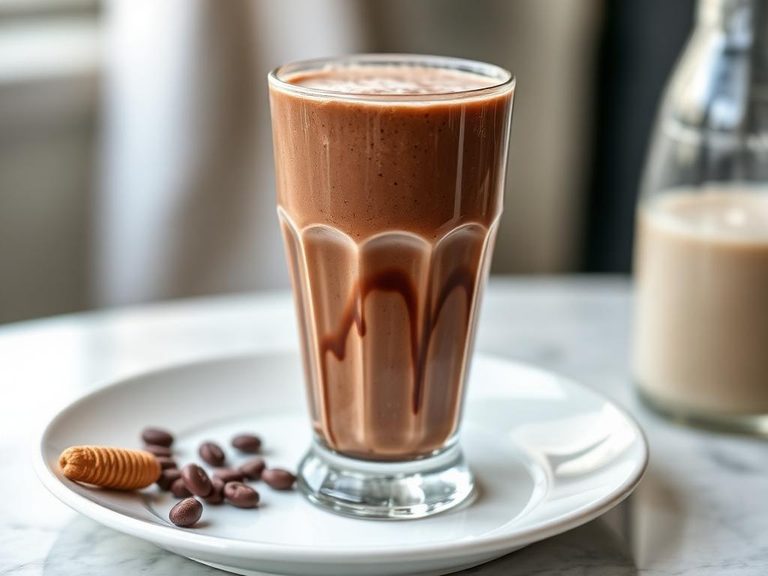



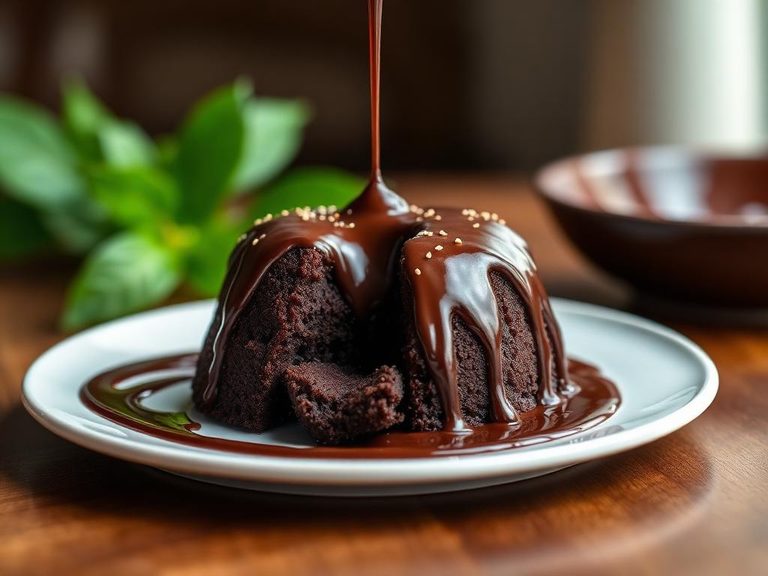
🌍 Where it's eaten
💡 Did you know?
The 'fudge-type' designation often means it contains a dairy component like condensed milk or butter, which gives it a richer, creamier mouthfeel compared to simpler cocoa syrups.
Full nutrition (USDA data · scales with serving)
| Water | 21.8 g |
| Energy | 350 kcal |
| Energy | 1465 kj |
| Protein | 4.6 g |
| Total lipid (fat) | 8.9 g |
| Ash | 1.8 g |
| Carbohydrate, by difference | 62.9 g |
| Fiber, total dietary | 2.8 g |
| Total Sugars | 34.8 g |
| Calcium, Ca | 49.0 mg |
| Iron, Fe | 1.3 mg |
| Magnesium, Mg | 48.0 mg |
| Phosphorus, P | 97.0 mg |
| Potassium, K | 284 mg |
| Sodium, Na | 346 mg |
| Zinc, Zn | 0.83 mg |
| Copper, Cu | 0.35 mg |
| Manganese, Mn | 0.37 mg |
| Selenium, Se | 2.3 ug |
| Vitamin C, total ascorbic acid | 0.20 mg |
| Thiamin | 0.03 mg |
| Riboflavin | 0.09 mg |
| Niacin | 0.25 mg |
| Pantothenic acid | 0.12 mg |
| Vitamin B-6 | 0.02 mg |
| Folate, total | 4.0 ug |
| Folic acid | 0.00 ug |
| Folate, food | 4.0 ug |
| Folate, DFE | 4.0 ug |
| Choline, total | 5.5 mg |
| Vitamin B-12 | 0.06 ug |
| Vitamin B-12, added | 0.00 ug |
| Vitamin A, RAE | 1.0 ug |
| Retinol | 1.0 ug |
| Carotene, beta | 0.00 ug |
| Carotene, alpha | 0.00 ug |
| Cryptoxanthin, beta | 0.00 ug |
| Vitamin A, IU | 2.0 iu |
| Lycopene | 0.00 ug |
| Lutein + zeaxanthin | 4.0 ug |
| Vitamin E (alpha-tocopherol) | 2.6 mg |
| Vitamin E, added | 0.00 mg |
| Vitamin D (D2 + D3), International Units | 0.00 iu |
| Vitamin D (D2 + D3) | 0.00 ug |
| Vitamin K (phylloquinone) | 2.5 ug |
| Alcohol, ethyl | 0.00 g |
| Caffeine | 7.0 mg |
| Theobromine | 247 mg |
Fat & fatty acid profile (per 100g)
| Fatty acids, total saturated | 4.0 g |
| SFA 4:0 | 0.00 g |
| SFA 6:0 | 0.00 g |
| SFA 8:0 | 0.02 g |
| SFA 10:0 | 0.05 g |
| SFA 12:0 | 0.06 g |
| SFA 14:0 | 0.24 g |
| SFA 16:0 | 1.8 g |
| SFA 18:0 | 0.76 g |
| Fatty acids, total monounsaturated | 3.9 g |
| MUFA 16:1 | 0.07 g |
| MUFA 18:1 | 3.8 g |
| MUFA 20:1 | 0.01 g |
| MUFA 22:1 | 0.00 g |
| Fatty acids, total polyunsaturated | 0.28 g |
| PUFA 18:2 | 0.25 g |
| PUFA 18:3 | 0.02 g |
| PUFA 18:4 | 0.00 g |
| PUFA 20:4 | 0.01 g |
| PUFA 20:5 n-3 (EPA) | 0.00 g |
| PUFA 22:5 n-3 (DPA) | 0.00 g |
| PUFA 22:6 n-3 (DHA) | 0.00 g |
| Cholesterol | 1.0 mg |
Amino acid profile (per 100g)
Estimated from Syrups, malt — USDA does not publish this profile for Syrups.
| Tryptophan | 0.07 g |
| Threonine | 0.21 g |
| Isoleucine | 0.21 g |
| Leucine | 0.38 g |
| Lysine | 0.27 g |
| Methionine | 0.11 g |
| Cystine | 0.07 g |
| Phenylalanine | 0.26 g |
| Tyrosine | 0.17 g |
| Valine | 0.30 g |
| Arginine | 0.28 g |
| Histidine | 0.13 g |
| Alanine | 0.27 g |
| Aspartic acid | 0.56 g |
| Glutamic acid | 1.0 g |
| Glycine | 0.25 g |
| Proline | 0.46 g |
| Serine | 0.23 g |
FAQ
Is chocolate fudge syrup the same as chocolate sauce?
Not exactly. Fudge syrup is typically thicker, richer, and often contains dairy, giving it a creamier, more fudge-like consistency. Chocolate sauce can be thinner, sometimes water-based, and may have a more straightforward cocoa flavor.
Can I use it in baking?
Yes, but sparingly. It can be swirled into brownie batter, used as a filling for cakes, or mixed into frosting for an extra chocolate boost. Be aware it adds significant sugar and moisture to recipes.
How should I store an opened bottle?
Once opened, it should be sealed tightly and stored in the refrigerator for best quality and to prevent spoilage, especially if it contains dairy. It may thicken when cold; let it sit at room temperature or warm slightly before using.
Nutrient density (calculated · NRF9.3)
Nutrient Rich Foods index: beneficial nutrients (protein, fiber, vitamins, minerals) minus saturated fat, added sugar & sodium, per 100 kcal.
NRF9.3 index — Fulgoni, Keast & Drewnowski, 2009. Computed from USDA nutrients.
Weight-loss friendliness (composite index)
Energy density 3.50 kcal/g · 5% calories from protein · 2.8 g fiber · 34.8 g sugar per 100 g.
Composite of energy density (Rolls et al., 1999), protein & fiber satiety, minus sugar. A calculated heuristic — ranks satiety-per-calorie, not a clinical measure.
Dietary load (calculated from USDA values)
Potential renal acid load. Positive = acid-forming, negative = alkaline-forming.
Sodium-to-potassium ratio: 1.22 (lower is better — aim for ≤ 1)
Sodium:potassium per WHO potassium guidance. Computed from USDA nutrients.