

Squash, winter, spaghetti, cooked, boiled, drained, or baked, without salt
Whole food · Vegetables and Vegetable Products

Photo: Wikipedia
Spaghetti squash is a winter squash variety whose cooked flesh naturally separates into long, translucent, pasta-like strands, offering a mild, slightly sweet flavor with a tender, al dente texture. Nutritionally, it's a remarkably low-calorie, high-fiber alternative to traditional pasta, providing a satisfying bulk with minimal energy density.
Calorie split: 9% protein · 84% carbs · 8% fat
↓ Full nutrition💚 Why it's loved
People adore it for its unique, magical ability to transform into noodle-like strands with a simple scrape of a fork, offering a fun, textural experience. Its mild, versatile flavor acts as a perfect canvas for bold sauces, from classic marinara to savory pesto.
⚠️ Watch-outs & how to enjoy it better
Its high water content and mild flavor can become watery or bland if overcooked or under-seasoned, potentially disappointing those expecting a robust pasta substitute. To counteract this, roast or bake the squash halves cut-side down to concentrate flavor, and always pair it with a flavorful sauce, protein (like meatballs or chickpeas), and a source of healthy fat (like olive oil or cheese) to enhance satiety and taste.
Key benefits
- Excellent low-calorie, high-volume food for weight management
- Good source of dietary fiber, supporting digestive health
- Provides vitamin C and beta-carotene (vitamin A precursor)
- Naturally gluten-free, making it a safe pasta alternative
- Low in fat and contains no cholesterol
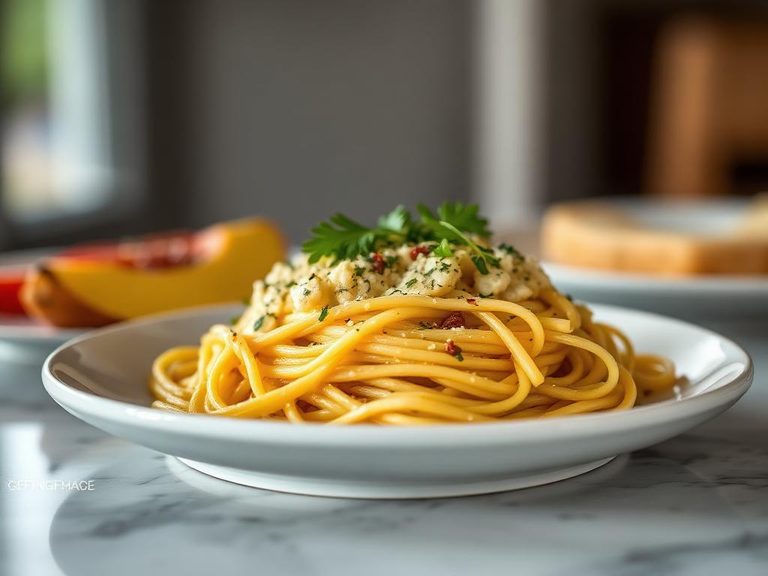
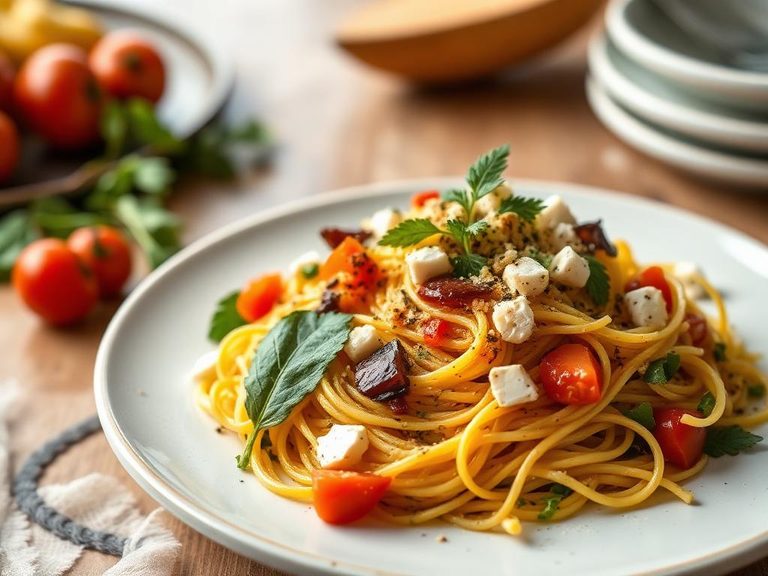
🍽️ Popular dishes
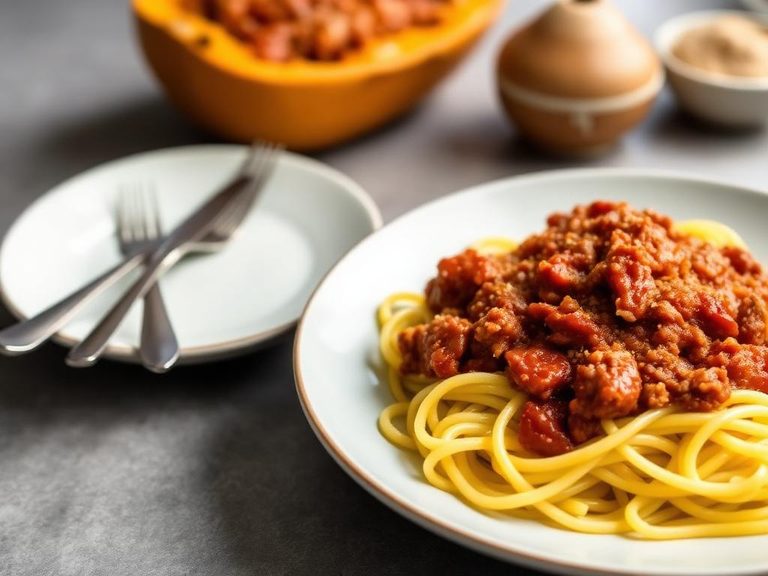
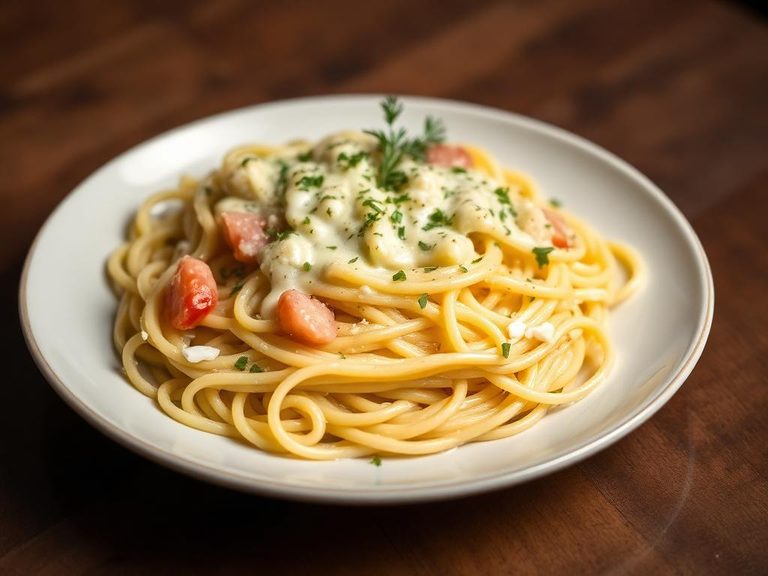
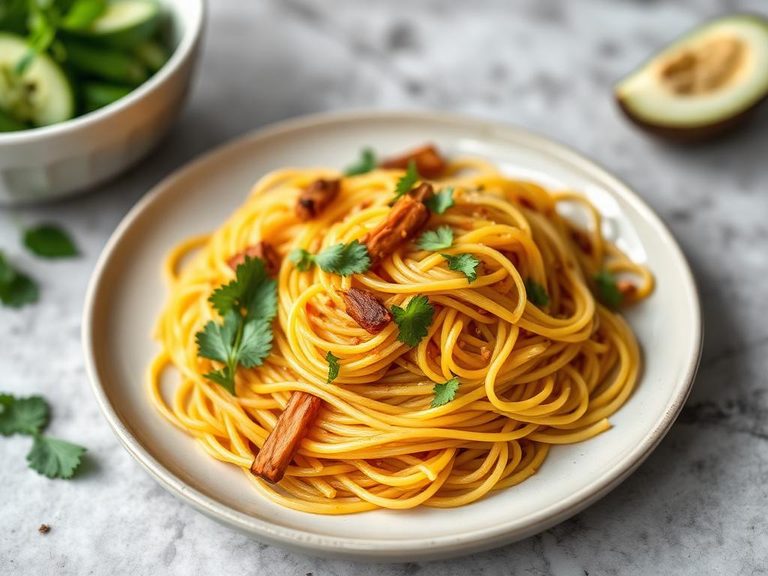
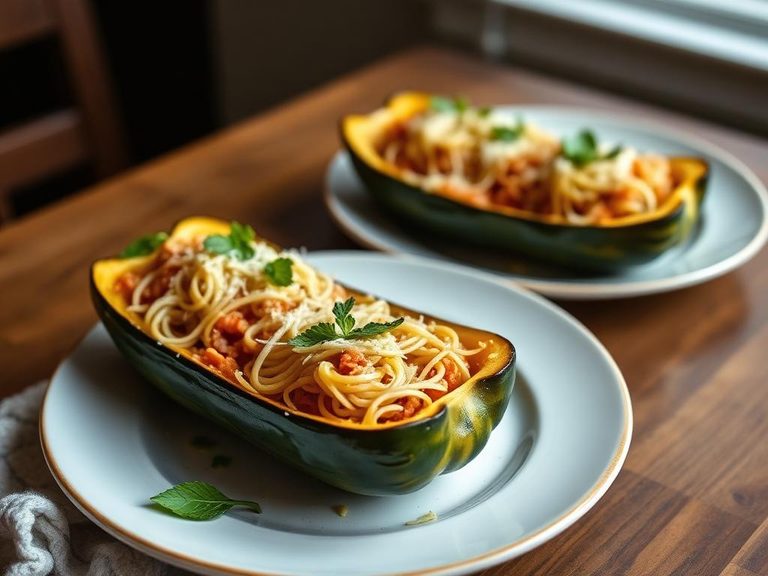
🌍 Where it's eaten
💡 Did you know?
The strands of spaghetti squash are formed by a natural, heat-induced breakdown of the fruit's cell walls along pre-existing lines, a process called 'sloughing,' which is unique among winter squashes.
Full nutrition (USDA data · scales with serving)
| Water | 92.3 g |
| Energy | 27.0 kcal |
| Energy | 113 kj |
| Protein | 0.66 g |
| Total lipid (fat) | 0.26 g |
| Ash | 0.32 g |
| Carbohydrate, by difference | 6.5 g |
| Fiber, total dietary | 1.4 g |
| Total Sugars | 2.5 g |
| Calcium, Ca | 21.0 mg |
| Iron, Fe | 0.34 mg |
| Magnesium, Mg | 11.0 mg |
| Phosphorus, P | 14.0 mg |
| Potassium, K | 117 mg |
| Sodium, Na | 18.0 mg |
| Zinc, Zn | 0.20 mg |
| Copper, Cu | 0.04 mg |
| Manganese, Mn | 0.11 mg |
| Selenium, Se | 0.30 ug |
| Vitamin C, total ascorbic acid | 3.5 mg |
| Thiamin | 0.04 mg |
| Riboflavin | 0.02 mg |
| Niacin | 0.81 mg |
| Pantothenic acid | 0.35 mg |
| Vitamin B-6 | 0.10 mg |
| Folate, total | 8.0 ug |
| Folic acid | 0.00 ug |
| Folate, food | 8.0 ug |
| Folate, DFE | 8.0 ug |
| Choline, total | 7.5 mg |
| Vitamin B-12 | 0.00 ug |
| Vitamin B-12, added | 0.00 ug |
| Vitamin A, RAE | 6.0 ug |
| Retinol | 0.00 ug |
| Carotene, beta | 59.0 ug |
| Carotene, alpha | 15.0 ug |
| Cryptoxanthin, beta | 0.00 ug |
| Vitamin A, IU | 110 iu |
| Lycopene | 0.00 ug |
| Lutein + zeaxanthin | 0.00 ug |
| Vitamin E (alpha-tocopherol) | 0.12 mg |
| Vitamin E, added | 0.00 mg |
| Vitamin D (D2 + D3), International Units | 0.00 iu |
| Vitamin D (D2 + D3) | 0.00 ug |
| Vitamin K (phylloquinone) | 0.80 ug |
| Alcohol, ethyl | 0.00 g |
| Caffeine | 0.00 mg |
| Theobromine | 0.00 mg |
Fat & fatty acid profile (per 100g)
| Fatty acids, total saturated | 0.06 g |
| SFA 4:0 | 0.00 g |
| SFA 6:0 | 0.00 g |
| SFA 8:0 | 0.00 g |
| SFA 10:0 | 0.00 g |
| SFA 12:0 | 0.00 g |
| SFA 14:0 | 0.00 g |
| SFA 16:0 | 0.05 g |
| SFA 18:0 | 0.01 g |
| Fatty acids, total monounsaturated | 0.02 g |
| MUFA 16:1 | 0.00 g |
| MUFA 18:1 | 0.02 g |
| MUFA 20:1 | 0.00 g |
| MUFA 22:1 | 0.00 g |
| Fatty acids, total polyunsaturated | 0.13 g |
| PUFA 18:2 | 0.05 g |
| PUFA 18:3 | 0.08 g |
| PUFA 18:4 | 0.00 g |
| PUFA 20:4 | 0.00 g |
| PUFA 20:5 n-3 (EPA) | 0.00 g |
| PUFA 22:5 n-3 (DPA) | 0.00 g |
| PUFA 22:6 n-3 (DHA) | 0.00 g |
| Fatty acids, total trans | 0.00 g |
| Cholesterol | 0.00 mg |
Amino acid profile (per 100g)
| Tryptophan | 0.01 g |
| Threonine | 0.02 g |
| Isoleucine | 0.02 g |
| Leucine | 0.03 g |
| Lysine | 0.02 g |
| Methionine | 0.01 g |
| Cystine | 0.01 g |
| Phenylalanine | 0.02 g |
| Tyrosine | 0.02 g |
| Valine | 0.03 g |
| Arginine | 0.03 g |
| Histidine | 0.01 g |
| Alanine | 0.03 g |
| Aspartic acid | 0.06 g |
| Glutamic acid | 0.10 g |
| Glycine | 0.02 g |
| Proline | 0.02 g |
| Serine | 0.02 g |
FAQ
How do you cook spaghetti squash to get the best strands?
The best method is to halve it, scoop out the seeds, brush the cut sides with oil, and roast cut-side down at 400°F (200°C) for 30-45 minutes until tender. This caramelizes the edges and prevents steaming, which can make it watery. Once cool enough to handle, use a fork to scrape the flesh into strands.
Is spaghetti squash a good substitute for regular pasta?
It's a fantastic *alternative* for adding volume, fiber, and nutrients while cutting calories and carbs. However, it doesn't replicate the chewy, glutenous texture of wheat pasta. Think of it as its own delicious vegetable dish rather than an exact 1:1 replacement.
How can I prevent my spaghetti squash from being watery?
Avoid steaming or boiling it. Roasting or baking cut-side down is key. After cooking, you can also place the scraped strands in a colander and gently press with paper towels to absorb excess moisture before saucing.
Nutrient density (calculated · NRF9.3)
Nutrient Rich Foods index: beneficial nutrients (protein, fiber, vitamins, minerals) minus saturated fat, added sugar & sodium, per 100 kcal.
NRF9.3 index — Fulgoni, Keast & Drewnowski, 2009. Computed from USDA nutrients.
Weight-loss friendliness (composite index)
Energy density 0.27 kcal/g · 10% calories from protein · 1.4 g fiber · 2.5 g sugar per 100 g.
Composite of energy density (Rolls et al., 1999), protein & fiber satiety, minus sugar. A calculated heuristic — ranks satiety-per-calorie, not a clinical measure.
Dietary load (calculated from USDA values)
Potential renal acid load. Positive = acid-forming, negative = alkaline-forming.
Sodium-to-potassium ratio: 0.15 (lower is better — aim for ≤ 1)
Sodium:potassium per WHO potassium guidance. Computed from USDA nutrients.