

Seaweed, spirulina, dried
Whole food · Vegetables and Vegetable Products
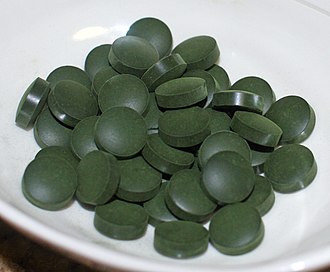
Photo: Wikipedia
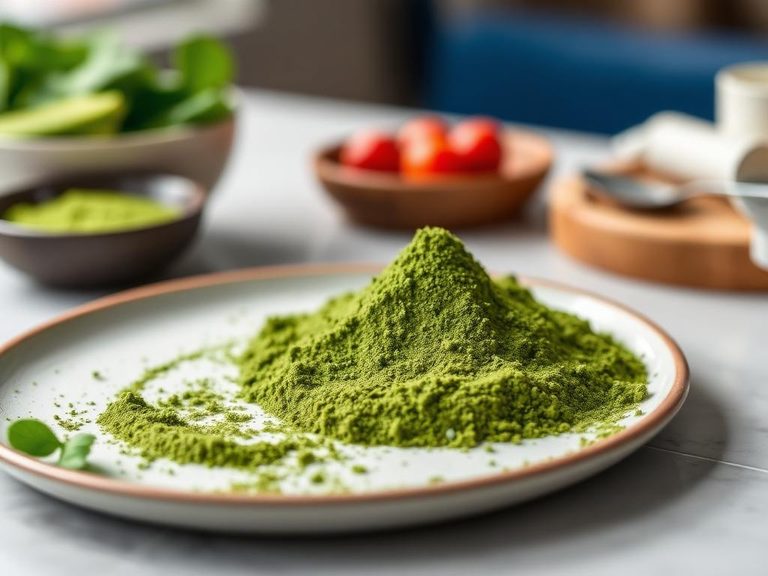
Dried spirulina is a deep blue-green, finely milled powder made from dried freshwater cyanobacteria. It has a potent, savory, oceanic flavor with a distinct 'seaweed' or 'fishy' note and a smooth, non-gritty texture when mixed into liquids. Nutritionally, it is a powerhouse, boasting an exceptionally high protein content of over 57g per 100g, making it one of the most protein-dense foods available.
Calorie split: 58% protein · 24% carbs · 18% fat
↓ Full nutrition💚 Why it's loved
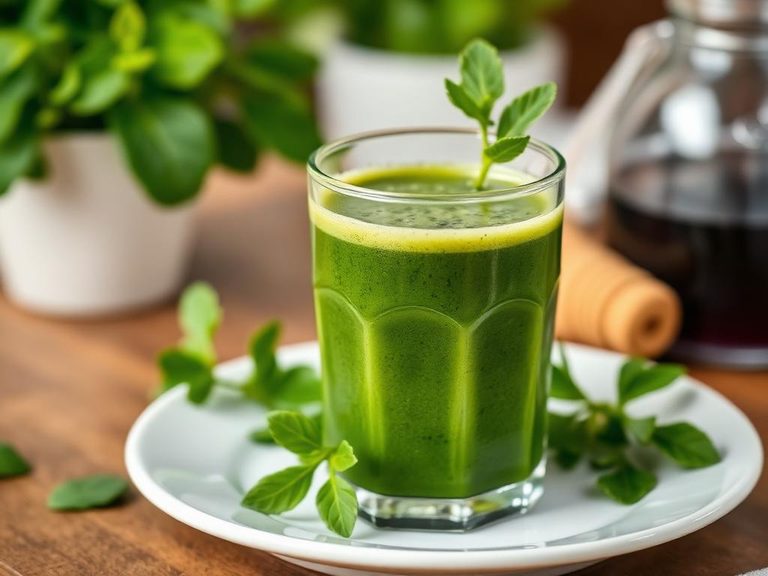
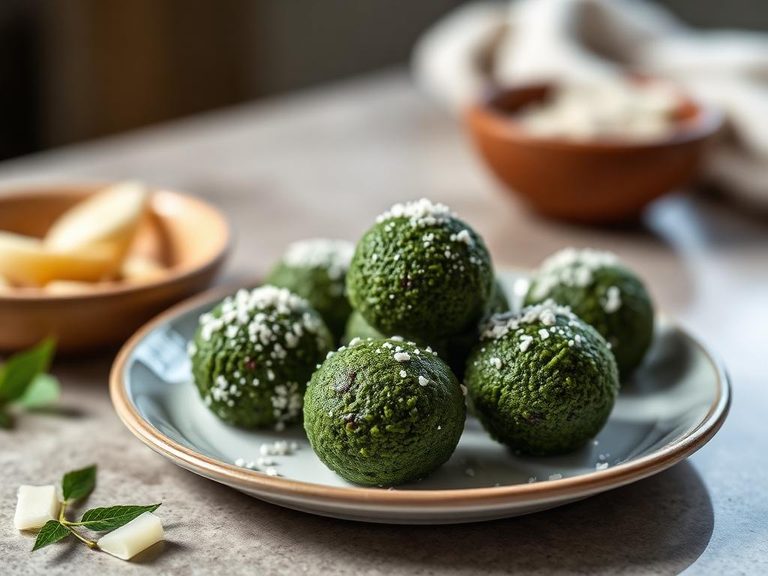
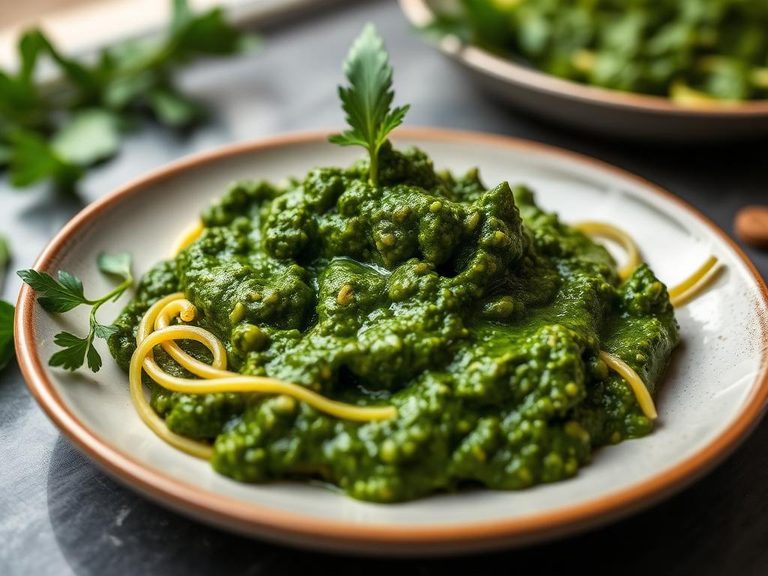
Health enthusiasts and plant-based athletes prize spirulina for its unparalleled protein density and micronutrient profile. Its strong, savory flavor is embraced in health-conscious cuisines, often used to add a deep umami note to smoothies, energy balls, and savory sauces.
⚠️ Watch-outs & how to enjoy it better
Its intense, fishy taste can be off-putting to the uninitiated, and some may experience mild digestive upset like nausea or bloating when first introducing it. To counteract this, start with a small dose (½ tsp), blend it thoroughly into strongly flavored foods like tropical fruit smoothies or chocolate-based drinks, and ensure you drink plenty of water with it. Individuals with autoimmune conditions or phenylketonuria (PKU) should consult a doctor before use.
Key benefits
- Exceptionally high in complete protein, containing all essential amino acids.
- Rich source of iron, B vitamins (especially thiamine and riboflavin), and copper.
- Contains powerful antioxidants like phycocyanin, which gives it its blue-green color.
- A concentrated source of essential minerals like manganese and potassium.
- Provides a significant amount of protein with minimal carbohydrates and fat.
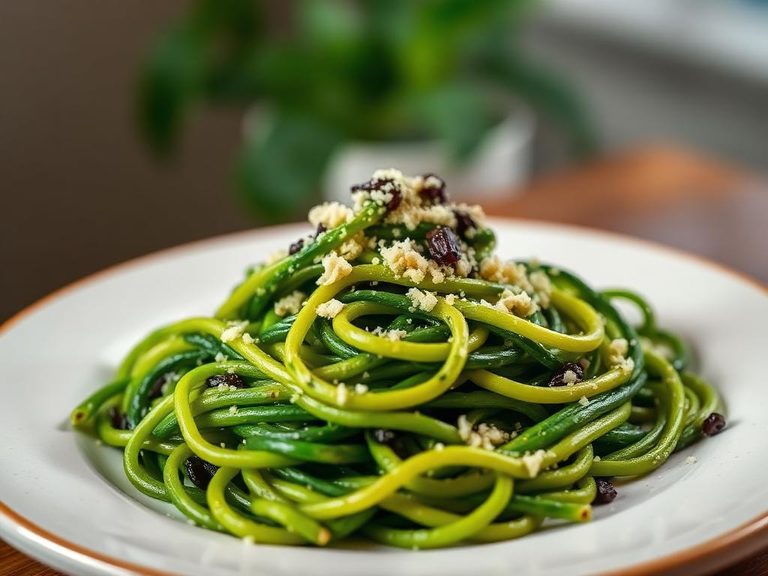
🍽️ Popular dishes

🌍 Where it's eaten
💡 Did you know?
NASA and the European Space Agency have studied spirulina as a primary food source for long-duration space missions due to its high nutritional yield, ability to be grown in closed-loop systems, and potential to recycle astronaut breath (CO2) into oxygen via photosynthesis.
Full nutrition (USDA data · scales with serving)
| Water | 4.7 g |
| Energy | 290 kcal |
| Energy | 1213 kj |
| Protein | 57.5 g |
| Total lipid (fat) | 7.7 g |
| Ash | 6.2 g |
| Carbohydrate, by difference | 23.9 g |
| Fiber, total dietary | 3.6 g |
| Total Sugars | 3.1 g |
| Calcium, Ca | 120 mg |
| Iron, Fe | 28.5 mg |
| Magnesium, Mg | 195 mg |
| Phosphorus, P | 118 mg |
| Potassium, K | 1363 mg |
| Sodium, Na | 1048 mg |
| Zinc, Zn | 2.0 mg |
| Copper, Cu | 6.1 mg |
| Manganese, Mn | 1.9 mg |
| Selenium, Se | 7.2 ug |
| Vitamin C, total ascorbic acid | 10.1 mg |
| Thiamin | 2.4 mg |
| Riboflavin | 3.7 mg |
| Niacin | 12.8 mg |
| Pantothenic acid | 3.5 mg |
| Vitamin B-6 | 0.36 mg |
| Folate, total | 94.0 ug |
| Folic acid | 0.00 ug |
| Folate, food | 94.0 ug |
| Folate, DFE | 94.0 ug |
| Choline, total | 66.0 mg |
| Vitamin B-12 | 0.00 ug |
| Vitamin B-12, added | 0.00 ug |
| Vitamin A, RAE | 29.0 ug |
| Retinol | 0.00 ug |
| Carotene, beta | 342 ug |
| Carotene, alpha | 0.00 ug |
| Cryptoxanthin, beta | 0.00 ug |
| Vitamin A, IU | 570 iu |
| Lycopene | 0.00 ug |
| Lutein + zeaxanthin | 0.00 ug |
| Vitamin E (alpha-tocopherol) | 5.0 mg |
| Vitamin E, added | 0.00 mg |
| Vitamin D (D2 + D3), International Units | 0.00 iu |
| Vitamin D (D2 + D3) | 0.00 ug |
| Vitamin K (phylloquinone) | 25.5 ug |
| Alcohol, ethyl | 0.00 g |
| Caffeine | 0.00 mg |
| Theobromine | 0.00 mg |
Fat & fatty acid profile (per 100g)
| Fatty acids, total saturated | 2.6 g |
| SFA 4:0 | 0.00 g |
| SFA 6:0 | 0.00 g |
| SFA 8:0 | 0.00 g |
| SFA 10:0 | 0.00 g |
| SFA 12:0 | 0.00 g |
| SFA 14:0 | 0.07 g |
| SFA 16:0 | 2.5 g |
| SFA 18:0 | 0.08 g |
| Fatty acids, total monounsaturated | 0.68 g |
| MUFA 16:1 | 0.33 g |
| MUFA 18:1 | 0.35 g |
| MUFA 20:1 | 0.00 g |
| MUFA 22:1 | 0.00 g |
| Fatty acids, total polyunsaturated | 2.1 g |
| PUFA 18:2 | 1.3 g |
| PUFA 18:3 | 0.82 g |
| PUFA 18:4 | 0.00 g |
| PUFA 20:4 | 0.00 g |
| PUFA 20:5 n-3 (EPA) | 0.00 g |
| PUFA 22:5 n-3 (DPA) | 0.00 g |
| PUFA 22:6 n-3 (DHA) | 0.00 g |
| Fatty acids, total trans | 0.00 g |
| Cholesterol | 0.00 mg |
Amino acid profile (per 100g)
| Tryptophan | 0.93 g |
| Threonine | 3.0 g |
| Isoleucine | 3.2 g |
| Leucine | 4.9 g |
| Lysine | 3.0 g |
| Methionine | 1.1 g |
| Cystine | 0.66 g |
| Phenylalanine | 2.8 g |
| Tyrosine | 2.6 g |
| Valine | 3.5 g |
| Arginine | 4.1 g |
| Histidine | 1.1 g |
| Alanine | 4.5 g |
| Aspartic acid | 5.8 g |
| Glutamic acid | 8.4 g |
| Glycine | 3.1 g |
| Proline | 2.4 g |
| Serine | 3.0 g |
FAQ
What does spirulina taste like?
Spirulina has a strong, savory, oceanic flavor often described as 'seaweed-like' or 'fishy.' Its taste is quite potent, so it's usually blended into other ingredients rather than eaten alone.
How much spirulina should I take daily?
A common daily dose is 1-3 grams (about ½ to 1 teaspoon). It's best to start with a very small amount (¼ teaspoon) and gradually increase to assess your tolerance and avoid digestive discomfort.
Is spirulina safe for everyone?
While generally safe for healthy adults, people with autoimmune diseases, phenylketonuria (PKU), or those on blood thinners should consult a healthcare provider first. It's also crucial to buy from reputable brands to avoid contamination with heavy metals or toxins.
Nutrient density (calculated · NRF9.3)
Nutrient Rich Foods index: beneficial nutrients (protein, fiber, vitamins, minerals) minus saturated fat, added sugar & sodium, per 100 kcal.
NRF9.3 index — Fulgoni, Keast & Drewnowski, 2009. Computed from USDA nutrients.
Weight-loss friendliness (composite index)
Energy density 2.90 kcal/g · 79% calories from protein · 3.6 g fiber · 3.1 g sugar per 100 g.
Composite of energy density (Rolls et al., 1999), protein & fiber satiety, minus sugar. A calculated heuristic — ranks satiety-per-calorie, not a clinical measure.
Dietary load (calculated from USDA values)
Potential renal acid load. Positive = acid-forming, negative = alkaline-forming.
Sodium-to-potassium ratio: 0.77 (lower is better — aim for ≤ 1)
Sodium:potassium per WHO potassium guidance. Computed from USDA nutrients.