

Sauce, pasta, spaghetti/marinara, ready-to-serve, low sodium
Whole food · Soups, Sauces, and Gravies

Photo: Wikipedia
This is a smooth, ready-to-serve tomato-based sauce, typically simmered with garlic, onions, and herbs like basil and oregano. It has a bright, tangy flavor with a balanced sweetness from ripe tomatoes and a velvety texture that clings to pasta. Nutritionally, it's a light option, providing only 51 calories per 100g, with a modest 5.5g of sugar and a helpful 1.8g of fiber.
Calorie split: 11% protein · 63% carbs · 26% fat
↓ Full nutrition💚 Why it's loved
People love it for its comforting, familiar taste that instantly elevates a simple plate of pasta into a satisfying meal. Its versatility makes it a kitchen staple, serving as a quick sauce, a pizza base, or a simmering liquid for proteins.
⚠️ Watch-outs & how to enjoy it better
Some may find the flavor too basic or acidic compared to homemade versions, and it can still contribute to blood sugar spikes due to its carbohydrate content. To counteract this, pair it with a source of protein (like lean meat or beans) and healthy fat (like olive oil or cheese) to slow digestion and enhance satiety.
Key benefits
- Low in calories per serving
- Contains dietary fiber from tomatoes
- Provides a source of lycopene, an antioxidant
- Quick and convenient base for meals
- Lower sodium than many canned sauces
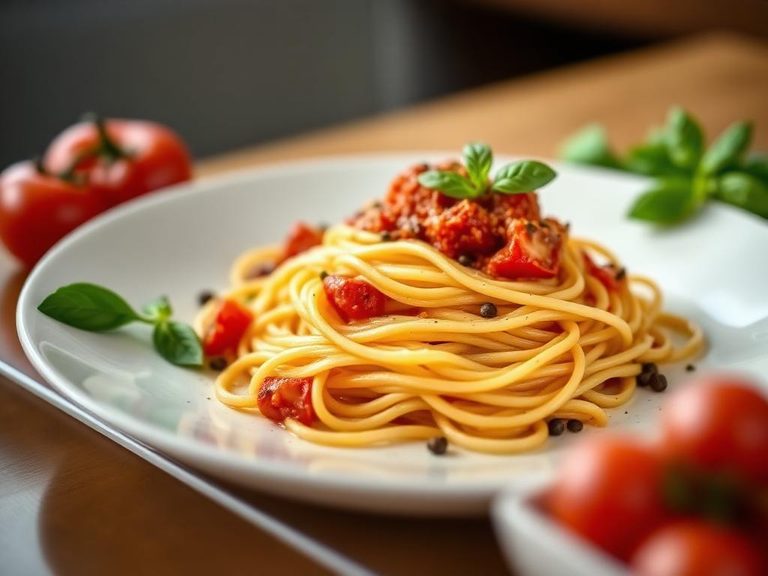
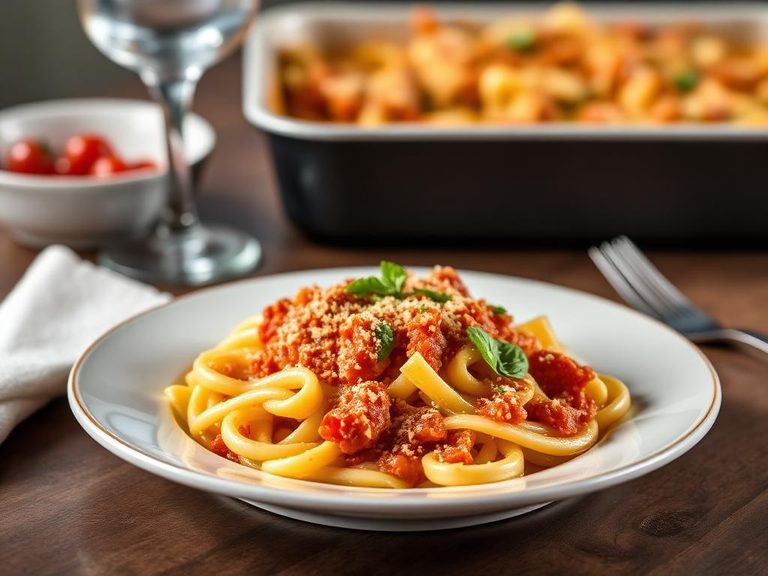
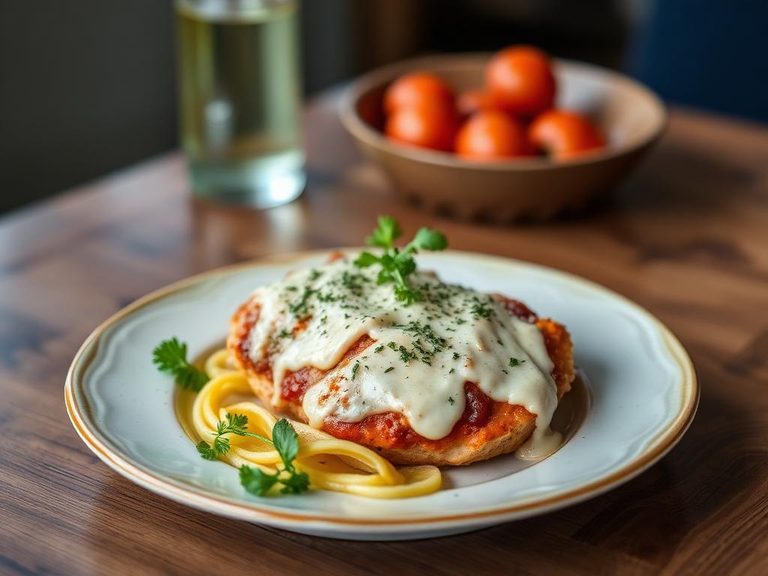
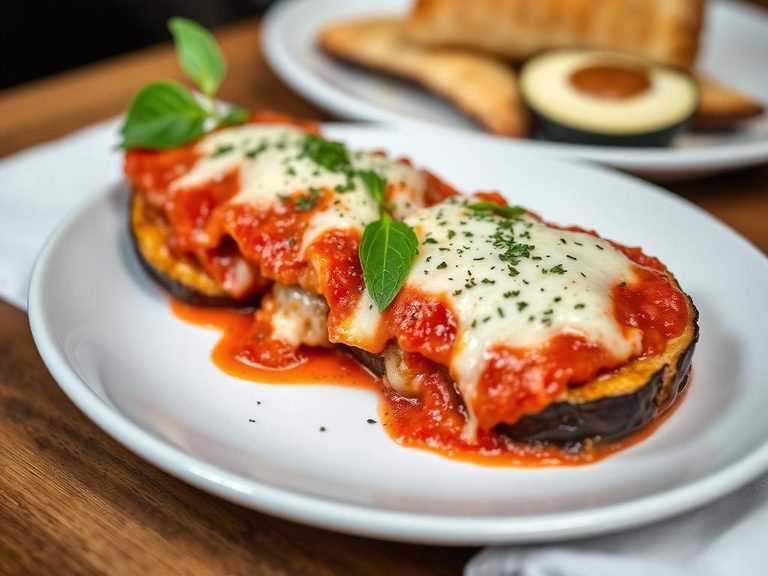
🍽️ Popular dishes
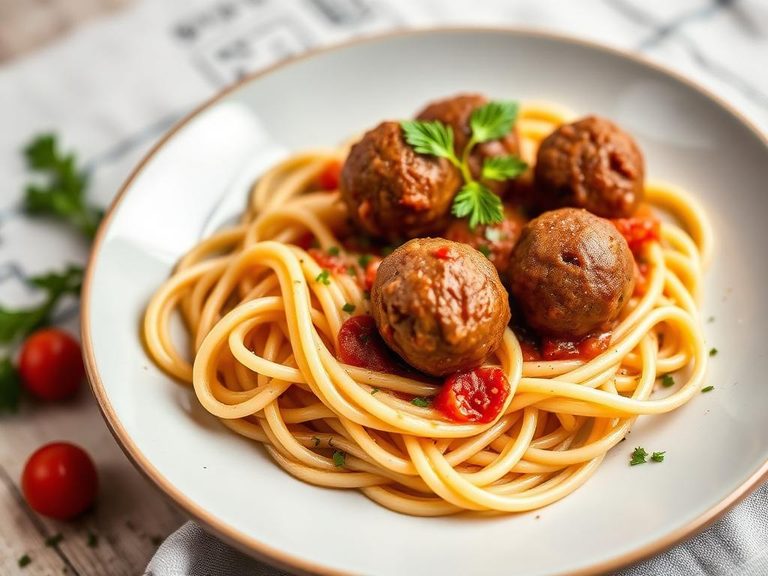
🌍 Where it's eaten
💡 Did you know?
The term 'marinara' in Italian doesn't mean 'marinated'; it actually translates to 'sailor-style,' referring to a simple sauce made on ships during long voyages.
Full nutrition (USDA data · scales with serving)
| Water | 87.4 g |
| Energy | 51.0 kcal |
| Energy | 214 kj |
| Protein | 1.4 g |
| Total lipid (fat) | 1.5 g |
| Ash | 1.7 g |
| Carbohydrate, by difference | 8.1 g |
| Fiber, total dietary | 1.8 g |
| Total Sugars | 5.5 g |
| Calcium, Ca | 27.0 mg |
| Iron, Fe | 0.78 mg |
| Magnesium, Mg | 18.0 mg |
| Phosphorus, P | 34.0 mg |
| Potassium, K | 319 mg |
| Sodium, Na | 30.0 mg |
| Zinc, Zn | 0.20 mg |
| Copper, Cu | 0.08 mg |
| Manganese, Mn | 0.14 mg |
| Selenium, Se | 1.1 ug |
| Vitamin C, total ascorbic acid | 2.0 mg |
| Thiamin | 0.02 mg |
| Riboflavin | 0.06 mg |
| Niacin | 3.9 mg |
| Vitamin B-6 | 0.17 mg |
| Folate, total | 13.0 ug |
| Folic acid | 0.00 ug |
| Folate, food | 13.0 ug |
| Folate, DFE | 13.0 ug |
| Choline, total | 13.7 mg |
| Vitamin B-12 | 0.00 ug |
| Vitamin B-12, added | 0.00 ug |
| Vitamin A, RAE | 33.0 ug |
| Retinol | 0.00 ug |
| Carotene, beta | 390 ug |
| Carotene, alpha | 0.00 ug |
| Cryptoxanthin, beta | 0.00 ug |
| Vitamin A, IU | 650 iu |
| Lycopene | 12665 ug |
| Lutein + zeaxanthin | 190 ug |
| Vitamin E (alpha-tocopherol) | 2.4 mg |
| Vitamin E, added | 0.00 mg |
| Vitamin D (D2 + D3), International Units | 0.00 iu |
| Vitamin D (D2 + D3) | 0.00 ug |
| Vitamin K (phylloquinone) | 13.9 ug |
| Alcohol, ethyl | 0.00 g |
| Caffeine | 0.00 mg |
| Theobromine | 0.00 mg |
Fat & fatty acid profile (per 100g)
| Fatty acids, total saturated | 0.17 g |
| SFA 4:0 | 0.00 g |
| SFA 6:0 | 0.00 g |
| SFA 8:0 | 0.00 g |
| SFA 10:0 | 0.00 g |
| SFA 12:0 | 0.00 g |
| SFA 14:0 | 0.00 g |
| SFA 16:0 | 0.11 g |
| SFA 18:0 | 0.04 g |
| SFA 20:0 | 0.01 g |
| SFA 22:0 | 0.00 g |
| SFA 24:0 | 0.00 g |
| Fatty acids, total monounsaturated | 0.38 g |
| MUFA 14:1 | 0.00 g |
| MUFA 15:1 | 0.00 g |
| MUFA 16:1 | 0.00 g |
| MUFA 18:1 | 0.36 g |
| MUFA 20:1 | 0.01 g |
| MUFA 22:1 | 0.00 g |
| Fatty acids, total polyunsaturated | 0.51 g |
| PUFA 18:2 | 0.43 g |
| PUFA 18:3 | 0.08 g |
| PUFA 18:4 | 0.00 g |
| PUFA 20:4 | 0.00 g |
| PUFA 20:5 n-3 (EPA) | 0.00 g |
| PUFA 22:5 n-3 (DPA) | 0.00 g |
| PUFA 22:6 n-3 (DHA) | 0.00 g |
| Cholesterol | 2.0 mg |
Amino acid profile (per 100g)
Estimated from Sauce, homemade, white, medium — USDA does not publish this profile for Sauce.
| Tryptophan | 0.04 g |
| Threonine | 0.14 g |
| Isoleucine | 0.19 g |
| Leucine | 0.30 g |
| Lysine | 0.24 g |
| Methionine | 0.08 g |
| Cystine | 0.03 g |
| Phenylalanine | 0.15 g |
| Tyrosine | 0.15 g |
| Valine | 0.20 g |
| Arginine | 0.11 g |
| Histidine | 0.08 g |
| Alanine | 0.10 g |
| Aspartic acid | 0.23 g |
| Glutamic acid | 0.64 g |
| Glycine | 0.07 g |
| Proline | 0.30 g |
| Serine | 0.17 g |
FAQ
What's the difference between marinara and spaghetti sauce?
Marinara is a simpler, thinner sauce primarily made from tomatoes, garlic, and herbs. 'Spaghetti sauce' is a broader term that often includes meat, vegetables, and a wider array of seasonings, making it thicker and more complex.
Can I use this sauce for pizza?
Yes, absolutely. It's a great, quick base for homemade pizza. For a thicker consistency, you can simmer it uncovered for a few minutes to reduce excess water.
Is low-sodium sauce significantly less flavorful?
Not necessarily. Many brands use ripe tomatoes and herbs to build flavor without relying heavily on salt. You can always taste and adjust by adding a pinch of salt, fresh herbs, or a drizzle of olive oil to suit your preference.
Nutrient density (calculated · NRF9.3)
Nutrient Rich Foods index: beneficial nutrients (protein, fiber, vitamins, minerals) minus saturated fat, added sugar & sodium, per 100 kcal.
NRF9.3 index — Fulgoni, Keast & Drewnowski, 2009. Computed from USDA nutrients.
Weight-loss friendliness (composite index)
Energy density 0.51 kcal/g · 11% calories from protein · 1.8 g fiber · 5.5 g sugar per 100 g.
Composite of energy density (Rolls et al., 1999), protein & fiber satiety, minus sugar. A calculated heuristic — ranks satiety-per-calorie, not a clinical measure.
Dietary load (calculated from USDA values)
Potential renal acid load. Positive = acid-forming, negative = alkaline-forming.
Sodium-to-potassium ratio: 0.09 (lower is better — aim for ≤ 1)
Sodium:potassium per WHO potassium guidance. Computed from USDA nutrients.