

Rice, white, long-grain, regular, cooked, enriched, with salt
Whole food · Cereal Grains and Pasta
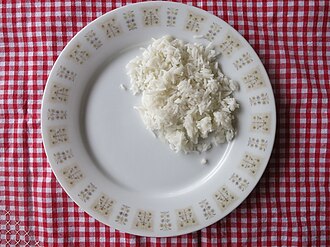
Photo: Wikipedia
This is the quintessential staple grain: long-grain white rice that has been milled, polished, and enriched with vitamins to restore nutrients lost during processing. It cooks into distinct, fluffy, and slightly chewy grains with a mild, neutral flavor that serves as a blank canvas for any cuisine. Nutritionally, it is a dense source of quick energy, providing 130 calories and over 28 grams of carbohydrates per 100 grams, with minimal fat and fiber.
Calorie split: 9% protein · 89% carbs · 2% fat
↓ Full nutrition💚 Why it's loved
People love this rice for its incredibly reliable, fluffy texture and its ability to absorb the flavors of sauces, broths, and spices without overpowering them. It is the ultimate culinary chameleon, forming the comforting backbone of countless meals across global cultures.
⚠️ Watch-outs & how to enjoy it better
Due to its refined nature and lack of fiber, it can cause rapid blood-sugar spikes and lacks the sustained satiety of whole grains. To counteract this, pair it with a source of protein (like beans or chicken) and healthy fats (like avocado or olive oil) to slow digestion, and practice strict portion control. Additionally, because it is enriched with salt, individuals monitoring sodium intake should be mindful of the added salt during cooking.
Key benefits
- Provides rapid, easily digestible energy for daily activities.
- Enriched with B vitamins and iron to prevent common nutritional deficiencies.
- Gluten-free and hypoallergenic, making it safe for most dietary restrictions.
- Acts as a highly versatile, neutral base for a wide variety of flavors and dishes.
- Easy to digest and gentle on the gastrointestinal system.
🍽️ Popular dishes
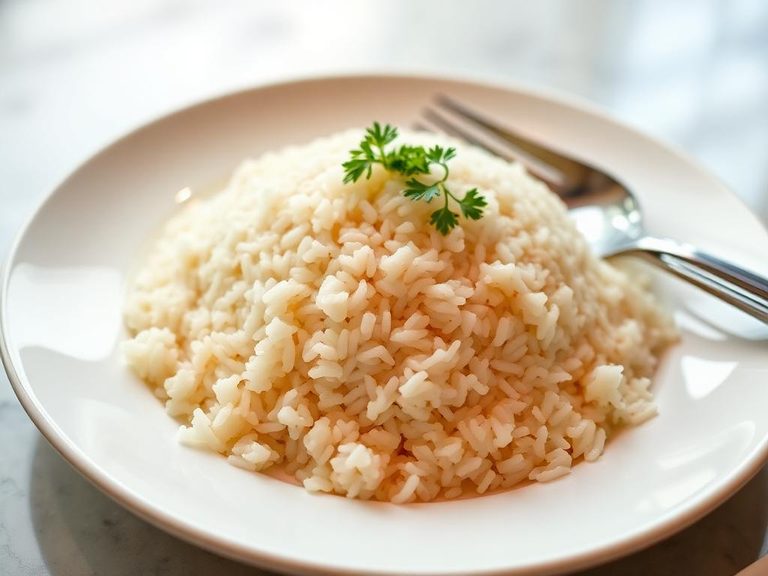
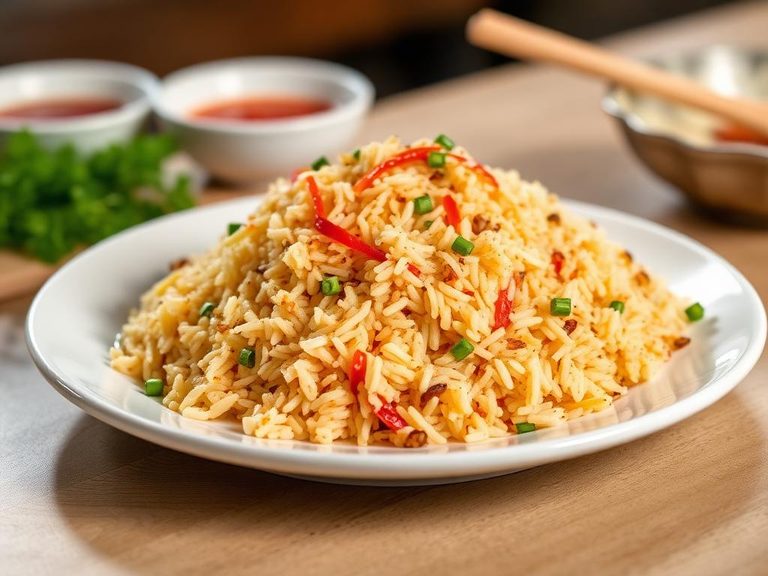
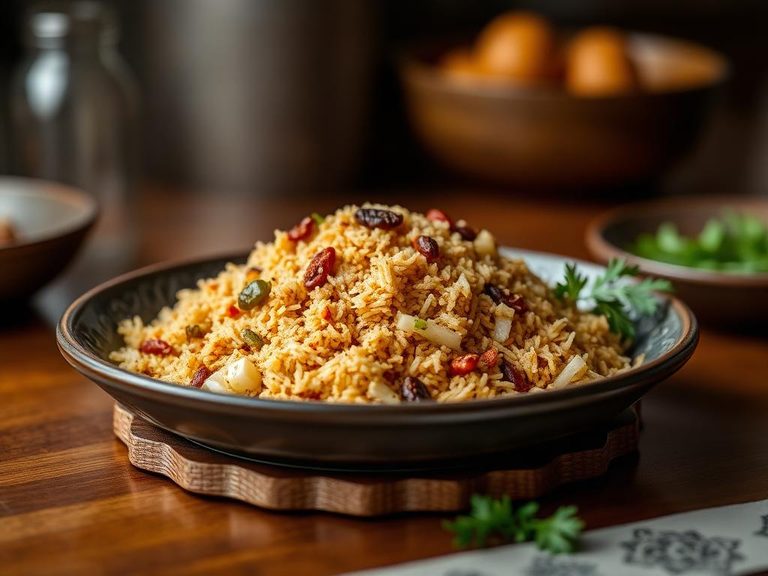
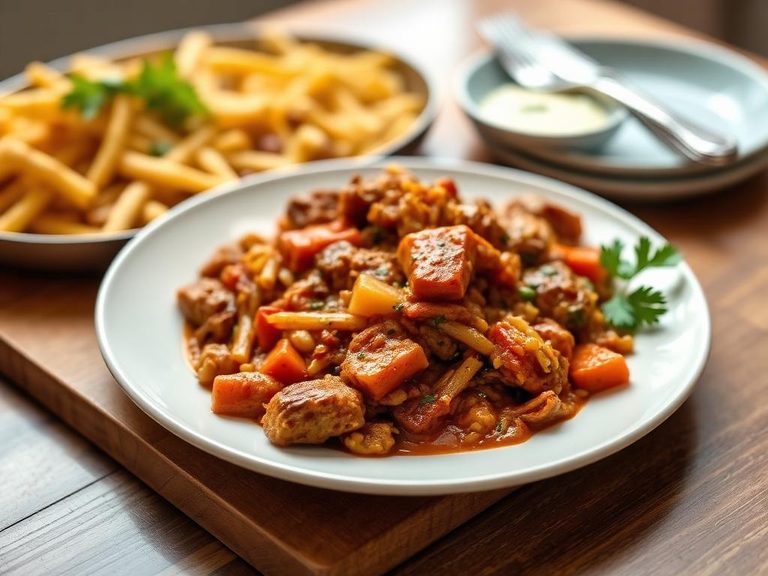
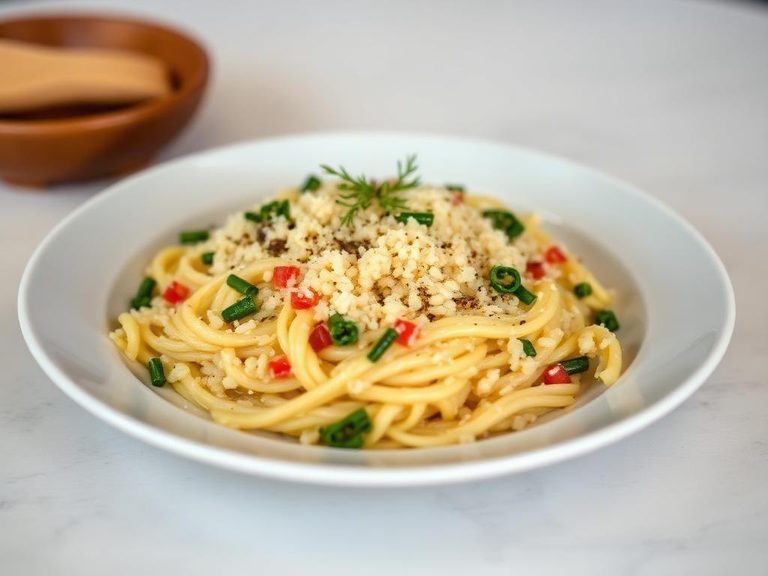
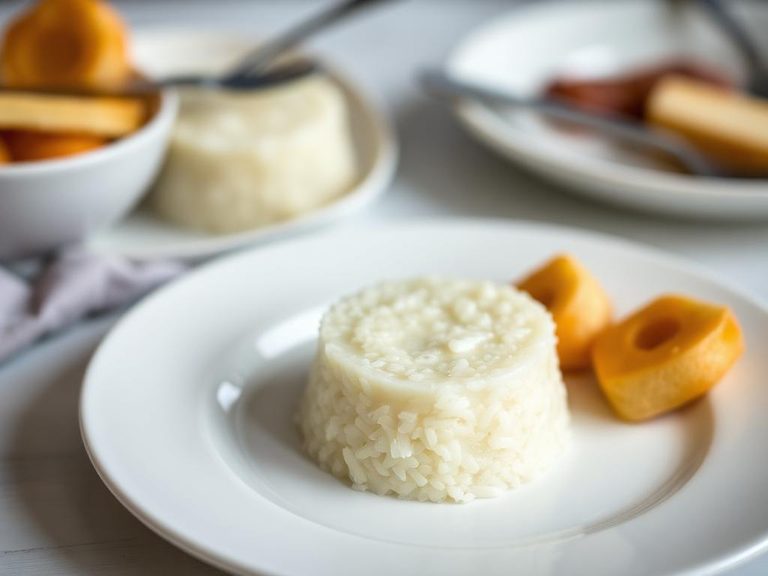
🌍 Where it's eaten
💡 Did you know?
The 'enrichment' process involves spraying the polished grains with a dusting of vitamins and minerals—such as thiamin, niacin, and iron—because the milling process strips away the nutrient-rich bran and germ layers.
Full nutrition (USDA data · scales with serving)
| Water | 68.4 g |
| Energy | 130 kcal |
| Energy | 544 kj |
| Protein | 2.7 g |
| Total lipid (fat) | 0.28 g |
| Ash | 0.41 g |
| Carbohydrate, by difference | 28.2 g |
| Fiber, total dietary | 0.40 g |
| Total Sugars | 0.05 g |
| Calcium, Ca | 10.0 mg |
| Iron, Fe | 1.2 mg |
| Magnesium, Mg | 12.0 mg |
| Phosphorus, P | 43.0 mg |
| Potassium, K | 35.0 mg |
| Sodium, Na | 382 mg |
| Zinc, Zn | 0.49 mg |
| Copper, Cu | 0.07 mg |
| Manganese, Mn | 0.47 mg |
| Selenium, Se | 7.5 ug |
| Vitamin C, total ascorbic acid | 0.00 mg |
| Thiamin | 0.16 mg |
| Riboflavin | 0.01 mg |
| Niacin | 1.5 mg |
| Pantothenic acid | 0.39 mg |
| Vitamin B-6 | 0.09 mg |
| Folate, total | 58.0 ug |
| Folic acid | 55.0 ug |
| Folate, food | 3.0 ug |
| Folate, DFE | 97.0 ug |
| Choline, total | 2.1 mg |
| Vitamin B-12 | 0.00 ug |
| Vitamin B-12, added | 0.00 ug |
| Vitamin A, RAE | 0.00 ug |
| Retinol | 0.00 ug |
| Carotene, beta | 0.00 ug |
| Carotene, alpha | 0.00 ug |
| Cryptoxanthin, beta | 0.00 ug |
| Vitamin A, IU | 0.00 iu |
| Lycopene | 0.00 ug |
| Lutein + zeaxanthin | 0.00 ug |
| Vitamin E (alpha-tocopherol) | 0.04 mg |
| Vitamin E, added | 0.00 mg |
| Vitamin D (D2 + D3), International Units | 0.00 iu |
| Vitamin D (D2 + D3) | 0.00 ug |
| Vitamin K (phylloquinone) | 0.00 ug |
| Alcohol, ethyl | 0.00 g |
| Caffeine | 0.00 mg |
| Theobromine | 0.00 mg |
Fat & fatty acid profile (per 100g)
| Fatty acids, total saturated | 0.08 g |
| SFA 4:0 | 0.00 g |
| SFA 6:0 | 0.00 g |
| SFA 8:0 | 0.00 g |
| SFA 10:0 | 0.00 g |
| SFA 12:0 | 0.00 g |
| SFA 14:0 | 0.00 g |
| SFA 16:0 | 0.07 g |
| SFA 18:0 | 0.01 g |
| Fatty acids, total monounsaturated | 0.09 g |
| MUFA 16:1 | 0.00 g |
| MUFA 18:1 | 0.09 g |
| MUFA 20:1 | 0.00 g |
| MUFA 22:1 | 0.00 g |
| Fatty acids, total polyunsaturated | 0.08 g |
| PUFA 18:2 | 0.06 g |
| PUFA 18:3 | 0.01 g |
| PUFA 18:4 | 0.00 g |
| PUFA 20:4 | 0.00 g |
| PUFA 20:5 n-3 (EPA) | 0.00 g |
| PUFA 22:5 n-3 (DPA) | 0.00 g |
| PUFA 22:6 n-3 (DHA) | 0.00 g |
| Cholesterol | 0.00 mg |
Amino acid profile (per 100g)
| Tryptophan | 0.03 g |
| Threonine | 0.10 g |
| Isoleucine | 0.12 g |
| Leucine | 0.22 g |
| Lysine | 0.10 g |
| Methionine | 0.06 g |
| Cystine | 0.06 g |
| Phenylalanine | 0.14 g |
| Tyrosine | 0.09 g |
| Valine | 0.16 g |
| Arginine | 0.22 g |
| Histidine | 0.06 g |
| Alanine | 0.16 g |
| Aspartic acid | 0.25 g |
| Glutamic acid | 0.52 g |
| Glycine | 0.12 g |
| Proline | 0.13 g |
| Serine | 0.14 g |
FAQ
What is the difference between long-grain and short-grain white rice?
Long-grain rice (like Basmati or Jasmine) stays fluffy and separate when cooked, while short-grain rice (like Arborio or Sushi rice) is stickier and clumps together due to higher starch content.
Why is white rice enriched?
Enrichment adds back essential nutrients like B vitamins (thiamin, niacin) and iron that are removed during the milling and polishing process to create white rice.
How should I store cooked white rice?
Cooked rice should be cooled quickly and refrigerated in an airtight container for up to 4 days, or frozen for up to 6 months, to prevent the growth of harmful bacteria like Bacillus cereus.
Is white rice a good source of fiber?
No, white rice is low in fiber (only 0.4g per 100g) because the fiber-rich bran layer is removed during processing; brown rice is a better choice for high-fiber diets.
Nutrient density (calculated · NRF9.3)
Nutrient Rich Foods index: beneficial nutrients (protein, fiber, vitamins, minerals) minus saturated fat, added sugar & sodium, per 100 kcal.
NRF9.3 index — Fulgoni, Keast & Drewnowski, 2009. Computed from USDA nutrients.
Weight-loss friendliness (composite index)
Energy density 1.30 kcal/g · 8% calories from protein · 0.4 g fiber · 0.1 g sugar per 100 g.
Composite of energy density (Rolls et al., 1999), protein & fiber satiety, minus sugar. A calculated heuristic — ranks satiety-per-calorie, not a clinical measure.
Dietary load (calculated from USDA values)
Potential renal acid load. Positive = acid-forming, negative = alkaline-forming.
Sodium-to-potassium ratio: 10.91 (lower is better — aim for ≤ 1)
Sodium:potassium per WHO potassium guidance. Computed from USDA nutrients.