

Rice noodles, dry
Whole food · Cereal Grains and Pasta

Photo: Wikipedia
Dried rice noodles are translucent, brittle strands made from rice flour and water that transform into a springy, chewy staple when rehydrated. They have a neutral, slightly sweet flavor and a smooth, slippery texture that soaks up sauces and broths beautifully. Nutritionally, they are a high-carbohydrate, low-fat energy source, providing about 364 calories per 100g of dry weight.
Calorie split: 7% protein · 92% carbs · 1% fat
↓ Full nutrition💚 Why it's loved
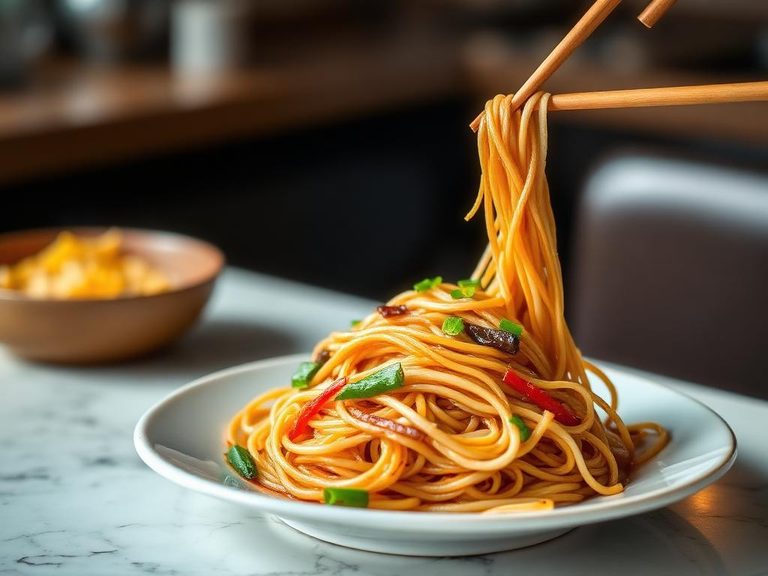
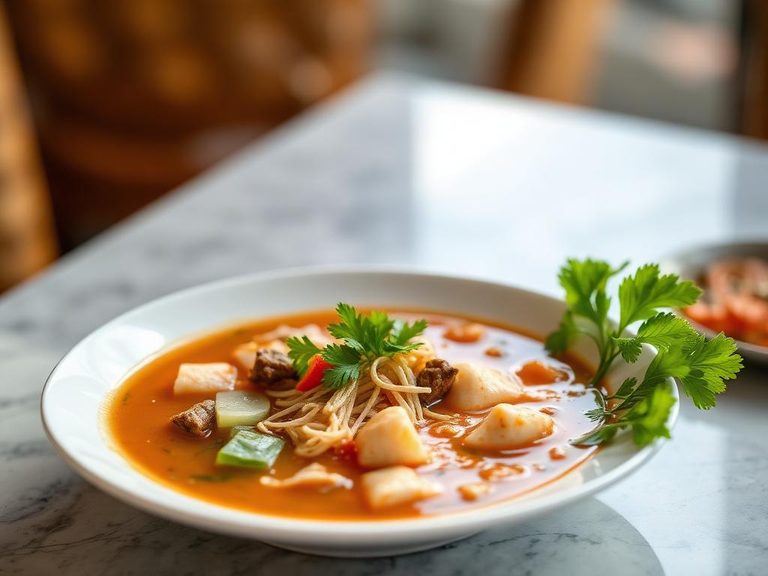
People love rice noodles for their incredible versatility—they can be stir-fried, boiled, or served cold, acting as a perfect canvas for bold flavors from spicy curries to savory broths. They are a beloved comfort food across Asia, central to dishes that bring families together.
⚠️ Watch-outs & how to enjoy it better
As a high-carb, low-fiber food, they can cause rapid blood sugar spikes, especially when eaten alone. To counteract this, pair them with protein (like shrimp, chicken, or tofu) and fiber-rich vegetables (like bok choy or bean sprouts) to slow digestion. Always check labels for added sodium in pre-seasoned packages.
Key benefits
- Naturally gluten-free, suitable for celiac or gluten-sensitive diets
- Quick to rehydrate and cook, making them a fast meal base
- Low in fat and cholesterol-free
- Provides quick energy from complex carbohydrates
- Light and easy to digest when prepared simply
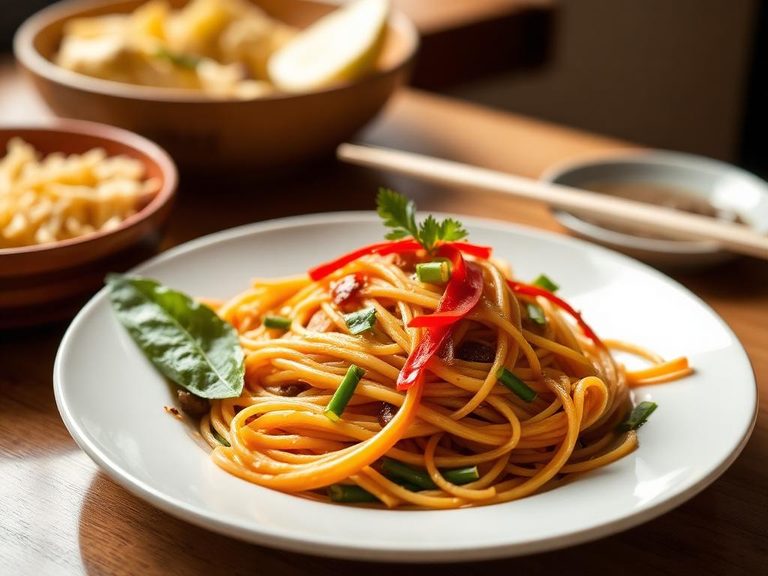
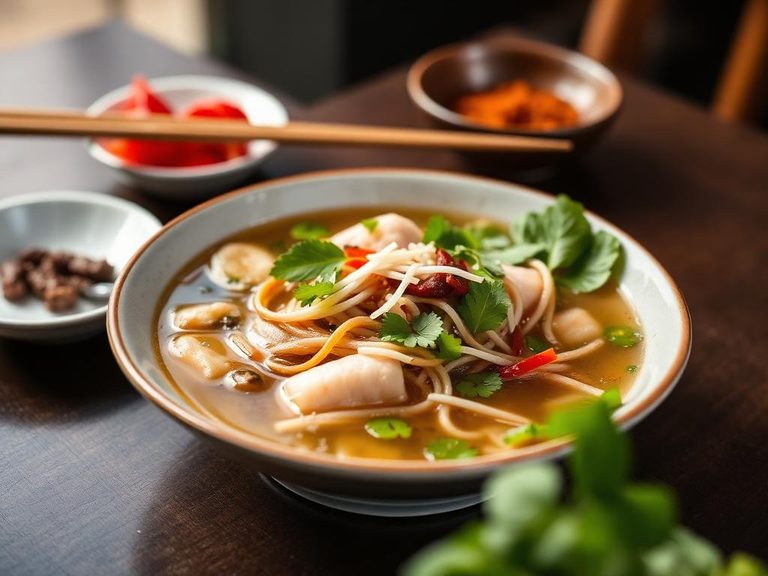
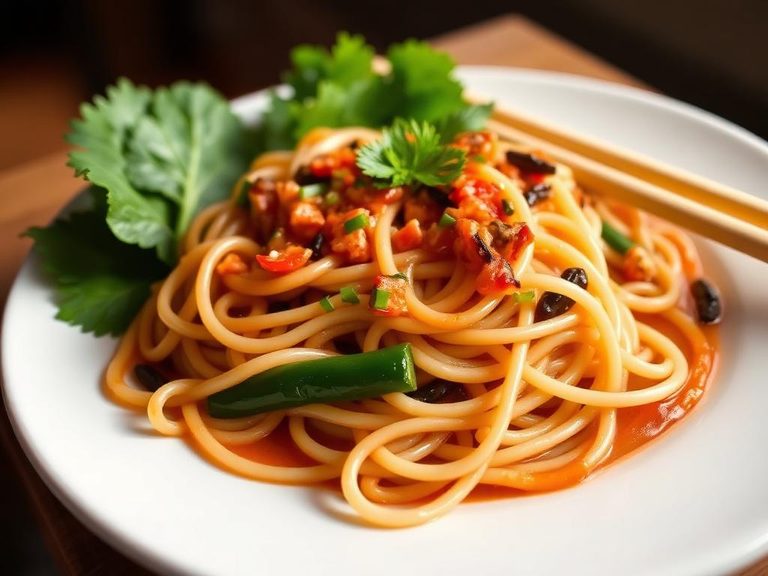
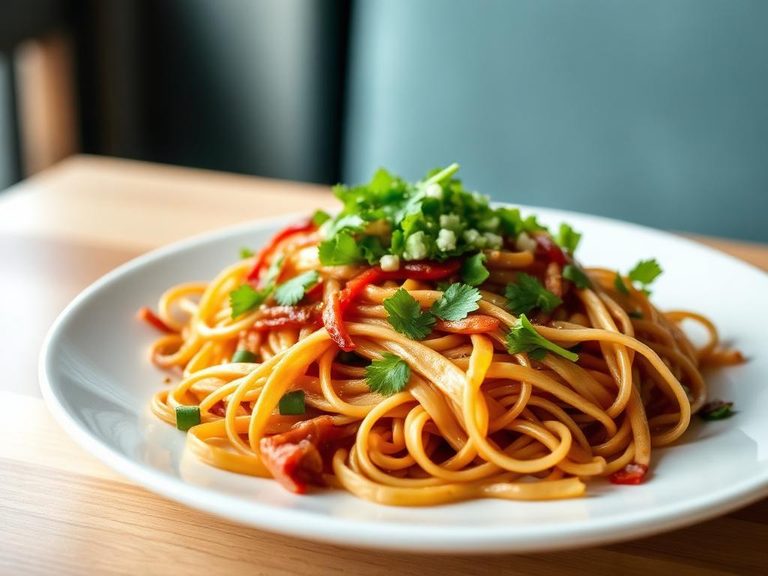
🍽️ Popular dishes
🌍 Where it's eaten
💡 Did you know?
The iconic slippery texture of rice noodles comes from a specific process called 'slurry extrusion,' where a rice flour batter is steamed into sheets and then cut, rather than being extruded from a dough like wheat pasta.
Full nutrition (USDA data · scales with serving)
| Water | 11.9 g |
| Energy | 364 kcal |
| Energy | 1523 kj |
| Protein | 6.0 g |
| Total lipid (fat) | 0.56 g |
| Ash | 0.85 g |
| Carbohydrate, by difference | 80.2 g |
| Fiber, total dietary | 1.6 g |
| Total Sugars | 0.12 g |
| Calcium, Ca | 18.0 mg |
| Iron, Fe | 0.70 mg |
| Magnesium, Mg | 12.0 mg |
| Phosphorus, P | 153 mg |
| Potassium, K | 30.0 mg |
| Sodium, Na | 182 mg |
| Zinc, Zn | 0.74 mg |
| Copper, Cu | 0.08 mg |
| Manganese, Mn | 0.50 mg |
| Selenium, Se | 15.1 ug |
| Vitamin C, total ascorbic acid | 0.00 mg |
| Thiamin | 0.03 mg |
| Riboflavin | 0.02 mg |
| Niacin | 0.22 mg |
| Pantothenic acid | 0.05 mg |
| Vitamin B-6 | 0.01 mg |
| Folate, total | 3.0 ug |
| Folic acid | 0.00 ug |
| Folate, food | 3.0 ug |
| Folate, DFE | 3.0 ug |
| Choline, total | 5.5 mg |
| Vitamin B-12 | 0.00 ug |
| Vitamin B-12, added | 0.00 ug |
| Vitamin A, RAE | 0.00 ug |
| Retinol | 0.00 ug |
| Carotene, beta | 0.00 ug |
| Carotene, alpha | 0.00 ug |
| Cryptoxanthin, beta | 0.00 ug |
| Vitamin A, IU | 0.00 iu |
| Lycopene | 0.00 ug |
| Lutein + zeaxanthin | 0.00 ug |
| Vitamin E (alpha-tocopherol) | 0.11 mg |
| Vitamin E, added | 0.00 mg |
| Vitamin D (D2 + D3), International Units | 0.00 iu |
| Vitamin D (D2 + D3) | 0.00 ug |
| Vitamin K (phylloquinone) | 0.00 ug |
| Alcohol, ethyl | 0.00 g |
| Caffeine | 0.00 mg |
| Theobromine | 0.00 mg |
Fat & fatty acid profile (per 100g)
| Fatty acids, total saturated | 0.15 g |
| SFA 4:0 | 0.00 g |
| SFA 6:0 | 0.00 g |
| SFA 8:0 | 0.00 g |
| SFA 10:0 | 0.00 g |
| SFA 12:0 | 0.00 g |
| SFA 14:0 | 0.00 g |
| SFA 16:0 | 0.14 g |
| SFA 18:0 | 0.01 g |
| Fatty acids, total monounsaturated | 0.17 g |
| MUFA 16:1 | 0.00 g |
| MUFA 18:1 | 0.17 g |
| MUFA 20:1 | 0.00 g |
| MUFA 22:1 | 0.00 g |
| Fatty acids, total polyunsaturated | 0.15 g |
| PUFA 18:2 | 0.12 g |
| PUFA 18:3 | 0.03 g |
| PUFA 18:4 | 0.00 g |
| PUFA 20:4 | 0.00 g |
| PUFA 20:5 n-3 (EPA) | 0.00 g |
| PUFA 22:5 n-3 (DPA) | 0.00 g |
| PUFA 22:6 n-3 (DHA) | 0.00 g |
| Cholesterol | 0.00 mg |
Amino acid profile (per 100g)
| Tryptophan | 0.07 g |
| Threonine | 0.21 g |
| Isoleucine | 0.24 g |
| Leucine | 0.49 g |
| Lysine | 0.21 g |
| Methionine | 0.14 g |
| Cystine | 0.11 g |
| Phenylalanine | 0.32 g |
| Tyrosine | 0.31 g |
| Valine | 0.35 g |
| Arginine | 0.52 g |
| Histidine | 0.15 g |
| Alanine | 0.33 g |
| Aspartic acid | 0.55 g |
| Glutamic acid | 1.1 g |
| Glycine | 0.27 g |
| Proline | 0.28 g |
| Serine | 0.31 g |
FAQ
How do I prevent rice noodles from getting mushy?
Soak them in room-temperature water until pliable but still firm (usually 20-30 minutes), then add them to the wok or broth only at the very end of cooking. They cook in 1-2 minutes and will continue to soften from residual heat.
What's the difference between rice sticks and rice vermicelli?
Rice sticks are flat and wide (like fettuccine), ideal for pad thai or stir-fries. Rice vermicelli are very thin, round strands, perfect for soups like pho or fresh spring rolls.
Can I freeze cooked rice noodles?
Yes, but they may become slightly crumbly upon thawing. Toss them with a tiny bit of oil before freezing, and reheat directly from frozen in a hot pan or broth to restore texture.
Nutrient density (calculated · NRF9.3)
Nutrient Rich Foods index: beneficial nutrients (protein, fiber, vitamins, minerals) minus saturated fat, added sugar & sodium, per 100 kcal.
NRF9.3 index — Fulgoni, Keast & Drewnowski, 2009. Computed from USDA nutrients.
Weight-loss friendliness (composite index)
Energy density 3.64 kcal/g · 7% calories from protein · 1.6 g fiber · 0.1 g sugar per 100 g.
Composite of energy density (Rolls et al., 1999), protein & fiber satiety, minus sugar. A calculated heuristic — ranks satiety-per-calorie, not a clinical measure.
Dietary load (calculated from USDA values)
Potential renal acid load. Positive = acid-forming, negative = alkaline-forming.
Sodium-to-potassium ratio: 6.07 (lower is better — aim for ≤ 1)
Sodium:potassium per WHO potassium guidance. Computed from USDA nutrients.