

Restaurant, Chinese, egg rolls, assorted
Whole food · Restaurant Foods
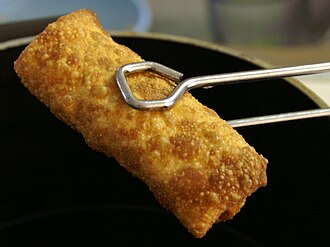
Photo: Wikipedia
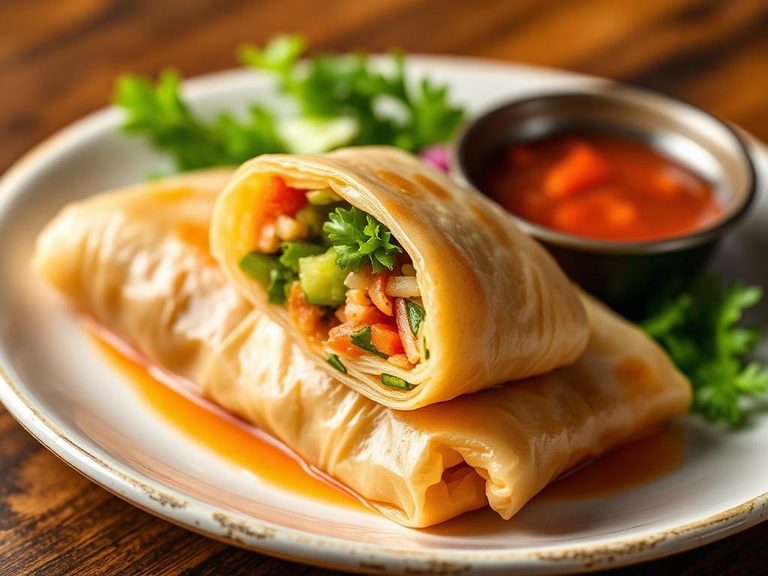
These are classic, deep-fried rolls with a crispy, bubbly wheat-flour wrapper encasing a savory mix of finely chopped vegetables like cabbage and carrots, sometimes with minced pork or shrimp. The exterior shatters with a satisfying crunch, giving way to a soft, steaming interior. Nutritionally, they are an energy-dense appetizer, with calories primarily from carbohydrates and fat.
Calorie split: 13% protein · 44% carbs · 43% fat
↓ Full nutrition💚 Why it's loved
People adore the irresistible contrast between the shatteringly crisp, golden shell and the savory, juicy filling, often dipped in sweet and sour sauce. It's a beloved staple of Chinese-American takeout, representing a comforting, shareable treat.
⚠️ Watch-outs & how to enjoy it better
The deep-frying process makes them high in calories and fat, which can contribute to blood sugar spikes due to the refined flour wrapper. Those watching sodium intake or with gluten or shellfish allergies should be cautious. To counteract, pair with a side of steamed vegetables or a lean protein, practice portion control by sharing an order, and opt for a low-sodium dipping sauce.
Key benefits
- Provides quick energy from carbohydrates
- Contains dietary fiber from vegetable filling
- Offers some plant-based protein
- A familiar, comforting finger food
- Versatile as an appetizer or snack
🍽️ Popular dishes
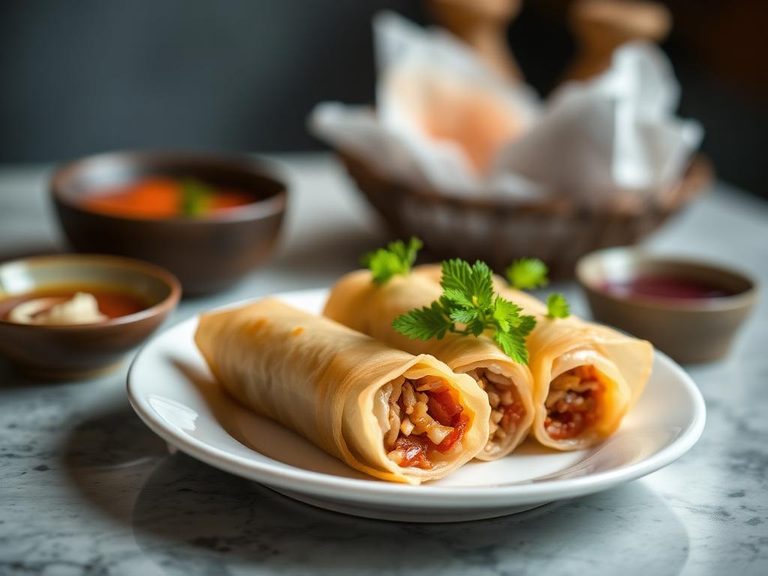
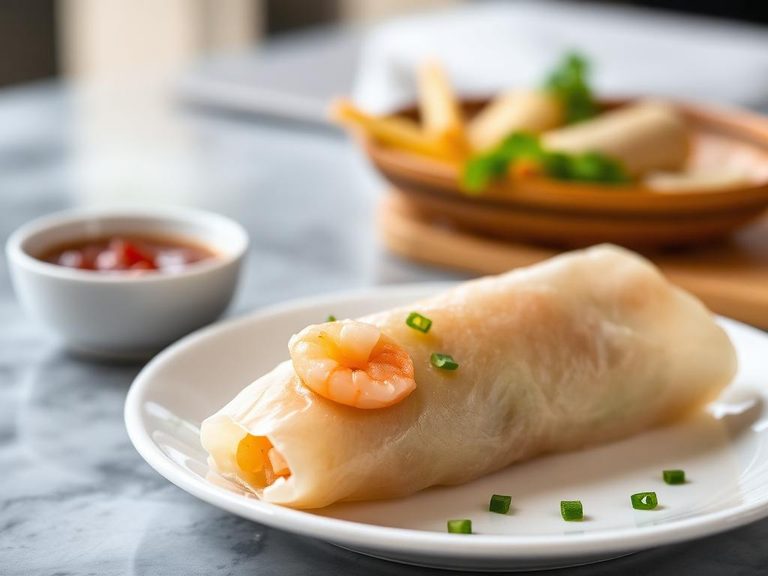
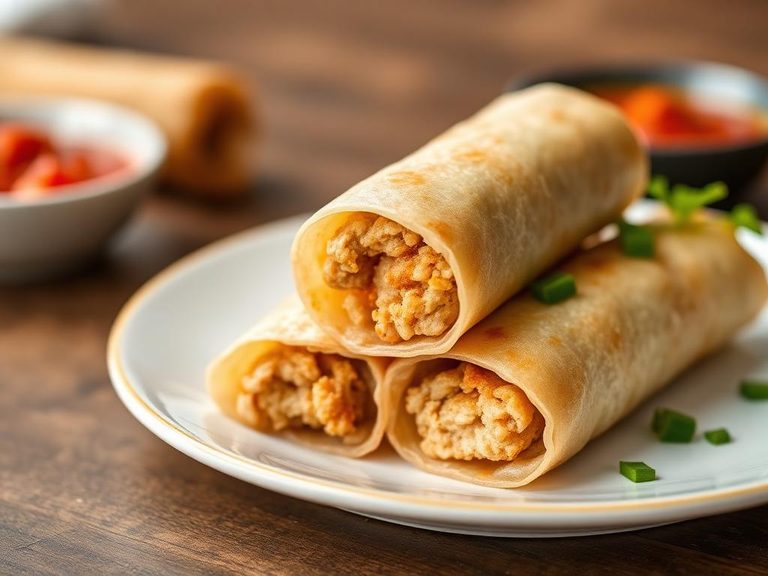
🌍 Where it's eaten
💡 Did you know?
The American 'egg roll' is distinct from the Chinese 'spring roll'; its thicker, chewier wrapper is thought to have been developed by Chinese immigrants in New York City in the early 20th century, possibly by adding egg to the dough for a richer texture.
Full nutrition (USDA data · scales with serving)
| Water | 50.6 g |
| Energy | 250 kcal |
| Energy | 1045 kj |
| Protein | 8.3 g |
| Total lipid (fat) | 11.9 g |
| Ash | 1.9 g |
| Carbohydrate, by difference | 27.3 g |
| Fiber, total dietary | 2.6 g |
| Sucrose | 0.52 g |
| Glucose | 1.4 g |
| Fructose | 0.73 g |
| Lactose | 0.00 g |
| Maltose | 1.1 g |
| Starch | 19.8 g |
| Calcium, Ca | 40.0 mg |
| Iron, Fe | 1.4 mg |
| Magnesium, Mg | 18.0 mg |
| Phosphorus, P | 85.0 mg |
| Potassium, K | 165 mg |
| Sodium, Na | 468 mg |
| Zinc, Zn | 0.62 mg |
| Copper, Cu | 0.15 mg |
| Manganese, Mn | 0.24 mg |
| Selenium, Se | 0.00 ug |
| Vitamin C, total ascorbic acid | 0.00 mg |
| Thiamin | 0.17 mg |
| Riboflavin | 0.08 mg |
| Niacin | 2.7 mg |
| Pantothenic acid | 0.38 mg |
| Vitamin B-6 | 0.17 mg |
| Choline, total | 17.9 mg |
| Betaine | 21.9 mg |
| Vitamin B-12 | 0.44 ug |
| Vitamin K (phylloquinone) | 58.9 ug |
| Vitamin K (Dihydrophylloquinone) | 0.00 ug |
| Vitamin K (Menaquinone-4) | 3.3 ug |
Fat & fatty acid profile (per 100g)
| Fatty acids, total saturated | 2.1 g |
| SFA 8:0 | 0.01 g |
| SFA 10:0 | 0.00 g |
| SFA 12:0 | 0.00 g |
| SFA 14:0 | 0.03 g |
| SFA 15:0 | 0.00 g |
| SFA 16:0 | 1.5 g |
| SFA 17:0 | 0.02 g |
| SFA 18:0 | 0.54 g |
| SFA 20:0 | 0.03 g |
| SFA 22:0 | 0.04 g |
| Fatty acids, total monounsaturated | 3.0 g |
| MUFA 14:1 | 0.01 g |
| MUFA 15:1 | 0.00 g |
| MUFA 16:1 | 0.09 g |
| MUFA 17:1 | 0.00 g |
| MUFA 18:1 | 2.9 g |
| MUFA 18:1 c | 2.8 g |
| MUFA 20:1 | 0.05 g |
| Fatty acids, total polyunsaturated | 5.6 g |
| PUFA 18:2 | 4.9 g |
| PUFA 18:2 n-6 c,c | 4.9 g |
| PUFA 18:3 | 0.66 g |
| PUFA 18:3 n-3 c,c,c (ALA) | 0.64 g |
| PUFA 18:3 n-6 c,c,c | 0.02 g |
| PUFA 20:2 n-6 c,c | 0.01 g |
| PUFA 20:3 | 0.00 g |
| PUFA 20:4 | 0.01 g |
| Fatty acids, total trans | 0.10 g |
| Fatty acids, total trans-monoenoic | 0.05 g |
| TFA 18:1 t | 0.05 g |
| TFA 18:2 t,t | 0.06 g |
| Fatty acids, total trans-polyenoic | 0.06 g |
| Cholesterol | 16.0 mg |
Amino acid profile (per 100g)
| Tryptophan | 0.07 g |
| Threonine | 0.34 g |
| Isoleucine | 0.30 g |
| Leucine | 0.58 g |
| Lysine | 0.37 g |
| Methionine | 0.15 g |
| Cystine | 0.16 g |
| Phenylalanine | 0.36 g |
| Tyrosine | 0.25 g |
| Valine | 0.33 g |
| Arginine | 0.41 g |
| Histidine | 0.18 g |
| Alanine | 0.30 g |
| Aspartic acid | 0.56 g |
| Glutamic acid | 2.7 g |
| Glycine | 0.36 g |
| Proline | 0.78 g |
| Serine | 0.32 g |
| Hydroxyproline | 0.00 g |
FAQ
What's the difference between an egg roll and a spring roll?
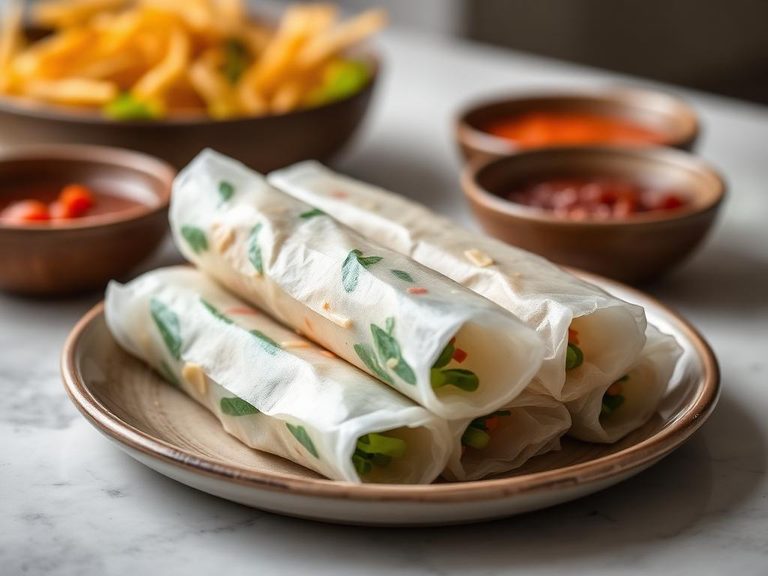
Egg rolls typically have a thicker, chewier wrapper made with egg, are larger, and are deep-fried to a bubbly crunch. Spring rolls use a thinner, smoother wrapper (often rice-based), are usually smaller, and can be fried to a delicate crisp or served fresh.
Are egg rolls a healthy food?
As a deep-fried item, they are considered an indulgence rather than a health food. They are high in calories and fat. However, the vegetable filling does provide some fiber and nutrients. Enjoying them occasionally and in moderation is key.
Can I make a healthier version at home?
Yes. You can use thinner spring roll wrappers, bake or air-fry them instead of deep-frying, and load the filling with extra vegetables and lean protein like chicken or tofu to boost nutrition and reduce the fat content.
Nutrient density (calculated · NRF9.3)
Nutrient Rich Foods index: beneficial nutrients (protein, fiber, vitamins, minerals) minus saturated fat, added sugar & sodium, per 100 kcal.
NRF9.3 index — Fulgoni, Keast & Drewnowski, 2009. Computed from USDA nutrients.
Weight-loss friendliness (composite index)
Energy density 2.50 kcal/g · 13% calories from protein · 2.6 g fiber · 0.0 g sugar per 100 g.
Composite of energy density (Rolls et al., 1999), protein & fiber satiety, minus sugar. A calculated heuristic — ranks satiety-per-calorie, not a clinical measure.
Dietary load (calculated from USDA values)
Potential renal acid load. Positive = acid-forming, negative = alkaline-forming.
Sodium-to-potassium ratio: 2.84 (lower is better — aim for ≤ 1)
Sodium:potassium per WHO potassium guidance. Computed from USDA nutrients.