

Spring Roll
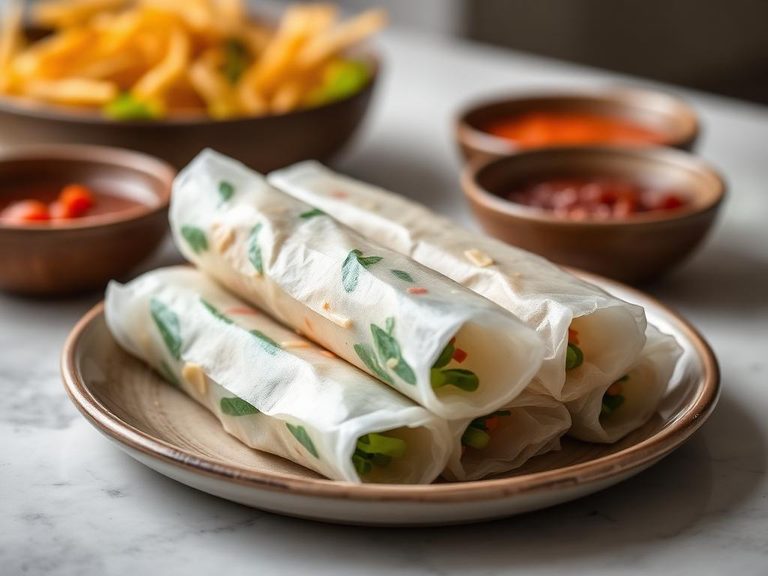
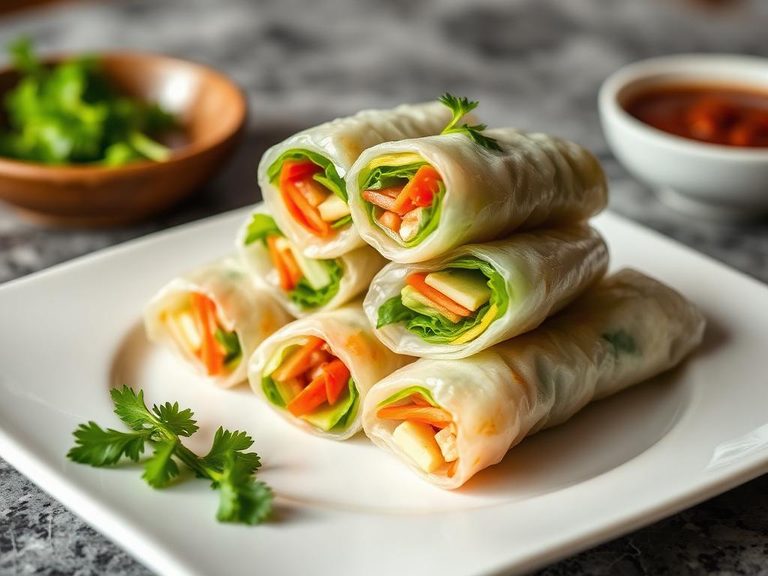
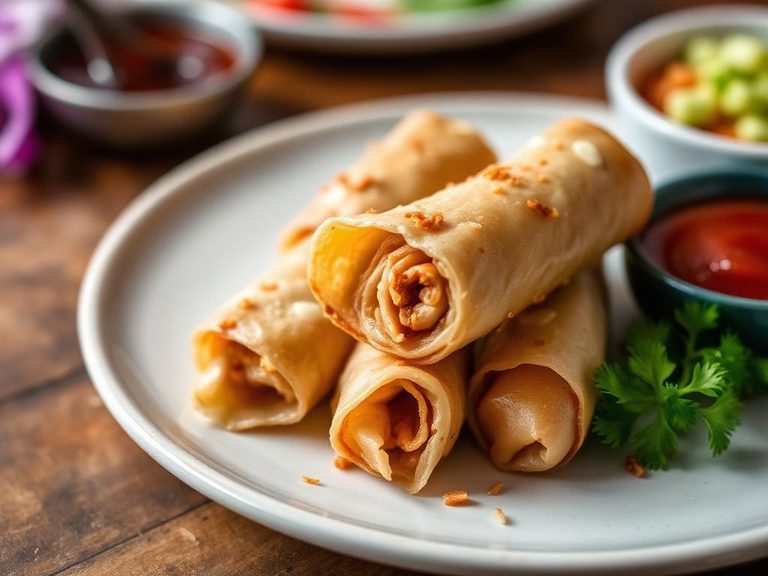
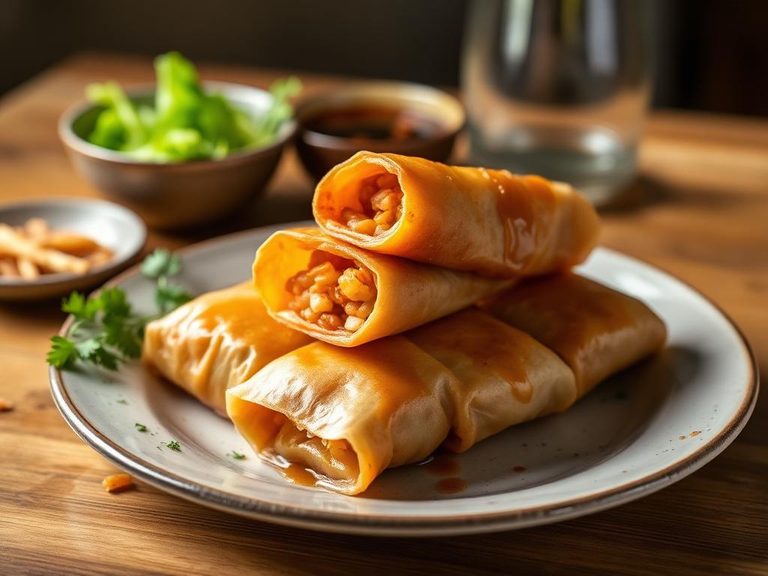
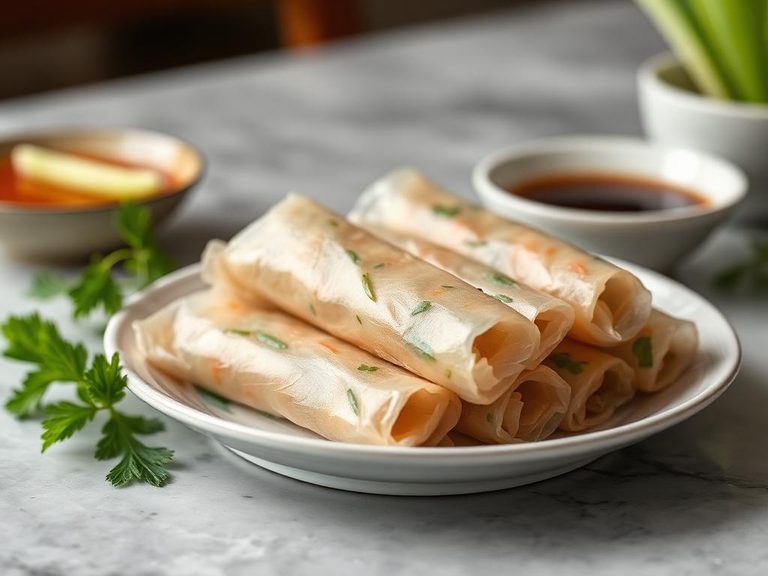
Spring rolls are a popular appetizer in many Asian cuisines, particularly Chinese, featuring a thin, crisp wrapper filled with a mix of vegetables like cabbage, carrots, and bean sprouts, often with a small amount of meat or shrimp. They are typically deep-fried to achieve a golden, crunchy exterior, though lighter versions can be baked or served fresh (uncooked). The dish is celebrated for its satisfying texture and versatile fillings, making it a staple in dim sum and festive meals.
🍳 View the full Spring Roll recipe →
🍽️ Nutrition at a glance
Spring rolls are generally high in carbohydrates due to the wrapper and frying oil, with moderate fat content and some protein if meat or shrimp is included. A typical fried spring roll (about 100g) provides roughly 200-300 calories, along with small amounts of vitamins like vitamin C from vegetables and minerals like iron.
Nutrition breakdown
| Calories | 210 kcal |
| Protein | 6 g |
| Carbs | 22 g |
| Fat | 11 g |
| Fiber | 2 g |
| Sugar | 3 g |
| Sodium | 350 mg |
| Vitamin A | 150 mcg RAE |
| Vitamin C | 5 mg |
| Vitamin K | 10 mcg |
| Thiamin (B1) | 0.1 mg |
| Iron | 1.2 mg |
| Calcium | 40 mg |
| Potassium | 180 mg |
| Phosphorus | 70 mg |
Per 2 rolls (120 g) · estimated, varies by recipe
💡 What's interesting
Culturally, spring rolls symbolize prosperity and renewal in Chinese New Year celebrations, as their shape resembles gold bars. Nutritionally, they offer a quick energy boost from carbs but can be made healthier by baking or using whole-grain wrappers to increase fiber content.
🍽️ Related dishes

AI estimate may be inaccurate · Terms