

Puddings, chocolate flavor, low calorie, regular, dry mix
Whole food · Sweets

Photo: Wikipedia
This is a powdered mix that transforms into a rich, velvety chocolate pudding with a smooth, spoonable texture when prepared with milk. It delivers a deep cocoa flavor with a surprisingly light body, making it a satisfying treat without the heaviness of traditional puddings. Nutritionally, it stands out for its high fiber content and substantial protein, offering a more balanced dessert option.
Calorie split: 11% protein · 82% carbs · 7% fat
↓ Full nutrition💚 Why it's loved
People love it for delivering a classic, comforting chocolate pudding experience with minimal effort and a better nutritional profile. Its versatility allows it to be enjoyed as a simple dessert, a filling snack, or a base for more elaborate parfaits and trifles.
⚠️ Watch-outs & how to enjoy it better
The high fiber content, while beneficial, can cause digestive discomfort (bloating, gas) if consumed in large amounts without adequate water. The dry mix itself is highly processed and may contain additives like maltodextrin or artificial flavors, which some prefer to avoid. **Tip:** Start with a small portion and drink plenty of water. Pair with fresh fruit or a handful of nuts to add natural sweetness and healthy fats, creating a more balanced snack.
Key benefits
- High in dietary fiber (10.1g per 100g dry mix)
- Good source of plant-based protein (10.08g per 100g dry mix)
- Low in fat (only 3g per 100g dry mix)
- Very low in sugar (0.7g per 100g dry mix)
- Convenient and shelf-stable dry mix format
🍽️ Popular dishes



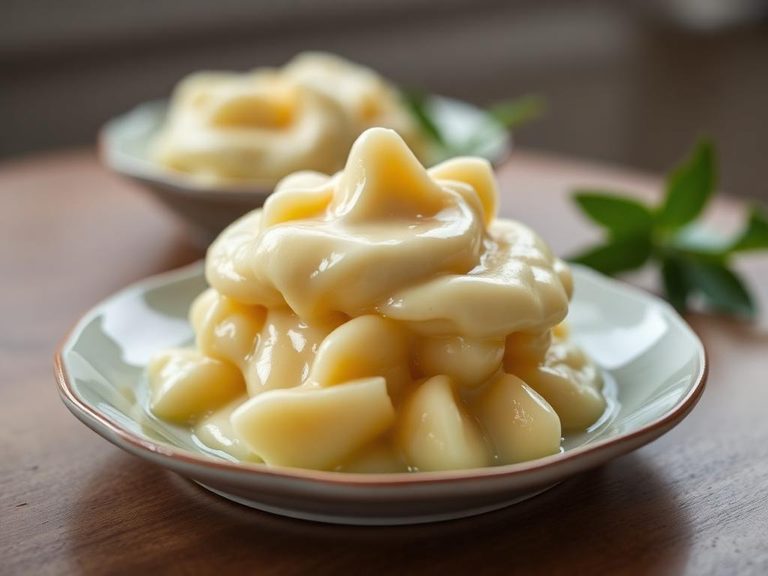
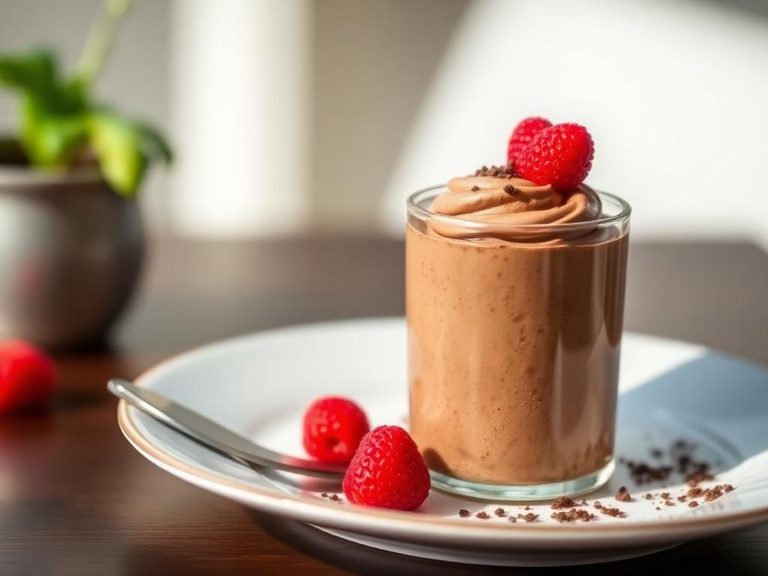

🌍 Where it's eaten
💡 Did you know?
The first commercially prepared, ready-to-eat chocolate pudding mix was introduced in the United States in 1918 by the Walter Baker & Company, the same chocolatiers famous for Baker's Chocolate.
Full nutrition (USDA data · scales with serving)
| Water | 6.8 g |
| Energy | 365 kcal |
| Energy | 1527 kj |
| Protein | 10.1 g |
| Total lipid (fat) | 3.0 g |
| Ash | 5.7 g |
| Carbohydrate, by difference | 74.4 g |
| Fiber, total dietary | 10.1 g |
| Total Sugars | 0.70 g |
| Calcium, Ca | 50.0 mg |
| Iron, Fe | 3.9 mg |
| Magnesium, Mg | 110 mg |
| Phosphorus, P | 174 mg |
| Potassium, K | 570 mg |
| Sodium, Na | 3326 mg |
| Zinc, Zn | 1.5 mg |
| Copper, Cu | 0.85 mg |
| Manganese, Mn | 0.89 mg |
| Selenium, Se | 5.1 ug |
| Vitamin C, total ascorbic acid | 0.00 mg |
| Thiamin | 0.03 mg |
| Riboflavin | 0.10 mg |
| Niacin | 0.55 mg |
| Pantothenic acid | 0.06 mg |
| Vitamin B-6 | 0.03 mg |
| Folate, total | 0.00 ug |
| Folic acid | 0.00 ug |
| Folate, food | 0.00 ug |
| Folate, DFE | 0.00 ug |
| Choline, total | 3.3 mg |
| Vitamin B-12 | 0.00 ug |
| Vitamin B-12, added | 0.00 ug |
| Vitamin A, RAE | 0.00 ug |
| Retinol | 0.00 ug |
| Carotene, beta | 0.00 ug |
| Carotene, alpha | 0.00 ug |
| Cryptoxanthin, beta | 0.00 ug |
| Vitamin A, IU | 0.00 iu |
| Lycopene | 0.00 ug |
| Lutein + zeaxanthin | 9.0 ug |
| Vitamin E (alpha-tocopherol) | 0.02 mg |
| Vitamin E, added | 0.00 mg |
| Vitamin D (D2 + D3), International Units | 0.00 iu |
| Vitamin D (D2 + D3) | 0.00 ug |
| Vitamin K (phylloquinone) | 0.50 ug |
| Alcohol, ethyl | 0.00 g |
| Caffeine | 18.0 mg |
| Theobromine | 596 mg |
Fat & fatty acid profile (per 100g)
| Fatty acids, total saturated | 1.6 g |
| SFA 4:0 | 0.00 g |
| SFA 6:0 | 0.00 g |
| SFA 8:0 | 0.00 g |
| SFA 10:0 | 0.00 g |
| SFA 12:0 | 0.00 g |
| SFA 14:0 | 0.00 g |
| SFA 16:0 | 0.73 g |
| SFA 18:0 | 0.84 g |
| Fatty acids, total monounsaturated | 1.1 g |
| MUFA 16:1 | 0.00 g |
| MUFA 18:1 | 1.1 g |
| MUFA 20:1 | 0.00 g |
| MUFA 22:1 | 0.00 g |
| Fatty acids, total polyunsaturated | 0.13 g |
| PUFA 18:2 | 0.13 g |
| PUFA 18:3 | 0.00 g |
| PUFA 18:4 | 0.00 g |
| PUFA 20:4 | 0.00 g |
| PUFA 20:5 n-3 (EPA) | 0.00 g |
| PUFA 22:5 n-3 (DPA) | 0.00 g |
| PUFA 22:6 n-3 (DHA) | 0.00 g |
| Cholesterol | 0.00 mg |
Amino acid profile (per 100g)
Estimated from Puddings, rice, dry mix, prepared with 2% milk — USDA does not publish this profile for Puddings.
| Tryptophan | 0.04 g |
| Threonine | 0.13 g |
| Isoleucine | 0.17 g |
| Leucine | 0.27 g |
| Lysine | 0.22 g |
| Methionine | 0.07 g |
| Cystine | 0.03 g |
| Phenylalanine | 0.14 g |
| Tyrosine | 0.14 g |
| Valine | 0.19 g |
| Arginine | 0.10 g |
| Histidine | 0.07 g |
| Alanine | 0.10 g |
| Aspartic acid | 0.21 g |
| Glutamic acid | 0.58 g |
| Glycine | 0.06 g |
| Proline | 0.27 g |
| Serine | 0.15 g |
FAQ
How does this differ from regular instant pudding mix?
This low-calorie version is specifically formulated to be higher in fiber and protein while being significantly lower in sugar and fat. Regular instant pudding mixes are typically much higher in sugar and calories, with minimal fiber or protein.
Can I make this with water instead of milk?
Yes, you can prepare it with water, but the result will be less creamy, have a thinner texture, and lack the added protein and calcium from milk. Using skim or low-fat milk is a common compromise to keep calories lower while improving taste and nutrition.
Why is the sugar content so low when it tastes sweet?
The sweetness likely comes from low-calorie or non-nutritive sweeteners like sucralose, aspartame, or stevia, which are commonly used in 'low calorie' or 'sugar-free' products to provide sweetness without the calories or carbohydrates of sugar.
Nutrient density (calculated · NRF9.3)
Nutrient Rich Foods index: beneficial nutrients (protein, fiber, vitamins, minerals) minus saturated fat, added sugar & sodium, per 100 kcal.
NRF9.3 index — Fulgoni, Keast & Drewnowski, 2009. Computed from USDA nutrients.
Weight-loss friendliness (composite index)
Energy density 3.65 kcal/g · 11% calories from protein · 10.1 g fiber · 0.7 g sugar per 100 g.
Composite of energy density (Rolls et al., 1999), protein & fiber satiety, minus sugar. A calculated heuristic — ranks satiety-per-calorie, not a clinical measure.
Dietary load (calculated from USDA values)
Potential renal acid load. Positive = acid-forming, negative = alkaline-forming.
Sodium-to-potassium ratio: 5.84 (lower is better — aim for ≤ 1)
Sodium:potassium per WHO potassium guidance. Computed from USDA nutrients.