

Phyllo dough
Whole food · Baked Products

Photo: Wikipedia
Phyllo dough is paper-thin, unleavened pastry sheets that shatter into a thousand crispy, buttery layers when baked. Its neutral, slightly wheaty flavor acts as a perfect canvas for both sweet and savory fillings, delivering an unmatched textural contrast. While it provides a notable energy boost from its carbohydrate content, it is relatively low in fat and sugar on its own.
Calorie split: 10% protein · 72% carbs · 18% fat
↓ Full nutrition💚 Why it's loved
People adore phyllo for its transformative ability to turn simple fillings into elegant, multi-layered masterpieces. It is a cultural staple in Mediterranean and Middle Eastern cuisines, representing both comfort and celebration in dishes like baklava and spanakopita.
⚠️ Watch-outs & how to enjoy it better
Its high carbohydrate content can lead to blood-sugar spikes, especially in sweet preparations. To counteract this, pair it with protein-rich fillings like cheese or meat, or use it in savory dishes with plenty of vegetables. Also, its delicate nature makes it prone to drying out, so keep unused sheets covered with a damp towel.
Key benefits
- Creates exceptionally light, crispy texture
- Versatile for sweet and savory dishes
- Low in fat compared to puff pastry
- Adds visual elegance to baked goods
- Can be baked instead of fried for lighter options
🍽️ Popular dishes
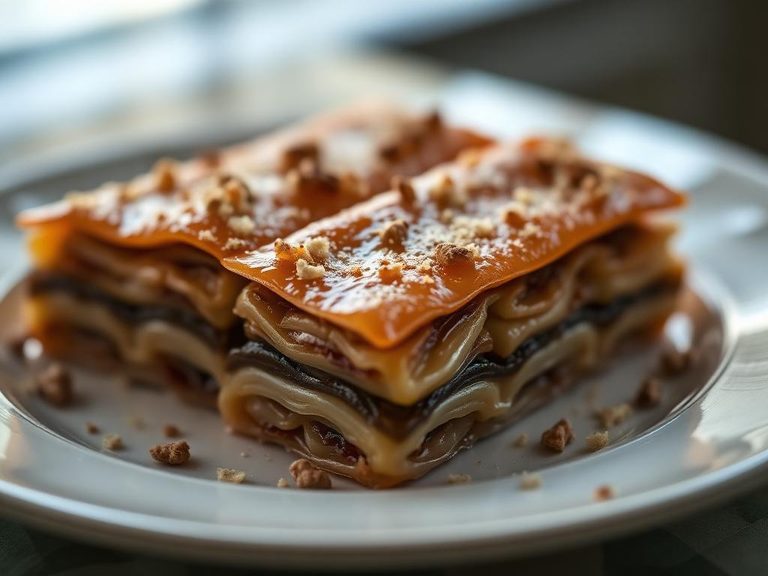
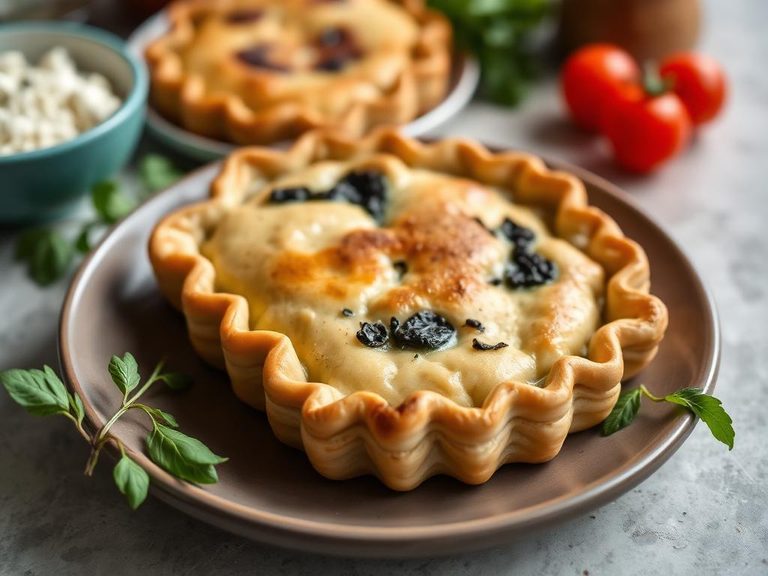



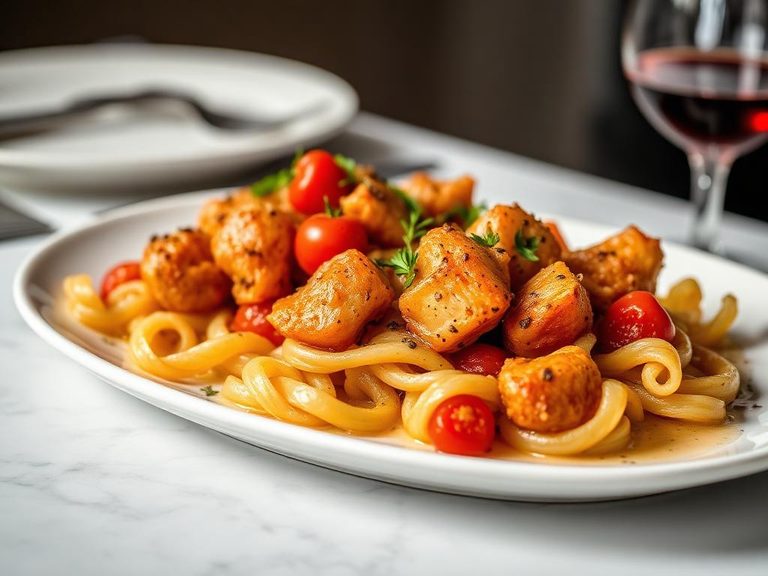
🌍 Where it's eaten
💡 Did you know?
The name 'phyllo' comes from the Greek word for 'leaf,' and traditional bakers can roll a single sheet so thin it becomes translucent enough to read a newspaper through.
Full nutrition (USDA data · scales with serving)
| Water | 32.6 g |
| Energy | 299 kcal |
| Energy | 1251 kj |
| Protein | 7.1 g |
| Total lipid (fat) | 6.0 g |
| Ash | 1.6 g |
| Carbohydrate, by difference | 52.6 g |
| Fiber, total dietary | 1.9 g |
| Total Sugars | 0.18 g |
| Calcium, Ca | 11.0 mg |
| Iron, Fe | 3.2 mg |
| Magnesium, Mg | 15.0 mg |
| Phosphorus, P | 75.0 mg |
| Potassium, K | 74.0 mg |
| Sodium, Na | 483 mg |
| Zinc, Zn | 0.49 mg |
| Copper, Cu | 0.10 mg |
| Manganese, Mn | 0.48 mg |
| Selenium, Se | 23.3 ug |
| Vitamin C, total ascorbic acid | 0.00 mg |
| Thiamin | 0.54 mg |
| Riboflavin | 0.34 mg |
| Niacin | 4.1 mg |
| Pantothenic acid | 0.30 mg |
| Vitamin B-6 | 0.03 mg |
| Folate, total | 88.0 ug |
| Folic acid | 70.0 ug |
| Folate, food | 18.0 ug |
| Folate, DFE | 137 ug |
| Choline, total | 6.9 mg |
| Vitamin B-12 | 0.00 ug |
| Vitamin B-12, added | 0.00 ug |
| Vitamin A, RAE | 0.00 ug |
| Retinol | 0.00 ug |
| Carotene, beta | 0.00 ug |
| Carotene, alpha | 0.00 ug |
| Cryptoxanthin, beta | 0.00 ug |
| Vitamin A, IU | 0.00 iu |
| Lycopene | 0.00 ug |
| Lutein + zeaxanthin | 11.0 ug |
| Vitamin E (alpha-tocopherol) | 0.08 mg |
| Vitamin E, added | 0.00 mg |
| Vitamin D (D2 + D3), International Units | 0.00 iu |
| Vitamin D (D2 + D3) | 0.00 ug |
| Vitamin K (phylloquinone) | 2.5 ug |
| Alcohol, ethyl | 0.00 g |
| Caffeine | 0.00 mg |
| Theobromine | 0.00 mg |
Fat & fatty acid profile (per 100g)
| Fatty acids, total saturated | 1.5 g |
| SFA 4:0 | 0.00 g |
| SFA 6:0 | 0.00 g |
| SFA 8:0 | 0.00 g |
| SFA 10:0 | 0.00 g |
| SFA 12:0 | 0.00 g |
| SFA 14:0 | 0.03 g |
| SFA 16:0 | 0.79 g |
| SFA 18:0 | 0.65 g |
| Fatty acids, total monounsaturated | 3.1 g |
| MUFA 16:1 | 0.01 g |
| MUFA 18:1 | 3.1 g |
| MUFA 20:1 | 0.01 g |
| MUFA 22:1 | 0.00 g |
| Fatty acids, total polyunsaturated | 0.92 g |
| PUFA 18:2 | 0.88 g |
| PUFA 18:3 | 0.05 g |
| PUFA 18:4 | 0.00 g |
| PUFA 20:4 | 0.00 g |
| PUFA 20:5 n-3 (EPA) | 0.00 g |
| PUFA 22:5 n-3 (DPA) | 0.00 g |
| PUFA 22:6 n-3 (DHA) | 0.00 g |
| Cholesterol | 0.00 mg |
Amino acid profile (per 100g)
| Tryptophan | 0.09 g |
| Threonine | 0.19 g |
| Isoleucine | 0.25 g |
| Leucine | 0.49 g |
| Lysine | 0.16 g |
| Methionine | 0.13 g |
| Cystine | 0.15 g |
| Phenylalanine | 0.36 g |
| Tyrosine | 0.21 g |
| Valine | 0.29 g |
| Arginine | 0.29 g |
| Histidine | 0.16 g |
| Alanine | 0.23 g |
| Aspartic acid | 0.30 g |
| Glutamic acid | 2.4 g |
| Glycine | 0.26 g |
| Proline | 0.83 g |
| Serine | 0.36 g |
FAQ
How do I prevent phyllo dough from drying out while working?
Keep the stack of sheets covered with a slightly damp kitchen towel or plastic wrap, and only work with one sheet at a time. If it does dry, lightly mist it with water.
Can I substitute phyllo dough with other pastries?
While not a perfect match, puff pastry or even thin wonton wrappers can sometimes be used, but they will yield a different texture and flavor profile.
Is phyllo dough gluten-free?
No, traditional phyllo is made from wheat flour and contains gluten. Gluten-free versions are available but are less common.
Nutrient density (calculated · NRF9.3)
Nutrient Rich Foods index: beneficial nutrients (protein, fiber, vitamins, minerals) minus saturated fat, added sugar & sodium, per 100 kcal.
NRF9.3 index — Fulgoni, Keast & Drewnowski, 2009. Computed from USDA nutrients.
Weight-loss friendliness (composite index)
Energy density 2.99 kcal/g · 9% calories from protein · 1.9 g fiber · 0.2 g sugar per 100 g.
Composite of energy density (Rolls et al., 1999), protein & fiber satiety, minus sugar. A calculated heuristic — ranks satiety-per-calorie, not a clinical measure.
Dietary load (calculated from USDA values)
Potential renal acid load. Positive = acid-forming, negative = alkaline-forming.
Sodium-to-potassium ratio: 6.53 (lower is better — aim for ≤ 1)
Sodium:potassium per WHO potassium guidance. Computed from USDA nutrients.