

Pears, raw, bartlett
Whole food · Fruits and Fruit Juices
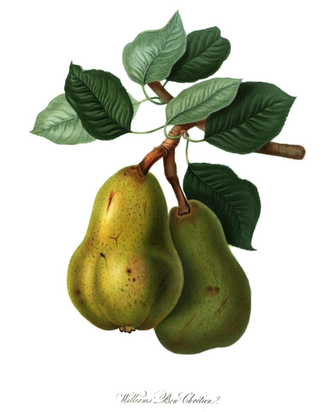
Photo: Wikipedia
The Bartlett pear is the classic American pear, known for its smooth, yellow-green skin and a distinctively buttery, melting texture when perfectly ripe. Its flavor is sweet, aromatic, and slightly floral, with a juicy, fine-grained flesh that makes it a favorite for fresh eating. Nutritionally, it's a standout source of dietary fiber, providing over 10% of the daily value in just one medium fruit.
Calorie split: 2% protein · 95% carbs · 2% fat
↓ Full nutrition💚 Why it's loved
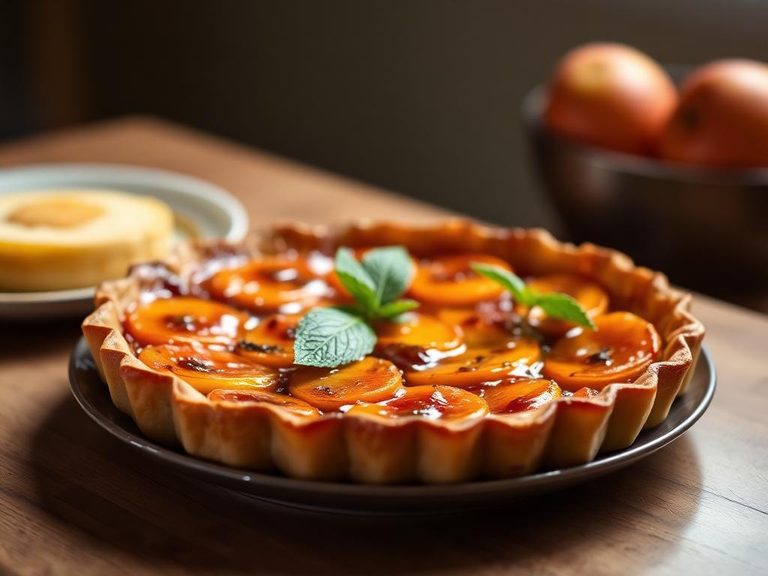
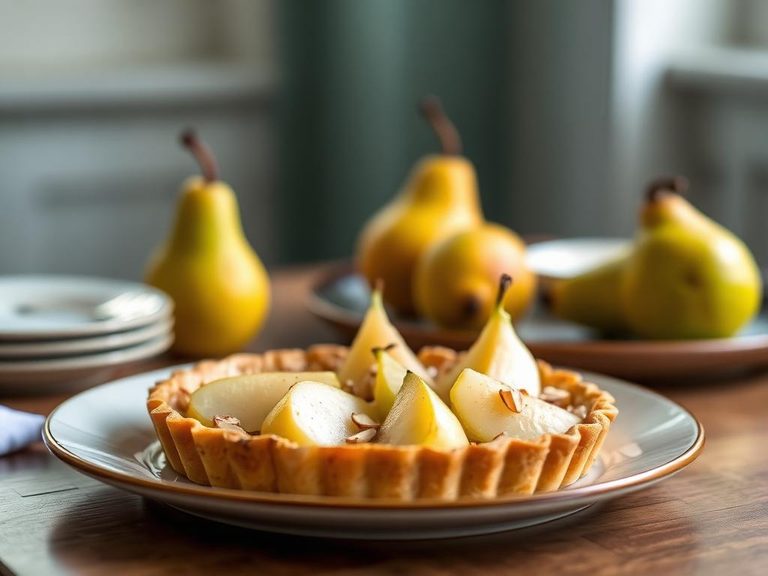
People love the Bartlett pear for its reliable, sweet flavor and the satisfying, juicy burst it delivers when eaten at peak ripeness. Its versatility shines in both sweet and savory applications, from simple snacking to elegant tarts.
⚠️ Watch-outs & how to enjoy it better
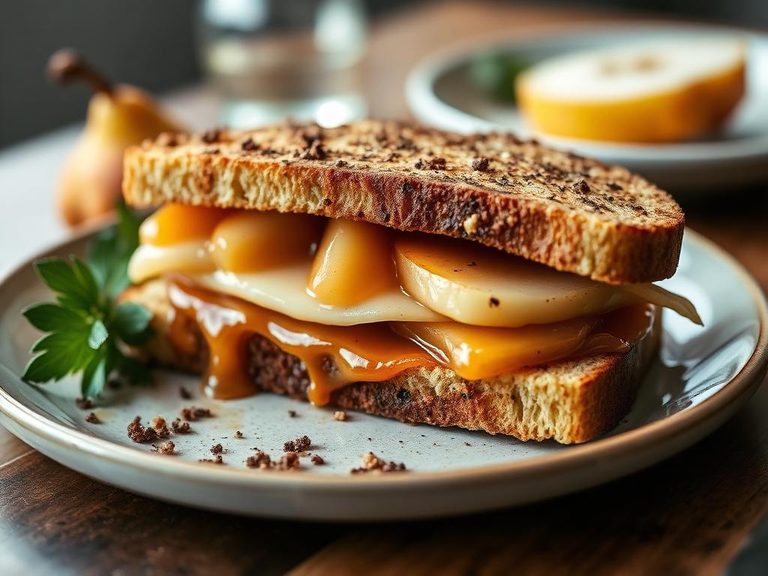
The primary downside is its high natural sugar content (15.1g carbs per 100g), which can cause blood sugar spikes if eaten in large quantities. To counteract this, pair a pear with a source of protein or healthy fat, like a handful of nuts or a slice of cheese, to slow sugar absorption.
Key benefits
- Excellent source of dietary fiber (3.1g per 100g)
- Very low in fat (0.16g per 100g)
- Good source of vitamin C
- Contains beneficial plant compounds like flavonoids
- High water content for hydration
🍽️ Popular dishes
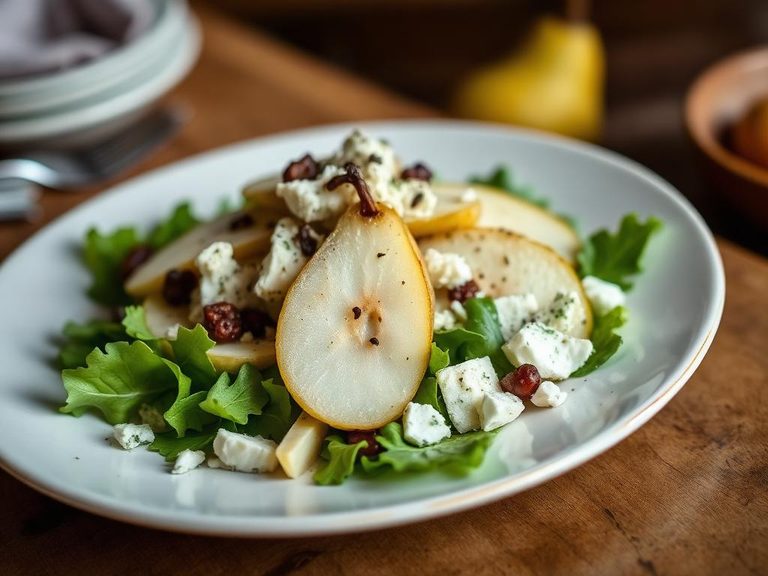
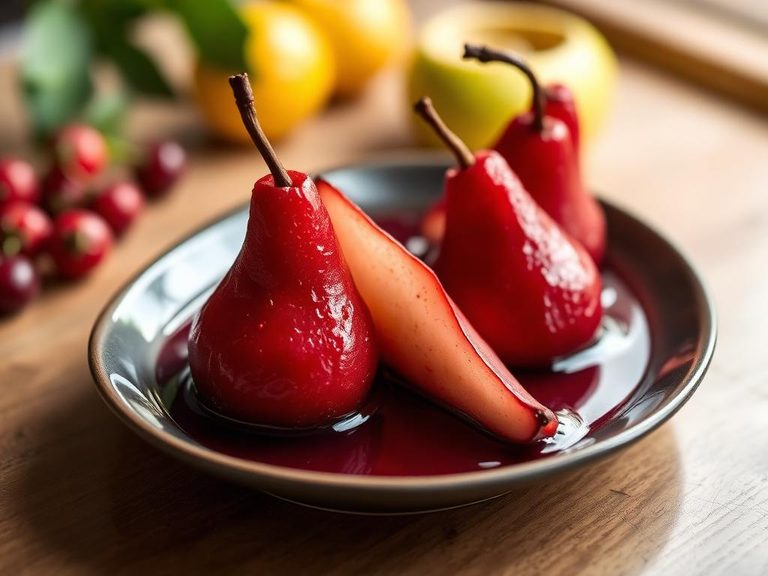
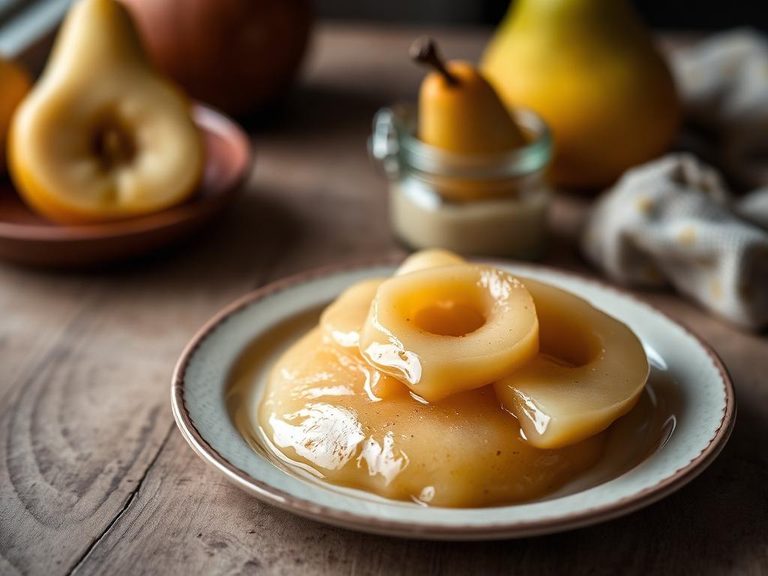
🌍 Where it's eaten
💡 Did you know?
The Bartlett pear is the same variety known as the Williams pear in most of Europe, and its name was changed in America to honor the nursery that popularized it.
Full nutrition (USDA data · scales with serving)
| Water | 84.1 g |
| Energy (Atwater General Factors) | 63.0 kcal |
| Energy (Atwater Specific Factors) | 57.0 kcal |
| Energy | 57.0 kcal |
| Energy | 238 kj |
| Nitrogen | 0.06 g |
| Protein | 0.38 g |
| Total lipid (fat) | 0.16 g |
| Ash | 0.30 g |
| Carbohydrate, by difference | 15.1 g |
| Fiber, total dietary | 3.1 g |
| Fiber, soluble | 0.30 g |
| Fiber, insoluble | 2.8 g |
| Sugars, Total | 9.7 g |
| Sucrose | 0.43 g |
| Glucose | 2.5 g |
| Fructose | 6.8 g |
| Lactose | 0.00 g |
| Maltose | 0.00 g |
| Galactose | 0.00 g |
| Calcium, Ca | 8.0 mg |
| Iron, Fe | 0.17 mg |
| Magnesium, Mg | 5.7 mg |
| Phosphorus, P | 10.0 mg |
| Potassium, K | 87.0 mg |
| Sodium, Na | 7.0 mg |
| Zinc, Zn | 0.07 mg |
| Copper, Cu | 0.07 mg |
| Manganese, Mn | 0.03 mg |
| Selenium, Se | 0.20 ug |
| Vitamin C, total ascorbic acid | 4.4 mg |
| Thiamin | 0.01 mg |
| Riboflavin | 0.03 mg |
| Niacin | 0.16 mg |
| Pantothenic acid | 0.04 mg |
| Vitamin B-6 | 0.03 mg |
| Folate, total | 6.0 ug |
| Vitamin A, RAE | 1.0 ug |
| Carotene, beta | 8.0 ug |
| Carotene, alpha | 0.00 ug |
| Cryptoxanthin, beta | 3.0 ug |
| Lycopene | 0.00 ug |
| Lutein + zeaxanthin | 48.0 ug |
| Vitamin K (phylloquinone) | 3.8 ug |
| Vitamin K (Dihydrophylloquinone) | 0.00 ug |
Fat & fatty acid profile (per 100g)
Estimated from Pears, canned, heavy syrup pack, solids and liquids — USDA does not publish this profile for Pears.
| Fatty acids, total saturated | 0.01 g |
| SFA 4:0 | 0.00 g |
| SFA 6:0 | 0.00 g |
| SFA 8:0 | 0.00 g |
| SFA 10:0 | 0.00 g |
| SFA 12:0 | 0.00 g |
| SFA 14:0 | 0.00 g |
| SFA 16:0 | 0.01 g |
| SFA 18:0 | 0.00 g |
| Fatty acids, total monounsaturated | 0.03 g |
| MUFA 16:1 | 0.00 g |
| MUFA 18:1 | 0.03 g |
| MUFA 20:1 | 0.00 g |
| MUFA 22:1 | 0.00 g |
| Fatty acids, total polyunsaturated | 0.03 g |
| PUFA 18:2 | 0.03 g |
| PUFA 18:3 | 0.00 g |
| PUFA 18:4 | 0.00 g |
| PUFA 20:4 | 0.00 g |
| PUFA 20:5 n-3 (EPA) | 0.00 g |
| PUFA 22:5 n-3 (DPA) | 0.00 g |
| PUFA 22:6 n-3 (DHA) | 0.00 g |
| Fatty acids, total trans | 0.00 g |
| Cholesterol | 0.00 mg |
Amino acid profile (per 100g)
| Tryptophan | 0.00 g |
| Threonine | 0.01 g |
| Isoleucine | 0.01 g |
| Leucine | 0.02 g |
| Lysine | 0.02 g |
| Methionine | 0.00 g |
| Cystine | 0.00 g |
| Phenylalanine | 0.01 g |
| Tyrosine | 0.00 g |
| Valine | 0.02 g |
| Arginine | 0.01 g |
| Histidine | 0.00 g |
| Alanine | 0.02 g |
| Aspartic acid | 0.10 g |
| Glutamic acid | 0.04 g |
| Glycine | 0.01 g |
| Proline | 0.02 g |
| Serine | 0.02 g |
FAQ
How do I know when a Bartlett pear is ripe?
Gently press the neck (the narrow part near the stem). If it yields slightly to pressure, it's ripe and ready to eat. The skin will also change from green to a more yellow hue.
Why do my pears sometimes have a gritty texture?
That grittiness is caused by stone cells (sclereids), which are natural, harmless clusters of cells in the pear's flesh. Some varieties, like Bartletts, are less prone to this than others.
Can I eat the skin of a Bartlett pear?
Yes, the skin is edible and contains a significant portion of the fruit's fiber and nutrients. Simply wash it well before eating.
Nutrient density (calculated · NRF9.3)
Nutrient Rich Foods index: beneficial nutrients (protein, fiber, vitamins, minerals) minus saturated fat, added sugar & sodium, per 100 kcal.
NRF9.3 index — Fulgoni, Keast & Drewnowski, 2009. Computed from USDA nutrients.
Weight-loss friendliness (composite index)
Energy density 0.57 kcal/g · 3% calories from protein · 3.1 g fiber · 0.0 g sugar per 100 g.
Composite of energy density (Rolls et al., 1999), protein & fiber satiety, minus sugar. A calculated heuristic — ranks satiety-per-calorie, not a clinical measure.
Dietary load (calculated from USDA values)
Potential renal acid load. Positive = acid-forming, negative = alkaline-forming.
Sodium-to-potassium ratio: 0.08 (lower is better — aim for ≤ 1)
Sodium:potassium per WHO potassium guidance. Computed from USDA nutrients.