

Peanut flour, defatted
Whole food · Legumes and Legume Products

Photo: Wikipedia
Defatted peanut flour is a fine, tan powder made from peanuts after most of their oil has been pressed out. It has a concentrated, nutty, roasted flavor and a dry, slightly gritty texture that absorbs moisture. Nutritionally, it's a powerhouse, delivering an exceptionally high protein content (over 50g per 100g) with minimal fat.
Calorie split: 59% protein · 39% carbs · 1% fat
↓ Full nutrition💚 Why it's loved
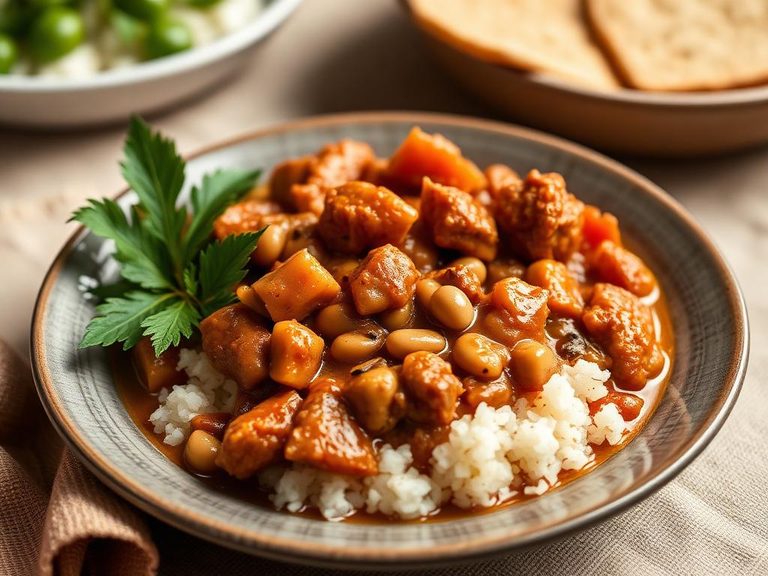
People love it for its potent roasted peanut flavor that can boost the protein and taste of smoothies, baked goods, and sauces without adding much fat. It's a staple in West African and Southeast Asian cuisines for its versatility as a thickener, coating, and flavor base.
⚠️ Watch-outs & how to enjoy it better
As a concentrated peanut product, it's a major allergen and must be avoided by those with peanut allergies. Its very low fat content can make it dry and gritty if not properly hydrated or combined with other ingredients. To counteract dryness, mix it with wet ingredients like yogurt, mashed banana, or oil; for baking, pair it with other flours and ensure adequate liquid in the recipe.
Key benefits
- Extremely high in plant-based protein
- Very low in fat, especially saturated fat
- Good source of dietary fiber
- Rich in micronutrients like manganese and folate
- Adds nutty flavor without added oils
🍽️ Popular dishes
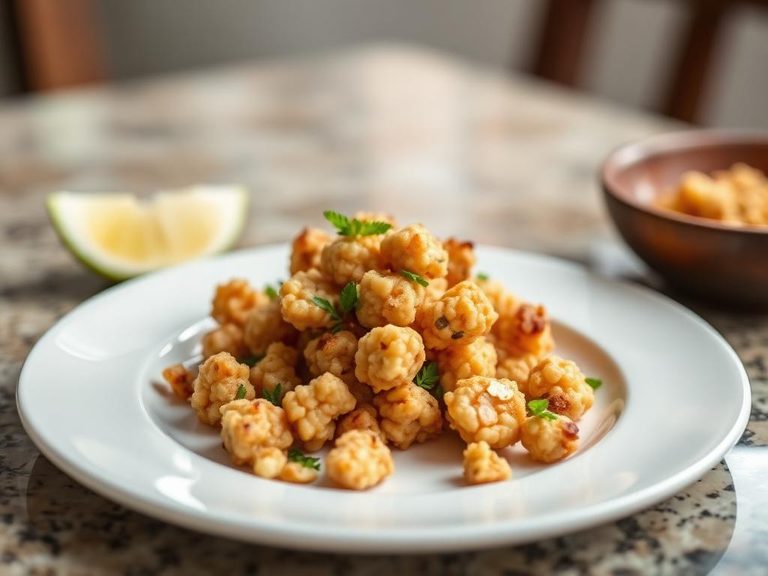
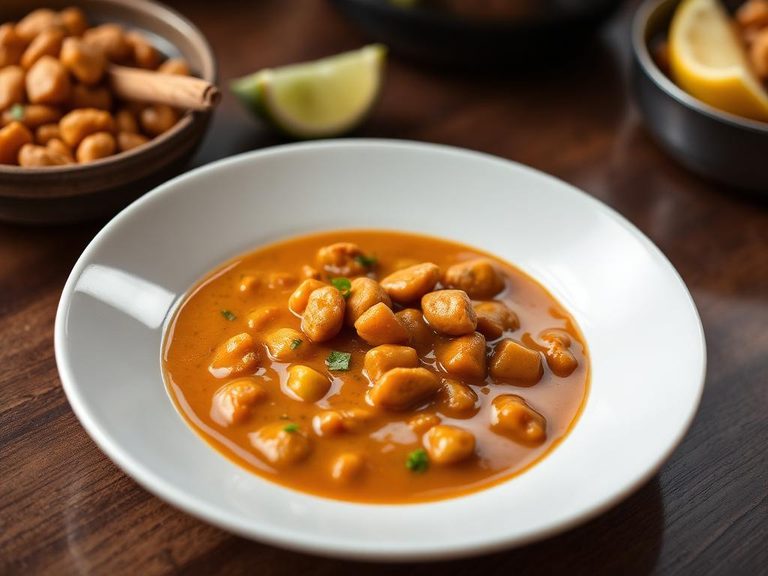
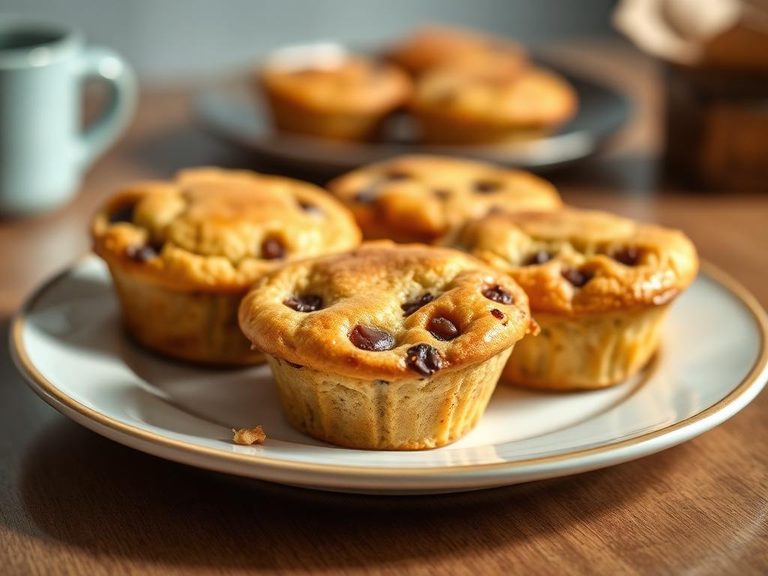
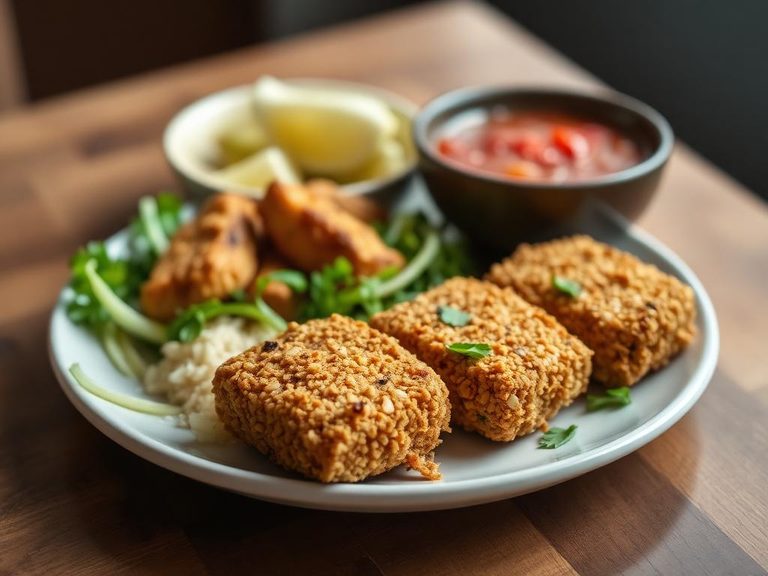
🌍 Where it's eaten
💡 Did you know?
The process of making defatted peanut flour is a key step in producing peanut oil; the leftover press cake is then ground into the flour you buy.
Full nutrition (USDA data · scales with serving)
| Water | 7.8 g |
| Energy | 327 kcal |
| Energy | 1368 kj |
| Protein | 52.2 g |
| Total lipid (fat) | 0.55 g |
| Ash | 4.8 g |
| Carbohydrate, by difference | 34.7 g |
| Fiber, total dietary | 15.8 g |
| Total Sugars | 8.2 g |
| Calcium, Ca | 140 mg |
| Iron, Fe | 2.1 mg |
| Magnesium, Mg | 370 mg |
| Phosphorus, P | 760 mg |
| Potassium, K | 1290 mg |
| Sodium, Na | 180 mg |
| Zinc, Zn | 5.1 mg |
| Copper, Cu | 1.8 mg |
| Manganese, Mn | 4.9 mg |
| Selenium, Se | 7.1 ug |
| Vitamin C, total ascorbic acid | 0.00 mg |
| Thiamin | 0.70 mg |
| Riboflavin | 0.48 mg |
| Niacin | 27.0 mg |
| Pantothenic acid | 2.7 mg |
| Vitamin B-6 | 0.50 mg |
| Folate, total | 248 ug |
| Folic acid | 0.00 ug |
| Folate, food | 248 ug |
| Folate, DFE | 248 ug |
| Choline, total | 109 mg |
| Vitamin B-12 | 0.00 ug |
| Vitamin B-12, added | 0.00 ug |
| Vitamin A, RAE | 0.00 ug |
| Retinol | 0.00 ug |
| Carotene, beta | 0.00 ug |
| Carotene, alpha | 0.00 ug |
| Cryptoxanthin, beta | 0.00 ug |
| Vitamin A, IU | 0.00 iu |
| Lycopene | 0.00 ug |
| Lutein + zeaxanthin | 0.00 ug |
| Vitamin E (alpha-tocopherol) | 0.05 mg |
| Vitamin E, added | 0.00 mg |
| Vitamin D (D2 + D3), International Units | 0.00 iu |
| Vitamin D (D2 + D3) | 0.00 ug |
| Vitamin K (phylloquinone) | 0.00 ug |
| Alcohol, ethyl | 0.00 g |
| Caffeine | 0.00 mg |
| Theobromine | 0.00 mg |
Fat & fatty acid profile (per 100g)
| Fatty acids, total saturated | 0.06 g |
| SFA 4:0 | 0.00 g |
| SFA 6:0 | 0.00 g |
| SFA 8:0 | 0.00 g |
| SFA 10:0 | 0.00 g |
| SFA 12:0 | 0.00 g |
| SFA 14:0 | 0.00 g |
| SFA 16:0 | 0.05 g |
| SFA 18:0 | 0.01 g |
| Fatty acids, total monounsaturated | 0.23 g |
| MUFA 16:1 | 0.00 g |
| MUFA 18:1 | 0.22 g |
| MUFA 20:1 | 0.01 g |
| MUFA 22:1 | 0.00 g |
| Fatty acids, total polyunsaturated | 0.14 g |
| PUFA 18:2 | 0.14 g |
| PUFA 18:3 | 0.00 g |
| PUFA 18:4 | 0.00 g |
| PUFA 20:4 | 0.00 g |
| PUFA 20:5 n-3 (EPA) | 0.00 g |
| PUFA 22:5 n-3 (DPA) | 0.00 g |
| PUFA 22:6 n-3 (DHA) | 0.00 g |
| Fatty acids, total trans | 0.00 g |
| Cholesterol | 0.00 mg |
Amino acid profile (per 100g)
| Tryptophan | 0.51 g |
| Threonine | 1.8 g |
| Isoleucine | 1.8 g |
| Leucine | 3.4 g |
| Lysine | 1.9 g |
| Methionine | 0.64 g |
| Cystine | 0.67 g |
| Phenylalanine | 2.7 g |
| Tyrosine | 2.1 g |
| Valine | 2.2 g |
| Arginine | 6.2 g |
| Histidine | 1.3 g |
| Alanine | 2.1 g |
| Aspartic acid | 6.4 g |
| Glutamic acid | 10.9 g |
| Glycine | 3.1 g |
| Proline | 2.3 g |
| Serine | 2.6 g |
FAQ
How is defatted peanut flour different from regular peanut flour or peanut butter powder?
They are often the same product. 'Defatted' simply emphasizes that the oil has been mechanically removed, resulting in a very low-fat powder. Peanut butter powder is typically this defatted flour, sometimes with a small amount of oil added back for flavor.
Can I use it as a 1:1 replacement for wheat flour in baking?
No. It has no gluten and behaves very differently. It absorbs more liquid and can make baked goods dense and crumbly. Use it as a protein-boosting supplement (e.g., replace 1/4 to 1/3 of the flour) and adjust liquids accordingly.
Is it good for people managing their weight?
It can be a useful tool. Its high protein and fiber content promote satiety, helping you feel full. However, it is still calorie-dense, so portion control is important. Measure servings rather than eating straight from the bag.
Nutrient density (calculated · NRF9.3)
Nutrient Rich Foods index: beneficial nutrients (protein, fiber, vitamins, minerals) minus saturated fat, added sugar & sodium, per 100 kcal.
NRF9.3 index — Fulgoni, Keast & Drewnowski, 2009. Computed from USDA nutrients.
Weight-loss friendliness (composite index)
Energy density 3.27 kcal/g · 64% calories from protein · 15.8 g fiber · 8.2 g sugar per 100 g.
Composite of energy density (Rolls et al., 1999), protein & fiber satiety, minus sugar. A calculated heuristic — ranks satiety-per-calorie, not a clinical measure.
Dietary load (calculated from USDA values)
Potential renal acid load. Positive = acid-forming, negative = alkaline-forming.
Sodium-to-potassium ratio: 0.14 (lower is better — aim for ≤ 1)
Sodium:potassium per WHO potassium guidance. Computed from USDA nutrients.