

Kuli-kuli
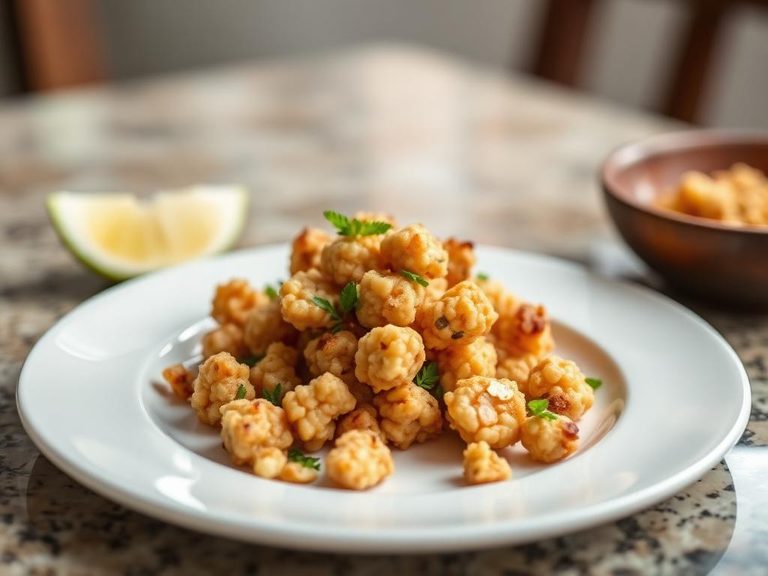
Kuli-kuli is a popular West African snack made from ground peanuts, often shaped into sticks, balls, or rings and deep-fried until crunchy. Its core ingredients are peanut paste, salt, and sometimes spices like ginger or chili, with no flour or sugar in the traditional version. It is a staple street food and pantry item across Nigeria, Ghana, and neighboring countries.
🍽️ Nutrition at a glance
This snack is exceptionally high in plant-based protein and healthy fats, with very few carbohydrates, making it a dense source of energy. A small serving provides significant amounts of magnesium, niacin, and manganese, and typically contains around 250-300 calories.
Nutrition breakdown
| Calories | 175 kcal |
| Protein | 8 g |
| Carbs | 4 g |
| Fat | 15 g |
| Fiber | 2 g |
| Sugar | 1 g |
| Sodium | 90 mg |
| Magnesium | 50 mg |
| Niacin (B3) | 3.5 mg |
| Manganese | 0.5 mg |
| Phosphorus | 100 mg |
| Vitamin E | 2 mg |
| Copper | 0.3 mg |
| Folate | 30 µg |
| Thiamine (B1) | 0.2 mg |
Per 1 piece (30 g) · estimated, varies by recipe
💡 What's interesting
Kuli-kuli is nutritionally unique because it's a nearly pure peanut product, offering a rare combination of high protein and fat in a shelf-stable, crunchy form. Culturally, it's often crumbled into soups and stews (like Nigerian kuka soup) as a thickener and flavor enhancer, not just eaten as a standalone snack.
AI estimate may be inaccurate · Terms