

Peanuts, raw
Whole food · Legumes and Legume Products
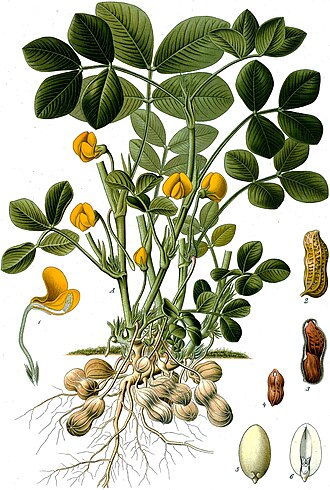
Photo: Wikipedia
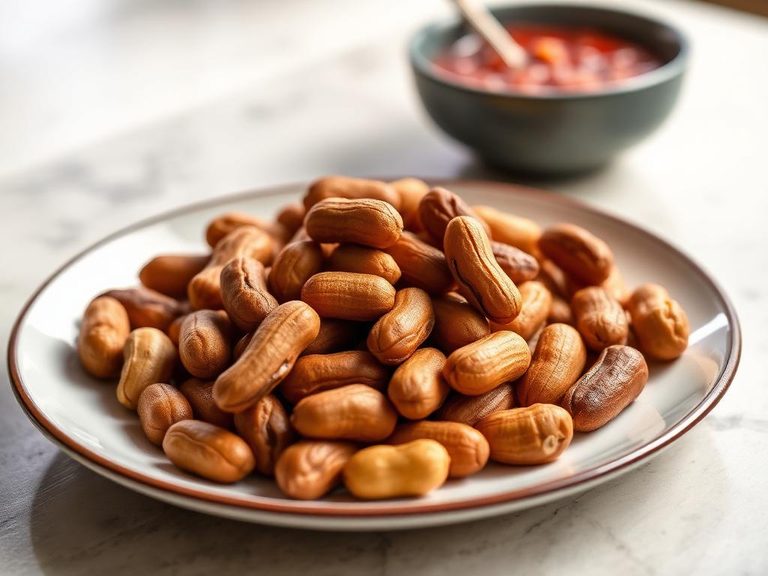
Raw peanuts are the edible seeds of the peanut plant, boasting a firm, crunchy texture and a mildly sweet, earthy, and nutty flavor. Nutritionally, they are a powerhouse, delivering an impressive 23.2g of protein and 43.3g of healthy fats per 100g, making them a dense source of energy and satiety.
Calorie split: 16% protein · 18% carbs · 66% fat
↓ Full nutrition💚 Why it's loved
People love peanuts for their satisfying crunch and versatile, savory-sweet flavor that complements both sweet and savory dishes. They are a beloved, affordable snack globally, deeply embedded in cultures from the American South to West Africa and Southeast Asia.
⚠️ Watch-outs & how to enjoy it better
Peanuts are a major allergen, and their high fat and calorie content can be a concern for some; they also contain phytic acid, which can reduce mineral absorption. To mitigate these, practice strict portion control (e.g., a small handful), and consider soaking or sprouting raw peanuts to reduce phytic acid before consumption.
Key benefits
- High in plant-based protein for muscle maintenance
- Rich in monounsaturated fats for heart health
- Good source of dietary fiber for digestion
- Contains essential minerals like magnesium and phosphorus
- Provides a steady release of energy
🍽️ Popular dishes

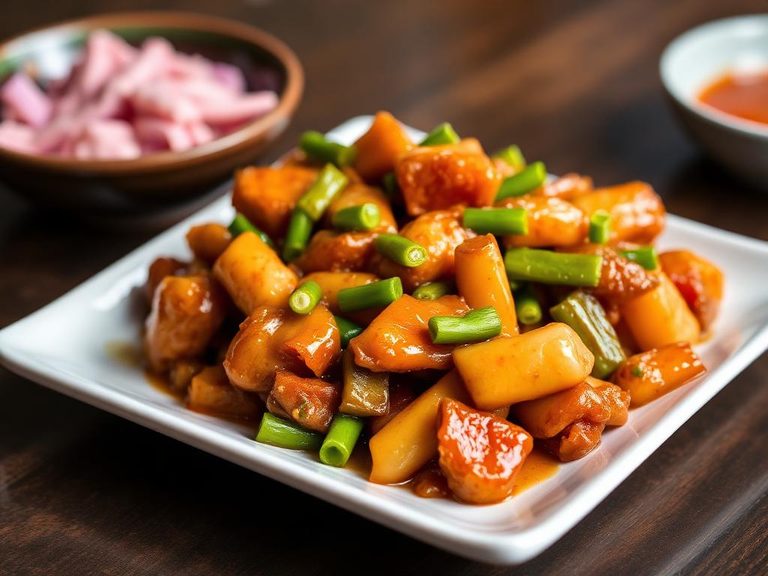


🌍 Where it's eaten
💡 Did you know?
Peanuts are not true nuts; they are legumes that develop underground, a process called geocarpy, which is why they are also known as groundnuts.
Full nutrition (USDA data · scales with serving)
| Water | 4.8 g |
| Energy (Atwater General Factors) | 588 kcal |
| Energy (Atwater Specific Factors) | 551 kcal |
| Nitrogen | 4.3 g |
| Protein | 23.2 g |
| Total lipid (fat) | 43.3 g |
| Ash | 2.2 g |
| Carbohydrate, by difference | 26.5 g |
| Fiber, total dietary | 8.0 g |
| Calcium, Ca | 49.1 mg |
| Iron, Fe | 1.6 mg |
| Magnesium, Mg | 180 mg |
| Phosphorus, P | 380 mg |
| Potassium, K | 636 mg |
| Sodium, Na | 1.5 mg |
| Zinc, Zn | 2.8 mg |
| Copper, Cu | 0.46 mg |
| Manganese, Mn | 1.7 mg |
| Selenium, Se | 17.8 ug |
Fat & fatty acid profile (per 100g)
Estimated from Peanuts, all types, oil-roasted, without salt — USDA does not publish this profile for Peanuts.
| Fatty acids, total saturated | 8.7 g |
| SFA 4:0 | 0.00 g |
| SFA 6:0 | 0.00 g |
| SFA 8:0 | 0.04 g |
| SFA 10:0 | 0.04 g |
| SFA 12:0 | 0.04 g |
| SFA 14:0 | 0.04 g |
| SFA 15:0 | 0.04 g |
| SFA 16:0 | 5.0 g |
| SFA 17:0 | 0.06 g |
| SFA 18:0 | 1.4 g |
| SFA 20:0 | 0.67 g |
| SFA 22:0 | 1.3 g |
| Fatty acids, total monounsaturated | 26.0 g |
| MUFA 14:1 | 0.04 g |
| MUFA 15:1 | 0.04 g |
| MUFA 16:1 | 0.04 g |
| MUFA 17:1 | 0.04 g |
| MUFA 18:1 | 25.2 g |
| MUFA 20:1 | 0.61 g |
| MUFA 22:1 | 0.00 g |
| Fatty acids, total polyunsaturated | 15.3 g |
| PUFA 18:2 | 15.1 g |
| PUFA 18:3 | 0.04 g |
| PUFA 18:3 n-6 c,c,c | 0.04 g |
| PUFA 18:4 | 0.00 g |
| PUFA 20:2 n-6 c,c | 0.04 g |
| PUFA 20:3 | 0.04 g |
| PUFA 20:4 | 0.04 g |
| PUFA 20:5 n-3 (EPA) | 0.00 g |
| PUFA 22:5 n-3 (DPA) | 0.00 g |
| PUFA 22:6 n-3 (DHA) | 0.00 g |
| Cholesterol | 0.00 mg |
Amino acid profile (per 100g)
Estimated from Peanuts, all types, oil-roasted, without salt — USDA does not publish this profile for Peanuts.
| Tryptophan | 0.23 g |
| Threonine | 0.61 g |
| Isoleucine | 0.98 g |
| Leucine | 1.8 g |
| Lysine | 0.94 g |
| Methionine | 0.29 g |
| Cystine | 0.38 g |
| Phenylalanine | 1.4 g |
| Tyrosine | 1.0 g |
| Valine | 1.1 g |
| Arginine | 3.2 g |
| Histidine | 0.66 g |
| Alanine | 1.1 g |
| Aspartic acid | 3.3 g |
| Glutamic acid | 5.4 g |
| Glycine | 1.6 g |
| Proline | 1.2 g |
| Serine | 1.3 g |
FAQ
Are raw peanuts safe to eat?
Raw peanuts can be eaten, but they may carry a risk of Salmonella or mold (aflatoxins). It's generally safer to roast or boil them, or purchase them from a reputable source.
How do peanuts compare to tree nuts?
Peanuts are legumes, not tree nuts, but they offer similar nutritional benefits like protein and healthy fats. However, they are a distinct allergen from tree nuts.
Can peanuts help with weight management?
Yes, their high protein and fiber content can promote fullness and reduce overall calorie intake when consumed in moderation.
Nutrient density (calculated · NRF9.3)
Nutrient Rich Foods index: beneficial nutrients (protein, fiber, vitamins, minerals) minus saturated fat, added sugar & sodium, per 100 kcal.
NRF9.3 index — Fulgoni, Keast & Drewnowski, 2009. Computed from USDA nutrients.
Weight-loss friendliness (composite index)
Energy density 5.88 kcal/g · 16% calories from protein · 8.0 g fiber · 0.0 g sugar per 100 g.
Composite of energy density (Rolls et al., 1999), protein & fiber satiety, minus sugar. A calculated heuristic — ranks satiety-per-calorie, not a clinical measure.
Dietary load (calculated from USDA values)
Potential renal acid load. Positive = acid-forming, negative = alkaline-forming.
Sodium-to-potassium ratio: 0.00 (lower is better — aim for ≤ 1)
Sodium:potassium per WHO potassium guidance. Computed from USDA nutrients.