

Nopales, cooked, without salt
Whole food · Vegetables and Vegetable Products

Photo: Wikipedia
Nopales are the tender, young pads of the prickly pear cactus, a staple in Mexican cuisine. When cooked, they lose their raw, slightly tart edge and develop a tender-crisp texture often compared to green beans or okra, with a mild, subtly tangy flavor. Nutritionally, they are a low-calorie, high-fiber powerhouse, providing nearly 2 grams of fiber per 100 grams for minimal energy cost.
Calorie split: 28% protein · 69% carbs · 2% fat
↓ Full nutrition💚 Why it's loved
People love nopales for their unique, satisfying texture and ability to absorb the flavors of spices, chilies, and lime they're cooked with. They are a deeply cultural ingredient, central to countless traditional dishes and a symbol of Mexican culinary identity.
⚠️ Watch-outs & how to enjoy it better
The main caution is their high oxalate content, which can contribute to kidney stone formation in susceptible individuals. To mitigate this, always boil or grill nopales thoroughly (discarding the cooking water) to reduce oxalate levels, and ensure adequate hydration. Those with digestive sensitivities may also find the high fiber content causes gas or bloating if introduced too quickly.
Key benefits
- Excellent source of dietary fiber for digestive health.
- Very low in calories and fat, supporting weight management.
- Provides a good amount of plant-based protein for a vegetable.
- Naturally low in sugar and sodium.
- Rich in antioxidants like flavonoids and polyphenols.
🍽️ Popular dishes
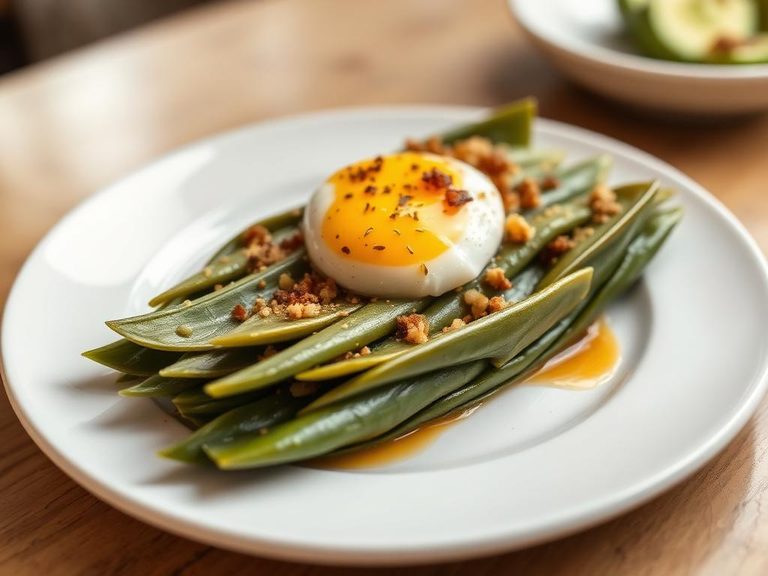
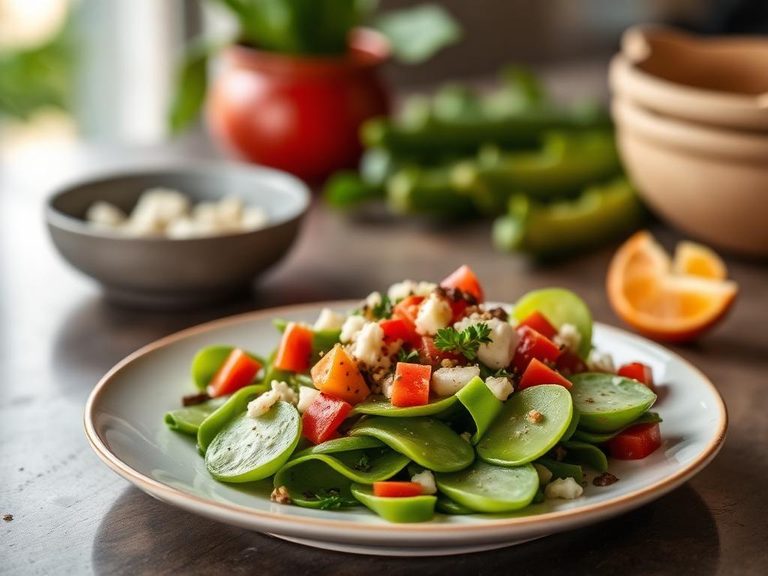
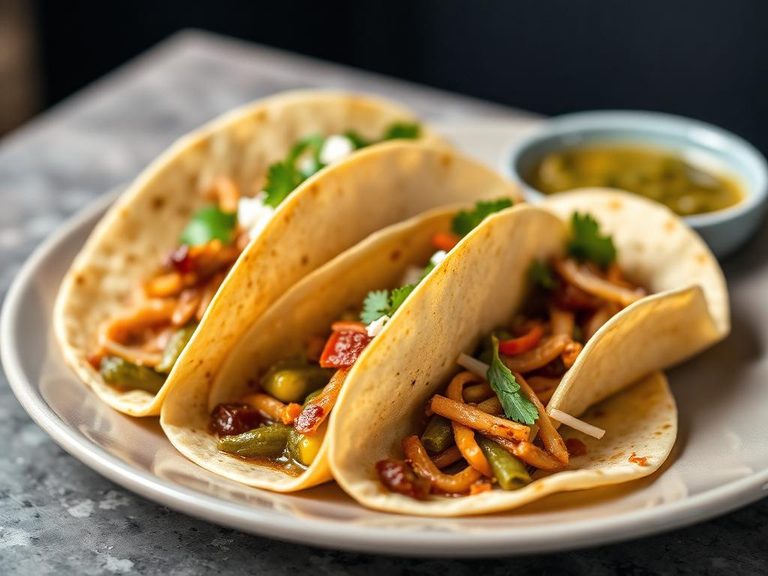
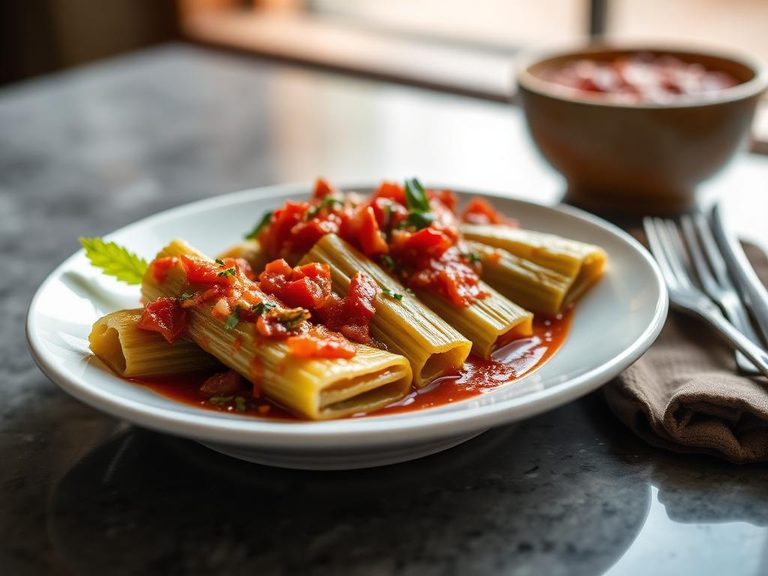
🌍 Where it's eaten
💡 Did you know?
The prickly pear cactus (Opuntia) is one of the few plants that can fix atmospheric nitrogen, meaning it can grow in and actually improve nutrient-poor soils.
Full nutrition (USDA data · scales with serving)
| Water | 94.3 g |
| Energy | 15.0 kcal |
| Energy | 65.0 kj |
| Protein | 1.4 g |
| Total lipid (fat) | 0.05 g |
| Ash | 1.0 g |
| Carbohydrate, by difference | 3.3 g |
| Fiber, total dietary | 2.0 g |
| Total Sugars | 1.1 g |
| Calcium, Ca | 164 mg |
| Iron, Fe | 0.50 mg |
| Magnesium, Mg | 47.0 mg |
| Phosphorus, P | 16.0 mg |
| Potassium, K | 195 mg |
| Sodium, Na | 20.0 mg |
| Zinc, Zn | 0.21 mg |
| Copper, Cu | 0.05 mg |
| Manganese, Mn | 0.41 mg |
| Selenium, Se | 0.70 ug |
| Vitamin C, total ascorbic acid | 5.3 mg |
| Thiamin | 0.01 mg |
| Riboflavin | 0.04 mg |
| Niacin | 0.30 mg |
| Pantothenic acid | 0.15 mg |
| Vitamin B-6 | 0.07 mg |
| Folate, total | 3.0 ug |
| Folic acid | 0.00 ug |
| Folate, food | 3.0 ug |
| Folate, DFE | 3.0 ug |
| Choline, total | 7.1 mg |
| Vitamin B-12 | 0.00 ug |
| Vitamin B-12, added | 0.00 ug |
| Vitamin A, RAE | 22.0 ug |
| Retinol | 0.00 ug |
| Carotene, beta | 242 ug |
| Carotene, alpha | 47.0 ug |
| Cryptoxanthin, beta | 0.00 ug |
| Vitamin A, IU | 443 iu |
| Lycopene | 0.00 ug |
| Lutein + zeaxanthin | 0.00 ug |
| Vitamin E (alpha-tocopherol) | 0.00 mg |
| Vitamin E, added | 0.00 mg |
| Vitamin D (D2 + D3), International Units | 0.00 iu |
| Vitamin D (D2 + D3) | 0.00 ug |
| Vitamin K (phylloquinone) | 5.1 ug |
| Alcohol, ethyl | 0.00 g |
| Caffeine | 0.00 mg |
| Theobromine | 0.00 mg |
Fat & fatty acid profile (per 100g)
| Fatty acids, total saturated | 0.01 g |
| SFA 4:0 | 0.00 g |
| SFA 6:0 | 0.00 g |
| SFA 8:0 | 0.00 g |
| SFA 10:0 | 0.00 g |
| SFA 12:0 | 0.00 g |
| SFA 14:0 | 0.00 g |
| SFA 16:0 | 0.01 g |
| SFA 18:0 | 0.00 g |
| Fatty acids, total monounsaturated | 0.01 g |
| MUFA 16:1 | 0.00 g |
| MUFA 18:1 | 0.01 g |
| MUFA 20:1 | 0.00 g |
| MUFA 22:1 | 0.00 g |
| Fatty acids, total polyunsaturated | 0.02 g |
| PUFA 18:2 | 0.02 g |
| PUFA 18:3 | 0.00 g |
| PUFA 18:4 | 0.00 g |
| PUFA 20:4 | 0.00 g |
| PUFA 20:5 n-3 (EPA) | 0.00 g |
| PUFA 22:5 n-3 (DPA) | 0.00 g |
| PUFA 22:6 n-3 (DHA) | 0.00 g |
| Fatty acids, total trans | 0.00 g |
| Cholesterol | 0.00 mg |
Amino acid profile (per 100g)
| Tryptophan | 0.01 g |
| Threonine | 0.04 g |
| Isoleucine | 0.05 g |
| Leucine | 0.08 g |
| Lysine | 0.06 g |
| Methionine | 0.02 g |
| Cystine | 0.01 g |
| Phenylalanine | 0.05 g |
| Tyrosine | 0.03 g |
| Valine | 0.06 g |
| Arginine | 0.06 g |
| Histidine | 0.03 g |
| Alanine | 0.05 g |
| Aspartic acid | 0.09 g |
| Glutamic acid | 0.15 g |
| Glycine | 0.05 g |
| Proline | 0.04 g |
| Serine | 0.05 g |
FAQ
How do I prepare fresh nopales to remove the slime?
After removing spines and skin, slice the pads. Toss the slices generously with coarse salt and let them sit for 15-30 minutes. Rinse thoroughly, then boil or grill them until tender. This process, called 'desabar,' draws out the viscous liquid (baba).
Are nopales and cactus pads the same thing?
Yes, 'nopales' is the Spanish word for the edible pads (cladodes) of the prickly pear cactus (genus Opuntia). In English, they are commonly called cactus pads or cactus paddles.
What do cooked nopales taste like?
They have a mild, slightly tart or lemony flavor and a tender-crisp texture, often compared to a cross between green beans and asparagus, or sometimes okra due to their mucilaginous quality when raw.
Nutrient density (calculated · NRF9.3)
Nutrient Rich Foods index: beneficial nutrients (protein, fiber, vitamins, minerals) minus saturated fat, added sugar & sodium, per 100 kcal.
NRF9.3 index — Fulgoni, Keast & Drewnowski, 2009. Computed from USDA nutrients.
Weight-loss friendliness (composite index)
Energy density 0.15 kcal/g · 36% calories from protein · 2.0 g fiber · 1.1 g sugar per 100 g.
Composite of energy density (Rolls et al., 1999), protein & fiber satiety, minus sugar. A calculated heuristic — ranks satiety-per-calorie, not a clinical measure.
Dietary load (calculated from USDA values)
Potential renal acid load. Positive = acid-forming, negative = alkaline-forming.
Sodium-to-potassium ratio: 0.10 (lower is better — aim for ≤ 1)
Sodium:potassium per WHO potassium guidance. Computed from USDA nutrients.