

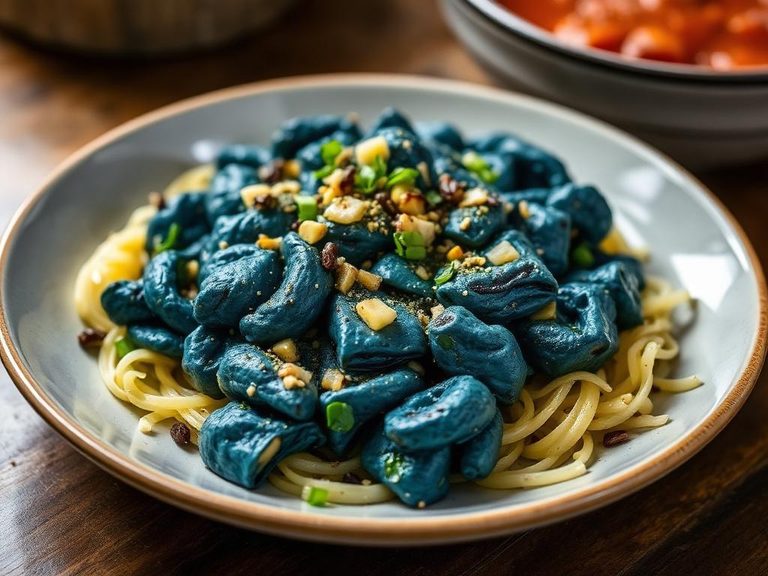
Mush, blue corn with ash (Navajo)
Whole food · American Indian/Alaska Native Foods

Photo: Wikipedia
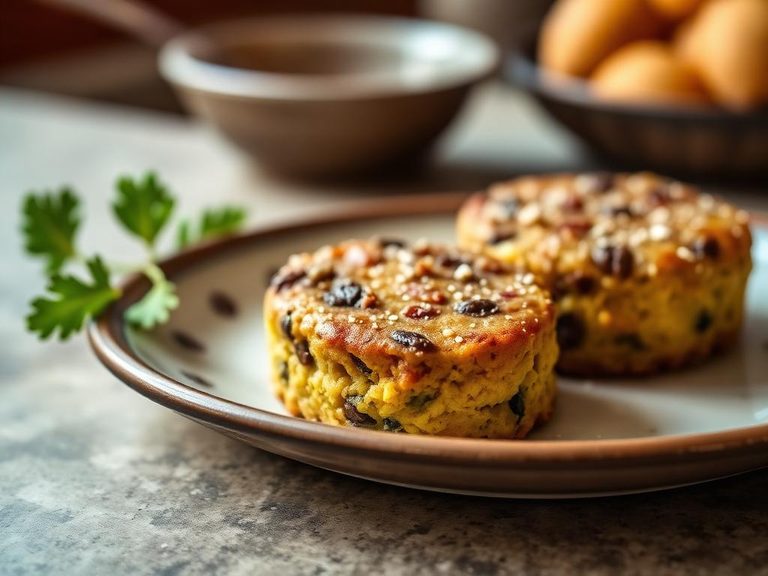
Navajo blue corn mush is a traditional, porridge-like dish made from finely ground blue cornmeal, water, and a pinch of wood ash. It has a distinctive earthy, slightly nutty flavor and a smooth, thick texture that can be served as a warm porridge or allowed to set into a firm cake. Nutritionally, it's a light, low-calorie staple, notable for its natural anthocyanin pigments and modest fiber content.
Calorie split: 5% protein · 87% carbs · 8% fat
↓ Full nutrition💚 Why it's loved
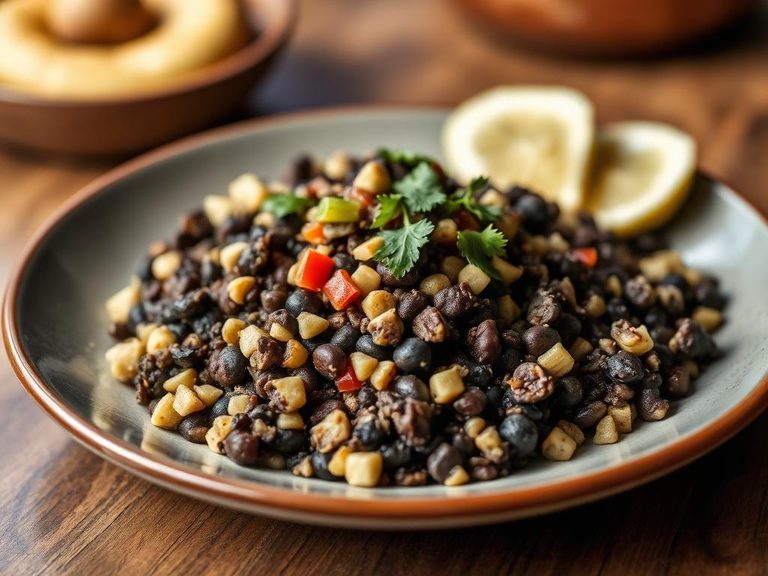
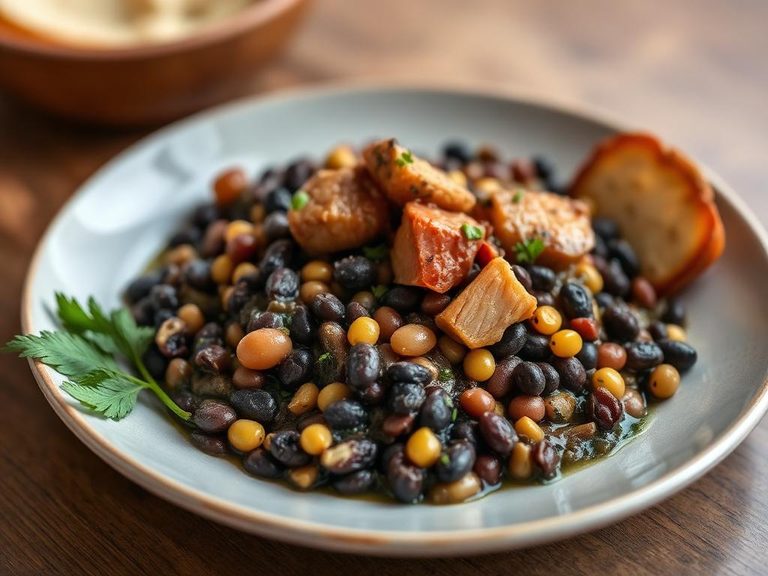
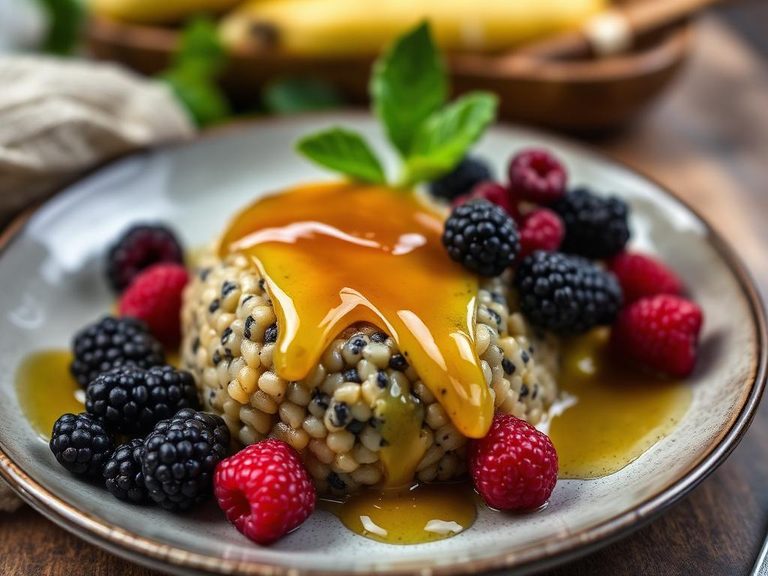
People love it for its deep, earthy corn flavor and its cultural significance as a foundational Navajo food, often eaten for breakfast or as a comforting side. Its versatility allows it to be served sweet with berries or savory with beans, making it a beloved, adaptable staple.
⚠️ Watch-outs & how to enjoy it better
The mush can be quite bland on its own and may cause a blood-sugar spike if eaten plain and in large portions due to its carbohydrate content. To counteract this, pair it with a source of protein (like beans or eggs) or healthy fat (like nuts or seeds) to slow digestion and balance the meal.
Key benefits
- Naturally rich in anthocyanin antioxidants from blue corn
- Provides a source of dietary fiber for digestive health
- Low in fat and calories, suitable for light meals
- Traditional preparation with ash adds trace minerals
- Gluten-free and naturally vegan
🍽️ Popular dishes
🌍 Where it's eaten
💡 Did you know?
The blue color in blue corn comes from anthocyanins, the same antioxidants found in blueberries and red cabbage, and the traditional addition of wood ash (lye) not only adds minerals but also helps release niacin, making the corn more nutritionally complete.
Full nutrition (USDA data · scales with serving)
| Water | 86.7 g |
| Energy | 54.0 kcal |
| Energy | 226 kj |
| Protein | 0.66 g |
| Total lipid (fat) | 0.49 g |
| Ash | 0.44 g |
| Carbohydrate, by difference | 11.7 g |
| Fiber, total dietary | 1.1 g |
| Total Sugars | 0.19 g |
| Sucrose | 0.19 g |
| Glucose | 0.00 g |
| Fructose | 0.00 g |
| Lactose | 0.00 g |
| Maltose | 0.00 g |
| Galactose | 0.00 g |
| Starch | 8.1 g |
| Calcium, Ca | 96.0 mg |
| Iron, Fe | 2.9 mg |
| Magnesium, Mg | 20.0 mg |
| Phosphorus, P | 39.0 mg |
| Potassium, K | 58.0 mg |
| Sodium, Na | 8.0 mg |
| Zinc, Zn | 0.76 mg |
| Copper, Cu | 0.05 mg |
| Manganese, Mn | 0.30 mg |
| Selenium, Se | 0.90 ug |
| Vitamin C, total ascorbic acid | 0.00 mg |
| Thiamin | 0.02 mg |
| Riboflavin | 0.01 mg |
| Niacin | 0.28 mg |
| Pantothenic acid | 0.08 mg |
| Vitamin B-6 | 0.05 mg |
| Folate, total | 4.0 ug |
| Folate, food | 4.0 ug |
| Vitamin E (alpha-tocopherol) | 0.00 mg |
| Tocopherol, beta | 0.00 mg |
| Tocopherol, gamma | 0.00 mg |
| Tocopherol, delta | 0.00 mg |
| Tocotrienol, alpha | 0.00 mg |
| Tocotrienol, beta | 0.00 mg |
| Tocotrienol, gamma | 0.00 mg |
| Tocotrienol, delta | 0.00 mg |
| Vitamin K (phylloquinone) | 0.00 ug |
| Vitamin K (Dihydrophylloquinone) | 0.00 ug |
Fat & fatty acid profile (per 100g)
| Fatty acids, total saturated | 0.07 g |
| SFA 8:0 | 0.00 g |
| SFA 10:0 | 0.00 g |
| SFA 12:0 | 0.00 g |
| SFA 14:0 | 0.00 g |
| SFA 15:0 | 0.00 g |
| SFA 16:0 | 0.06 g |
| SFA 17:0 | 0.00 g |
| SFA 18:0 | 0.01 g |
| SFA 20:0 | 0.00 g |
| SFA 22:0 | 0.00 g |
| Fatty acids, total monounsaturated | 0.11 g |
| MUFA 14:1 | 0.00 g |
| MUFA 15:1 | 0.00 g |
| MUFA 16:1 | 0.00 g |
| MUFA 17:1 | 0.00 g |
| MUFA 18:1 | 0.11 g |
| MUFA 20:1 | 0.00 g |
| Fatty acids, total polyunsaturated | 0.21 g |
| PUFA 18:2 | 0.20 g |
| PUFA 18:3 | 0.01 g |
| PUFA 18:3 n-3 c,c,c (ALA) | 0.01 g |
| PUFA 18:3 n-6 c,c,c | 0.00 g |
| PUFA 20:2 n-6 c,c | 0.00 g |
| PUFA 20:3 | 0.00 g |
| PUFA 20:4 | 0.00 g |
Amino acid profile (per 100g)
Estimated from Mushrooms, brown, italian, or crimini, raw — USDA does not publish this profile for Mush.
| Tryptophan | 0.06 g |
| Threonine | 0.11 g |
| Isoleucine | 0.10 g |
| Leucine | 0.15 g |
| Lysine | 0.25 g |
| Methionine | 0.05 g |
| Cystine | 0.01 g |
| Phenylalanine | 0.10 g |
| Tyrosine | 0.05 g |
| Valine | 0.12 g |
| Arginine | 0.12 g |
| Histidine | 0.07 g |
| Alanine | 0.19 g |
| Aspartic acid | 0.23 g |
| Glutamic acid | 0.43 g |
| Glycine | 0.11 g |
| Proline | 0.18 g |
| Serine | 0.11 g |
FAQ
Is blue corn mush gluten-free?
Yes, blue corn mush is naturally gluten-free, as it is made from corn, which does not contain gluten.
How is the ash used in traditional preparation?
Wood ash (often from juniper or other hardwoods) is added in small amounts to the cooking water. It helps soften the corn, enhances the flavor, and adds trace minerals like calcium and potassium.
Can I make blue corn mush without ash?
Yes, you can make a simple version with just blue cornmeal and water. The ash is traditional for flavor and nutrition, but it's not strictly necessary for a basic porridge.
Nutrient density (calculated · NRF9.3)
Nutrient Rich Foods index: beneficial nutrients (protein, fiber, vitamins, minerals) minus saturated fat, added sugar & sodium, per 100 kcal.
NRF9.3 index — Fulgoni, Keast & Drewnowski, 2009. Computed from USDA nutrients.
Weight-loss friendliness (composite index)
Energy density 0.54 kcal/g · 5% calories from protein · 1.1 g fiber · 0.2 g sugar per 100 g.
Composite of energy density (Rolls et al., 1999), protein & fiber satiety, minus sugar. A calculated heuristic — ranks satiety-per-calorie, not a clinical measure.
Dietary load (calculated from USDA values)
Potential renal acid load. Positive = acid-forming, negative = alkaline-forming.
Sodium-to-potassium ratio: 0.14 (lower is better — aim for ≤ 1)
Sodium:potassium per WHO potassium guidance. Computed from USDA nutrients.