

Milk, dry, nonfat, regular, with added vitamin A and vitamin D
Whole food · Dairy and Egg Products

Photo: Wikipedia
This is a shelf-stable, concentrated dairy product made by removing water and fat from skim milk, resulting in a fine, free-flowing powder. It has a clean, mildly sweet, and distinctly 'milky' taste with a smooth texture when reconstituted. Nutritionally, it's a powerhouse of high-quality protein and carbohydrates, fortified with vitamins A and D.
Calorie split: 40% protein · 58% carbs · 2% fat
↓ Full nutrition💚 Why it's loved
People love it for its incredible versatility and convenience, acting as a shelf-stable milk substitute, a protein booster in smoothies and baked goods, and a foundational ingredient in homemade infant formulas and emergency food supplies. Its mild flavor allows it to blend seamlessly into both sweet and savory recipes.
⚠️ Watch-outs & how to enjoy it better
The primary downside is its high concentration of lactose (milk sugar), which can cause digestive issues for those with lactose intolerance or sensitive blood sugar levels. To counteract this, individuals can use it in small portions, pair it with fiber or healthy fats to slow sugar absorption, or opt for a lactose-free version if available. It is also a common milk allergen.
Key benefits
- Excellent source of complete, high-quality protein for muscle maintenance.
- Very low in fat and contains no dietary cholesterol.
- Fortified with vitamins A and D, supporting immune and bone health.
- Long shelf life and requires no refrigeration before opening.
- Provides a quick, calorie-dense source of energy and nutrients.
🍽️ Popular dishes


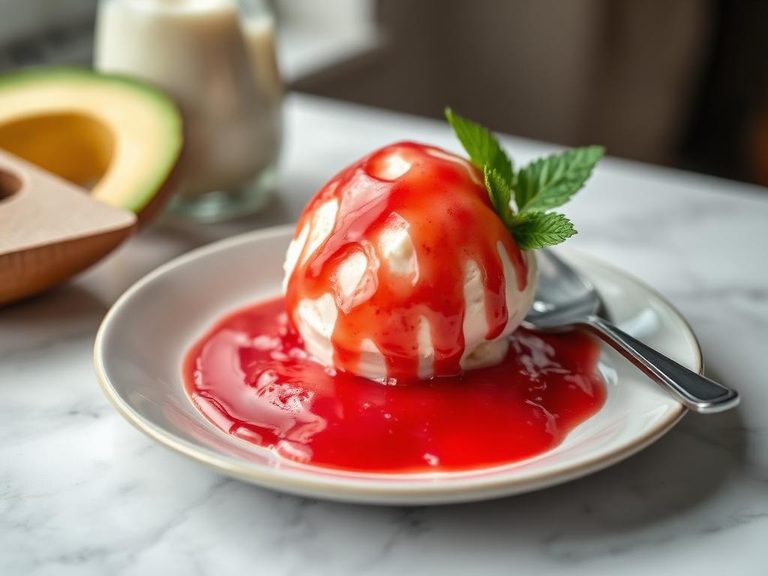
🌍 Where it's eaten
💡 Did you know?
The process of making nonfat dry milk involves 'spray drying,' where liquid milk is sprayed into a chamber of hot air, evaporating the water almost instantly and leaving behind fine powder—a technology that revolutionized global food storage and distribution.
Full nutrition (USDA data · scales with serving)
| Water | 3.2 g |
| Energy | 362 kcal |
| Energy | 1516 kj |
| Protein | 36.2 g |
| Total lipid (fat) | 0.77 g |
| Ash | 7.9 g |
| Carbohydrate, by difference | 52.0 g |
| Fiber, total dietary | 0.00 g |
| Total Sugars | 52.0 g |
| Calcium, Ca | 1257 mg |
| Iron, Fe | 0.32 mg |
| Magnesium, Mg | 110 mg |
| Phosphorus, P | 968 mg |
| Potassium, K | 1794 mg |
| Sodium, Na | 535 mg |
| Zinc, Zn | 4.1 mg |
| Copper, Cu | 0.04 mg |
| Manganese, Mn | 0.02 mg |
| Selenium, Se | 27.3 ug |
| Vitamin C, total ascorbic acid | 6.8 mg |
| Thiamin | 0.41 mg |
| Riboflavin | 1.6 mg |
| Niacin | 0.95 mg |
| Pantothenic acid | 3.6 mg |
| Vitamin B-6 | 0.36 mg |
| Folate, total | 50.0 ug |
| Folic acid | 0.00 ug |
| Folate, food | 50.0 ug |
| Folate, DFE | 50.0 ug |
| Choline, total | 169 mg |
| Vitamin B-12 | 4.0 ug |
| Vitamin B-12, added | 0.00 ug |
| Vitamin A, RAE | 653 ug |
| Retinol | 653 ug |
| Carotene, beta | 1.0 ug |
| Carotene, alpha | 0.00 ug |
| Cryptoxanthin, beta | 0.00 ug |
| Vitamin A, IU | 2179 iu |
| Lycopene | 0.00 ug |
| Lutein + zeaxanthin | 0.00 ug |
| Vitamin E (alpha-tocopherol) | 0.00 mg |
| Vitamin E, added | 0.00 mg |
| Vitamin D (D2 + D3), International Units | 440 iu |
| Vitamin D (D2 + D3) | 11.0 ug |
| Vitamin D3 (cholecalciferol) | 11.0 ug |
| Vitamin K (phylloquinone) | 0.10 ug |
| Alcohol, ethyl | 0.00 g |
| Caffeine | 0.00 mg |
| Theobromine | 0.00 mg |
Fat & fatty acid profile (per 100g)
| Fatty acids, total saturated | 0.50 g |
| SFA 4:0 | 0.03 g |
| SFA 6:0 | 0.01 g |
| SFA 8:0 | 0.01 g |
| SFA 10:0 | 0.02 g |
| SFA 12:0 | 0.01 g |
| SFA 14:0 | 0.08 g |
| SFA 16:0 | 0.23 g |
| SFA 18:0 | 0.09 g |
| Fatty acids, total monounsaturated | 0.20 g |
| MUFA 16:1 | 0.02 g |
| MUFA 18:1 | 0.17 g |
| MUFA 20:1 | 0.00 g |
| MUFA 22:1 | 0.00 g |
| Fatty acids, total polyunsaturated | 0.03 g |
| PUFA 18:2 | 0.02 g |
| PUFA 18:3 | 0.01 g |
| PUFA 18:4 | 0.00 g |
| PUFA 20:4 | 0.00 g |
| PUFA 20:5 n-3 (EPA) | 0.00 g |
| PUFA 22:5 n-3 (DPA) | 0.00 g |
| PUFA 22:6 n-3 (DHA) | 0.00 g |
| Cholesterol | 20.0 mg |
Amino acid profile (per 100g)
| Tryptophan | 0.51 g |
| Threonine | 1.6 g |
| Isoleucine | 2.2 g |
| Leucine | 3.5 g |
| Lysine | 2.9 g |
| Methionine | 0.91 g |
| Cystine | 0.33 g |
| Phenylalanine | 1.7 g |
| Tyrosine | 1.7 g |
| Valine | 2.4 g |
| Arginine | 1.3 g |
| Histidine | 0.98 g |
| Alanine | 1.2 g |
| Aspartic acid | 2.7 g |
| Glutamic acid | 7.6 g |
| Glycine | 0.77 g |
| Proline | 3.5 g |
| Serine | 2.0 g |
FAQ
How do I reconstitute nonfat dry milk?
A standard ratio is about 3 tablespoons of powder per 1 cup (240ml) of cold water. Stir or shake vigorously until fully dissolved. It tastes best when chilled.
Can I use it in baking?
Yes, it's excellent for adding protein, browning, and a rich dairy flavor to breads, muffins, pancakes, and cookies. It can often replace some of the milk in a recipe.
Why does it have added vitamins A and D?
The fat removal process also strips away naturally occurring fat-soluble vitamins A and D. Fortification restores these nutrients, making it nutritionally comparable to fluid milk and helping prevent deficiencies.
How should I store it?
Keep it in a cool, dry place in an airtight container. Once opened, it's best to refrigerate it to maintain freshness and prevent clumping. It has a long shelf life, typically 6-12 months.
Nutrient density (calculated · NRF9.3)
Nutrient Rich Foods index: beneficial nutrients (protein, fiber, vitamins, minerals) minus saturated fat, added sugar & sodium, per 100 kcal.
NRF9.3 index — Fulgoni, Keast & Drewnowski, 2009. Computed from USDA nutrients.
Weight-loss friendliness (composite index)
Energy density 3.62 kcal/g · 40% calories from protein · 0.0 g fiber · 52.0 g sugar per 100 g.
Composite of energy density (Rolls et al., 1999), protein & fiber satiety, minus sugar. A calculated heuristic — ranks satiety-per-calorie, not a clinical measure.
Dietary load (calculated from USDA values)
Potential renal acid load. Positive = acid-forming, negative = alkaline-forming.
Sodium-to-potassium ratio: 0.30 (lower is better — aim for ≤ 1)
Sodium:potassium per WHO potassium guidance. Computed from USDA nutrients.