

Milk, dry, nonfat, instant, with added vitamin A and vitamin D
Whole food · Dairy and Egg Products

Photo: Wikipedia
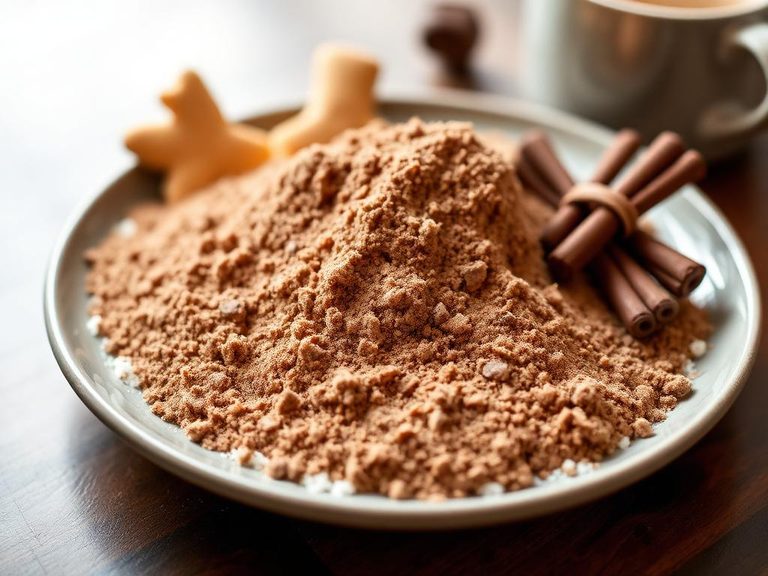
This is a shelf-stable, powdered form of skim milk, created by removing water from nonfat milk and fortifying it with vitamins A and D. It has a fine, free-flowing texture and a clean, mildly sweet dairy flavor that reconstitutes instantly in water. Nutritionally, it's a powerhouse of protein with virtually no fat and a high carbohydrate content from naturally occurring milk sugar.
Calorie split: 39% protein · 59% carbs · 2% fat
↓ Full nutrition💚 Why it's loved
People love its incredible convenience and long pantry life, making it a reliable staple for camping, emergency kits, or simply a quick protein boost. Its neutral, clean taste also makes it a versatile ingredient in both sweet and savory cooking.
⚠️ Watch-outs & how to enjoy it better
The high concentration of milk sugar (lactose) can cause digestive discomfort for some and may lead to rapid blood sugar spikes if consumed in large amounts alone. To mitigate this, pair it with a source of fat or fiber (like blending into a smoothie with nuts and fruit) and be mindful of portion size.
Key benefits
- Excellent source of high-quality, complete protein (35.1g per 100g)
- Very low in fat (0.72g per 100g)
- Fortified with vitamins A and D for bone and immune health
- Long shelf life without refrigeration
- Instant solubility for quick preparation
🍽️ Popular dishes
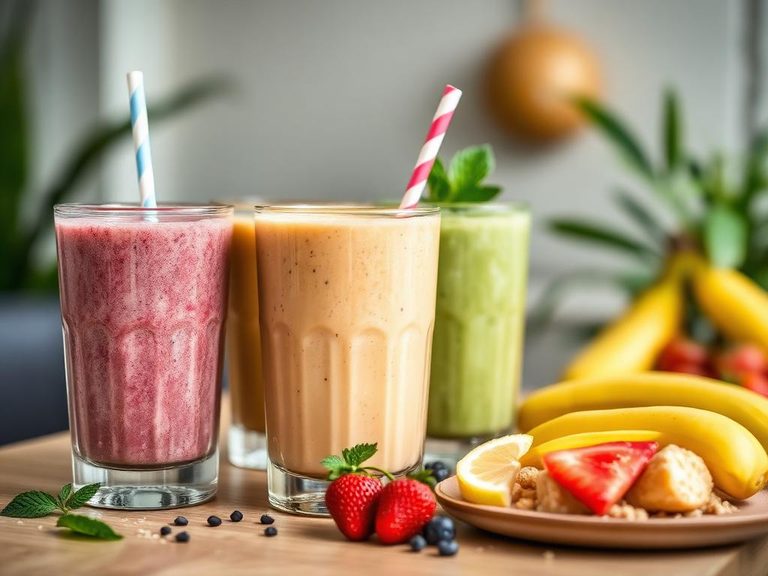

🌍 Where it's eaten
💡 Did you know?
The process to create instant nonfat dry milk often involves 'spray drying,' where liquid milk is sprayed into a hot chamber, causing the water to evaporate almost instantly and leaving behind a fine powder.
Full nutrition (USDA data · scales with serving)
| Water | 4.0 g |
| Energy | 358 kcal |
| Energy | 1499 kj |
| Protein | 35.1 g |
| Total lipid (fat) | 0.72 g |
| Ash | 8.0 g |
| Carbohydrate, by difference | 52.2 g |
| Fiber, total dietary | 0.00 g |
| Total Sugars | 52.2 g |
| Calcium, Ca | 1231 mg |
| Iron, Fe | 0.31 mg |
| Magnesium, Mg | 117 mg |
| Phosphorus, P | 985 mg |
| Potassium, K | 1705 mg |
| Sodium, Na | 549 mg |
| Zinc, Zn | 4.4 mg |
| Copper, Cu | 0.04 mg |
| Manganese, Mn | 0.02 mg |
| Selenium, Se | 27.3 ug |
| Vitamin C, total ascorbic acid | 5.6 mg |
| Thiamin | 0.41 mg |
| Riboflavin | 1.7 mg |
| Niacin | 0.89 mg |
| Pantothenic acid | 3.2 mg |
| Vitamin B-6 | 0.34 mg |
| Folate, total | 50.0 ug |
| Folic acid | 0.00 ug |
| Folate, food | 50.0 ug |
| Folate, DFE | 50.0 ug |
| Choline, total | 168 mg |
| Vitamin B-12 | 4.0 ug |
| Vitamin B-12, added | 0.00 ug |
| Vitamin A, RAE | 709 ug |
| Retinol | 709 ug |
| Carotene, beta | 1.0 ug |
| Carotene, alpha | 0.00 ug |
| Cryptoxanthin, beta | 0.00 ug |
| Vitamin A, IU | 2365 iu |
| Lycopene | 0.00 ug |
| Lutein + zeaxanthin | 0.00 ug |
| Vitamin E (alpha-tocopherol) | 0.01 mg |
| Vitamin E, added | 0.00 mg |
| Vitamin D (D2 + D3), International Units | 440 iu |
| Vitamin D (D2 + D3) | 11.0 ug |
| Vitamin D3 (cholecalciferol) | 11.0 ug |
| Vitamin K (phylloquinone) | 0.00 ug |
| Alcohol, ethyl | 0.00 g |
| Caffeine | 0.00 mg |
| Theobromine | 0.00 mg |
Fat & fatty acid profile (per 100g)
| Fatty acids, total saturated | 0.47 g |
| SFA 4:0 | 0.03 g |
| SFA 6:0 | 0.01 g |
| SFA 8:0 | 0.01 g |
| SFA 10:0 | 0.02 g |
| SFA 12:0 | 0.01 g |
| SFA 14:0 | 0.08 g |
| SFA 16:0 | 0.22 g |
| SFA 18:0 | 0.08 g |
| Fatty acids, total monounsaturated | 0.19 g |
| MUFA 16:1 | 0.02 g |
| MUFA 18:1 | 0.16 g |
| MUFA 20:1 | 0.00 g |
| MUFA 22:1 | 0.00 g |
| Fatty acids, total polyunsaturated | 0.03 g |
| PUFA 18:2 | 0.02 g |
| PUFA 18:3 | 0.01 g |
| PUFA 18:4 | 0.00 g |
| PUFA 20:4 | 0.00 g |
| PUFA 20:5 n-3 (EPA) | 0.00 g |
| PUFA 22:5 n-3 (DPA) | 0.00 g |
| PUFA 22:6 n-3 (DHA) | 0.00 g |
| Cholesterol | 18.0 mg |
Amino acid profile (per 100g)
| Tryptophan | 0.49 g |
| Threonine | 1.6 g |
| Isoleucine | 2.1 g |
| Leucine | 3.4 g |
| Lysine | 2.8 g |
| Methionine | 0.88 g |
| Cystine | 0.33 g |
| Phenylalanine | 1.7 g |
| Tyrosine | 1.7 g |
| Valine | 2.3 g |
| Arginine | 1.3 g |
| Histidine | 0.95 g |
| Alanine | 1.2 g |
| Aspartic acid | 2.7 g |
| Glutamic acid | 7.3 g |
| Glycine | 0.74 g |
| Proline | 3.4 g |
| Serine | 1.9 g |
FAQ
How do I reconstitute it?
A standard ratio is about 3 tablespoons of powder to 1 cup (240ml) of cold water. Stir or shake vigorously until completely dissolved.
Can I use it in baking like regular milk?
Yes, but you must reconstitute it first. Alternatively, some recipes allow you to add the dry powder with other dry ingredients and increase the total liquid in the recipe.
Why does it taste different from fresh milk?
The drying process can slightly alter the flavor, giving it a more 'cooked' or caramelized note. The lack of fat also changes the mouthfeel and taste perception.
Nutrient density (calculated · NRF9.3)
Nutrient Rich Foods index: beneficial nutrients (protein, fiber, vitamins, minerals) minus saturated fat, added sugar & sodium, per 100 kcal.
NRF9.3 index — Fulgoni, Keast & Drewnowski, 2009. Computed from USDA nutrients.
Weight-loss friendliness (composite index)
Energy density 3.58 kcal/g · 39% calories from protein · 0.0 g fiber · 52.2 g sugar per 100 g.
Composite of energy density (Rolls et al., 1999), protein & fiber satiety, minus sugar. A calculated heuristic — ranks satiety-per-calorie, not a clinical measure.
Dietary load (calculated from USDA values)
Potential renal acid load. Positive = acid-forming, negative = alkaline-forming.
Sodium-to-potassium ratio: 0.32 (lower is better — aim for ≤ 1)
Sodium:potassium per WHO potassium guidance. Computed from USDA nutrients.