

Gravy, turkey, canned, ready-to-serve
Whole food · Soups, Sauces, and Gravies

Photo: Wikipedia
This is a savory, ready-to-serve sauce made from turkey drippings, stock, and seasonings, offering a rich, meaty flavor and a smooth, slightly viscous texture. Nutritionally, it's a low-calorie, low-fat condiment that primarily provides a small amount of protein and carbohydrates from thickeners like flour. Its main contribution to a meal is flavor and moisture rather than significant macronutrients.
Calorie split: 21% protein · 41% carbs · 38% fat
↓ Full nutrition💚 Why it's loved
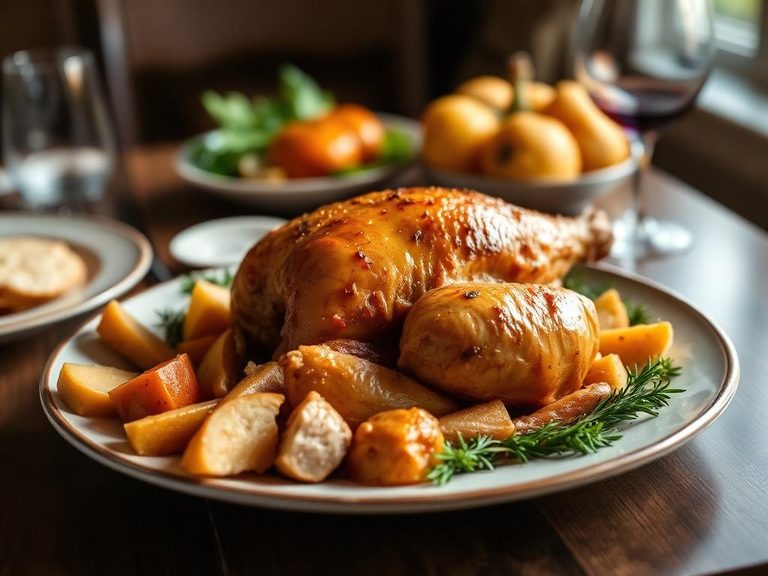
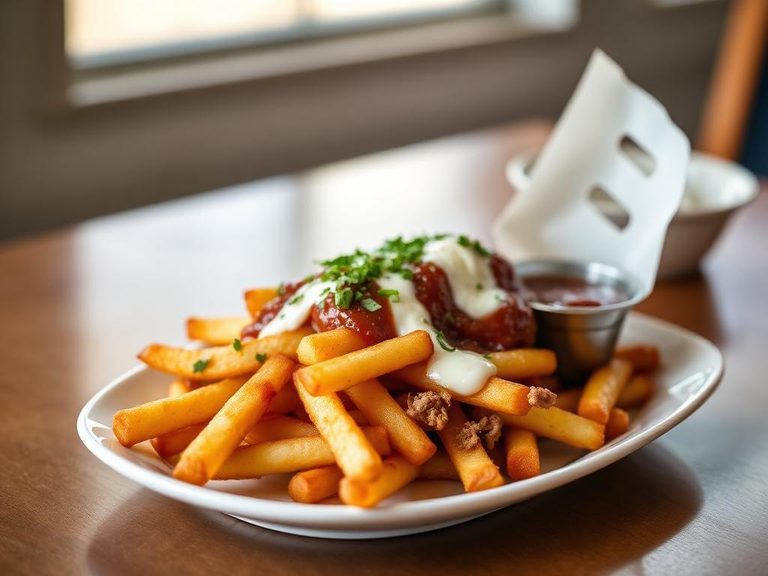
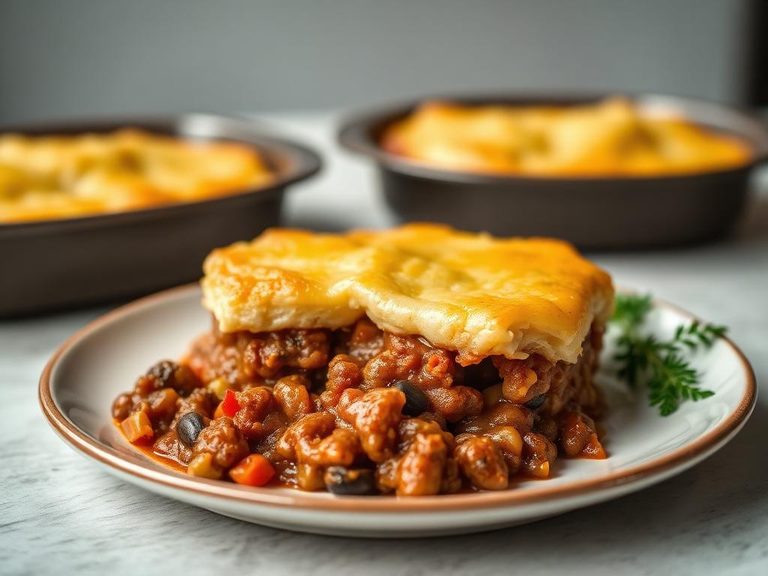
People love it for its essential role in the classic Thanksgiving or Sunday roast dinner, providing that comforting, savory backbone that ties the entire meal together. Its versatility also makes it a quick way to add depth to weeknight meals like poutine, shepherd's pie, or mashed potatoes.
⚠️ Watch-outs & how to enjoy it better
Canned gravy is often very high in sodium, which can be a concern for those monitoring blood pressure. It may also contain thickeners like wheat flour (a common allergen) or added sugars. To counteract, pair it with unsalted sides, use it sparingly as a flavor accent rather than a drenching sauce, and check labels for low-sodium or gluten-free versions.
Key benefits
- Low-calorie flavor enhancer for meals
- Provides a small boost of protein from turkey
- Adds moisture and richness to lean dishes like turkey breast
- Convenient ready-to-serve format saves cooking time
- Can help increase palatability of vegetables or grains
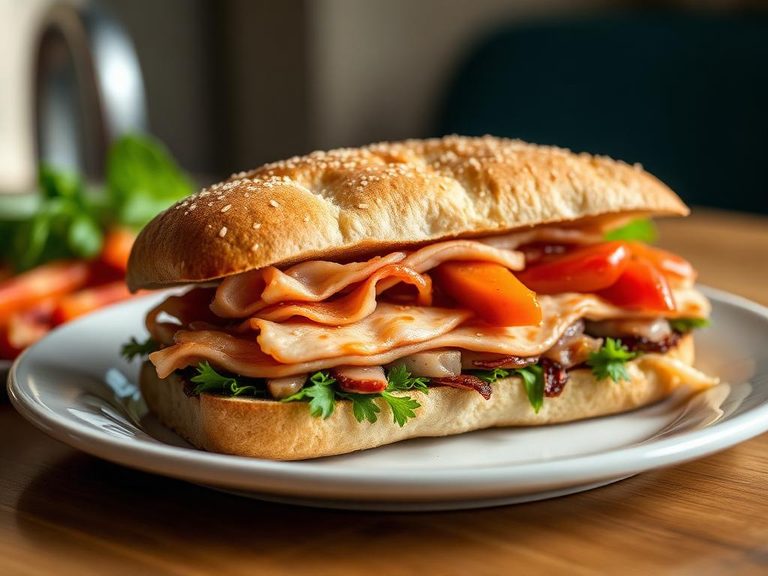
🍽️ Popular dishes

🌍 Where it's eaten
💡 Did you know?
The word 'gravy' first appeared in English in the 14th century, but it referred to a meat broth or juice; the thickened sauce we know today evolved later.
Full nutrition (USDA data · scales with serving)
| Water | 88.6 g |
| Energy | 51.0 kcal |
| Energy | 213 kj |
| Protein | 2.6 g |
| Total lipid (fat) | 2.1 g |
| Ash | 1.6 g |
| Carbohydrate, by difference | 5.1 g |
| Fiber, total dietary | 0.40 g |
| Total Sugars | 0.21 g |
| Calcium, Ca | 4.0 mg |
| Iron, Fe | 0.70 mg |
| Magnesium, Mg | 2.0 mg |
| Phosphorus, P | 29.0 mg |
| Potassium, K | 109 mg |
| Sodium, Na | 577 mg |
| Zinc, Zn | 0.80 mg |
| Copper, Cu | 0.10 mg |
| Manganese, Mn | 0.20 mg |
| Selenium, Se | 0.60 ug |
| Vitamin C, total ascorbic acid | 0.00 mg |
| Thiamin | 0.02 mg |
| Riboflavin | 0.08 mg |
| Niacin | 1.3 mg |
| Pantothenic acid | 0.02 mg |
| Vitamin B-6 | 0.01 mg |
| Folate, total | 2.0 ug |
| Folic acid | 0.00 ug |
| Folate, food | 2.0 ug |
| Folate, DFE | 2.0 ug |
| Choline, total | 2.9 mg |
| Vitamin B-12 | 0.10 ug |
| Vitamin B-12, added | 0.00 ug |
| Vitamin A, RAE | 0.00 ug |
| Retinol | 0.00 ug |
| Carotene, beta | 0.00 ug |
| Carotene, alpha | 0.00 ug |
| Cryptoxanthin, beta | 0.00 ug |
| Vitamin A, IU | 0.00 iu |
| Lycopene | 0.00 ug |
| Lutein + zeaxanthin | 1.0 ug |
| Vitamin E (alpha-tocopherol) | 0.05 mg |
| Vitamin E, added | 0.00 mg |
| Vitamin D (D2 + D3), International Units | 0.00 iu |
| Vitamin D (D2 + D3) | 0.00 ug |
| Vitamin K (phylloquinone) | 0.00 ug |
| Alcohol, ethyl | 0.00 g |
| Caffeine | 0.00 mg |
| Theobromine | 0.00 mg |
Fat & fatty acid profile (per 100g)
| Fatty acids, total saturated | 0.62 g |
| SFA 4:0 | 0.00 g |
| SFA 6:0 | 0.00 g |
| SFA 8:0 | 0.00 g |
| SFA 10:0 | 0.00 g |
| SFA 12:0 | 0.00 g |
| SFA 14:0 | 0.02 g |
| SFA 16:0 | 0.43 g |
| SFA 18:0 | 0.13 g |
| Fatty acids, total monounsaturated | 0.90 g |
| MUFA 16:1 | 0.13 g |
| MUFA 18:1 | 0.75 g |
| MUFA 20:1 | 0.00 g |
| MUFA 22:1 | 0.00 g |
| Fatty acids, total polyunsaturated | 0.49 g |
| PUFA 18:2 | 0.45 g |
| PUFA 18:3 | 0.03 g |
| PUFA 18:4 | 0.00 g |
| PUFA 20:4 | 0.01 g |
| PUFA 20:5 n-3 (EPA) | 0.00 g |
| PUFA 22:5 n-3 (DPA) | 0.00 g |
| PUFA 22:6 n-3 (DHA) | 0.00 g |
| Cholesterol | 2.0 mg |
Amino acid profile (per 100g)
Estimated from Gravy, HEINZ Home Style, savory beef — USDA does not publish this profile for Gravy.
| Tryptophan | 0.01 g |
| Threonine | 0.03 g |
| Isoleucine | 0.03 g |
| Leucine | 0.06 g |
| Lysine | 0.05 g |
| Methionine | 0.01 g |
| Cystine | 0.01 g |
| Phenylalanine | 0.03 g |
| Tyrosine | 0.02 g |
| Valine | 0.04 g |
| Arginine | 0.06 g |
| Histidine | 0.02 g |
| Alanine | 0.06 g |
| Aspartic acid | 0.07 g |
| Glutamic acid | 0.44 g |
| Glycine | 0.10 g |
| Proline | 0.08 g |
| Serine | 0.04 g |
| Hydroxyproline | 0.04 g |
FAQ
What is the main ingredient in canned turkey gravy?
The primary ingredients are typically turkey stock or broth, turkey fat or drippings, and a thickener like wheat flour or cornstarch, along with salt and seasonings.
Is canned turkey gravy gluten-free?
Not usually. Most traditional recipes use wheat flour as a thickener. For a gluten-free option, you must specifically look for a product labeled as such, which often uses cornstarch or arrowroot.
How can I reduce the sodium in canned gravy?
You can dilute it with a small amount of unsalted turkey or chicken broth. Another method is to use it sparingly as a drizzle rather than a sauce, and pair it with other unsalted components of the meal.
Nutrient density (calculated · NRF9.3)
Nutrient Rich Foods index: beneficial nutrients (protein, fiber, vitamins, minerals) minus saturated fat, added sugar & sodium, per 100 kcal.
NRF9.3 index — Fulgoni, Keast & Drewnowski, 2009. Computed from USDA nutrients.
Weight-loss friendliness (composite index)
Energy density 0.51 kcal/g · 20% calories from protein · 0.4 g fiber · 0.2 g sugar per 100 g.
Composite of energy density (Rolls et al., 1999), protein & fiber satiety, minus sugar. A calculated heuristic — ranks satiety-per-calorie, not a clinical measure.
Dietary load (calculated from USDA values)
Potential renal acid load. Positive = acid-forming, negative = alkaline-forming.
Sodium-to-potassium ratio: 5.29 (lower is better — aim for ≤ 1)
Sodium:potassium per WHO potassium guidance. Computed from USDA nutrients.