

Game meat, opossum, cooked, roasted
Whole food · Lamb, Veal, and Game Products

Photo: Wikipedia
Opossum meat, when roasted, transforms into a surprisingly tender, dark red delicacy with a mild, slightly sweet flavor reminiscent of rabbit or dark-meat turkey. Its lean, fine-grained texture absorbs marinades and seasonings beautifully, making it a blank canvas for bold flavors. Nutritionally, it's a powerhouse of protein with virtually no carbohydrates, offering a dense, low-calorie fuel source.
Calorie split: 57% protein · 0% carbs · 43% fat
↓ Full nutrition💚 Why it's loved
People cherish opossum for its unique, mild flavor that takes on the character of its preparation, from smoky barbecue to savory stews. It holds cultural significance in rural and Southern U.S. cuisine, often tied to traditions of foraging and self-reliance.
⚠️ Watch-outs & how to enjoy it better
The primary caution is the risk of parasites like Trichinella if not cooked to a safe internal temperature of 160°F (71°C). To counteract this, always use a meat thermometer and ensure thorough cooking. Its gamey reputation can deter some, which can be mitigated by soaking in salted water or buttermilk before cooking.
Key benefits
- Exceptionally high in complete protein for muscle maintenance.
- Very low in carbohydrates and contains no sugar.
- A lean source of fat compared to many traditional meats.
- Rich in iron and B vitamins like B12, supporting energy metabolism.
- A sustainable, wild-harvested protein source in many regions.
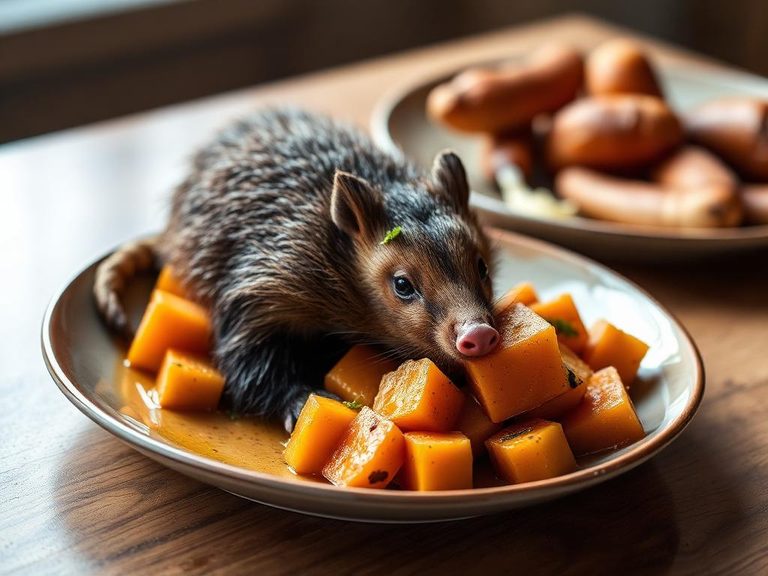
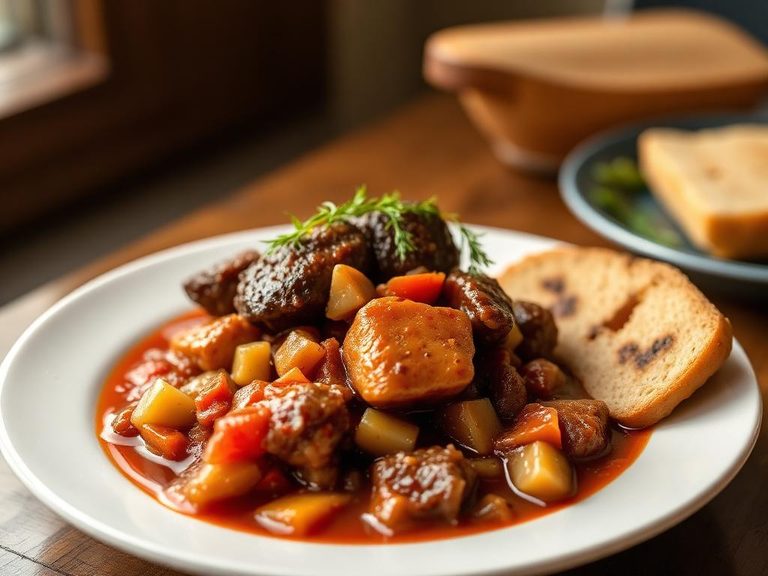
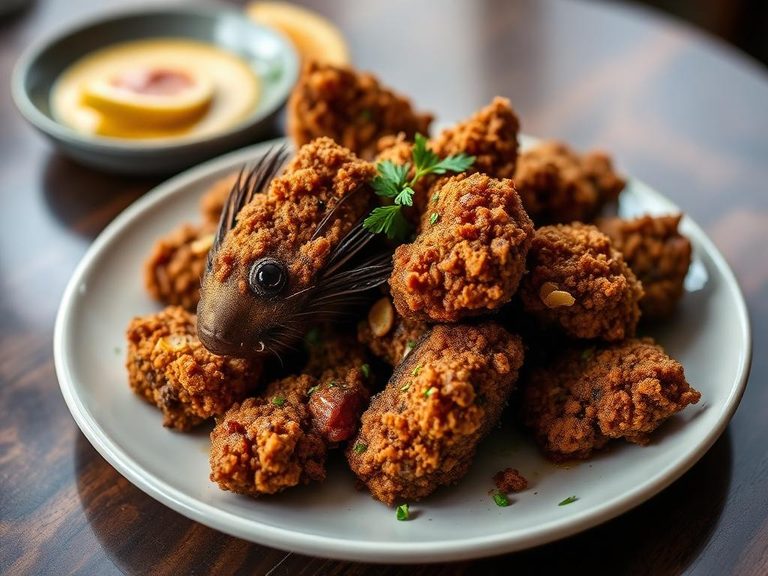
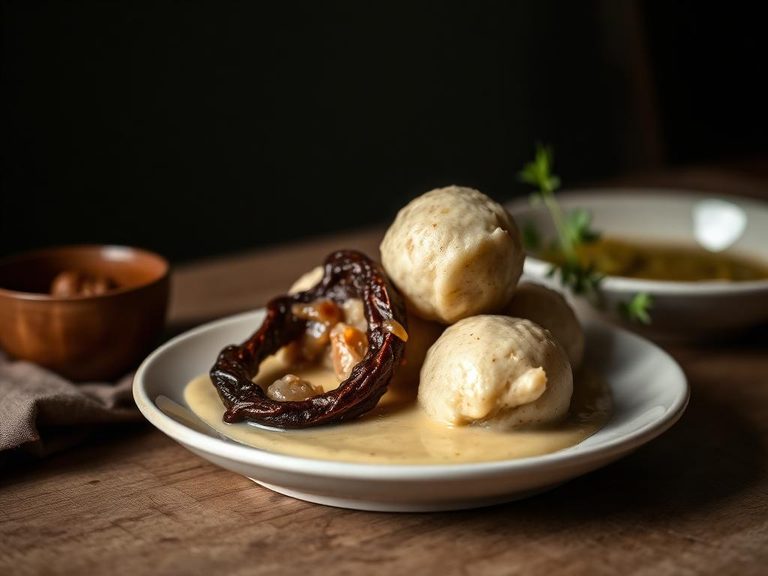
🍽️ Popular dishes
🌍 Where it's eaten
💡 Did you know?
In the 19th and early 20th centuries, opossum was a common dish on American tables, even appearing in cookbooks like Fannie Farmer's 1896 'Boston Cooking-School Cook Book'.
Full nutrition (USDA data · scales with serving)
| Water | 58.3 g |
| Energy | 221 kcal |
| Energy | 925 kj |
| Protein | 30.2 g |
| Total lipid (fat) | 10.2 g |
| Ash | 2.3 g |
| Carbohydrate, by difference | 0.00 g |
| Fiber, total dietary | 0.00 g |
| Total Sugars | 0.00 g |
| Calcium, Ca | 17.0 mg |
| Iron, Fe | 4.6 mg |
| Magnesium, Mg | 34.0 mg |
| Phosphorus, P | 278 mg |
| Potassium, K | 438 mg |
| Sodium, Na | 58.0 mg |
| Zinc, Zn | 2.3 mg |
| Copper, Cu | 0.19 mg |
| Selenium, Se | 18.2 ug |
| Vitamin C, total ascorbic acid | 0.00 mg |
| Thiamin | 0.10 mg |
| Riboflavin | 0.37 mg |
| Niacin | 8.4 mg |
| Vitamin B-6 | 0.47 mg |
| Folate, total | 10.0 ug |
| Folic acid | 0.00 ug |
| Folate, food | 10.0 ug |
| Folate, DFE | 10.0 ug |
| Choline, total | 117 mg |
| Betaine | 15.3 mg |
| Vitamin B-12 | 8.3 ug |
| Vitamin B-12, added | 0.00 ug |
| Vitamin A, RAE | 0.00 ug |
| Retinol | 0.00 ug |
| Carotene, beta | 0.00 ug |
| Carotene, alpha | 0.00 ug |
| Cryptoxanthin, beta | 0.00 ug |
| Vitamin A, IU | 0.00 iu |
| Lycopene | 0.00 ug |
| Lutein + zeaxanthin | 0.00 ug |
| Vitamin E (alpha-tocopherol) | 0.44 mg |
| Vitamin E, added | 0.00 mg |
| Vitamin D (D2 + D3), International Units | 0.00 iu |
| Vitamin D (D2 + D3) | 0.00 ug |
| Vitamin D3 (cholecalciferol) | 0.00 ug |
| Vitamin K (phylloquinone) | 1.6 ug |
| Vitamin K (Dihydrophylloquinone) | 0.00 ug |
| Alcohol, ethyl | 0.00 g |
| Caffeine | 0.00 mg |
| Theobromine | 0.00 mg |
Fat & fatty acid profile (per 100g)
| Fatty acids, total saturated | 1.2 g |
| SFA 4:0 | 0.00 g |
| SFA 6:0 | 0.00 g |
| SFA 8:0 | 0.00 g |
| SFA 10:0 | 0.00 g |
| SFA 12:0 | 0.00 g |
| SFA 14:0 | 0.04 g |
| SFA 16:0 | 0.96 g |
| SFA 18:0 | 0.18 g |
| Fatty acids, total monounsaturated | 3.8 g |
| MUFA 16:1 | 0.31 g |
| MUFA 18:1 | 3.4 g |
| MUFA 20:1 | 0.00 g |
| MUFA 22:1 | 0.00 g |
| Fatty acids, total polyunsaturated | 3.0 g |
| PUFA 18:2 | 2.9 g |
| PUFA 18:3 | 0.07 g |
| PUFA 18:4 | 0.00 g |
| PUFA 20:4 | 0.00 g |
| PUFA 20:5 n-3 (EPA) | 0.00 g |
| PUFA 22:5 n-3 (DPA) | 0.00 g |
| PUFA 22:6 n-3 (DHA) | 0.00 g |
| Cholesterol | 129 mg |
Amino acid profile (per 100g)
Estimated from Game meat, deer, cooked, roasted — USDA does not publish this profile for Game meat.
| Threonine | 1.4 g |
| Isoleucine | 1.2 g |
| Leucine | 2.6 g |
| Lysine | 2.6 g |
| Methionine | 0.74 g |
| Cystine | 0.34 g |
| Phenylalanine | 1.2 g |
| Tyrosine | 1.1 g |
| Valine | 1.4 g |
| Arginine | 2.2 g |
| Histidine | 1.5 g |
| Alanine | 1.9 g |
| Aspartic acid | 2.8 g |
| Glutamic acid | 4.4 g |
| Glycine | 1.5 g |
| Proline | 1.6 g |
| Serine | 1.3 g |
FAQ
What does opossum meat taste like?
It has a mild, slightly sweet flavor often compared to rabbit, dark-meat turkey, or squirrel. The taste is less 'gamey' than venison and is largely influenced by the animal's diet and the cooking method.
Is opossum meat safe to eat?
Yes, when properly sourced from a healthy animal and cooked thoroughly to an internal temperature of 160°F (71°C) to eliminate potential parasites. It's best purchased from licensed game processors or trusted hunters.
How do you prepare opossum for cooking?
After skinning and cleaning, the meat is often soaked overnight in salted water or buttermilk to draw out any residual blood and mellow its flavor. It can then be roasted, braised, fried, or stewed.
Nutrient density (calculated · NRF9.3)
Nutrient Rich Foods index: beneficial nutrients (protein, fiber, vitamins, minerals) minus saturated fat, added sugar & sodium, per 100 kcal.
NRF9.3 index — Fulgoni, Keast & Drewnowski, 2009. Computed from USDA nutrients.
Weight-loss friendliness (composite index)
Energy density 2.21 kcal/g · 55% calories from protein · 0.0 g fiber · 0.0 g sugar per 100 g.
Composite of energy density (Rolls et al., 1999), protein & fiber satiety, minus sugar. A calculated heuristic — ranks satiety-per-calorie, not a clinical measure.
Dietary load (calculated from USDA values)
Potential renal acid load. Positive = acid-forming, negative = alkaline-forming.
Sodium-to-potassium ratio: 0.13 (lower is better — aim for ≤ 1)
Sodium:potassium per WHO potassium guidance. Computed from USDA nutrients.