

Game meat, beaver, cooked, roasted
Whole food · Lamb, Veal, and Game Products

Photo: Wikipedia
Beaver meat, when roasted, offers a surprisingly lean and tender experience, with a flavor often compared to a cross between dark turkey and lean pork, but with a subtle, earthy sweetness. Its nutritional profile is remarkable for its high protein content and virtually zero carbohydrates, making it a powerhouse for those seeking a dense, meat-based protein source. The texture is fine-grained and moist, especially when cooked properly to avoid drying out the naturally low-fat meat.
Calorie split: 69% protein · 0% carbs · 31% fat
↓ Full nutrition💚 Why it's loved
People love beaver for its unique, rich flavor that is less gamey than venison but more complex than chicken, offering a delightful culinary surprise. Its versatility in both traditional and modern recipes, from hearty stews to refined roasts, makes it a cherished ingredient in regions with a strong hunting culture.
⚠️ Watch-outs & how to enjoy it better
The primary downside is its leanness, which can lead to dry, tough meat if overcooked, requiring careful preparation and often slow-cooking methods. Additionally, those new to game meat might find its distinct, slightly musky flavor unfamiliar, and it can be difficult to source outside of specific regions or specialty markets.
Key benefits
- Extremely high in protein (34.85g per 100g) for muscle maintenance and satiety
- Zero carbohydrates and sugar, making it ideal for ketogenic and low-carb diets
- Very low in fat (6.96g per 100g) compared to many red meats
- A sustainable, lean wild game option with a unique nutritional profile
- Rich in essential minerals like iron and zinc, common in organ meats and game
🍽️ Popular dishes
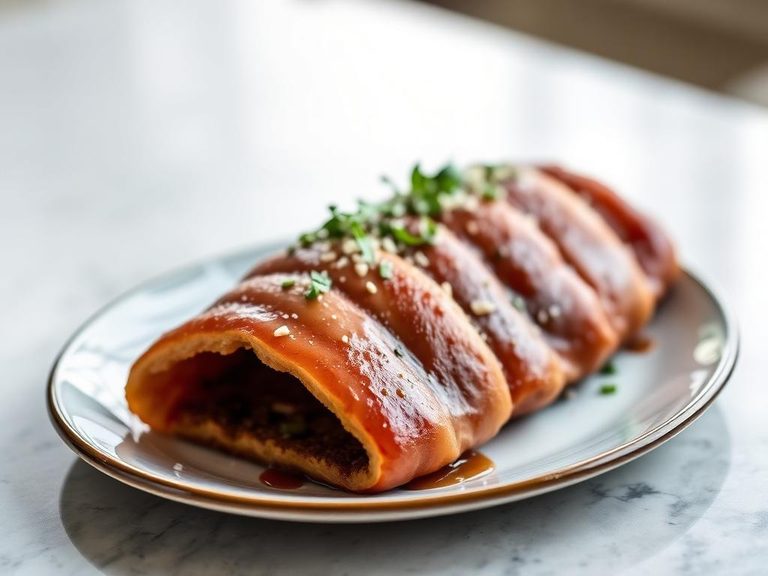 Beaver tail (a traditional Indigenous North American delicacy, often slow-cooked)
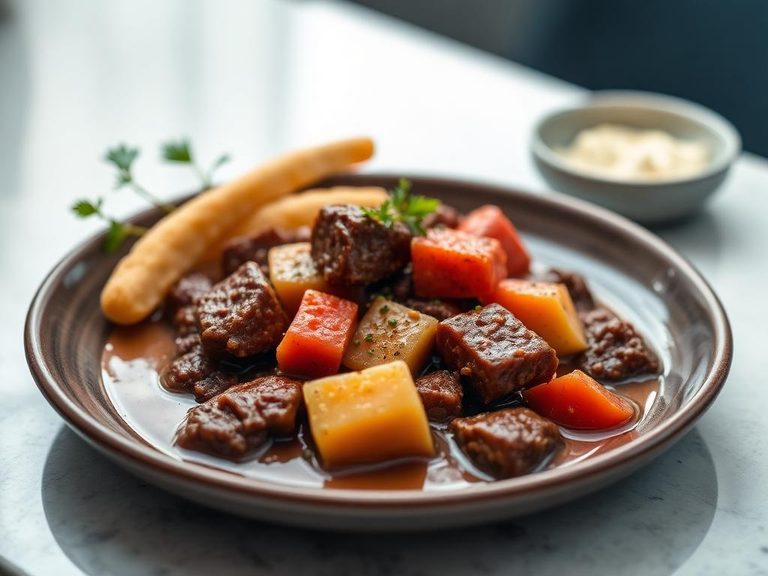 Beaver stew (a hearty, slow-cooked dish common in Canadian and Northern U.S. cuisines)
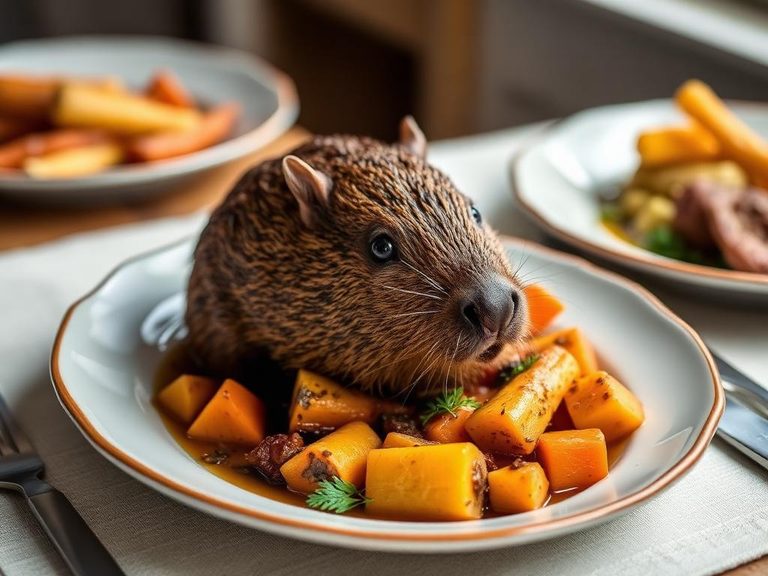 Roasted beaver with root vegetables (a classic, simple preparation highlighting the meat)
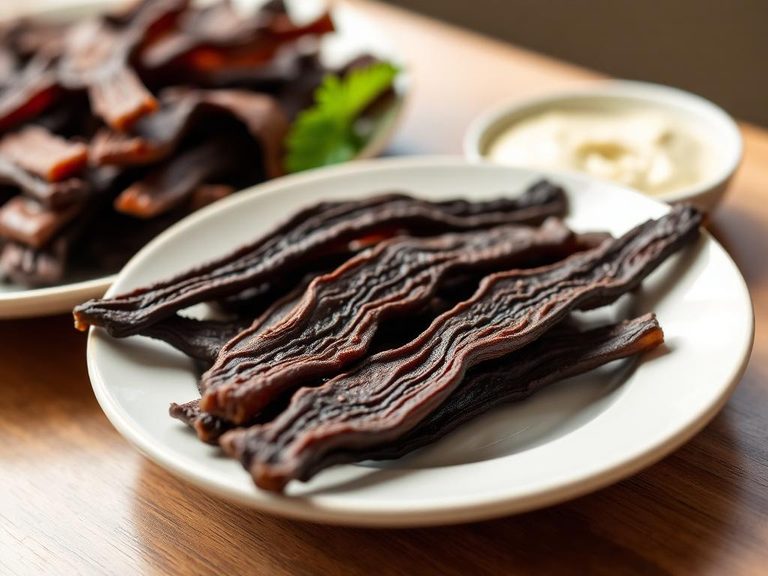 Beaver jerky (a preserved snack, popular in hunting communities)
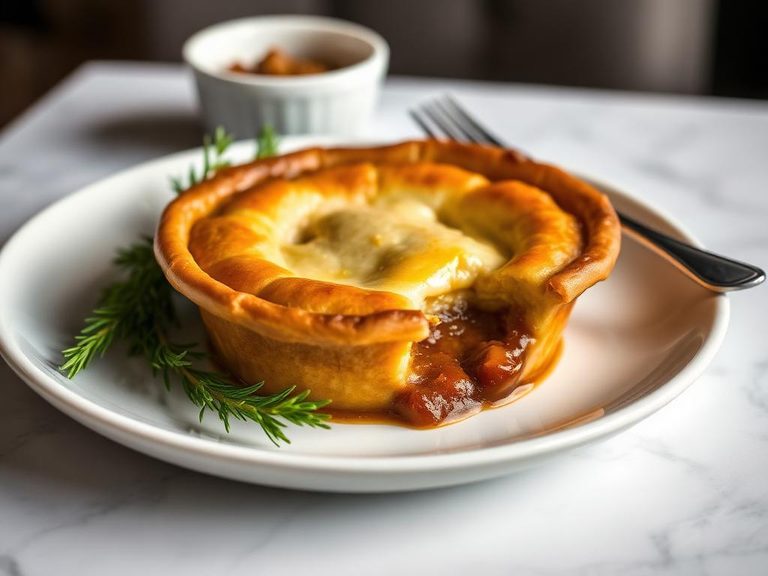 Beaver pot pie (a comforting, savory pie with a flaky crust)
🌍 Where it's eaten
💡 Did you know?
Beaver meat was once considered a 'poor man's food' in colonial North America, but it was also a staple for early fur traders and explorers, who relied on it for its high protein and calorie density during long expeditions.
Full nutrition (USDA data · scales with serving)
| Water | 57.9 g |
| Energy | 212 kcal |
| Energy | 887 kj |
| Protein | 34.9 g |
| Total lipid (fat) | 7.0 g |
| Ash | 1.4 g |
| Carbohydrate, by difference | 0.00 g |
| Fiber, total dietary | 0.00 g |
| Total Sugars | 0.00 g |
| Calcium, Ca | 22.0 mg |
| Iron, Fe | 10.0 mg |
| Magnesium, Mg | 29.0 mg |
| Phosphorus, P | 292 mg |
| Potassium, K | 403 mg |
| Sodium, Na | 59.0 mg |
| Zinc, Zn | 2.3 mg |
| Copper, Cu | 0.19 mg |
| Selenium, Se | 43.1 ug |
| Vitamin C, total ascorbic acid | 3.0 mg |
| Thiamin | 0.05 mg |
| Riboflavin | 0.31 mg |
| Niacin | 2.2 mg |
| Pantothenic acid | 0.93 mg |
| Vitamin B-6 | 0.47 mg |
| Folate, total | 11.0 ug |
| Folic acid | 0.00 ug |
| Folate, food | 11.0 ug |
| Folate, DFE | 11.0 ug |
| Choline, total | 130 mg |
| Betaine | 17.1 mg |
| Vitamin B-12 | 8.3 ug |
| Vitamin B-12, added | 0.00 ug |
| Vitamin A, RAE | 0.00 ug |
| Retinol | 0.00 ug |
| Carotene, beta | 0.00 ug |
| Carotene, alpha | 0.00 ug |
| Cryptoxanthin, beta | 0.00 ug |
| Vitamin A, IU | 0.00 iu |
| Lycopene | 0.00 ug |
| Lutein + zeaxanthin | 0.00 ug |
| Vitamin E (alpha-tocopherol) | 0.45 mg |
| Vitamin E, added | 0.00 mg |
| Vitamin D (D2 + D3), International Units | 0.00 iu |
| Vitamin D (D2 + D3) | 0.00 ug |
| Vitamin D3 (cholecalciferol) | 0.00 ug |
| Vitamin K (phylloquinone) | 1.6 ug |
| Vitamin K (Dihydrophylloquinone) | 0.00 ug |
| Alcohol, ethyl | 0.00 g |
| Caffeine | 0.00 mg |
| Theobromine | 0.00 mg |
Fat & fatty acid profile (per 100g)
| Fatty acids, total saturated | 2.1 g |
| SFA 4:0 | 0.00 g |
| SFA 6:0 | 0.00 g |
| SFA 8:0 | 0.00 g |
| SFA 10:0 | 0.00 g |
| SFA 12:0 | 0.00 g |
| SFA 14:0 | 0.18 g |
| SFA 16:0 | 1.6 g |
| SFA 18:0 | 0.32 g |
| Fatty acids, total monounsaturated | 1.9 g |
| MUFA 16:1 | 0.24 g |
| MUFA 18:1 | 1.6 g |
| MUFA 20:1 | 0.00 g |
| MUFA 22:1 | 0.00 g |
| Fatty acids, total polyunsaturated | 1.4 g |
| PUFA 18:2 | 1.1 g |
| PUFA 18:3 | 0.28 g |
| PUFA 18:4 | 0.00 g |
| PUFA 20:4 | 0.00 g |
| PUFA 20:5 n-3 (EPA) | 0.00 g |
| PUFA 22:5 n-3 (DPA) | 0.00 g |
| PUFA 22:6 n-3 (DHA) | 0.00 g |
| Cholesterol | 117 mg |
Amino acid profile (per 100g)
| Threonine | 1.3 g |
| Isoleucine | 1.5 g |
| Leucine | 2.7 g |
| Lysine | 3.2 g |
| Methionine | 0.79 g |
| Phenylalanine | 1.4 g |
| Tyrosine | 1.1 g |
| Valine | 1.4 g |
| Arginine | 2.1 g |
| Histidine | 1.4 g |
| Alanine | 1.6 g |
| Aspartic acid | 2.8 g |
| Glutamic acid | 5.0 g |
| Glycine | 1.3 g |
| Proline | 1.2 g |
| Serine | 1.2 g |
FAQ
What does beaver meat taste like?
Beaver meat is often described as having a flavor similar to dark turkey or lean pork, with a subtle, earthy sweetness and a fine, moist texture when cooked properly.
Is beaver meat healthy?
Yes, it is very healthy, being high in protein (34.85g per 100g), low in fat (6.96g per 100g), and containing zero carbohydrates, making it suitable for low-carb and high-protein diets.
How should I cook beaver meat to avoid it being dry?
Due to its low fat content, beaver meat is best cooked slowly, such as braising, stewing, or slow-roasting, and should not be overcooked to prevent it from becoming tough and dry.
Nutrient density (calculated · NRF9.3)
Nutrient Rich Foods index: beneficial nutrients (protein, fiber, vitamins, minerals) minus saturated fat, added sugar & sodium, per 100 kcal.
NRF9.3 index — Fulgoni, Keast & Drewnowski, 2009. Computed from USDA nutrients.
Weight-loss friendliness (composite index)
Energy density 2.12 kcal/g · 66% calories from protein · 0.0 g fiber · 0.0 g sugar per 100 g.
Composite of energy density (Rolls et al., 1999), protein & fiber satiety, minus sugar. A calculated heuristic — ranks satiety-per-calorie, not a clinical measure.
Dietary load (calculated from USDA values)
Potential renal acid load. Positive = acid-forming, negative = alkaline-forming.
Sodium-to-potassium ratio: 0.15 (lower is better — aim for ≤ 1)
Sodium:potassium per WHO potassium guidance. Computed from USDA nutrients.